- Shaft
- Molds&Tools
- Hydraulics And Pump
- Hair transplant needle
- Hydraulics And Pump
- Precision CNC Shaft Machining Manufacturer for High Performance Applications
- Energy Industry CNC Machining Parts Supplier
- Aerospace CNC Machining Parts Manufacturer
- Aerospace CNC Machining Parts Manufacturer
- Automotive & EV CNC Machining Parts Supplier for OEM and Tier 1
- Medical CNC Machining Parts Supplier for Precision Medical Devices
The Role of Supply Chain Integrators in Agile Manufacturing for Global OEMs

Executive Summary
Agile manufacturing is no longer defined only by fast machining cycles or flexible production cells. For global OEMs and Tier 1 suppliers, agility now depends on how quickly engineering intent, material sourcing, process planning, quality control, production scheduling, and logistics can move as one coordinated system. This is where supply chain integrators have become strategically important. A capable integrator does not simply quote parts, place orders, or coordinate vendors. It converts fragmented manufacturing requirements into a controlled, traceable, and scalable execution model.
In precision manufacturing, the cost of supply chain fragmentation is often hidden until late in the project. A design change may be approved by engineering but not reflected in tooling. A material substitution may solve a lead time problem but introduce qualification risk. A machining supplier may meet dimensional requirements but lack the documentation discipline required for aerospace, medical, hydraulic, or industrial automation programs. Agile manufacturing requires more than speed; it requires controlled responsiveness.
IndustryApex Technology, operating through the IndustryApex CNC platform at IndustryApex CNC, approaches this challenge as both a supply chain integrator and an ODM solution provider. The value is not only in producing precision components, but in aligning engineering, manufacturing, inspection, supplier coordination, and delivery planning under one accountable structure. For OEMs managing shorter product cycles, higher customization, and global sourcing risk, this integrated model helps reduce operational friction while maintaining the technical rigor required for critical parts.
The central question for procurement and engineering leaders is no longer whether outsourcing is cheaper than internal production. The better question is whether the external manufacturing partner can absorb complexity without creating new coordination burden. In agile manufacturing, the strongest partner is the one that can compress the distance between design, process validation, production, and supply continuity.
Technical Deep Dive
Agile manufacturing begins with a technical foundation: the ability to translate changing requirements into stable, repeatable production processes. In precision CNC manufacturing, this means controlling the relationship between part geometry, material behavior, machine capability, fixture strategy, cutting parameters, inspection methods, and documentation. A supply chain integrator must understand each of these elements deeply enough to make decisions before they become production delays.
For example, a 5-axis aerospace structural component may require thin-wall machining, datum stability, tight positional tolerances, and controlled surface integrity. The supplier must account for residual stress in the billet, toolpath sequencing, clamping deformation, heat generation, and in-process inspection. If the part is revised during prototype validation, an agile system must evaluate the impact on fixture design, cycle time, tool life, inspection programming, and delivery schedule. This is not administrative coordination; it is manufacturing engineering.
In medical components, the same principle applies with different risk factors. Titanium implants, surgical instruments, and high-precision device parts often require excellent biocompatibility, burr control, surface finish consistency, and strict traceability. Engineering changes must be managed with documentation discipline because a minor dimensional adjustment can affect cleaning, assembly, sterilization, or functional performance. A partner experienced in ISO certified CNC machining for medical components can help reduce the gap between design approval and controlled production release.
Hydraulic and pump components introduce another layer of precision risk. Valve spools, sleeves, pump shafts, rotors, and sealing interfaces depend on roundness, straightness, surface finish, concentricity, and material compatibility. A small deviation may result in leakage, unstable pressure control, vibration, or premature wear. Agile manufacturing in this sector requires the ability to respond quickly to demand changes while maintaining process capability. For programs involving hydraulic pump parts, integration across machining, grinding, heat treatment, coating, and inspection is essential.
The technical role of a supply chain integrator is to remove weak links between process steps. CNC milling may be only one part of the value stream. A finished precision component may require turning, 3-axis or 5-axis milling, EDM, precision grinding, lapping, heat treatment, passivation, anodizing, plating, laser marking, assembly, and final inspection. If each operation is managed separately, the OEM carries the coordination burden. If the integrator controls the manufacturing chain through ERP planning, qualified supplier networks, internal process engineering, and disciplined quality gates, the OEM receives a more predictable output.
Agility also depends on data. Modern manufacturing decisions cannot rely only on phone calls and informal updates. ERP-based production control allows order status, material availability, routing, work-in-process, inspection results, and delivery planning to be monitored systematically. When engineering and procurement teams need to make decisions under time pressure, accurate operational visibility becomes a competitive advantage.
The ODM & Supply Chain Advantage
IndustryApex Technology’s edge is built around a clear operating identity: a supply chain integrator and ODM solution provider for global OEM and Tier 1 customers. This distinction matters because many machining suppliers focus only on build-to-print execution. Build-to-print manufacturing is important, but complex programs often require additional engineering support before stable production can be achieved. ODM capability adds value by helping customers refine manufacturability, material selection, tolerance strategy, process routing, and component performance.
With more than 30 years of manufacturing experience, IndustryApex Technology has developed a fully controlled precision manufacturing system supported by ERP management. This structure allows the company to coordinate production resources, technical processes, inspection requirements, and delivery schedules with higher reliability. For customers facing volatile demand, compressed development timelines, or multi-region sourcing pressure, the ability to centralize accountability is highly valuable.
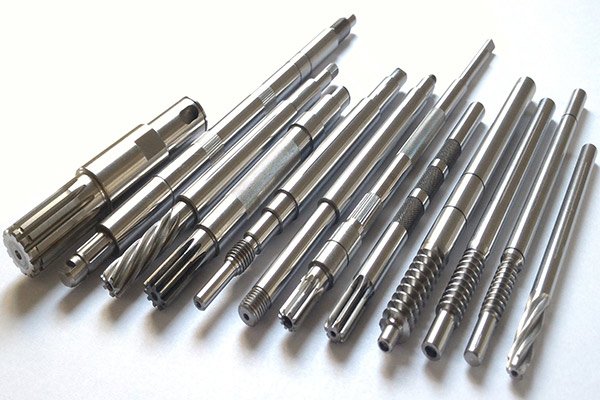
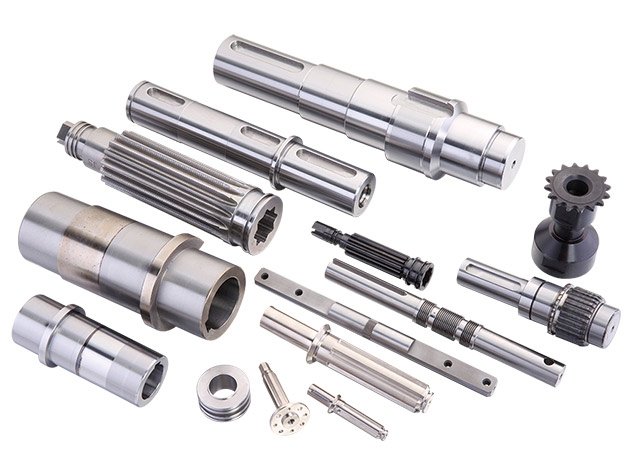
The manufacturing capability base includes 3-axis to 5-axis CNC machining, EDM, precision grinding, and industrial ceramics. These capabilities support a broad range of high-precision components, from complex aluminum and titanium structures to hardened steel parts, carbide wear components, ceramic parts, precision shafts, mold components, valve components, and tight-tolerance assemblies. The practical advantage is that different technologies can be combined into one process plan instead of being treated as separate purchasing events.
For an OEM, this reduces engineering handoff risk. A component that requires CNC milling followed by grinding and EDM features can be planned with the final tolerance stack in mind from the beginning. The fixture strategy can consider later operations. The inspection plan can be aligned with functional datums. Material procurement can be linked to production scheduling. Secondary processes can be qualified in advance. This is how supply chain integration improves agility: it turns sequential uncertainty into coordinated execution.
ODM support is especially important when customers are developing new equipment or upgrading existing platforms. Early supplier involvement can identify difficult tolerances that do not affect function, recommend geometry adjustments that improve machinability, reduce unnecessary cost drivers, and select materials better suited to performance requirements. In many programs, the most valuable cost savings are not achieved through unit price negotiation, but through engineering decisions made before the production process is locked.
Global OEMs and Tier 1 suppliers also need resilience. Supply disruptions, capacity constraints, geopolitical uncertainty, and sudden demand shifts can quickly expose fragile sourcing models. A supply chain integrator with controlled manufacturing resources and a qualified partner network can create alternative routing options while maintaining accountability. This does not mean changing suppliers casually; it means building a controlled system in which material, process, inspection, and logistics risks are actively managed.
The best integrators act as an extension of the customer’s manufacturing engineering and supply chain teams. They understand that procurement needs stable lead times, engineering needs technical feedback, quality teams need documentation, and operations teams need delivery reliability. Agile manufacturing is achieved when these needs are handled together, rather than traded against one another.
Industry Applications
The role of supply chain integrators is most visible in industries where precision, qualification, and schedule pressure intersect. Aerospace is one of the strongest examples. Aircraft structural components, brackets, housings, titanium parts, and lightweight assemblies often involve complex geometries, demanding tolerances, and strict material traceability. A supplier supporting 5-axis aerospace CNC machining and titanium aircraft parts must control not only machining accuracy but also documentation, process stability, and inspection discipline. In this environment, integration reduces risk because the customer has one accountable partner managing the manufacturing route.
Medical manufacturing presents a different but equally demanding environment. Device companies need partners capable of producing components with consistent dimensional quality, clean surface finishes, compatible materials, and reliable documentation. Whether the project involves titanium implants, surgical tools, diagnostic device parts, or miniature mechanical components, agile response must not compromise process validation. An integrator can help bridge prototype development and production scaling by coordinating machining, finishing, inspection, and compliance expectations from the beginning.
Hydraulics, pumps, and fluid control systems require a strong balance between precision and durability. Parts must perform under pressure, friction, temperature variation, and continuous motion. Components such as spools, sleeves, shafts, pistons, rotors, housings, and valve bodies depend on tight control of geometry and surface characteristics. For OEMs in construction machinery, agricultural equipment, automation, energy systems, and industrial equipment, an integrated supplier can help maintain delivery continuity while supporting technical problem solving.
Semiconductor equipment, optics, automation, and high-precision industrial systems also benefit from integrated supply chain support. These sectors frequently involve low-to-medium volume production, frequent engineering revisions, tight cleanliness or surface requirements, and high part complexity. Traditional sourcing models can struggle when every revision requires multiple supplier confirmations. A supply chain integrator reduces that friction by coordinating feasibility review, machining strategy, secondary operations, and final verification through a single operating system.
Automotive, drivetrain, energy, and advanced machinery programs often require a mixture of prototypes, pilot production, and scaled manufacturing. Agile manufacturing helps these sectors respond to product platform changes, regional demand swings, and cost pressure. However, agility must be disciplined. Fast response without process control produces quality risk. Low cost without supply chain resilience creates delivery risk. A technically capable integrator balances speed, control, and scalability.
Across these industries, the pattern is consistent: the more critical the component, the more valuable integration becomes. When tolerances are loose and requirements are simple, a transactional supplier may be sufficient. When the component affects safety, performance, sealing, motion, assembly, or regulatory compliance, the customer needs a partner that can manage complexity across the full manufacturing chain.
Call to Action
Agile manufacturing is not achieved by adding more suppliers to a vendor list. It is achieved by building a responsive, technically capable, and accountable manufacturing ecosystem. For global OEMs and Tier 1 suppliers, the right supply chain integrator can reduce coordination burden, improve engineering feedback, stabilize quality, and strengthen delivery performance across complex precision component programs.
IndustryApex Technology and IndustryApex CNC support customers that require more than conventional machining capacity. With integrated ODM support, ERP-controlled production, more than 30 years of experience, and capabilities spanning 3-axis and 5-axis CNC machining, EDM, precision grinding, and industrial ceramics, the company is positioned to support demanding applications in aerospace, medical, hydraulics, pumps, automation, energy, and advanced industrial equipment.
If your team is evaluating a new precision component project, consolidating suppliers, improving manufacturability, or seeking a more resilient sourcing model, connect with the IndustryApex Technology engineering team through the Contact Us page. A structured technical review can help identify the right process route, qualification path, and production strategy before cost, quality, or lead time risks become embedded in the program.