- Shaft
- Molds&Tools
- Hydraulics And Pump
- Hair transplant needle
- Hydraulics And Pump
- Precision CNC Shaft Machining Manufacturer for High Performance Applications
- Energy Industry CNC Machining Parts Supplier
- Aerospace CNC Machining Parts Manufacturer
- Aerospace CNC Machining Parts Manufacturer
- Automotive & EV CNC Machining Parts Supplier for OEM and Tier 1
- Medical CNC Machining Parts Supplier for Precision Medical Devices

The Future of Robotics Components: Micron-Level Precision in 2026

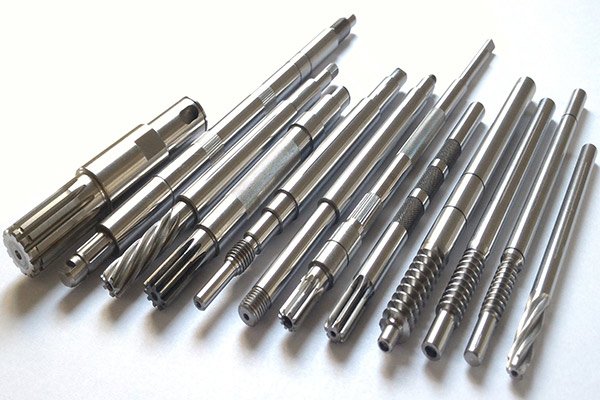
The Future of Robotics Components: Micron-Level Precision in 2026
Executive Summary
Robotics manufacturing is entering a new phase in 2026. The market is no longer defined only by faster actuators, smarter controllers, or more compact sensors. The decisive advantage is increasingly found inside the mechanical components that determine repeatability, rigidity, thermal stability, vibration behavior, and service life. For global OEMs and Tier 1 suppliers, micron-level precision is becoming a supply chain requirement, not a premium option.
Industrial robots, collaborative robots, surgical robots, semiconductor handling systems, warehouse automation platforms, humanoid robots, and autonomous inspection systems all depend on motion systems that can repeat with extremely low error across millions of cycles. This performance starts with shafts, housings, gear interfaces, bearing seats, ceramic guides, valve components, structural brackets, couplings, spindles, and high-precision machined assemblies. A controller can compensate for some error, but it cannot fully overcome poor concentricity, unstable materials, residual stress, surface defects, or inconsistent process control.
For manufacturers developing next-generation robotics platforms, the sourcing question is shifting from simple part procurement to integrated manufacturing strategy. Buyers need partners who can manage manufacturability, process capability, materials behavior, tolerance stack-up, inspection, documentation, and scalable production under one controlled system. This is where IndustryApex Technology, operating through IndustryApex CNC, positions itself as both a precision manufacturer and an ODM-oriented supply chain integrator for demanding global programs.
In 2026, the robotics component supply chain will reward suppliers that can combine high-mix flexibility with production-grade repeatability. The winning model is not only owning advanced machines; it is controlling the complete manufacturing loop from engineering review through 3-5 axis CNC machining, EDM, precision grinding, industrial ceramics processing, ERP-managed production, metrology, traceability, and export-ready delivery.
Technical Deep Dive
Micron-level precision in robotics is not a marketing phrase. It is a measurable engineering discipline tied to dimensional tolerance, form accuracy, surface finish, geometric relationship, and process stability. In robotic joints, for example, small deviations in roundness, coaxiality, perpendicularity, or bearing seat geometry can amplify positioning error at the end effector. A few microns of error at the joint level may become a measurable deviation across the working envelope, especially in long-reach systems or applications requiring force control.
The most important component-level requirements in 2026 robotics platforms include tight tolerance control, low-friction surfaces, stable mating interfaces, high fatigue resistance, lightweight structure, and compatibility with compact electromechanical assemblies. Precision gear components, spline shafts, harmonic drive interfaces, RV reducer housings, motor shafts, encoder mounts, end-effector adapters, hydraulic micro-control parts, and ceramic wear components all require different manufacturing strategies. A single robotics assembly may combine aluminum, stainless steel, titanium, engineering plastics, tungsten carbide, ceramics, and hardened tool steels.
For precision machined robot components, the challenge often begins before cutting. Material selection must account for thermal expansion, stiffness-to-weight ratio, corrosion resistance, magnetic properties, surface treatment compatibility, and long-term dimensional stability. Aluminum can support lightweight structures but requires careful control of distortion. Stainless steel offers durability and corrosion resistance but can create cutting heat and tool wear challenges. Titanium is valuable in lightweight and high-strength robotics, especially in medical and aerospace-adjacent systems, but demands controlled machining parameters and toolpath strategy. Advanced ceramics can deliver wear resistance, insulation, low particle generation, and dimensional stability, but require specialized grinding and finishing expertise.
Manufacturing methods must be matched to the functional risk of the component. 3-axis CNC machining remains efficient for plates, brackets, mounts, covers, and many structural parts. 4-axis and 5-axis CNC machining become essential when parts have complex multi-face geometry, tight positional relationships, curved surfaces, deep features, and reduced setup tolerance. EDM is valuable for difficult materials, sharp internal features, small slots, precision profiles, and hardened components. Precision grinding is critical when surface finish, flatness, cylindricity, parallelism, and size control move into the micron range. Industrial ceramics processing supports applications where conventional metals cannot meet wear, insulation, or cleanliness requirements.
Inspection strategy is equally important. A part cannot be considered precision-grade unless the supplier can verify the features that matter. Coordinate measuring machines, optical inspection, surface roughness testing, height measurement, bore gauges, air gauges, roundness evaluation, and controlled inspection plans all contribute to confidence. For robotics OEMs, this evidence matters because mechanical variation directly affects assembly yield, calibration time, warranty risk, and field performance.
Another critical issue is tolerance stack-up. Robotics manufacturers often focus on individual part tolerances, but system accuracy depends on how parts interact. Bearing seats, shaft shoulders, gear mounting surfaces, dowel locations, ceramic guides, and actuator housings must work together as a controlled assembly. A supplier with ODM capability can help evaluate whether tolerances are realistic, which features should be datum-controlled, where grinding is necessary, and where design changes can reduce cost without sacrificing performance.
Surface integrity is also becoming more important. High-speed robotics systems face vibration, repeated acceleration, lubricant sensitivity, and micro-wear. Tool marks, burrs, edge defects, heat-affected zones, and inconsistent coatings can reduce service life. Deburring, edge conditioning, passivation, anodizing, hard coating, polishing, lapping, and cleaning processes must be selected according to the operating environment. Semiconductor and medical robotics may require especially careful particle control and surface cleanliness.
The ODM & Supply Chain Advantage
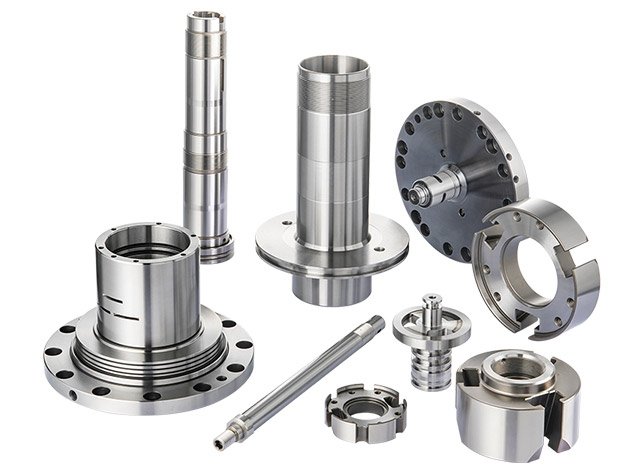
Robotics OEMs and Tier 1 suppliers increasingly need more than a machine shop. They need a manufacturing partner that can translate design intent into stable production while reducing coordination risk across the supply chain. IndustryApex Technology’s core identity is as a supply chain integrator and ODM solution provider, serving customers who require engineered components, controlled processes, and reliable international delivery.
The manufacturing edge comes from a fully controlled precision manufacturing system supported by ERP management and more than 30 years of manufacturing experience. In practical terms, this means production orders, materials, process routes, inspection checkpoints, subcontracted treatments, scheduling, and delivery status can be managed through a structured system rather than informal workshop coordination. For robotics programs, that control is essential because part families often evolve quickly during prototyping, pilot builds, and mass production launch.
IndustryApex Technology’s technical capabilities include 3-5 axis CNC machining, EDM, precision grinding, and industrial ceramics. This combination is especially relevant for robotics because high-performance assemblies rarely depend on one process alone. A robot joint housing may require 5-axis machining for complex geometry, precision boring for bearing alignment, grinding for critical surfaces, and surface treatment for corrosion protection. A ceramic guide or insulating component may require specialized grinding to reach the required dimensional accuracy and surface finish. A hardened steel drive element may need EDM followed by grinding and final inspection.
As a supply chain integrator, the company can support customers across the product lifecycle. During early engineering, the focus is design for manufacturability, process selection, tolerance review, and prototype feasibility. During pilot production, the priority becomes repeatability, inspection data, assembly feedback, and controlled revision management. During mass production, the focus shifts to capacity planning, cost control, yield stability, traceability, and delivery reliability. This lifecycle view is particularly valuable for global OEMs managing robotics platforms across multiple markets.
Compared with fragmented sourcing, an ODM-oriented manufacturing partner reduces the number of handoffs between design, machining, grinding, ceramic processing, finishing, inspection, and logistics. Fewer handoffs can reduce communication error, shorten development time, and improve accountability. For robotics buyers, this is not only a procurement benefit; it is an engineering risk reduction strategy.
The same manufacturing discipline required for robotics is already proven in adjacent high-precision industries. Aerospace programs demand lightweight structures, complex geometries, and strict traceability, which is why many buyers evaluate capabilities similar to those used in 5-axis aerospace CNC machining and titanium aircraft structural components. Medical device manufacturing requires biocompatible materials, surface quality, documentation, and repeatable precision, similar to the demands found in ISO-certified CNC machining for medical components, titanium implants, surgical instruments, and high-precision device parts. Fluid power and automation applications require precise sealing, sliding, and flow-control surfaces, connecting closely with capabilities used for hydraulic pump parts and precision fluid control components.
For procurement teams, the key evaluation question in 2026 is not simply whether a supplier can quote a drawing. The better question is whether the supplier can protect the design intent from prototype through production. That means understanding which tolerances drive function, which materials create processing risk, which inspection methods are appropriate, and which process controls will prevent drift over time.
Industry Applications
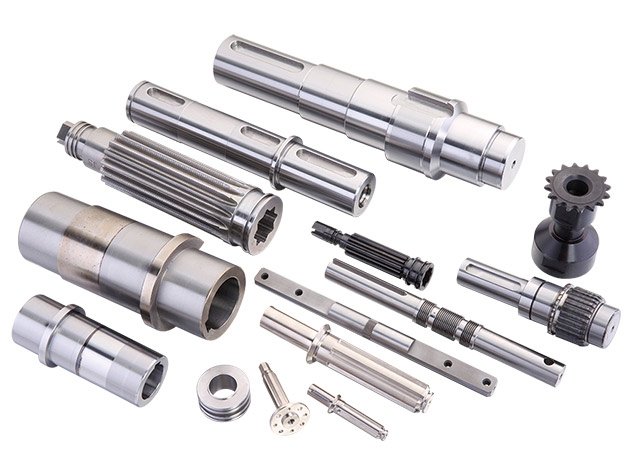
The robotics component market is broad, but the requirement for micron-level precision is strongest in applications where motion accuracy, reliability, and compact design directly affect business outcomes.
In industrial automation, robot arms and gantry systems require rigid structural components, accurate joint interfaces, reliable bearing locations, and durable transmission parts. Automotive production, electronics assembly, welding, packaging, and machine tending all depend on repeatability under continuous operation. For these systems, component precision affects uptime, cycle time, calibration frequency, and maintenance cost.
In collaborative robots, compact design and smooth motion are critical. Cobots operate near people and often use integrated torque sensing, lightweight arms, compact gearboxes, and precise motor assemblies. Component quality influences backlash, noise, temperature rise, and tactile response. High-precision machined housings, shafts, couplings, and mounting interfaces help achieve safe and predictable motion.
In medical robotics, the stakes are even higher. Surgical robots, rehabilitation systems, diagnostic automation, and laboratory robots require smooth movement, clean surfaces, small part geometry, corrosion resistance, and strict documentation. Titanium, stainless steel, engineering plastics, and ceramics are common material choices. Precision manufacturing supports not only performance but also regulatory confidence and long-term reliability.
In semiconductor and electronics robotics, particle control and micron-level positioning are essential. Wafer handling, optical inspection, test automation, and cleanroom transport systems depend on low-vibration motion and clean materials. Ceramic components, precision ground surfaces, and stable machined structures are valuable because they can reduce wear, contamination, and thermal drift.
In aerospace and defense robotics, unmanned systems, inspection robots, actuator modules, and maintenance automation require lightweight strength, environmental resistance, and dependable operation. Many of these components share requirements with aerospace-grade machining, including tight documentation, complex geometry, and high-performance metals.
In logistics and warehouse automation, cost pressure is high, but precision remains important. Autonomous mobile robots, sortation systems, robotic picking arms, and conveyor automation need durable components that can be produced at scale. Here, the challenge is balancing precision with manufacturability. Overly tight tolerances increase cost, but under-controlled parts increase assembly time and field failures. A strong manufacturing partner helps identify the right tolerance strategy for the real operating requirement.
In humanoid and service robotics, 2026 will bring increased demand for small, lightweight, high-load components. These platforms require many joints, compact actuators, miniature transmission elements, sensor mounts, and structural parts. As volumes increase, suppliers must support both rapid iteration and production discipline. This is precisely where ERP-managed, multi-process precision manufacturing becomes a supply chain advantage.
Call to Action
The future of robotics components will be decided by manufacturers that can control accuracy, process stability, materials, inspection, and delivery as one integrated system. Micron-level precision is not achieved by equipment alone. It requires engineering judgment, disciplined production management, capable process combinations, and a supplier structure designed for long-term OEM cooperation.
IndustryApex Technology supports global OEM and Tier 1 robotics customers with ODM-oriented precision manufacturing, 3-5 axis CNC machining, EDM, precision grinding, industrial ceramics, controlled inspection, and supply chain integration. Whether the requirement is a prototype robot joint component, a precision shaft, a ceramic wear part, a lightweight actuator housing, a fluid control component, or a production-ready machined assembly, the correct partner can reduce risk from design review through delivery.
To discuss a robotics component project, request manufacturability feedback, or evaluate production capability for a new platform, contact the IndustryApex CNC engineering team through the IndustryApex Technology contact page.