- Shaft
- Molds&Tools
- Hydraulics And Pump
- Hair transplant needle
- Hydraulics And Pump
- Precision CNC Shaft Machining Manufacturer for High Performance Applications
- Energy Industry CNC Machining Parts Supplier
- Aerospace CNC Machining Parts Manufacturer
- Aerospace CNC Machining Parts Manufacturer
- Automotive & EV CNC Machining Parts Supplier for OEM and Tier 1
- Medical CNC Machining Parts Supplier for Precision Medical Devices

Precision CNC Machining for EV Motor Housings: Tight Tolerances Explained for OEM Supply Chains

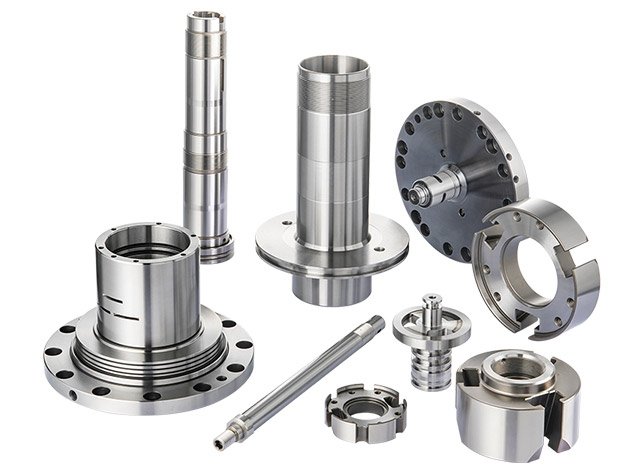
Precision CNC Machining for EV Motor Housings: Tight Tolerances Explained
Electric vehicle motor housings look simple from the outside, but they are among the most tolerance-sensitive aluminum structures in the e-drive system. The housing locates the stator, supports bearing seats, manages heat transfer, protects sealing interfaces, and connects the electric motor to the gearbox or integrated axle assembly. For global OEMs and Tier 1 suppliers, a few microns of variation can influence noise, vibration, efficiency, service life, and assembly yield. This is why precision CNC machining for EV motor housings is no longer a commodity operation. It is a manufacturing engineering discipline that connects casting strategy, datum control, fixture design, toolpath stability, metrology, and supply chain execution.
IndustryApex Technology, operating through IndustryApex CNC, supports engineered component programs where tolerance, repeatability, and delivery discipline must be managed together. Buyers evaluating suppliers for EV motor housing machining should not only ask whether a shop can hold a diameter or flatness callout on one sample. The more important question is whether the supplier can hold critical geometry across production lots, control thermal and clamping distortion, document process capability, and respond to design changes without destabilizing the supply chain. More details about IndustryApex Technology and IndustryApex CNC are available through the IndustryApex CNC precision manufacturing platform.
Executive Summary
EV motor housings require tight tolerance machining because the housing is the structural reference for the rotating assembly. Bearing bores, stator mounting surfaces, pilot diameters, sealing grooves, cooling channel interfaces, and bolt patterns all influence the final performance of the drive unit. Typical engineering priorities include coaxiality between bearing seats, cylindricity of large bores, perpendicularity between flange faces and shaft axes, flatness of cover interfaces, and controlled surface finish in sealing and heat transfer zones. The exact numbers depend on motor architecture, housing size, material, casting quality, and assembly method, but the tolerance stack is usually unforgiving.
From a manufacturing standpoint, the challenge is that EV motor housings are often thin-walled aluminum castings or forgings. They may arrive with residual stress, porosity risk, variable wall thickness, and nonuniform stock allowance. The part may move after roughing, after unclamping, or during temperature changes on the shop floor. A machining supplier therefore needs a process plan that separates roughing and finishing intelligently, defines stable datums, uses dedicated fixtures, and validates the process with coordinate measuring machines, air gauges, surface testers, and in-process inspection where appropriate.
For sourcing teams, the commercial risk is equally important. A low-cost quote can become expensive if the supplier cannot maintain yield, traceability, and engineering response speed. The best EV motor housing programs align machining capability with supply chain control: material readiness, casting supplier coordination, tooling life management, fixture maintenance, ERP-based scheduling, quality records, and export documentation. This is where an ODM and supply chain integrator can reduce friction for OEM and Tier 1 programs that need repeatable parts, not just isolated machining capacity.
Technical Deep Dive
The most critical feature family in an EV motor housing is usually the bearing and rotor alignment system. If the front and rear bearing bores are not coaxial, the rotor can operate with increased radial load, generating noise, heat, and reduced bearing life. Even when each bore is individually within diameter tolerance, the system can fail if the relationship between bores, end faces, and pilot features is not controlled. This is why geometric dimensioning and tolerancing is central to EV housing production. Position, runout, perpendicularity, cylindricity, and true profile controls often matter more than simple plus-minus dimensions.
Large stator bores introduce a different machining challenge. The stator must seat securely, transfer heat efficiently, and remain stable under thermal cycling. If the bore is oversized, heat transfer and retention can suffer. If it is undersized, assembly forces rise and stator distortion can occur. A common manufacturing strategy is to rough the main bore, allow the part to stabilize, and then finish the bore with a rigid, balanced tool under controlled cutting parameters. Tool deflection, insert wear, spindle thermal growth, and chip evacuation must be monitored because a small process drift can affect roundness and taper over a large diameter.
Flatness and sealing surfaces are equally important. EV motor housings often integrate coolant jackets, O-ring grooves, cover interfaces, and inverter or gearbox mating faces. A sealing face may require controlled flatness across a broad area, while an O-ring groove needs consistent width, depth, corner radius, and surface finish. Any local chatter mark, burr, or edge breakout can become a leak path. In production, deburring cannot be treated as cosmetic work. It must be engineered, especially around intersecting holes, coolant ports, cable outlets, and threaded features.
Thermal management drives many of the housing tolerances. Electric motors generate heat at the stator and power electronics interface, so the housing often functions as a heat path as well as a mechanical structure. Machined surfaces that contact cooling plates, sleeves, or stator laminations need stable geometry and predictable roughness. A rougher surface may increase microscopic contact gaps, while an overly polished surface may not support the intended assembly behavior depending on the joint design. Precision machining must therefore follow the design intent, not simply chase the lowest roughness number.
Material condition also matters. Aluminum alloys used for EV housings are selected for weight, thermal conductivity, castability, and mechanical performance. However, aluminum is sensitive to clamping pressure and temperature variation. Thin ribs, integrated cooling channels, and open pocket structures can distort under aggressive workholding. A mature CNC process uses fixture contact points that support the part near critical datums while avoiding overconstraint. Vacuum assistance, hydraulic clamping, soft jaws, custom nests, and modular locating systems may all be used, but the underlying principle is the same: the fixture must hold the part in a condition that represents the final assembled geometry.
Machine selection depends on part geometry and volume. Three-axis machining can handle many flange, drilling, and milling operations, but complex EV housings frequently benefit from 4-axis or 5-axis CNC machining to reduce refixturing and protect datum relationships. Fewer setups can improve positional accuracy, but only when the fixture and machine kinematics are validated. For deep bores and coaxial features, boring strategy, tool projection, spindle condition, and inspection feedback are decisive. EDM may be used for difficult internal details or tooling support, while precision grinding can support related shafts, sleeves, or tooling components. The supplier’s complete process capability matters because motor housing programs rarely involve only one part number in isolation.
Metrology closes the loop. A first article inspection report should confirm all critical characteristics, but production control needs more than one initial report. Process capability studies, control plans, gauge repeatability and reproducibility, tool offset records, and nonconformance analysis all help determine whether the supplier can hold tolerance at scale. For high-volume programs, inspection planning may include CMM programs with defined datum simulation, automated probing on the CNC machine, leak testing, thread gauging, surface roughness inspection, and statistical process control on critical bores. The goal is not inspection after failure. The goal is process knowledge before failure reaches assembly.
The ODM and Supply Chain Advantage

IndustryApex Technology’s value proposition is based on a practical identity: a supply chain integrator and ODM solution provider for precision engineered components. For EV motor housing projects, this means the discussion can start before the drawing is frozen. Manufacturability reviews can identify tolerance risks, datum ambiguity, insufficient machining allowance, sharp internal corners, problematic sealing transitions, or inspection features that are difficult to verify. Early collaboration helps OEM and Tier 1 teams prevent avoidable cost and schedule pressure after tooling and fixtures are already built.
The manufacturing edge comes from a fully controlled precision manufacturing system supported by ERP and more than 30 years of experience. ERP control is not just administrative software. In a demanding production environment, it links material status, routing, work orders, process documentation, inspection records, delivery schedules, and quality traceability. When an EV program enters ramp-up, this control helps protect delivery performance while engineering changes, tooling adjustments, and capacity planning are being managed. For global buyers, this reduces the uncertainty that often appears between prototype approval and stable serial production.
Technical capability also matters at the supplier network level. IndustryApex Technology supports 3-axis to 5-axis CNC machining, EDM, precision grinding, and industrial ceramics. This breadth is valuable because EV motor housing programs often connect to adjacent components such as shafts, sleeves, gearbox interfaces, cooling hardware, insulators, and specialized fixtures. A supplier that understands multiple precision processes can provide better design feedback and reduce the burden on the buyer’s internal sourcing team. It also allows the program to be managed as an engineered supply solution rather than a fragmented set of purchase orders.
For global OEMs and Tier 1 suppliers, the ODM advantage is strongest when quality, cost, and lead time must be balanced without losing engineering control. A motor housing may require casting supplier coordination, machining fixture development, leak test planning, cleaning validation, packaging design, and export-ready documentation. If each step is isolated, responsibility gaps appear. A supply chain integrator closes those gaps by managing technical risk across the full part journey. This model is especially valuable for customers seeking China-based precision manufacturing with English-language engineering communication, documented quality systems, and scalable production planning.
Industry Applications
EV motor housing expertise applies across passenger cars, commercial vehicles, electric buses, off-highway equipment, motorcycles, marine propulsion, and industrial electric drives. Passenger vehicle applications typically emphasize weight reduction, acoustic behavior, high-volume repeatability, and integration with gearbox or inverter housings. Commercial and off-highway platforms may prioritize durability, sealing, corrosion resistance, and service life under vibration and contamination. In each case, machining tolerances must reflect the operating environment rather than a generic precision target.
The same tolerance logic extends to adjacent powertrain and drivetrain components. Gearbox covers, reducer housings, differential cases, shaft supports, and bearing carriers all depend on accurate bore alignment and stable sealing surfaces. IndustryApex Technology’s experience in drivetrain-related precision components is reinforced by manufacturing knowledge relevant to hydraulic pump parts and fluid control components, where sealing, concentricity, and surface finish are also critical. Fluid systems and motor housings are different applications, but both punish uncontrolled geometry.
There are useful parallels with high-reliability industries as well. Aerospace components demand disciplined material control, multi-axis machining, and inspection rigor. Buyers can review IndustryApex Technology’s capabilities for aerospace CNC machining and aircraft structural components to understand how complex geometry and quality documentation are handled in demanding environments. Medical manufacturing offers another comparison because device parts, implants, and instruments require precision, surface control, and validated process consistency. IndustryApex Technology’s work in ISO certified CNC machining for medical components demonstrates similar discipline in traceability and fine-detail machining.
For EV sourcing teams, these cross-industry references matter because motor housing production is not only about making aluminum chips. It requires a supplier culture that understands risk, documentation, repeatability, and engineering communication. The most capable suppliers can move between industries while adapting process controls to the application. That flexibility is useful as electric powertrain platforms evolve and OEMs consolidate more functions into compact integrated housings.
Call to Action
Precision CNC machining for EV motor housings demands more than nominal machine capacity. It requires tolerance strategy, controlled fixturing, stable finishing processes, disciplined metrology, and a supply chain structure that can support prototype builds, engineering changes, and serial production. When bearing bores, stator seats, coolant interfaces, and sealing faces must work together, the manufacturing partner must understand the complete functional system.
IndustryApex Technology and IndustryApex CNC support global OEM and Tier 1 suppliers with ODM engineering support, controlled precision manufacturing, ERP-based production management, and capabilities across 3-axis to 5-axis CNC, EDM, precision grinding, and industrial ceramics. If your team is developing EV motor housings, reducer housings, bearing carriers, or related electric powertrain components, engage early so manufacturability, tolerance control, inspection planning, and delivery requirements can be aligned before production risk becomes expensive.
To discuss a new project, request a manufacturing review, or evaluate IndustryApex Technology as a precision supply chain partner, contact the engineering team through the IndustryApex CNC contact page.