- Shaft
- Molds&Tools
- Hydraulics And Pump
- Hair transplant needle
- Hydraulics And Pump
- Precision CNC Shaft Machining Manufacturer for High Performance Applications
- Energy Industry CNC Machining Parts Supplier
- Aerospace CNC Machining Parts Manufacturer
- Aerospace CNC Machining Parts Manufacturer
- Automotive & EV CNC Machining Parts Supplier for OEM and Tier 1
- Medical CNC Machining Parts Supplier for Precision Medical Devices

Navigating ISO Standards for Medical CNC Machined Parts: Engineering and Supply Chain Guide for OEMs

Executive Summary
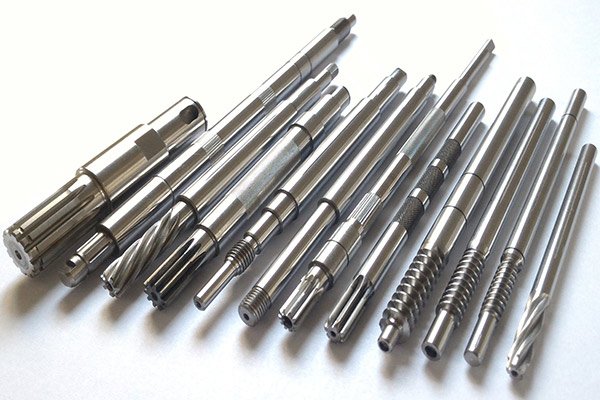
Medical CNC machined parts sit at the intersection of precision engineering, clinical risk management, and global supply chain control. For OEMs and Tier 1 suppliers developing surgical instruments, implantable components, diagnostic equipment, robotic surgery systems, and high-precision device assemblies, ISO compliance is not simply a certificate on a supplier profile. It is a manufacturing discipline that must be embedded into material selection, process validation, inspection planning, traceability, packaging, documentation, and supplier governance.
The most important standard for medical component manufacturing is ISO 13485, which defines the quality management system requirements for medical devices and related services. However, CNC machined medical parts also intersect with ISO 9001 quality management, ISO 14971 risk management principles, ISO 10993 biocompatibility considerations, ISO 14644 cleanroom expectations for controlled environments, and application-specific standards such as ASTM and ISO material specifications for titanium, stainless steel, cobalt-chrome, ceramics, and high-performance polymers. The challenge for procurement and engineering teams is to translate these standards into practical manufacturing controls: what must be measured, what must be recorded, what must be validated, and what must be reviewed before production release.
IndustryApex Technology, operating globally through IndustryApex CNC, supports medical OEMs by combining precision machining capability with an integrated supply chain model. Our role is not limited to machining a drawing. We help customers evaluate manufacturability, stabilize tolerances, align process controls with regulatory expectations, and manage repeatable production across complex part families. Learn more about our precision manufacturing platform at IndustryApex CNC and our dedicated ISO-certified CNC machining for medical components.
Technical Deep Dive
ISO standards for medical CNC machined parts begin with the concept of process control. A machined part may appear simple as a physical object, but in a regulated supply chain it is the result of a documented sequence: approved material source, controlled cutting process, validated finishing method, dimensional verification, surface integrity confirmation, cleaning, packaging, and traceable shipment. Any weak link can create downstream compliance risk for the device manufacturer.
ISO 13485 is the central quality management standard for organizations involved in medical device production. For a CNC machining supplier, it drives requirements around documented procedures, competence records, equipment maintenance, supplier control, nonconforming product handling, corrective and preventive action, production traceability, and customer communication. ISO 13485 places strong emphasis on risk-based thinking and regulatory alignment, meaning a machine shop must understand not only how to cut metal but also how each feature may affect device function, assembly, sterilization, or patient safety.
ISO 9001 remains relevant because it provides a broad quality management foundation. Many precision manufacturers maintain ISO 9001 as a baseline, but medical OEMs often require ISO 13485 when components have direct device relevance. The practical distinction is important: ISO 9001 focuses on customer satisfaction and process improvement, while ISO 13485 emphasizes regulatory compliance, risk management, and controlled documentation. For medical CNC parts, the supplier’s system must be able to demonstrate both manufacturing efficiency and compliance discipline.
ISO 14971 addresses risk management for medical devices. While the final device manufacturer owns the formal risk management file, the machining supplier contributes critical input. For example, burrs on a minimally invasive surgical jaw, micro-cracks in an implant component, poor surface finish on a fluid-contact part, or inconsistent thread geometry on an orthopedic screw can become device-level hazards. A capable supplier should understand critical-to-quality features and align inspection strategy accordingly.
ISO 10993 relates to biological evaluation of medical devices. CNC suppliers do not normally perform full biocompatibility testing unless specifically contracted, but machining practices can influence biocompatibility outcomes. Coolant residues, embedded abrasive particles, improper passivation, uncontrolled polishing compounds, or cross-contamination between materials can affect the biological response of a finished device. Therefore, material segregation, controlled deburring, validated cleaning, and documented surface finishing are essential for components used in implants or patient-contacting assemblies.
Material compliance is another core area. Titanium alloys such as Ti-6Al-4V, implant-grade stainless steels, cobalt-chrome alloys, PEEK, PPSU, and medical ceramics each demand different machining strategies. Titanium offers excellent strength-to-weight ratio and biocompatibility but is difficult to machine due to low thermal conductivity and work hardening. Stainless steels are familiar but can generate burrs and require careful passivation. PEEK and other polymers require attention to thermal deformation and chip control. Industrial ceramics can provide wear resistance and chemical stability, but they require grinding and specialized processing knowledge rather than conventional machining alone.
For medical parts, dimensional tolerances are only one aspect of quality. Surface roughness, edge condition, cleanliness, residual stress, microstructure preservation, and corrosion resistance may be equally important. A drawing may specify Ra values, sharp-edge breaks, radii, passivation, electropolishing, anodizing, or laser marking. The supplier must define how these requirements are achieved and verified. First article inspection, in-process inspection, final inspection, gauge R&R, and statistical process control may all be appropriate depending on the risk level and production volume.
Documentation is the practical language of ISO compliance. OEM buyers should expect material certificates, inspection reports, process travelers, heat treatment records, coating certificates, cleaning records, nonconformance reports where applicable, and change control documentation. For high-risk medical components, lot traceability should connect raw material batch, machining process, operator records, inspection data, and shipment information. This enables rapid containment if a quality issue is discovered later in the device lifecycle.
The ODM & Supply Chain Advantage
Medical OEMs increasingly need suppliers that can operate beyond traditional build-to-print machining. Development cycles are shorter, product portfolios are more customized, and regulatory expectations continue to rise. In this environment, IndustryApex Technology positions IndustryApex CNC as a supply chain integrator and ODM solution provider, supporting global OEM and Tier 1 suppliers from early manufacturability review through scalable production.
Our core identity is based on integration. A medical device part may require CNC milling, turning, EDM, precision grinding, surface finishing, heat treatment, cleaning, laser marking, and final assembly support. If these steps are fragmented across uncontrolled vendors, quality risk and lead-time uncertainty increase. By coordinating the manufacturing chain under a disciplined quality and ERP-managed system, we help customers reduce communication gaps, stabilize delivery, and maintain clear traceability.
IndustryApex Technology brings more than 30 years of manufacturing experience to complex precision components. Our fully controlled precision manufacturing system is supported by ERP process management, engineering review, production planning, inspection control, and supplier coordination. This matters because ISO compliance depends on repeatability. It is not enough to produce one excellent prototype. A supplier must repeatedly produce conforming parts under controlled conditions while preserving the documentation required for audits and regulatory submissions.
Our technical capabilities include 3-axis to 5-axis CNC machining, EDM, precision grinding, and industrial ceramics processing. 5-axis machining is particularly valuable for surgical tools, orthopedic instruments, robotic end-effectors, implant prototypes, and compact medical device housings where complex geometries must be produced with fewer setups. EDM supports small slots, fine profiles, hard materials, and delicate geometries. Precision grinding enables tight dimensional control, excellent surface finish, and high roundness or flatness requirements. Industrial ceramics capability expands options for wear-resistant, electrically insulating, chemically stable, or thermally robust components.

As an ODM partner, we also support design-for-manufacturing decisions that influence cost, quality, and compliance. A tolerance that is tighter than functionally necessary may increase scrap rate and validation burden. A sharp internal corner may require EDM instead of milling. A surface finish callout may require secondary polishing or grinding. A material selection may affect sterilization compatibility, corrosion resistance, or machining stability. By reviewing these choices early, we help engineering teams balance device performance with manufacturable, auditable production.
Supply chain continuity is equally important. Medical device manufacturers cannot tolerate unexpected material substitutions, undocumented process changes, or unstable lead times. Strong supplier governance includes approved vendor lists, change notification procedures, contingency planning, capacity management, and transparent communication. IndustryApex Technology’s integrated model is designed to support long-term programs, not one-time transactions. Whether a customer is scaling a new surgical platform or transferring mature production for cost and resilience, our approach helps reduce operational risk.
The same precision culture required in medical manufacturing also supports demanding industries such as aerospace CNC machining and hydraulic pump parts, where traceability, tolerance control, and material discipline are also critical. This cross-industry experience strengthens our ability to solve difficult engineering and supply chain problems for regulated customers.
Industry Applications
ISO-aligned CNC machining supports a broad range of medical and life science applications. Each category has different risk levels, materials, tolerances, and documentation needs, so supplier selection should be based on both capability and process maturity.
Orthopedic and implant-related components often use titanium, cobalt-chrome, stainless steel, or advanced polymers. These parts may include trial instruments, implant prototypes, bone plates, spinal components, fixation elements, and surgical guides. Key concerns include biocompatibility, surface finish, burr control, fatigue performance, and traceability back to certified material lots.
Surgical instruments require reliable tactile performance, corrosion resistance, cleaning compatibility, and repeatable geometry. Forceps, clamps, drill guides, cutting instruments, endoscopic tools, and robotic surgical components may contain small features, thin walls, tight mating interfaces, or complex multi-axis surfaces. Edge quality is particularly important because burrs can interfere with function or create cleaning challenges.
Diagnostic and analytical equipment uses machined parts in sample handling, optical positioning, microfluidic support, pump mechanisms, laboratory automation, and imaging systems. These components may not contact patients directly, but they often require high dimensional stability and clean surfaces to ensure instrument accuracy. Material choices may include aluminum, stainless steel, engineering plastics, ceramics, and specialty alloys.
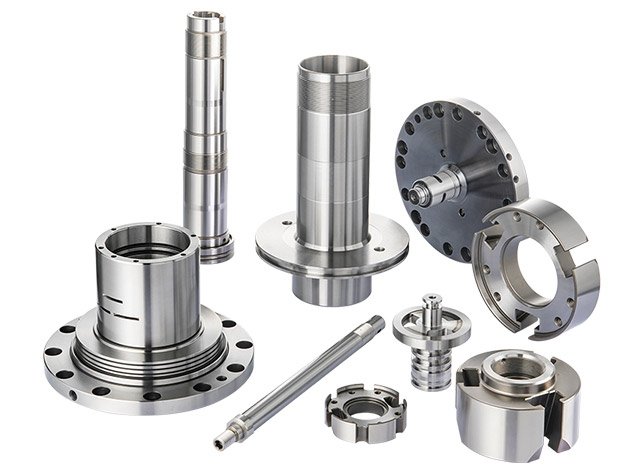
Robotic surgery and minimally invasive systems demand compact, lightweight, and high-precision parts. Components may include miniature housings, articulating joints, shafts, drive elements, end-effectors, and sensor mounts. 5-axis CNC machining, EDM, and precision grinding are often required to achieve the necessary geometry and repeatability. In this field, suppliers must understand not only part tolerances but also assembly stack-up, motion control, and sterilization exposure.
Fluid management and drug delivery devices may require small channels, valve seats, pump components, fittings, nozzles, and sealing surfaces. Surface finish, cleanliness, and dimensional control directly affect leakage, flow stability, and particle generation. For these applications, controlled deburring and cleaning are essential, especially when small internal features are difficult to inspect visually.
Dental and laboratory components include implant tooling, abutment-related parts, fixtures, scan-body components, and automation hardware. These applications often require precision machining of titanium, stainless steel, zirconia-related tooling, or high-performance plastics. Repeatability matters because dental workflows increasingly depend on digital manufacturing and tightly integrated assembly systems.
Across these applications, the common requirement is not only machining accuracy but also a supplier culture capable of supporting audits, engineering changes, corrective actions, and lifecycle production. For global OEMs and Tier 1 suppliers, selecting a partner with ISO-oriented systems can reduce qualification delays and improve confidence during production scale-up.
Call to Action
Navigating ISO standards for medical CNC machined parts requires more than checking a compliance box. It requires an engineering partner that understands how standards become real manufacturing controls: documented processes, validated inspection, material traceability, disciplined change management, and stable supply chain execution.
IndustryApex Technology, through IndustryApex CNC, supports medical OEMs and Tier 1 suppliers with precision CNC machining, EDM, grinding, industrial ceramics capability, ODM engineering support, and integrated supply chain management. If your team is developing titanium implants, surgical instruments, diagnostic equipment parts, robotic surgery components, or other high-precision medical device components, we can help evaluate manufacturability, reduce production risk, and build a scalable quality pathway.
Explore our medical manufacturing capabilities at IndustryApex CNC Medical Parts, or contact us to discuss drawings, materials, tolerances, documentation requirements, and production timelines. Our engineering and supply chain teams are ready to support your next medical CNC machining program from prototype to qualified production.