- Shaft
- Molds&Tools
- Hydraulics And Pump
- Hair transplant needle
- Hydraulics And Pump
- Precision CNC Shaft Machining Manufacturer for High Performance Applications
- Energy Industry CNC Machining Parts Supplier
- Aerospace CNC Machining Parts Manufacturer
- Aerospace CNC Machining Parts Manufacturer
- Automotive & EV CNC Machining Parts Supplier for OEM and Tier 1
- Medical CNC Machining Parts Supplier for Precision Medical Devices

Why Choose China for High-Precision CNC Shaft Machining? Engineering and Supply Chain Analysis for Global OEMs

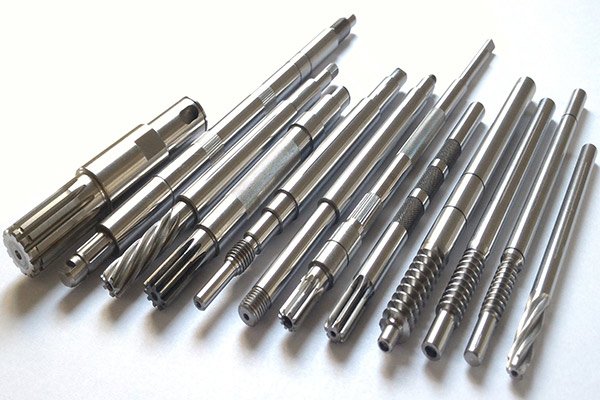
Why Choose China for High-Precision CNC Shaft Machining?
For global OEMs and Tier 1 suppliers, high-precision CNC shaft machining is no longer a simple purchasing category. It is a strategic decision involving dimensional accuracy, material stability, process control, lead-time reliability, cost structure, and supplier engineering depth. China has become one of the most competitive manufacturing locations for precision shaft components because it combines mature CNC capacity, integrated supply chains, specialized finishing processes, advanced inspection systems, and scalable production economics.
As IndustryApex Technology, operating through IndustryApex CNC, we support international buyers who need custom shaft parts, splined shafts, eccentric shafts, pump shafts, motor shafts, transmission shafts, medical drive shafts, and aerospace-grade rotating components. Our role is not only to machine parts, but to act as a supply chain integrator and ODM solution provider for complex, high-tolerance CNC components. Learn more about our broader manufacturing capabilities at IndustryApex CNC.
1. Executive Summary
China is often selected for high-precision CNC shaft machining because it offers a rare combination of engineering capability, manufacturing scale, material sourcing depth, process flexibility, and export experience. For companies in aerospace, medical devices, hydraulics, robotics, automotive systems, industrial automation, energy equipment, and semiconductor-related machinery, precision shafts are mission-critical components. A dimensional deviation of only a few microns can influence bearing fit, torque transmission, vibration, sealing performance, fatigue life, and assembly reliability.
The strongest Chinese precision machining suppliers have moved far beyond basic turning services. They now operate controlled manufacturing systems that include 3-axis, 4-axis, and 5-axis CNC machining, Swiss-type turning, CNC grinding, EDM, deep-hole machining, gear cutting, spline machining, heat treatment coordination, surface finishing, and metrology laboratories. This makes China particularly attractive when the project requires multi-process integration rather than a single machining operation.
For global buyers, the key question is not simply whether China is cheaper. The more important question is whether a China-based machining partner can reduce total supply chain risk while meeting strict engineering requirements. The answer depends on supplier selection. A qualified partner should demonstrate drawing review capability, tolerance feasibility analysis, DFM support, material traceability, process documentation, inspection reporting, export packaging, and responsiveness during engineering changes.
IndustryApex Technology positions itself around this requirement. With more than 30 years of manufacturing experience, a fully controlled precision manufacturing system supported by ERP, and capabilities across CNC machining, EDM, precision grinding, and industrial ceramics, we serve global OEM and Tier 1 customers who need stable, repeatable, and scalable production of precision parts. For shaft machining in particular, this means we control the key variables that determine long-term part performance: concentricity, straightness, roundness, surface roughness, hardness, runout, and balance-related geometry.
2. Technical Deep Dive
High-precision CNC shaft machining is a demanding discipline because shaft components are usually functional surfaces, not merely structural parts. A shaft may transfer torque, guide linear motion, support rotating assemblies, seal hydraulic pressure, drive a medical instrument, or align aerospace mechanisms. Therefore, machining strategy must be designed around the real operating function of the component.
The first engineering consideration is material behavior. Common shaft materials include carbon steel, alloy steel, stainless steel, tool steel, aluminum alloys, titanium alloys, brass, bronze, engineering plastics, tungsten carbide, and advanced ceramics. Each material has different cutting characteristics. For example, stainless steel may generate work hardening and require stable cutting parameters. Titanium offers high strength-to-weight ratio but poor thermal conductivity, making tool wear and heat control critical. Hardened steel shafts may require precision grinding after heat treatment to achieve final tolerances and surface finish.
The second consideration is geometry. Precision shafts often include journals, shoulders, grooves, keyways, splines, threads, cross holes, flats, tapers, eccentric sections, internal bores, and surface relief features. A basic turning center may be sufficient for simple cylindrical shafts, but complex shafts often require mill-turn machining, 4-axis indexing, 5-axis machining, EDM, broaching, hobbing, or grinding. Choosing the correct process route is essential for controlling cumulative error.
Concentricity and runout control are among the most critical quality factors. If a shaft has multiple bearing journals, the machining datum strategy must ensure that these surfaces are produced with minimal relative error. In many cases, the process may involve rough turning, stress relief, semi-finishing, heat treatment, straightening if required, finish turning, cylindrical grinding, and final inspection. For tight runout requirements, centers, soft jaws, custom fixtures, and in-process probing may be used to maintain datum consistency.
Surface roughness is equally important. A hydraulic valve spool shaft, for example, may require a very fine finish to reduce leakage and friction. A motor shaft may require controlled surface texture for bearing performance. A medical shaft may require burr-free edges, cleanability, and corrosion resistance. Depending on application, post-processing may include grinding, polishing, lapping, passivation, anodizing, nitriding, carburizing, hard chrome plating, black oxide, electroless nickel plating, or special coatings.
Dimensional inspection must match the part function. Calipers and micrometers are not enough for advanced shaft manufacturing. Precision shafts often require roundness testers, CMM inspection, height gauges, air gauges, profile projectors, surface roughness testers, hardness testers, thread gauges, spline gauges, concentricity fixtures, and optical measurement systems. For export OEM work, inspection reports should reference drawing characteristics, tolerances, measurement tools, sampling plans, and traceable results.
From a manufacturing engineering perspective, China’s advantage comes from the availability of both core machining and secondary process suppliers within close industrial clusters. A shaft can move efficiently from CNC turning to heat treatment, grinding, spline cutting, coating, and final inspection without long intercontinental logistics loops. This shortens development cycles and allows faster response when prototype feedback requires modification.
3. The ODM and Supply Chain Advantage
Many overseas buyers initially evaluate China as a machining destination because of cost competitiveness. However, the deeper advantage is supply chain integration. Precision shaft production rarely depends on machining alone. It often requires material procurement, process engineering, tooling design, fixture development, heat treatment, grinding, surface finishing, cleaning, packaging, and export coordination. A supplier that can integrate these activities reduces project complexity for the customer.
IndustryApex Technology’s core identity is that of a supply chain integrator and ODM solution provider. This is especially valuable for customers that have a functional requirement but need support converting it into a manufacturable design. During the early phase, we can review drawings, identify high-risk tolerances, recommend datum strategies, evaluate material alternatives, and propose process routes. This helps customers avoid unnecessary cost drivers while preserving the performance characteristics that matter most.
Our manufacturing edge is built on a fully controlled precision manufacturing system supported by ERP and more than 30 years of production experience. ERP control is important because shaft manufacturing involves many process steps and traceability requirements. Work orders, materials, inspection stages, outsourcing steps, delivery dates, and quality records must be coordinated accurately. For global OEMs, this improves transparency and reduces the risk of missed specifications or delayed shipments.
Technically, our capabilities cover 3-axis to 5-axis CNC machining, EDM, precision grinding, and industrial ceramics. These capabilities allow us to support more than conventional steel shafts. We can manufacture complex components with milled features, precise slots, fine holes, hardened surfaces, ceramic wear sections, and tight-tolerance ground journals. When parts require multiple materials or special performance characteristics, our engineering team can help determine whether metal, ceramic, carbide, or hybrid solutions are most appropriate.
The ODM aspect is increasingly important in B2B manufacturing. Global OEMs and Tier 1 suppliers may not always want a vendor that simply follows a drawing without comment. They need a partner that understands manufacturability, risk control, tolerance stack-up, assembly fit, and lifecycle cost. For example, a shaft design may include an extremely tight tolerance on a non-functional diameter, increasing cost without improving performance. Alternatively, a drawing may lack a geometric tolerance needed to control assembly vibration. A competent ODM partner identifies these issues early.
China also offers strong scalability. A project can start with engineering samples, move to small-batch validation, then expand to recurring production. Because the supplier ecosystem is dense, capacity can be planned around turning centers, milling centers, grinding machines, inspection equipment, and finishing partners. This supports both low-volume high-mix projects and higher-volume production programs.
For international procurement teams, the business case often includes landed cost, lead time, supplier responsiveness, quality consistency, and engineering communication. Choosing China for shaft machining works best when the supplier is able to provide structured project management, stable English technical communication, export documentation, and proactive issue resolution. This is where IndustryApex Technology aims to create long-term value for global industrial customers.
4. Industry Applications
High-precision CNC shaft machining is used across industries where motion, alignment, torque, pressure, or precision guidance is required. The application determines the manufacturing priorities. A transmission shaft may prioritize torque capacity and spline accuracy. A hydraulic shaft may prioritize surface finish and sealing performance. A medical shaft may prioritize cleanliness, biocompatibility, and miniature geometry. An aerospace shaft may prioritize weight reduction, fatigue resistance, and material traceability.
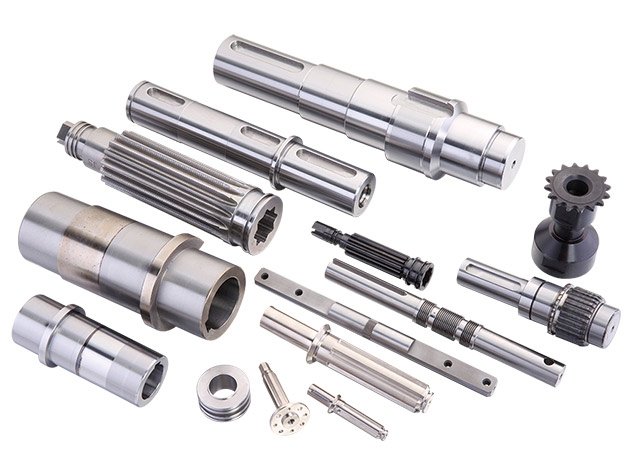
In aerospace applications, shafts and rotating components may be used in actuation systems, landing gear mechanisms, control systems, turbine-related assemblies, and structural mechanisms. These parts often require advanced materials such as titanium, stainless steel, or high-strength alloys, along with strict inspection and documentation. Customers seeking related expertise can review our aerospace CNC machining capabilities.
In medical and life science equipment, precision shafts may be found in surgical tools, diagnostic instruments, implant manufacturing equipment, robotic-assisted systems, dental devices, and miniature drive mechanisms. Medical shaft machining may require tight tolerances, smooth surfaces, burr control, corrosion-resistant materials, and careful cleaning. More information is available on our medical CNC machining solutions.
Hydraulic and pump systems depend heavily on shafts, spools, sleeves, pistons, and rotating pump elements. These parts must control leakage, maintain pressure, resist wear, and operate reliably under continuous load. Precision grinding, surface treatment, and accurate roundness control are often essential. For customers in fluid power and pump manufacturing, our hydraulic and pump parts manufacturing capabilities provide relevant process experience.
In automotive, drivetrain, robotics, and industrial automation, shaft components are used in motors, gearboxes, actuators, couplings, sensors, conveyors, and transmission assemblies. These industries often require a balance between precision and cost efficiency. China’s machining ecosystem is well suited for this balance because suppliers can combine automated CNC production, dedicated fixtures, tool-life management, and statistical quality control.
Energy, agricultural machinery, construction equipment, and heavy industry also rely on precision shafts. These applications often place emphasis on durability, wear resistance, heat treatment, and reliable supply. For large or heavy-duty shafts, machining strategy must address distortion, residual stress, and long-part support during turning and grinding. For smaller high-speed shafts, balance, runout, and surface finish become more critical.
Across all these industries, the central requirement is repeatability. A prototype that meets tolerance once is useful, but a production system that holds tolerance consistently across batches is what global OEMs need. This is why process documentation, inspection discipline, and controlled supply chain management are as important as machine tool capability.
5. Call to Action
Choosing China for high-precision CNC shaft machining can deliver major advantages in engineering flexibility, cost competitiveness, lead-time efficiency, and supply chain integration. But the result depends on selecting a partner with the right technical depth and quality discipline. The best supplier is not simply the lowest-cost machine shop. It is a manufacturing partner that understands your application, manages process risk, controls quality, and supports your procurement team from prototype through production.
IndustryApex Technology, through IndustryApex CNC, supports global OEM and Tier 1 customers with precision machining, ODM engineering support, ERP-controlled manufacturing, and integrated supply chain execution. Whether you need a prototype shaft for validation, a complex splined shaft for a transmission assembly, a ground hydraulic shaft, a titanium aerospace component, or a miniature medical device shaft, our team can help evaluate manufacturability and develop a practical production plan.
If you are reviewing suppliers for your next precision shaft project, send us your drawings, material requirements, annual volume, tolerance expectations, and application background. Our engineering team will review the project and provide technical feedback, process recommendations, and a quotation path. Start the conversation through our Contact Us page.