- Shaft
- Molds&Tools
- Hydraulics And Pump
- Hair transplant needle
- Hydraulics And Pump
- Precision CNC Shaft Machining Manufacturer for High Performance Applications
- Energy Industry CNC Machining Parts Supplier
- Aerospace CNC Machining Parts Manufacturer
- Aerospace CNC Machining Parts Manufacturer
- Automotive & EV CNC Machining Parts Supplier for OEM and Tier 1
- Medical CNC Machining Parts Supplier for Precision Medical Devices

Hydraulic Pump Parts: Ensuring Reliability through Precision Grinding


Executive Summary
Hydraulic pumps operate at the center of motion, lifting, clamping, steering, pressing, braking, and power transmission systems across demanding industrial platforms. In these applications, reliability is not determined only by pump design; it is determined by the precision of every mating surface, sealing land, bore, shaft journal, valve interface, rotor, piston shoe, and wear plate inside the assembly. When hydraulic pump parts are not manufactured to the correct geometry, surface finish, flatness, roundness, and dimensional stability, the result is leakage, pressure loss, vibration, heat generation, accelerated wear, and premature field failure.
Precision grinding is one of the most important manufacturing processes for hydraulic pump components because it converts machined blanks into functional sealing, rotating, and sliding surfaces capable of operating under high pressure and continuous duty cycles. For global OEMs and Tier 1 suppliers, grinding quality directly affects pump efficiency, service life, warranty exposure, and brand reputation.
IndustryApex Technology, operating under the IndustryApex CNC platform, supports manufacturers that require high-reliability hydraulic components through a fully controlled precision manufacturing system. As a supply chain integrator and ODM solution provider, IndustryApex combines 3-axis to 5-axis CNC machining, EDM, precision grinding, industrial ceramics, quality planning, and ERP-controlled production management. This integrated model helps customers reduce sourcing complexity while improving repeatability from prototype to mass production.
This article analyzes why precision grinding is essential for hydraulic pump parts, what engineering variables affect performance, and how a vertically coordinated manufacturing partner can help OEMs strengthen both component reliability and supply chain resilience. For more information about IndustryApex Technology capabilities, visit IndustryApex CNC.
Technical Deep Dive
Hydraulic pumps convert mechanical energy into hydraulic energy by moving fluid under pressure. Whether the system uses axial piston pumps, radial piston pumps, gear pumps, vane pumps, or high-pressure metering units, the internal components must maintain extremely controlled clearances. A few microns of deviation can influence volumetric efficiency, noise, friction, and durability.
Key hydraulic pump parts that frequently require precision grinding include drive shafts, valve plates, cylinder blocks, pistons, piston shoes, swash plates, slipper retainers, bearing seats, gear faces, rotor surfaces, sleeves, spools, thrust plates, sealing faces, and wear plates. These components often operate with thin lubricating films under variable loads. If a sealing surface is too rough, it accelerates wear. If it is too smooth without the correct bearing pattern, it may create adhesion or insufficient oil retention. If flatness is inconsistent, leakage paths form. If roundness and cylindricity are poor, rotating assemblies generate vibration and localized contact stress.
Precision grinding addresses these risks by controlling geometry and surface texture after heat treatment or near-final machining. Unlike general CNC milling or turning, grinding uses abrasive cutting to remove small amounts of material with high dimensional accuracy. This is especially important for hardened steels, carburized surfaces, nitrided parts, stainless steels, tool steels, ceramics, tungsten carbide, and other difficult-to-machine materials commonly used in high-pressure hydraulic systems.
Several grinding parameters are critical. Flatness is essential for valve plates and wear plates because these surfaces must form a stable sealing interface while allowing controlled lubrication. Parallelism is vital for stacked components and thrust surfaces because uneven loading can cause bending, heat, and early failure. Roundness and cylindricity are necessary for shafts, sleeves, bores, and pistons, where radial runout affects sealing and vibration. Surface roughness, often specified as Ra, Rz, or bearing area parameters, must be matched to the operating function of the part. In hydraulic components, the lowest roughness value is not always the best; the ideal surface supports fluid film formation, sealing, and wear resistance.
Thermal control is another major consideration. Grinding generates heat at the contact zone between the wheel and workpiece. If heat is not controlled, the component may suffer grinding burn, microcracking, residual tensile stress, hardness reduction, or dimensional distortion. For pump components exposed to cyclic pressure and sliding contact, these defects can initiate fatigue failure. Proper coolant delivery, wheel selection, dressing strategy, feed rate, and in-process measurement are therefore essential for stable quality.
Material behavior also matters. Hardened bearing steels may require different wheel specifications than stainless hydraulic components. Carbide and ceramic pump-related parts require specialized grinding methods due to brittleness and high hardness. Components with coatings or surface treatments require process planning to avoid damaging functional layers. IndustryApex Technology applies engineering review at the process-planning stage to align material, heat treatment, grinding allowance, fixturing, and inspection strategy before production begins.
Inspection is not an afterthought. Reliable hydraulic pump components require dimensional reports, surface finish measurement, hardness verification, profile control, and geometric tolerance validation. Depending on the part, quality control may include CMM inspection, roundness testing, air gauging, optical measurement, height measurement, contour checking, and surface roughness testing. For high-volume programs, statistical process control and ERP-linked production records help identify drift before it becomes a shipment risk.
Precision grinding is therefore not simply a finishing process. It is a reliability engineering process that determines whether a hydraulic pump can maintain pressure, efficiency, and service life in the field.
The ODM & Supply Chain Advantage
For global OEMs and Tier 1 suppliers, the challenge is not only to manufacture a precise hydraulic pump component. The real challenge is to manufacture it repeatedly, document it correctly, deliver it on time, and adapt quickly when drawings, volumes, materials, or operating requirements change. This is where IndustryApex Technology’s role as a supply chain integrator and ODM solution provider becomes strategically valuable.
IndustryApex Technology combines more than 30 years of manufacturing experience with a fully controlled precision manufacturing system. The company supports customers through early-stage manufacturability review, material selection, process development, prototype machining, precision grinding, inspection planning, and production scaling. Through ERP-based production management, IndustryApex improves traceability across purchasing, machining, grinding, heat treatment coordination, quality control, and shipment scheduling.
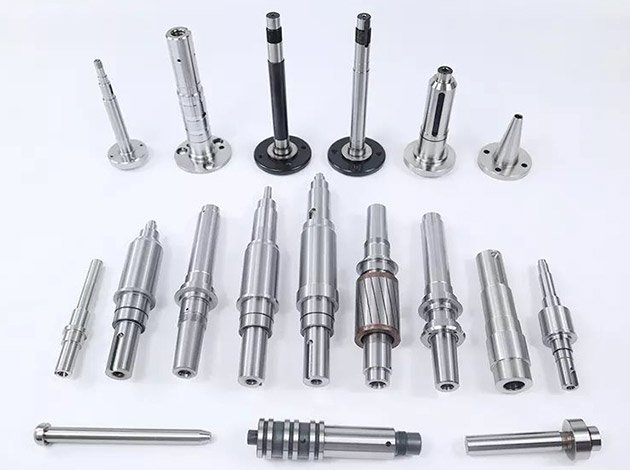
Many hydraulic pump parts require multiple manufacturing technologies. A shaft may need CNC turning, milling, spline machining, heat treatment, cylindrical grinding, thread grinding, and final inspection. A valve plate may require milling, drilling, lapping or surface grinding, deburring, flatness inspection, and surface finish validation. A precision sleeve may require boring, honing, internal grinding, and close-tolerance matching. Managing these operations through disconnected suppliers increases the risk of tolerance stack-up, communication gaps, schedule delays, and inconsistent accountability.
IndustryApex reduces these risks by integrating key processes under a coordinated engineering and supply chain framework. Core capabilities include 3-axis, 4-axis, and 5-axis CNC machining; EDM for complex profiles and hard materials; precision grinding for critical sealing and motion surfaces; and industrial ceramic component manufacturing for high-wear or corrosion-resistant applications. This capability set allows IndustryApex to support both metal and advanced material solutions for demanding fluid power systems.
As an ODM partner, IndustryApex can also assist customers that need more than build-to-print manufacturing. Engineering teams can review functional requirements, identify manufacturability risks, recommend tolerance strategies, propose material alternatives, and design production methods that balance performance, cost, and scalability. This is especially important when a hydraulic component must be localized, redesigned for supply security, or optimized for a new generation of pump platforms.
The supply chain advantage becomes even stronger when customers source related high-precision components across multiple industries. IndustryApex Technology also supports sectors where similar process discipline is required, including aerospace CNC machining and medical component machining. The manufacturing culture required for aerospace and medical parts—process control, documentation, dimensional discipline, and material traceability—translates directly into higher confidence for hydraulic pump programs.
For OEM purchasing teams, this means fewer suppliers to qualify, clearer accountability, and better coordination between design intent and manufacturing execution. For engineering teams, it means access to practical production feedback before drawings become expensive to change. For operations teams, it means improved continuity from sampling to serial supply.
Industry Applications
Hydraulic pump parts manufactured through precision grinding are used across industries where power density, control, and reliability matter. In construction machinery, pumps must withstand shock loads, contamination risk, temperature variation, and long duty cycles. Excavators, loaders, cranes, drilling rigs, and concrete pumping systems depend on hydraulic components that maintain efficiency even under severe operating conditions.
In agricultural equipment, hydraulic pumps support steering, lifting, implement control, transmission functions, and harvesting systems. These machines often operate in dusty, wet, and remote environments where downtime during peak seasons is extremely costly. Precision-ground pump parts help reduce leakage, maintain predictable response, and extend service intervals.
In industrial automation and machine tools, hydraulic systems are used for clamping, pressing, injection, forming, lifting, and controlled motion. These applications require stable pressure and repeatable movement. Components such as ground shafts, spools, sleeves, valve plates, and piston assemblies must maintain dimensional consistency to ensure predictable system behavior.
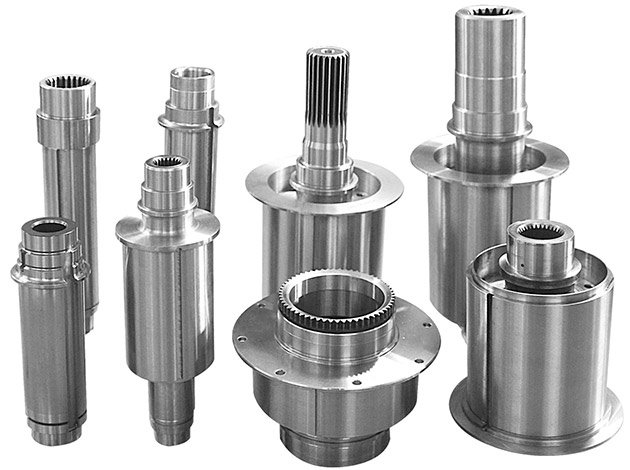
In energy and heavy industry, hydraulic pumps are used in wind power maintenance systems, mining equipment, steel production, marine systems, and oil and gas machinery. These environments impose heavy loads and often require components with enhanced wear resistance, corrosion resistance, or high-temperature performance. Precision grinding enables tight control of mating surfaces even when advanced alloys, hardened steels, carbide, or ceramic materials are used.
In transportation and specialty vehicles, hydraulic pumps support braking, steering, suspension, lifting platforms, and auxiliary equipment. Reliability requirements are high because pump failure can affect safety, productivity, or regulatory compliance. The same manufacturing principles used in critical sectors—controlled process windows, robust inspection, and documented quality—are essential for these applications.
Hydraulic systems also overlap with advanced fluid control assemblies, including valve blocks, sleeves, spools, metering parts, and actuator components. IndustryApex Technology’s dedicated hydraulic and pump component capability can be reviewed at Hydraulic Pump Parts, where OEMs and Tier 1 buyers can explore precision manufacturing support for fluid power applications.
Call to Action
Hydraulic pump reliability begins long before final assembly. It begins with material selection, tolerance planning, process control, precision grinding, and inspection discipline at the component level. For OEMs and Tier 1 suppliers, choosing the right manufacturing partner can reduce leakage risk, improve pump efficiency, extend field life, and simplify supply chain management.
IndustryApex Technology provides an integrated solution for high-precision hydraulic pump parts, combining decades of manufacturing experience with CNC machining, EDM, precision grinding, industrial ceramics, ERP-managed production, and ODM engineering support. Whether your project involves prototype development, supplier localization, cost optimization, or serial production, IndustryApex can help convert demanding technical requirements into stable manufactured components.
To discuss drawings, materials, tolerances, annual demand, or a custom hydraulic component program, contact the IndustryApex Technology engineering team today through Contact Us. Partner with IndustryApex CNC to build hydraulic pump parts that perform reliably where precision matters most.