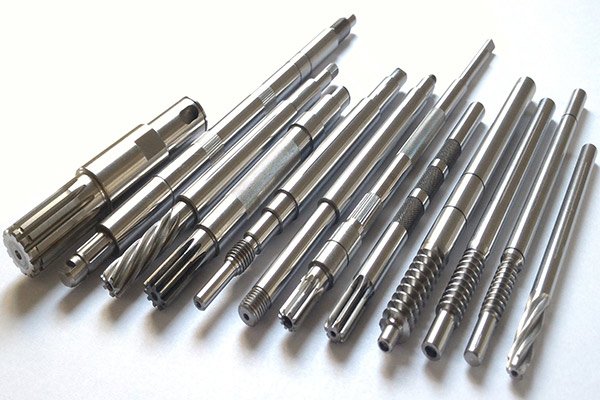
- Shaft
- Molds&Tools
- Hydraulics And Pump
- Hair transplant needle
- Hydraulics And Pump
- Precision CNC Shaft Machining Manufacturer for High Performance Applications
- Energy Industry CNC Machining Parts Supplier
- Aerospace CNC Machining Parts Manufacturer
- Aerospace CNC Machining Parts Manufacturer
- Automotive & EV CNC Machining Parts Supplier for OEM and Tier 1
- Medical CNC Machining Parts Supplier for Precision Medical Devices
The Role of Supply Chain Integrators in Agile Manufacturing: Engineering Control, ODM Execution, and OEM Resilience

Executive Summary
Agile manufacturing is no longer defined only by how quickly a factory can machine, assemble, or ship a component. For global OEMs and Tier 1 suppliers, agility now depends on how effectively engineering, sourcing, process control, quality assurance, and logistics are integrated into one responsive operating model. This is where supply chain integrators create measurable competitive advantage. A supply chain integrator does more than purchase parts or manage vendors; it connects design intent, manufacturing capability, production scheduling, quality documentation, and delivery commitments into a controlled system that can adapt to volatility without sacrificing precision.
At IndustryApex Technology, operating through IndustryApex CNC, this model is built around a core identity as a supply chain integrator and ODM solution provider for precision engineered components. The value is especially significant when customers require low-volume prototypes, high-mix production, tight-tolerance machining, hard-to-process materials, and rapid design iteration. In aerospace, medical devices, hydraulic systems, semiconductor equipment, automotive engineering, and industrial automation, OEMs increasingly need partners that can reduce supplier fragmentation while improving technical accountability.
The traditional supply chain model separates design, machining, heat treatment, grinding, inspection, finishing, and export coordination across multiple parties. Each handoff adds risk: incomplete technical communication, tolerance stack-up issues, schedule drift, duplicated quality checks, and unclear ownership when a problem appears. An integrated model compresses these interfaces. Engineering teams, CNC machining departments, EDM specialists, precision grinding technicians, ceramic processing experts, quality inspectors, and procurement planners operate within a unified workflow. With ERP-supported production visibility and more than 30 years of manufacturing experience, IndustryApex Technology helps customers move from reactive sourcing to proactive manufacturing strategy.
This article examines the technical role of supply chain integrators in agile manufacturing, explains how ODM capability changes the supplier relationship, and highlights industry applications where integration directly improves cost, lead time, reliability, and design scalability.
Technical Deep Dive
Agile manufacturing begins with information discipline. A technically capable supplier may own advanced equipment, but a supply chain integrator must also control the data that drives the equipment. Drawings, 3D models, GD&T specifications, material standards, inspection requirements, revision histories, and special process instructions must be translated into manufacturable process plans. When this translation is weak, agility becomes cosmetic: parts may start quickly, but delays emerge during fixture design, tool selection, secondary processing, or final inspection.
A mature integrator evaluates each project through a manufacturing feasibility lens. This includes material machinability, datum strategy, clamping deformation risk, thermal distortion, tool access, burr control, surface finish, and post-process stability. For example, a titanium aerospace bracket may require 5-axis machining to reduce setups, maintain positional accuracy, and improve repeatability. A hardened pump component may require EDM followed by precision grinding to achieve sealing performance. A ceramic component may require specialized grinding methods because brittle materials behave differently from aluminum, stainless steel, or tool steel. These decisions are not isolated shop-floor choices; they determine purchasing, scheduling, inspection planning, and delivery risk.
In agile manufacturing, the most important technical function of an integrator is to reduce iteration waste. Early-stage engineering projects often contain tolerance assumptions that are theoretically possible but commercially inefficient. A hole position tolerance, flatness callout, or surface roughness requirement may drive unnecessary cost if it is not tied to actual functional performance. By providing design-for-manufacturability feedback, an ODM-oriented integrator can recommend geometry changes, alternative materials, improved datum structures, or more stable process routes. This shortens the distance between concept and qualified production.
Another critical role is process orchestration. Precision components often require multiple operations: CNC milling, CNC turning, wire EDM, sinker EDM, precision grinding, honing, lapping, heat treatment, coating, cleaning, laser marking, and full dimensional inspection. If each operation is managed separately, the supply chain becomes slow and opaque. A supply chain integrator builds a route map that sequences these operations according to technical dependency. For example, rough machining may precede stress relief; finishing may occur after heat treatment; grinding may be reserved for final geometry; and coating allowance must be built into the drawing review. This creates manufacturing agility because the project team can anticipate bottlenecks before they become shipment delays.
Quality control is another foundation. Agile does not mean informal. In precision manufacturing, fast response must be supported by controlled measurement. Coordinate measuring machines, optical inspection, surface roughness testing, hardness testing, gauge design, and statistical process control all contribute to repeatable delivery. For regulated or mission-critical industries, inspection records, material certificates, process traceability, and revision control are as important as the physical parts. Integrators that combine manufacturing execution with quality documentation reduce customer workload and accelerate internal approval at the OEM or Tier 1 level.
ERP systems strengthen this model by linking quotations, material planning, work orders, machine capacity, inspection status, and shipment scheduling. When ERP data is connected to engineering and production decisions, customers benefit from realistic lead times rather than optimistic promises. The integrator can identify whether the constraint is raw material availability, 5-axis machine capacity, grinding queue, outside finishing, or final inspection. This transparency is essential for agile manufacturing because it supports fast decision-making under changing demand conditions.
The ODM & Supply Chain Advantage
The strongest supply chain integrators are not simply trading companies or machining vendors. They operate as engineering-led ODM solution providers with direct control over critical manufacturing resources. IndustryApex Technology’s edge is based on a fully controlled precision manufacturing system supported by ERP, over 30 years of experience, and a broad technical platform that includes 3-5 axis CNC machining, EDM, precision grinding, and industrial ceramics. This combination allows global OEM and Tier 1 customers to consolidate complex component requirements with one accountable partner.
ODM capability changes the commercial relationship. Instead of waiting for the customer to define every process detail, the supplier contributes engineering judgment. In practice, this means IndustryApex Technology can help customers refine component structure, select practical materials, improve manufacturability, and establish production-ready specifications. For early-stage products, this reduces engineering burden. For mature products, it can reduce cost, stabilize quality, and improve scalability. For replacement or localization projects, it allows customers to transition from legacy supplier dependency to a more flexible and controlled sourcing model.
Supply chain integration also improves supplier risk management. Many OEMs have learned that having a long supplier list does not necessarily create resilience. If each supplier controls only one narrow process, the customer must coordinate technical communication, quality issues, expediting, and engineering changes across multiple interfaces. In contrast, an integrator creates a single point of responsibility while still managing specialized capabilities internally or through qualified controlled partners. This is especially valuable when components require multiple manufacturing technologies or when demand fluctuates unexpectedly.
Cost control is another important advantage. The lowest unit price is rarely the lowest total cost when engineering changes, scrap, inspection failure, late delivery, and inventory imbalance are considered. A supply chain integrator attacks total cost by reducing process uncertainty. Better fixture planning improves yield. Correct toolpath strategy reduces cycle time. Proper material sourcing prevents delays. Accurate inspection planning avoids disputes. ERP-supported scheduling reduces emergency freight and overtime. These improvements create value that cannot be captured by a simple piece-price comparison.
For procurement leaders, the integrated model also simplifies communication. A single technically competent partner can discuss drawings with engineers, align schedules with planners, support quality teams with documentation, and coordinate export or delivery requirements. This eliminates the gap between purchasing language and engineering language. The result is faster RFQ response, clearer technical clarification, smoother sampling, and more reliable ramp-up.
For engineering leaders, the advantage is deeper. Agile manufacturing depends on learning loops. When prototype feedback is connected directly to process planning and production experience, design improvements happen faster. If a feature is difficult to machine, if a tolerance causes inspection instability, or if a material behaves unpredictably after heat treatment, the integrator can feed that knowledge back into the product team. This creates a closed-loop development system rather than a transactional sourcing process.
Industry Applications
The role of supply chain integrators becomes most visible in industries where component performance, lead time, and documentation all matter. In aerospace manufacturing, lightweight materials, complex structural geometry, and stringent traceability requirements make integration essential. Components such as titanium brackets, aircraft structural parts, housings, and precision fittings often require 5-axis CNC machining, controlled workholding, careful burr management, and complete inspection records. IndustryApex Technology supports these needs through capabilities aligned with aerospace CNC machining for titanium aircraft parts and structural components.
Medical device manufacturing presents a different but equally demanding challenge. Surgical instruments, titanium implants, diagnostic device parts, and precision medical assemblies require biocompatible materials, excellent surface quality, tight dimensional repeatability, and strong process discipline. Agile manufacturing in this sector must balance speed with regulatory expectations. An integrated ODM partner can help refine manufacturable designs, manage precision machining, coordinate surface finishing, and support the documentation needed for customer qualification. More information is available on IndustryApex Technology’s ISO certified CNC machining for medical components capabilities.
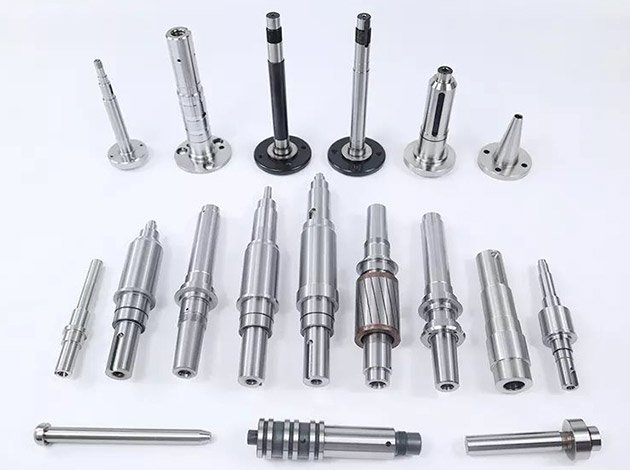
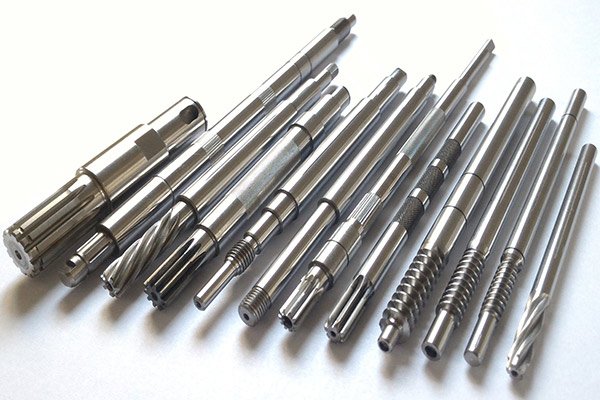
Hydraulic and pump systems are another strong example. Valve spools, sleeves, pump shafts, sealing components, pistons, and precision housings often demand roundness, cylindricity, surface finish, and material stability. A minor dimensional deviation can affect leakage, pressure stability, efficiency, and service life. These parts may require turning, milling, grinding, honing, and surface treatment under one coordinated process plan. IndustryApex Technology’s experience with hydraulic pump parts demonstrates how supply chain integration supports reliability in fluid power applications.
In semiconductor equipment and advanced automation, the challenge is high mix, high precision, and frequent design updates. Manufacturers need low-volume runs, quick prototypes, clean machining practices, and exceptional consistency. Components may include ceramic parts, precision plates, vacuum-related hardware, alignment features, and complex assemblies. A supply chain integrator helps customers avoid delays by coordinating material selection, machining strategy, inspection planning, and secondary processing within one controlled workflow.
Automotive, drivetrain, robotics, energy, packaging, optics, and industrial machinery customers also benefit from integrated manufacturing. These sectors often require fast response to engineering changes and flexible production volumes. Whether the project involves gears, shafts, structural components, impellers, molds, wear parts, or precision ceramic elements, the value of an integrator lies in combining process expertise with supply chain control. Instead of treating each component as a purchasing item, the integrator treats it as part of a technical and operational system.
Across these industries, the common requirement is confidence. Customers want to know that the supplier understands the part function, controls the process, communicates risk early, and delivers according to agreed quality standards. Supply chain integrators make agile manufacturing practical because they connect technical execution with business continuity.
Call to Action
Agile manufacturing is not achieved by speed alone. It requires engineering insight, controlled production resources, transparent planning, and supply chain accountability. For global OEMs and Tier 1 suppliers, the right integrator can reduce complexity, shorten development cycles, improve quality stability, and build a more resilient manufacturing network.
IndustryApex Technology, through IndustryApex CNC, combines ODM engineering support with a fully controlled precision manufacturing system covering 3-5 axis CNC machining, EDM, precision grinding, and industrial ceramics. With more than 30 years of experience and ERP-supported execution, we help customers transform complex component sourcing into a coordinated manufacturing advantage.
If your team is developing a new precision component, localizing a critical part, qualifying a second source, or consolidating a fragmented supplier base, we invite you to discuss your project with our engineering team. Visit our Contact Us page to share drawings, specifications, target quantities, and technical requirements. IndustryApex Technology is ready to support your next agile manufacturing program with integrated engineering and supply chain execution.