- Shaft
- Molds&Tools
- Hydraulics And Pump
- Hair transplant needle
- Hydraulics And Pump
- Precision CNC Shaft Machining Manufacturer for High Performance Applications
- Energy Industry CNC Machining Parts Supplier
- Aerospace CNC Machining Parts Manufacturer
- Aerospace CNC Machining Parts Manufacturer
- Automotive & EV CNC Machining Parts Supplier for OEM and Tier 1
- Medical CNC Machining Parts Supplier for Precision Medical Devices

How ODM Solution Providers Are Transforming Medical Device Manufacturing

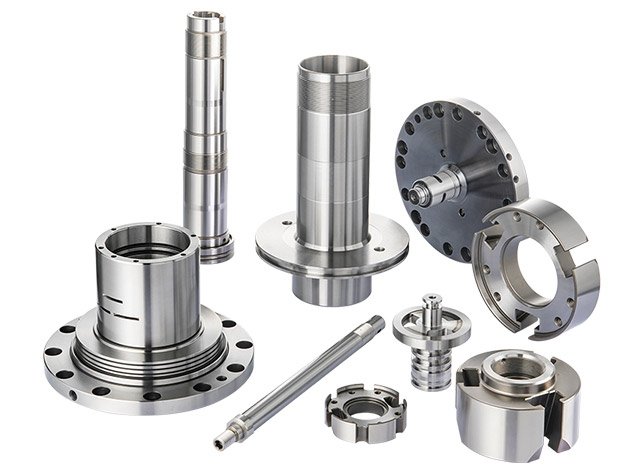
How ODM Solution Providers Are Transforming Medical Device Manufacturing
1. Executive Summary
Medical device manufacturing is entering a new operating era. OEMs and Tier 1 suppliers are no longer looking only for machine shops that can cut metal to print. They need engineering partners that can interpret clinical performance requirements, stabilize manufacturability, manage validated supply chains, and deliver precision components with repeatable quality across product lifecycles. This is where ODM solution providers are transforming the sector.
An ODM partner does more than manufacture a component. It helps convert a design concept into a controlled, scalable, and compliant manufacturing solution. For medical devices, that transformation is especially important because components often combine biocompatible materials, micron-level tolerances, complex geometries, clean surface requirements, traceability demands, and strict risk controls. A surgical instrument, titanium implant interface, pump mechanism, robotic surgery actuator, diagnostic equipment module, or minimally invasive device component must function reliably in a high-consequence environment.
IndustryApex Technology, operating globally through IndustryApex CNC, supports this shift as a precision manufacturing and ODM solution provider for demanding industrial and medical applications. Through a fully controlled precision manufacturing system, ERP-enabled production management, and more than 30 years of manufacturing experience, IndustryApex Technology helps global OEM and Tier 1 customers reduce development friction, secure production capacity, and improve component reliability. More information about the company’s capabilities can be found at IndustryApex CNC.
The competitive advantage of ODM in medical device manufacturing is not simply cost reduction. It is a structural improvement in engineering collaboration, quality planning, supplier consolidation, and production resilience. As medical OEMs face shorter product cycles, stricter regulatory scrutiny, and increasing pressure to localize or diversify supply chains, ODM providers with integrated CNC machining, EDM, precision grinding, industrial ceramics, and process engineering capabilities are becoming strategic supply chain partners.
2. Technical Deep Dive
Medical device components are technically demanding because they sit at the intersection of material science, mechanical accuracy, surface integrity, and regulatory documentation. In traditional sourcing models, OEM engineers may design a component, transfer the drawing to multiple vendors, then resolve production feedback late in the development cycle. ODM-driven manufacturing reverses that sequence. The manufacturing partner participates earlier, helping define the process window before production risks become expensive.
One critical area is design for manufacturability. Components used in orthopedic implants, surgical tools, endoscopic devices, diagnostic systems, and drug delivery equipment often contain thin walls, small channels, micro-features, precision threads, polished sealing surfaces, and complex multi-axis contours. A capable ODM provider evaluates tool access, datum structures, clamping strategy, burr risk, tolerance stack-up, and inspection methodology before the first production run. This reduces redesign loops and improves first article success.
Material selection also plays a central role. Titanium alloys, stainless steels, cobalt-chromium alloys, engineering plastics, ceramics, tungsten carbide, and specialty non-ferrous materials each behave differently under machining, grinding, finishing, and cleaning operations. Titanium, for example, is widely used in implants and surgical devices because of strength-to-weight ratio and biocompatibility, but it also presents heat management and tool wear challenges. Stainless steel instruments require corrosion resistance and durable edges, while ceramic and sapphire components may be selected for wear resistance, insulation, chemical stability, or optical performance.
Advanced precision manufacturing is therefore not a single process. It is a coordinated system. Three-axis CNC machining may be sufficient for prismatic components and fixture plates, while five-axis CNC machining enables complex implant geometries, articulating mechanisms, and compact device housings with fewer setups. EDM is valuable for high-aspect-ratio features, difficult internal shapes, and hard conductive materials. Precision grinding delivers tight roundness, flatness, and surface finish requirements for shafts, sleeves, valve components, and mating surfaces. Industrial ceramics processing supports applications where electrical insulation, wear resistance, chemical inertness, and dimensional stability are essential.
Surface integrity is another differentiator. In medical applications, a dimensionally correct part can still fail if the surface condition is uncontrolled. Burrs, sharp transitions, embedded contamination, tool marks, recast layers, micro-cracks, or inconsistent roughness may affect assembly performance, sterilization behavior, fatigue life, fluid sealing, or tissue interaction. ODM providers build finishing requirements into the manufacturing plan, including deburring, polishing, passivation support, cleaning compatibility, and inspection of critical surfaces.
Inspection strategy must be designed, not improvised. Coordinate measuring machines, optical inspection, roundness measurement, surface roughness testing, thread gauges, custom functional gauges, and in-process probing can be combined to control risk. For complex medical components, the inspection plan should align with the actual functional hierarchy of the part: critical interfaces first, cosmetic or secondary features later. A mature ODM provider also understands that measurement repeatability, fixture design, and operator training are part of quality control, not afterthoughts.
Documentation and traceability are equally important. Medical device OEMs need production evidence that supports internal quality systems and downstream regulatory obligations. While the exact documentation package depends on the device class, customer specification, and quality agreement, common needs include material certificates, process records, inspection reports, production travelers, lot control, change management, nonconformance handling, and corrective action discipline. ERP-managed production helps connect engineering data, purchasing, work orders, inspection records, and shipment status into a more transparent manufacturing environment.
This technical foundation is why specialized medical CNC machining suppliers are increasingly favored over general-purpose vendors. IndustryApex Technology’s medical manufacturing capabilities include high-precision CNC machining for device parts, surgical instrument components, and titanium medical components. Customers can review relevant capabilities through the medical CNC machining solutions page.
3. The ODM & Supply Chain Advantage
The strategic value of ODM solution providers is strongest when engineering and supply chain requirements converge. Medical OEMs do not only need a part that meets a drawing. They need continuity of supply, controlled variation, rapid engineering communication, and the ability to scale from prototype to production without losing process knowledge. A capable ODM partner becomes a supply chain integrator, consolidating manufacturing processes, supplier coordination, quality planning, and delivery management into one accountable system.
IndustryApex Technology’s core identity is built around this model: a supply chain integrator and ODM solution provider for global OEM and Tier 1 suppliers. Instead of treating each manufacturing step as an isolated transaction, IndustryApex Technology combines engineering review, material sourcing support, CNC machining, EDM, precision grinding, industrial ceramics capability, process planning, inspection, and logistics coordination. This integrated approach reduces handoff risk and helps customers manage complex projects more efficiently.
The manufacturing edge comes from a fully controlled precision manufacturing system supported by ERP and over 30 years of experience. ERP-based control improves production visibility by linking job status, material movement, scheduling, inspection milestones, and delivery requirements. For medical customers, this matters because lead time reliability and change control can affect product launches, clinical supply needs, aftermarket service, and inventory planning. When demand forecasts change or design revisions occur, an integrated ODM provider can respond with better internal coordination than a fragmented supplier network.
Technology breadth is also central to the ODM advantage. IndustryApex Technology’s capabilities include 3-axis and 5-axis CNC machining, EDM, precision grinding, and industrial ceramics. This portfolio supports a wide range of component types, from stainless steel surgical tools and titanium implant-related parts to ceramic insulating elements, miniature mechanisms, precision shafts, and tight-tolerance housings. The ability to select the right process sequence under one engineering framework improves dimensional consistency and reduces the risk of incompatibility between suppliers.
Supply chain integration also helps manage supplier qualification burden. Medical OEMs commonly spend significant time auditing, qualifying, and monitoring vendors. When one ODM partner can responsibly coordinate multiple manufacturing technologies and provide consistent communication, the OEM can simplify supplier management while maintaining technical depth. This does not remove the need for quality agreements or customer oversight, but it reduces complexity and accelerates execution.
Cost optimization in ODM manufacturing is not merely about lower piece price. The larger savings often come from reduced engineering rework, fewer nonconformances, shorter development cycles, improved yield, more stable lead times, and lower administrative workload. Early manufacturability input can simplify features that do not affect clinical or functional performance, optimize tolerances where appropriate, and recommend process routes that balance cost, precision, and scalability. Over the lifecycle of a medical device program, these decisions can significantly affect total landed cost.
Risk management is another major advantage. Medical device supply chains are exposed to material shortages, geopolitical disruptions, freight volatility, capacity constraints, and regulatory expectations. ODM providers with broad process knowledge and supplier coordination experience can support dual-process planning, alternative material evaluation, capacity reservation, and phased production ramp-up. For OEMs, this creates a more resilient sourcing model than relying on narrowly specialized vendors with limited flexibility.
IndustryApex Technology’s cross-industry experience further strengthens its medical manufacturing perspective. Aerospace, hydraulics, optics, automotive, semiconductor, energy, and industrial automation customers all require precision, documentation, and repeatability. Lessons from demanding sectors can be applied to medical manufacturing, especially in areas such as fatigue-critical machining, fluid control accuracy, ceramic processing, and high-reliability production. For example, similar five-axis precision and structural component expertise used in aerospace CNC machining can support advanced medical housings, robotic device structures, and titanium components requiring stable geometry.
4. Industry Applications
ODM-driven medical manufacturing supports a broad range of applications. In surgical instruments, precision machining determines the fit, balance, cutting performance, and repeatable function of forceps, handles, clamps, guides, and articulating assemblies. Instrument components may require smooth transitions, consistent edges, corrosion-resistant materials, and reliable mechanical interfaces. ODM engineering helps refine these features for manufacturability while preserving surgeon usability and device intent.
In orthopedic and implant-related manufacturing, tight control of titanium and stainless steel components is essential. While final implant validation is owned by the medical device OEM, the manufacturing partner must control geometry, surface condition, and process repeatability. Multi-axis machining can support anatomical contours, porous-interface-adjacent features, locking mechanisms, bone fixation components, and trial instrument systems. The earlier the ODM partner is involved, the easier it is to align critical dimensions, inspection methods, and production stability.
Minimally invasive and endoscopic devices create another technical challenge. These systems are compact, assembled from small parts, and often require thin-wall tubes, miniature shafts, precision sleeves, micro slots, and high-quality surface finishes. Small dimensional errors can cause friction, leakage, misalignment, or functional inconsistency. Precision grinding, EDM, and micro-capable CNC machining are valuable for these applications because they enable fine features and controlled mating surfaces.

Diagnostic and laboratory equipment also benefits from ODM manufacturing. Components used in sample handling, fluidic control, imaging modules, motion systems, and analytical equipment must often combine cleanliness, chemical compatibility, and high precision. The medical and chemical sectors frequently use custom machined parts in pumps, valves, reagent systems, and analytical platforms. IndustryApex Technology’s experience with fluid-related precision components is also reflected in its hydraulic and pump parts capabilities, where sealing surfaces, dimensional control, and repeatable mechanical performance are essential.
Robotic surgery and medical automation are especially aligned with ODM capabilities. These systems require lightweight structural elements, miniature gears or transmission parts, precise shafts, ceramic insulation elements, sensor housings, and compact mechanical linkages. Five-axis machining, grinding, and EDM can support compact, high-performance parts that must maintain precision under repeated movement. As robotic platforms become more specialized, OEMs increasingly need manufacturing partners that can assist with design iteration and scalable production.
Drug delivery and wearable medical devices introduce additional requirements. Components may involve micro-pump mechanisms, needle interfaces, cartridge systems, precision plungers, seals, and miniature housings. Manufacturing success depends on controlling small features and assembly-critical dimensions at production volume. ODM support helps bridge the gap between prototype feasibility and stable mass production by defining process routes, inspection criteria, and supplier controls early.
Industrial ceramics are also becoming more relevant in medical and diagnostic systems. Ceramic components can provide electrical insulation, wear resistance, chemical stability, and thermal performance. They may be used in analytical instruments, pump components, sensors, surgical energy devices, and laboratory equipment. Because ceramics require different machining and grinding knowledge than metals, integrated ODM providers with ceramic capabilities can reduce sourcing complexity for hybrid assemblies.
The common thread across these applications is that medical device manufacturing is no longer a simple build-to-print activity. The value is created through engineering collaboration, process discipline, manufacturing feedback, and supply chain orchestration. OEMs that engage ODM partners early can improve launch readiness, reduce supplier fragmentation, and create a more reliable path from design validation to production supply.
5. Call to Action
As medical device markets become more competitive, OEM and Tier 1 teams need manufacturing partners that can support both technical execution and supply chain resilience. An ODM solution provider with deep precision manufacturing capability can help reduce development risk, improve component quality, and create a more scalable production model.
IndustryApex Technology, through IndustryApex CNC, provides integrated precision manufacturing services for global customers requiring high-quality CNC machining, EDM, precision grinding, industrial ceramics, and supply chain coordination. With more than 30 years of experience and an ERP-supported production system, the company is positioned to support demanding medical device components as well as related high-reliability industrial applications.
If your team is developing surgical instruments, titanium medical components, diagnostic equipment parts, robotic medical assemblies, fluidic device components, or other high-precision medical parts, IndustryApex Technology can help evaluate manufacturability and define a production-ready solution. To discuss drawings, materials, tolerances, lead times, or ODM collaboration models, visit Contact Us and connect with the IndustryApex CNC engineering team.