- Shaft
- Molds&Tools
- Hydraulics And Pump
- Hair transplant needle
- Hydraulics And Pump
- Precision CNC Shaft Machining Manufacturer for High Performance Applications
- Energy Industry CNC Machining Parts Supplier
- Aerospace CNC Machining Parts Manufacturer
- Aerospace CNC Machining Parts Manufacturer
- Automotive & EV CNC Machining Parts Supplier for OEM and Tier 1
- Medical CNC Machining Parts Supplier for Precision Medical Devices

CNC Machining in China for High-Value OEM Projects: How to Choose the Right Factory

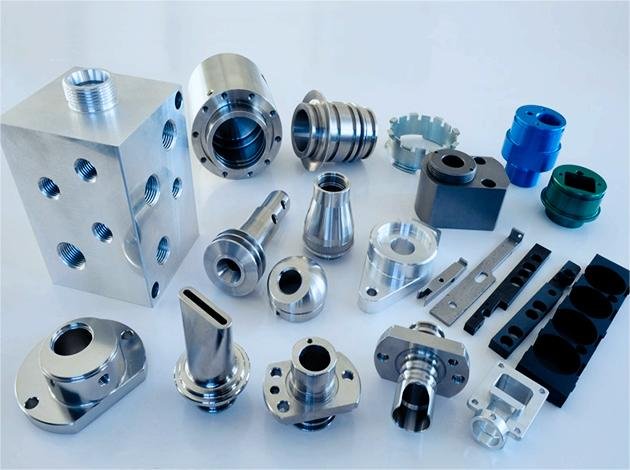
CNC machining in China is attractive to high-value OEMs because it can combine engineering capability, cost control, material access, and scalable production. But for purchasing managers, sourcing directors, and engineering teams, the real question is not simply where to find a low price. The real question is how to identify a CNC machining factory in China that can protect project risk, communicate technically, and deliver repeatable precision parts over time.
For companies in aerospace, medical devices, robotics, EV systems, industrial automation, hydraulics, optics, energy equipment, and high-end machinery, the supplier decision affects more than unit cost. It affects launch timing, assembly reliability, inspection workload, IP protection, and long-term supply continuity. This guide explains how high-value customers can evaluate a Chinese CNC machining partner with the same discipline they use for critical suppliers in Europe or North America.
Why High-Value Buyers Look For CNC Machining In China
Many global companies source precision machined parts from China because the supplier ecosystem is broad. A capable China CNC machining factory can often support CNC milling, CNC turning, 5-axis machining, turn-mill machining, EDM, wire cutting, grinding, surface treatment coordination, and custom inspection documentation within one supply chain. This makes China attractive for complex parts that require multiple manufacturing steps.
However, the advantage is not automatic. High-value buyers should avoid treating every supplier as interchangeable. The best result comes from selecting a factory that understands engineering drawings, tolerance control, material behavior, inspection planning, and export requirements. A professional supplier should make the buyer feel that the project is being engineered, not merely quoted.
What Separates A Real Factory From A Trading Supplier
Many buyers searching for CNC machining in China are not only comparing price. They are trying to confirm whether the supplier has real manufacturing control. A trading company may be useful in some cases, but for high-value custom parts, direct factory communication usually reduces technical risk.
- Process ownership: Ask which operations are done in-house and which are outsourced. A serious factory should explain the machining route, inspection route, and any secondary processes clearly.
- Engineering communication: The supplier should be able to review GD&T, datum strategy, wall thickness, surface finish, thread standards, heat treatment, and coating allowances before accepting the order.
- Equipment match: Machine type matters. A 5-axis component, a concentric turned part, and a ground sealing surface require different equipment and process control.
- Inspection capability: CMM inspection, height gauges, micrometers, thread gauges, surface roughness testing, hardness testing, and custom fixtures may be needed depending on the drawing.
- Traceability: High-value projects often need material certificates, batch records, heat treatment reports, coating reports, and first article inspection documents.
The fastest way to test a supplier is to send a controlled RFQ package and evaluate the questions they ask. A mature CNC machining factory will not only quote; it will identify risks.
Start With A Strong RFQ Package
If your project is important, do not send only a screenshot or a simplified model. A high-quality RFQ makes it easier for the factory to quote accurately and prevents misunderstandings later. For CNC machined components, the best package usually includes a 3D CAD file, a 2D drawing, material requirements, tolerance notes, surface finish requirements, expected quantity, and inspection expectations.
For high-value customers, it is especially useful to explain the function of the part. Is the component used for alignment, sealing, motion transfer, structural load, thermal management, fluid control, or cosmetic appearance? When the factory understands the application, it can protect the features that actually determine performance.
Evaluate DFM Support Before You Evaluate Price
Design for manufacturability is one of the strongest signals of a capable CNC supplier. A factory that simply says “no problem” to every drawing may not be the safest choice. For precision parts, useful DFM feedback may include tolerance adjustment, datum improvement, tool access review, wall thickness risk, burr control, internal radius feasibility, surface finish strategy, and post-treatment dimensional change.
Good DFM support does not mean reducing quality. It means separating critical requirements from unnecessary cost drivers. A small change in corner radius, tolerance range, material condition, or machining sequence can reduce scrap rate and lead time without affecting the assembly function.
Quality Control Signals High-Value Buyers Should Require
For custom CNC machining in China, quality control must be discussed before production starts. A reliable supplier should be able to define how parts will be inspected, which features are critical, what documents will be provided, and how nonconforming parts will be handled.
- First article inspection: Required when the project is new, complex, or used in a regulated or safety-critical assembly.
- CMM reports: Useful for geometric tolerances, positional accuracy, flatness, perpendicularity, and multi-datum inspection.
- Material certificates: Important for aerospace, medical, energy, hydraulic, and industrial components where alloy identity matters.
- In-process inspection: Essential for long production runs, thin-wall parts, tight bores, high surface finish demands, or tool-wear-sensitive features.
- Final documentation: Buyers may require dimensional reports, surface treatment certificates, packing photos, and batch traceability.
For repeat orders, buyers should also ask how the factory controls fixture repeatability, tool life, operator handoff, machine warm-up, coolant, and inspection frequency. A beautiful first sample is useful, but stable production is what protects total cost.
Protecting IP, Drawings, And Commercial Confidentiality
High-value customers often worry about sending drawings overseas. This concern is reasonable. A professional China CNC machining supplier should be comfortable with NDA requirements, controlled file sharing, restricted internal access, and customer-specific documentation rules. The buyer should also avoid sending more assembly information than the supplier needs to manufacture the part.
For sensitive projects, use clear file naming, revision control, watermarking when appropriate, and written confirmation of the current drawing revision before production. IP protection is not only a legal topic. It is also an operational discipline.
How To Compare Quotes From Chinese CNC Machining Factories
The cheapest quotation is not always the lowest-cost decision. A reliable quote should make the process visible. When comparing suppliers, look for whether the quotation explains material, machining time, fixture cost, secondary operations, inspection requirements, surface treatment, packing, and shipping terms.
High-value buyers should be cautious when a quote is far below the market without explanation. It may mean the supplier has misunderstood tolerances, ignored inspection cost, used a lower material assumption, skipped a secondary process, or planned a process that cannot hold the required consistency. A good supplier should be able to defend the quote technically.
Prototype, Pilot Run, And Production Should Be Connected
Some buyers source prototypes from one supplier and production from another. This can work, but it may create new risk if the production supplier must relearn the process. For high-value CNC machined parts, it is often better to select a supplier that can support prototype, engineering validation, pilot production, and stable batch manufacturing.
During the prototype stage, focus on geometry, fit, DFM feedback, and engineering speed. During the pilot run, focus on fixture stability, inspection reports, packaging, and process repeatability. During production, focus on lead time, batch consistency, cost control, and communication discipline. The supplier should understand all three stages.
International Delivery And After-Sales Support Matter
Companies sourcing CNC machining in China also need reliable export communication. The supplier should understand packing requirements, part protection, labeling, Incoterms, customs documents, courier or freight options, and urgent shipment handling. For precision components, packaging is not an afterthought. Scratches, dents, corrosion, or mixed batches can create avoidable quality problems after good machining work has already been completed.
After delivery, the supplier should also support engineering feedback. If a customer needs a revision, dimensional review, assembly feedback, or a root-cause discussion, the response should be fast and technical. This is where high-value customers separate transaction suppliers from long-term manufacturing partners.
A Supplier Scorecard For High-Value CNC Projects
Before choosing a CNC machining factory in China, use this practical scorecard:
- Does the supplier understand the drawing, tolerances, and functional requirements?
- Can the supplier explain the machining process, fixture strategy, and inspection plan?
- Does the supplier support CNC milling, turning, 5-axis machining, EDM, grinding, or the specific processes your part requires?
- Can the supplier provide first article inspection, CMM reports, material certificates, and batch traceability?
- Is communication handled by people who understand engineering, not only sales language?
- Does the supplier have a plan for prototype, pilot run, and production scale-up?
- Can the supplier protect drawings, revision control, NDA requirements, and project confidentiality?
- Are packing, export documents, delivery terms, and after-sales communication clearly defined?
Send Drawings To A CNC Machining Partner That Thinks Like An Engineering Team
If your company is looking for CNC machining in China for high-value precision components, the best next step is to share your 3D CAD files, 2D drawings, material requirements, target quantity, and inspection expectations. Our engineering team can review manufacturability, identify risk areas, and prepare a practical quotation for prototype or production machining.
For buyers who care about quality, communication, and long-term supplier value, choosing the right factory in China is not only a cost decision. It is a strategic manufacturing decision.