- Shaft
- Molds&Tools
- Hydraulics And Pump
- Hair transplant needle
- Hydraulics And Pump
- Precision CNC Shaft Machining Manufacturer for High Performance Applications
- Energy Industry CNC Machining Parts Supplier
- Aerospace CNC Machining Parts Manufacturer
- Aerospace CNC Machining Parts Manufacturer
- Automotive & EV CNC Machining Parts Supplier for OEM and Tier 1
- Medical CNC Machining Parts Supplier for Precision Medical Devices

High-Precision CNC Machining for Critical Metal Parts: A Sourcing Guide

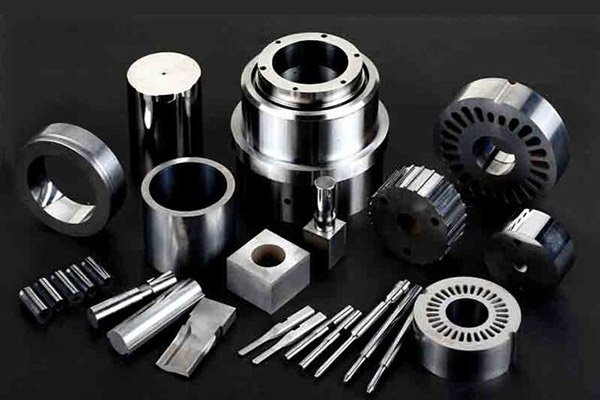
For OEMs, tier suppliers, equipment builders, and engineering teams, high-precision CNC machining is rarely just a purchase order for machined parts. It is a risk decision. The right supplier can protect assembly performance, reduce launch delays, and keep cost under control as demand moves from prototype to repeat production. The wrong supplier can turn a technically simple-looking drawing into missed deliveries, inconsistent dimensions, and avoidable quality disputes.
This guide explains how procurement managers and engineers can evaluate precision CNC machining suppliers for critical metal components, especially when the project involves tight tolerances, complex geometry, difficult materials, or production volumes that require repeatability across many batches.
Precision Starts With The Function Of The Part
A tolerance block on a drawing tells only part of the story. Before quoting a high-precision CNC component, the manufacturing team needs to understand what the part must do inside the assembly. A bore that controls shaft alignment, a sealing surface in a hydraulic component, a thin wall in an EV housing, or a datum surface for an aerospace bracket can all require different machining and inspection strategies.
When the supplier understands the functional intent, it becomes easier to recommend the right process route, control the critical features, and avoid over-processing non-critical areas. This is where early design for manufacturability review creates measurable value. It can reduce cycle time, simplify fixturing, improve yield, and prevent tolerance stack-up problems before the first production order is released.
What Engineers Should Clarify Before Sending An RFQ
A strong RFQ package helps a precision machining supplier respond with a realistic price, lead time, and quality plan. For complex metal parts, include more than a 3D model whenever possible. The 3D CAD file defines geometry, but the 2D drawing communicates engineering intent.
- Critical dimensions and datums: Identify the features that affect fit, motion, sealing, load path, or assembly alignment.
- Material and condition: Specify alloy grade, heat treatment, hardness range, temper, coating condition, and any restricted material sources.
- Surface finish requirements: Separate cosmetic surfaces from functional sealing, bearing, sliding, or fatigue-sensitive surfaces.
- Inspection expectations: Define whether first article inspection, CMM reports, material certificates, surface roughness checks, or capability data are required.
- Quantity and demand pattern: Prototype, pilot build, annual forecast, and release schedule all influence tooling, fixturing, and cost structure.
- Assembly context: Mating parts, press-fit requirements, gasket interfaces, and post-machining processes help the supplier protect the final function.
When these details are clear, the quote becomes more than a unit price. It becomes a manufacturing proposal that shows how the supplier will control risk.
Choosing The Right CNC Process Route
High-precision components are often produced by a combination of CNC milling, CNC turning, mill-turn machining, 5-axis machining, EDM, wire cutting, and precision grinding. The best process route depends on geometry, material behavior, tolerance distribution, and volume.
5-axis CNC machining for complex geometry
For aerospace brackets, impellers, medical instruments, complex housings, and curved surfaces, 5-axis CNC machining can reduce setups and improve geometric consistency. Fewer setups mean fewer opportunities for datum transfer error. This is especially valuable when features on multiple planes must maintain positional accuracy relative to each other.
Mill-turn machining for concentric and multi-feature parts
For shafts, valve bodies, connectors, bushings, and rotating components, turn-mill machining can combine OD, ID, slots, flats, cross holes, and threads in one controlled workflow. This improves concentricity and reduces handling between machines.
Grinding, EDM, and wire cutting for difficult tolerances
Not every requirement should be solved by milling alone. Precision grinding can protect flatness, parallelism, and surface finish. EDM and wire cutting are useful for hard materials, sharp internal profiles, mold components, and features that are difficult to cut mechanically. A capable supplier should be able to explain when secondary operations are necessary and when they add cost without adding performance.
How Procurement Teams Can Compare CNC Suppliers Beyond Price
Unit price matters, but it should not be the only decision factor for critical parts. A quote that looks inexpensive can become costly if the supplier cannot maintain dimensions, manage material traceability, or support engineering changes. Procurement teams should evaluate the supplier’s ability to communicate, document, and repeat the process.
- Technical review quality: Does the supplier ask intelligent questions about datums, tolerances, finish, and assembly function?
- Manufacturing plan: Can they explain the setup strategy, fixture concept, machining sequence, and secondary operations?
- Measurement capability: Do they have the inspection equipment and reporting discipline needed for the critical features?
- Material control: Can they provide certificates, heat treatment records, coating documentation, and batch traceability when required?
- Scalability: Can the same process move from prototype to pilot run and stable production without redesigning the whole workflow?
- Responsiveness: Can engineering and purchasing teams get clear answers during quotation, sampling, and production?
For large companies, the goal is not simply to find a machine shop. The goal is to build a supply relationship that reduces engineering workload and protects launch schedules.
Quality Control For High-Precision Metal Components
Reliable precision machining depends on a quality plan that starts before material is cut. Critical projects often require first article inspection, in-process checks, final CMM reports, thread gauges, plug gauges, surface roughness testing, hardness verification, and visual criteria. The supplier should define what is checked at each stage and how nonconforming parts are controlled.
For repeat production, process capability matters more than a single good sample. Buyers should ask how the supplier controls tool wear, fixture repeatability, thermal stability, cutting parameters, coolant condition, and operator handoff. A stable process is what allows a part to stay within tolerance after the first shipment, the tenth shipment, and the hundredth shipment.
Design Choices That Protect Cost Without Sacrificing Performance
Many cost reductions come from small design changes that do not affect function. During DFM review, engineers and suppliers can work together to identify areas where tolerances, radii, surface finishes, and material choices can be optimized.
- Avoid applying tight tolerances to non-functional features.
- Use realistic internal radii based on available tool sizes.
- Separate cosmetic requirements from precision functional surfaces.
- Confirm whether sharp corners are truly required or can be relieved.
- Consider whether a part can be machined in fewer setups through datum or feature adjustments.
- Review coating and heat treatment effects on final dimensions.
This type of collaboration is especially valuable for aluminum, stainless steel, alloy steel, brass, copper, titanium, and engineering-grade production materials where machinability, distortion, and finishing behavior can affect final results.
From Prototype To Production: What A Strong Supplier Should Support
Prototype machining proves geometry and fit, but production readiness requires more. A supplier that supports full-cycle CNC manufacturing should help the customer move through prototype, engineering validation, pilot production, and batch manufacturing with controlled documentation and repeatable methods.
For early-stage builds, speed and engineering feedback are usually most important. For production, the priorities shift toward stable lead time, fixture repeatability, inspection efficiency, packaging, and long-term cost control. The best suppliers can support both phases without forcing the customer to restart sourcing after validation is complete.
A Practical RFQ Checklist For Precision CNC Components
Before sending your next RFQ, prepare the following information to receive a faster and more accurate quotation:
- 3D CAD files such as STEP, IGES, X_T, or native CAD formats.
- 2D drawings with GD&T, critical dimensions, finish requirements, and inspection notes.
- Material grade, heat treatment, hardness, and surface treatment requirements.
- Prototype quantity, pilot quantity, annual volume, and expected delivery schedule.
- Target application, assembly function, and any regulatory or customer-specific requirements.
- Required documents such as inspection reports, material certificates, coating reports, or first article documentation.
If your team is sourcing high-precision CNC machined components for aerospace, medical devices, EV systems, robotics, hydraulic equipment, industrial machinery, or other demanding applications, share your drawings and technical requirements with our engineering team. A clear RFQ allows us to review manufacturability, identify risk areas, and provide a practical quotation for prototype or production manufacturing.