- Shaft
- Molds&Tools
- Hydraulics And Pump
- Hair transplant needle
- Hydraulics And Pump
- Precision CNC Shaft Machining Manufacturer for High Performance Applications
- Energy Industry CNC Machining Parts Supplier
- Aerospace CNC Machining Parts Manufacturer
- Aerospace CNC Machining Parts Manufacturer
- Automotive & EV CNC Machining Parts Supplier for OEM and Tier 1
- Medical CNC Machining Parts Supplier for Precision Medical Devices

Precision CNC Machining for EV Motor Housings: Tight Tolerances Explained

Executive Summary
Electric vehicle motor housings are no longer simple cast enclosures. They are precision-engineered structural, thermal, and alignment-critical components that directly influence motor efficiency, noise, vibration, harshness, service life, and final vehicle quality. For global OEMs and Tier 1 suppliers, the challenge is not only producing a lightweight housing at scale, but also maintaining tight tolerances across bearing bores, stator locations, coolant channels, mounting faces, sealing surfaces, and datum structures while managing supply chain risk.
Precision CNC machining is the manufacturing bridge between near-net-shape casting, extrusion, or forging and the functional performance required in high-speed EV drivetrains. A motor housing may appear geometrically straightforward, but its tolerance stack-up is unforgiving. Concentricity errors can reduce bearing life. Poor flatness may compromise inverter or gearbox integration. Surface finish variation can create sealing failures. Dimensional drift can cause assembly rework, end-of-line rejection, or field reliability concerns.
At IndustryApex Technology, operating through IndustryApex CNC, we approach EV motor housing programs as an engineering and supply chain problem, not only a machining task. Our role is to help customers convert demanding product specifications into repeatable manufacturing processes with controlled machining strategy, fixture design, inspection planning, supplier coordination, and scalable delivery. For OEM and Tier 1 engineering teams, the goal is clear: reduce variation, protect launch timing, and stabilize cost without compromising the precision that EV powertrains demand.
Technical Deep Dive
EV motor housings typically combine several critical functions in one component. They support the stator, locate the rotor through bearing systems, provide structural interfaces to the vehicle or e-axle assembly, manage heat transfer, protect internal electrical and mechanical systems, and seal against moisture, coolant, and contamination. Because these functions interact, tolerance control must be evaluated as a complete system rather than as isolated drawing dimensions.
The most critical feature group is usually the bearing bore and motor axis alignment. In a high-speed electric motor, small deviations in roundness, cylindricity, coaxiality, and positional accuracy can create uneven bearing load, rotor imbalance, increased acoustic noise, and accelerated wear. Machining the bearing seats requires stable fixturing, controlled tool deflection, thermal compensation, and often multi-step boring or finishing passes. A housing that meets nominal bore diameter but fails on geometric tolerance may still create assembly and performance issues.
Stator location features are equally important. The stator must be accurately positioned relative to the rotor axis to maintain the intended air gap. In many EV motors, the radial air gap is extremely small, and uneven spacing can reduce electromagnetic efficiency or cause localized heating. CNC machining must therefore control the relationship between the stator bore, bearing bores, end faces, and mounting datums. This is where 3-axis machining may be sufficient for some features, but 4-axis or 5-axis strategies can reduce refixturing error and improve datum integrity.
Flatness and parallelism on mounting interfaces also play a major role. Motor housings commonly mate with gearboxes, inverters, end covers, water jackets, or structural brackets. If these faces are not flat or parallel within specification, assembly forces may distort the housing or create sealing gaps. For large aluminum housings, clamping pressure, residual stress from casting, and heat generated during machining can all influence final geometry. A robust process may include stress-relief considerations, roughing and finishing separation, controlled stock allowance, and in-process measurement.
Thermal management features add another layer of complexity. Many EV motor housings include coolant jackets, O-ring grooves, ports, and sealing lands. These features must maintain dimensional accuracy and surface finish while avoiding burrs, tool marks, or sharp transitions that could compromise flow or sealing. Coolant channel machining may require long-reach tools, specialized deburring, EDM support for difficult features, or precision grinding for high-integrity sealing surfaces. When leakage risk is high, machining must be coordinated with pressure testing and cleanliness controls.
Material behavior is another critical variable. Aluminum alloys are widely used due to their lightweight and thermal conductivity advantages, but they can be sensitive to distortion, built-up edge, and surface tearing if tooling and parameters are not optimized. Cast aluminum may contain porosity, inclusions, or variable hardness, while extruded or forged materials may behave differently under cutting loads. For premium EV platforms, engineers increasingly evaluate hybrid structures, inserts, sleeves, or high-performance materials in localized areas. The machining process must account for each material’s response to cutting, clamping, heat, and finishing.
Surface finish requirements should not be underestimated. Bearing seats, sealing faces, gasket surfaces, sensor interfaces, and grounding points may each require different roughness targets. A surface that appears acceptable visually may fail functional requirements due to chatter, waviness, embedded chips, or directional tool marks. Process engineering must therefore define tool geometry, feed rate, spindle speed, coolant strategy, and inspection method based on the function of each surface.
Inspection planning is the final pillar of tight tolerance control. Coordinate measuring machines, roundness testers, surface roughness instruments, air gauges, thread gauges, and custom fixtures may all be required depending on the part. More importantly, measurement strategy must match the engineering datum scheme. If the inspection setup does not represent the functional assembly condition, the data may be misleading. For production programs, statistical process control helps identify drift before nonconforming batches are produced.
The ODM & Supply Chain Advantage
Many EV programs fail not because the prototype part cannot be made, but because the process cannot be scaled reliably across repeated production batches, engineering changes, supplier constraints, and launch pressure. This is where IndustryApex Technology’s identity as a supply chain integrator and ODM solution provider becomes strategically valuable. We support global OEM and Tier 1 suppliers by connecting product engineering intent with manufacturable, inspectable, and scalable production execution.
With more than 30 years of manufacturing experience, IndustryApex Technology has developed a fully controlled precision manufacturing system supported by ERP-driven coordination. This matters for EV motor housings because machining is only one part of the value chain. Material sourcing, casting or blank management, heat treatment coordination, machining scheduling, inspection documentation, surface treatment, packaging, and logistics all affect final delivery performance. ERP visibility helps control lead times, batch traceability, capacity planning, and documentation accuracy for international B2B programs.
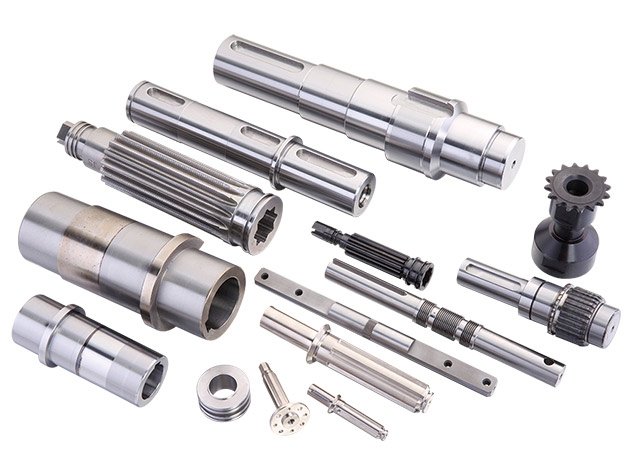
Our manufacturing edge includes 3-axis to 5-axis CNC machining, EDM, precision grinding, and industrial ceramics capabilities. For EV motor housings, this combination supports complex machining of large structural features, accurate finishing of functional bores and sealing surfaces, and problem-solving for difficult geometries. Five-axis machining can reduce the number of setups for complex housings, improving positional relationships between features. EDM can support sharp internal features or difficult-to-cut details where conventional tooling is limited. Precision grinding may be used when specific surfaces demand extremely high finish quality or dimensional stability.
ODM support is especially relevant when customers are still refining a motor platform or e-axle architecture. Early manufacturability review can identify tolerance risks, machining access limitations, unnecessary cost drivers, or datum conflicts before tooling is locked. For example, a drawing may specify very tight positional tolerances on multiple features without clearly defining the functional datum priority. By working with the customer’s engineering team, we can recommend datum strategies, fixture concepts, process sequences, and inspection methods that protect function while improving production feasibility.
Supply chain integration also helps mitigate risk in volatile EV markets. Demand forecasts may shift quickly, design revisions may arrive late, and regional sourcing requirements may evolve. A machining partner that only quotes a part number may struggle under these conditions. A supply chain integrator can help manage upstream and downstream dependencies, including blank quality, secondary processing, assembly interface requirements, and export documentation. This creates value beyond piece-price reduction because it supports launch security and total landed cost control.
IndustryApex Technology also applies cross-industry precision experience to EV component manufacturing. The tolerance discipline used in aerospace CNC machining helps inform our approach to datum control, traceability, and structural component reliability. The cleanliness and documentation expectations associated with medical component machining reinforce disciplined inspection and process validation. Our work in hydraulic and pump parts contributes expertise in sealing surfaces, bores, fluid passages, and pressure-related functionality. These experiences are directly relevant when machining EV housings with coolant channels, sealing lands, and high-concentricity rotating systems.
Industry Applications
Precision CNC machined EV motor housings are used across several vehicle and mobility segments. In passenger EVs, the housing must support compact, lightweight, high-efficiency powertrains where acoustic performance and energy consumption are major brand differentiators. A small amount of misalignment can become noticeable as motor whine, vibration, or efficiency loss. Tight machining control helps protect the driving experience and warranty performance.
In commercial electric vehicles, motor housings must withstand higher duty cycles, heavier loads, and longer operating hours. Delivery vans, buses, trucks, and specialty vehicles often place greater emphasis on durability and serviceability. Machined interfaces must remain stable under thermal cycling, vibration, road shock, and continuous torque demand. For these applications, process capability and material consistency are essential.
Electric motorcycles, scooters, and compact mobility platforms also require precise housings, but they add packaging pressure. Smaller housings often concentrate multiple functions into limited space, including motor support, cooling, mounting, and protection. CNC machining enables compact feature integration while maintaining functional accuracy.
Beyond road vehicles, EV motor housing machining is relevant for electric construction machinery, agricultural equipment, marine propulsion, industrial automation, and energy systems. Electrification is expanding into environments where reliability is non-negotiable and downtime is costly. In these sectors, housings may require enhanced sealing, corrosion-resistant treatments, rugged mounting structures, or specialized materials. A supplier with broad industrial machining experience can better adapt processes to each operating environment.
Another important application area is e-axle and integrated drive units. These assemblies combine motor, gearbox, inverter, and cooling functions into compact systems. The housing becomes a multi-interface precision component, often requiring tight control between motor axis, gear axis, inverter mounting surfaces, coolant ports, and structural vehicle attachment points. This increases the importance of 5-axis machining, advanced fixturing, and complete inspection planning.
Prototype and pre-production programs also benefit from precision CNC machining. Before mass production tooling is finalized, CNC processes can validate geometry, assembly behavior, thermal performance, and tolerance assumptions. Engineering teams can use machined prototypes to identify design risks before committing to casting dies or large-scale production investment. For launch programs, rapid iteration supported by experienced manufacturing engineers can shorten development cycles and improve confidence.
Call to Action
Tight tolerances in EV motor housings are not simply numbers on a drawing. They represent performance, reliability, manufacturability, and supply chain discipline. To achieve them consistently, OEMs and Tier 1 suppliers need a partner that understands precision machining, process control, inspection strategy, and international production coordination.
IndustryApex Technology, through IndustryApex CNC, supports EV and advanced industrial customers with ODM engineering input, fully controlled precision manufacturing, ERP-backed production management, and multi-process capability including 3-5 axis CNC, EDM, precision grinding, and industrial ceramics. Whether your team is developing a new EV motor platform, qualifying a second source, improving tolerance capability, or stabilizing production delivery, we can help convert engineering requirements into reliable machined components.
To discuss your EV motor housing project, tolerance challenge, or supply chain requirement, visit Contact Us and connect with the IndustryApex Technology engineering team. For a broader view of our precision manufacturing capabilities, explore the IndustryApex CNC homepage.