- Shaft
- Molds&Tools
- Hydraulics And Pump
- Hair transplant needle
- Hydraulics And Pump
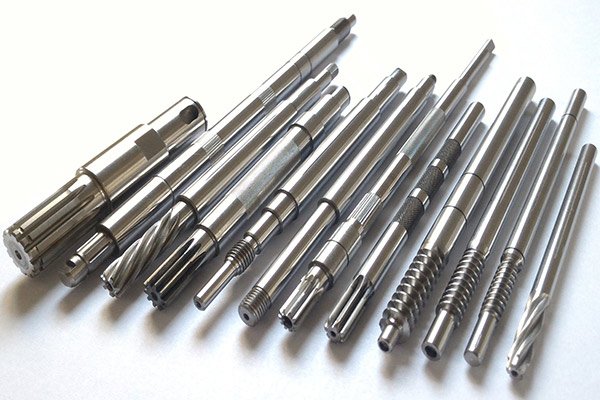
- Precision CNC Shaft Machining Manufacturer for High Performance Applications
- Energy Industry CNC Machining Parts Supplier
- Aerospace CNC Machining Parts Manufacturer
- Aerospace CNC Machining Parts Manufacturer
- Automotive & EV CNC Machining Parts Supplier for OEM and Tier 1
- Medical CNC Machining Parts Supplier for Precision Medical Devices

Navigating ISO Standards for Medical CNC Machined Parts: A B2B Guide to Compliance, Quality, and Supply Chain Resilience


Navigating ISO Standards for Medical CNC Machined Parts
Medical device sourcing is governed by a simple reality: dimensional precision matters, but traceability, process discipline, and documentation matter just as much. For OEMs and Tier 1 suppliers, ISO standards are not a compliance formality. They are the framework that makes medical CNC machined parts manufacturable at scale, auditable across borders, and stable enough for regulated product launches.
Executive Summary
Medical CNC machined parts operate in a high-consequence environment where tolerance control, material integrity, cleanliness, and validation evidence can directly affect device performance and regulatory acceptance. ISO 13485 remains the most important management-system benchmark for medical device manufacturing, while related requirements around risk management, traceability, calibration, and documented process control shape the practical sourcing model. Buyers should evaluate suppliers on more than machine capability: the real question is whether the manufacturer can convert ISO requirements into repeatable production, controlled change management, and complete lot-level documentation.
For global OEMs, the best sourcing partners combine engineering depth with supply chain integration. IndustryApex Technology, operating under IndustryApex CNC, is positioned as a supply chain integrator and ODM solution provider with a fully controlled precision manufacturing system, ERP-enabled visibility, more than 30 years of experience, and capabilities spanning 3-5 axis CNC, EDM, precision grinding, and industrial ceramics. That combination supports regulated programs that demand consistency from prototype through production.
Medical buyers should also think beyond a single part number. The strongest suppliers can support adjacent needs across aerospace-grade precision, fluid control components, and high-mix machining, which creates supply continuity and cross-functional engineering value. For more on the company and its manufacturing scope, see the IndustryApex CNC home page and the dedicated medical parts capability page.
Technical Deep Dive
ISO compliance for medical CNC machining starts with the management system and extends into every operational layer. ISO 13485 requires a supplier to establish controlled processes for design transfer, purchasing, production, verification, nonconformance handling, corrective action, and record retention. In practice, this means a buyer should expect documented process flows, defined inspection gates, calibrated measurement systems, and traceable material controls that connect raw stock to finished component.
The standard does not replace engineering judgment; it formalizes it. For machined implants, surgical instruments, diagnostic housings, and precision device parts, the supplier must maintain process stability around critical characteristics such as surface finish, concentricity, positional tolerance, burr control, and material biocompatibility. Titanium and cobalt-chrome components often require careful toolpath planning, thermal management, and controlled finishing steps to avoid work hardening, dimensional drift, or surface defects. Where geometry or material response demands it, EDM and precision grinding become important complements to CNC milling and turning.
Risk management is another central pillar. ISO 14971 is often applied at the device level, but machining suppliers still need a risk-aware operating model. That includes identifying failure modes in fixturing, tool wear, cleaning, packaging, and label traceability. It also includes managing process changes so that revisions to fixtures, tooling, or subcontracted finishing do not silently alter part performance. A mature supplier should be able to explain how it handles first article approval, in-process inspection, layered process audits, and revalidation when necessary.
Documentation quality is often what separates a capable machine shop from a medical manufacturing partner. Buyers should ask for material certificates, inspection reports, machine and gauge calibration records, lot traceability maps, and documented deviation handling procedures. When the part is part of a regulated assembly, the supply chain must preserve evidence across every handoff. This is where ERP discipline matters: it lets the manufacturer link raw material lots, machine schedules, quality records, and shipment history into a single auditable chain.
Equally important is the supplier’s treatment of cleanliness and contamination control. Medical parts frequently require strict post-machining handling, controlled cleaning, and packaging that protects both dimensional integrity and surface condition. Cutting fluids, machining debris, residual oils, and particulate contamination must be managed before the part enters the medical device assembly stream. If a supplier cannot clearly describe its cleaning, drying, packaging, and storage controls, it is not yet ready for demanding medical applications.
For buyers comparing suppliers across regions, the most reliable benchmark is not a certificate alone but the system behind it. Ask how the company validates processes, how it trains operators, how it controls subcontractors, and how rapidly it can isolate affected lots when a quality issue appears. Those answers reveal whether ISO is embedded in operations or merely displayed on paper.
The ODM & Supply Chain Advantage
In the medical segment, the most valuable suppliers are often not just machine shops but solution providers. IndustryApex Technology’s edge is its role as a supply chain integrator and ODM solution provider, which matters when buyers need more than isolated machining. Medical programs routinely involve multiple parts, variable demand, strict delivery windows, and engineering changes during validation. A supplier with ODM capability can support part rationalization, manufacturability review, process selection, and multi-process coordination instead of leaving the OEM to stitch the chain together.
That matters because medical procurement is rarely linear. A purchasing team may start with a titanium implant or surgical instrument component, then discover related needs in housings, connectors, precision bushings, or fluid-handling interfaces. A controlled manufacturing system with ERP support helps maintain schedule integrity, material traceability, and revision discipline across that expanding scope. With over 30 years of experience, IndustryApex Technology brings institutional knowledge that is especially useful when the customer needs conservative engineering decisions backed by production reality.
The company’s technical platform is also relevant to risk reduction. 3-5 axis CNC machining supports complex medical geometries and tight tolerance features. EDM is valuable for hard materials and intricate features that are difficult to machine conventionally. Precision grinding helps finish critical interfaces and achieve controlled surface conditions. Industrial ceramics extend capability into wear-resistant and specialized applications where medical or medical-adjacent devices demand nonmetallic performance. That breadth gives global OEMs and Tier 1 suppliers a way to consolidate vendors while preserving engineering quality.
For adjacent industrial categories that share high precision requirements, the same manufacturing discipline can support aerospace components, hydraulic and pump parts, and other regulated or performance-sensitive assemblies. See the aerospace capability page for another example of tight-tolerance manufacturing at scale: aerospace CNC machining, and the fluid power application area here: hydraulic pump parts.
From a sourcing strategy perspective, this integrated model reduces fragmentation. Instead of managing separate suppliers for prototyping, volume production, finishing, and documentation, the buyer can work with one manufacturing partner that understands process interdependence. That lowers the probability of translation errors between engineering intent and shop-floor execution. It also helps global programs absorb demand swings without losing control over qualification status or part genealogy.
Industry Applications
Medical CNC machined parts appear across a broad set of applications, each with different ISO and quality priorities. Titanium implant components demand excellent dimensional stability, clean surface integrity, and rigorous material traceability. Surgical instruments need repeatable geometry, edge quality, and corrosion-resistant finishing. Diagnostic equipment parts often require precision housings, alignment features, and carefully controlled interfaces for sensors, optics, or fluid pathways. Device subassemblies may need small, highly accurate parts with a strong emphasis on cleanliness and packaging discipline.
For OEMs, the challenge is not only technical fit but lifecycle fit. A supplier must be able to support early design changes, pilot builds, engineering verification, and eventual production release without destabilizing quality records. That is why process maturity matters as much as spindle count. The supplier should be able to scale from development lots to repeat production while maintaining identical controls for material verification, inspection, and corrective action.
The medical supply chain also overlaps with other demanding sectors. Aerospace programs value the same tolerance control and documentation discipline. Fluid control hardware shares requirements around sealing surfaces, corrosion resistance, and lot traceability. High-precision machining for optics, industrial automation, and advanced mechanical systems can reinforce capability development for medical work as well. This cross-sector competence is useful because it indicates a manufacturing base that can hold demanding tolerances consistently, not just for one vertical.
Buyers evaluating a supplier for medical work should therefore look for evidence across applications. Can the manufacturer machine difficult alloys? Can it support complex multi-axis geometries? Can it manage hard-to-hold features through EDM or grinding when needed? Can it maintain records well enough to survive an audit? These questions define whether the partnership can support production over the long term.
For organizations building a new sourcing shortlist, a good starting point is to compare technical fit, regulatory readiness, and supply chain discipline in one review. Suppliers with a broad precision portfolio and a controlled manufacturing backbone are usually better positioned to support future device variants and cost-down efforts without requalifying the entire supply base.
Call to Action
If your team is sourcing ISO-aligned medical CNC machined parts, work with a partner that can connect engineering requirements to a fully controlled manufacturing system. IndustryApex Technology, under the IndustryApex CNC brand, supports medical OEMs and Tier 1 suppliers with precision machining, ODM collaboration, ERP-backed traceability, and multi-process manufacturing depth.
Review the medical capability overview on the medical parts page, explore the broader manufacturing portfolio on the home page, or contact the team directly through the Contact Us page to discuss drawings, tolerance requirements, and qualification plans.