- Shaft
- Molds&Tools
- Hydraulics And Pump
- Hair transplant needle
- Hydraulics And Pump
- Precision CNC Shaft Machining Manufacturer for High Performance Applications
- Energy Industry CNC Machining Parts Supplier
- Aerospace CNC Machining Parts Manufacturer
- Aerospace CNC Machining Parts Manufacturer
- Automotive & EV CNC Machining Parts Supplier for OEM and Tier 1
- Medical CNC Machining Parts Supplier for Precision Medical Devices

The Future of Robotics Components: Micron-Level Precision in 2026

The Future of Robotics Components: Micron-Level Precision in 2026
As industrial robots, surgical robots, humanoid platforms, autonomous logistics systems, and semiconductor automation equipment move toward higher speed and tighter control, the mechanical components inside them are entering a new precision era. In 2026, robotics performance will be defined not only by software, sensors, and AI, but by the micron-level reliability of shafts, housings, gears, end-effector interfaces, hydraulic and pneumatic elements, ceramic wear parts, and precision structural components.
1. Executive Summary
The robotics supply chain is shifting from conventional precision machining to integrated component engineering. OEMs and Tier 1 suppliers increasingly require components that support compact motion control, reduced backlash, improved thermal stability, high repeatability, and extended lifecycle performance. In practice, this means tighter geometric tolerances, more complex multi-axis features, advanced material selection, and validated process control from prototype to volume production.
For manufacturers building the next generation of robotic systems, micron-level precision is no longer a niche requirement. It is becoming a baseline expectation in harmonic-drive interfaces, reducer housings, motor shafts, splined couplings, linear motion blocks, surgical robot joints, collaborative robot arms, robot-mounted pump assemblies, and semiconductor handling modules. The competitive question is not simply whether a supplier can machine a tight tolerance once. The real question is whether that supplier can repeatedly deliver stable quality across batches, materials, and global production schedules.
IndustryApex Technology, operating through IndustryApex CNC, addresses this requirement as both a precision manufacturer and supply chain integrator. With more than 30 years of manufacturing experience, controlled CNC machining systems, EDM, precision grinding, industrial ceramics capability, and ERP-supported production management, the company is positioned to support global OEM and Tier 1 robotics programs that demand engineering discipline and supply continuity.
By 2026, robotics procurement teams will prioritize three capabilities: component-level manufacturability engineering, process-level quality assurance, and supply-chain-level responsiveness. The suppliers that combine all three will help robotics brands shorten development cycles, stabilize production, and reduce the hidden costs associated with inconsistent component quality.
2. Technical Deep Dive
Robotics components operate in an environment where very small dimensional deviations can create large system-level consequences. A few microns of runout in a motor shaft may become vibration at the end effector. A slight misalignment in a bearing seat can reduce service life. A poor surface finish on a sliding or rotating interface can raise friction, heat, noise, and control error. In high-duty automation cells, these effects compound over millions of cycles.
The 2026 generation of robots is expected to run faster, handle more payload per unit mass, and operate with higher positional accuracy. To support this trend, component suppliers must control not only dimensional tolerances but also geometric relationships: concentricity, cylindricity, flatness, perpendicularity, parallelism, angular accuracy, and true position. For robot joints and transmission assemblies, the relationship between mating components is often more important than the tolerance of any single feature.
Material behavior is another key factor. Robotics components may use aluminum alloys for lightweight structures, stainless steel for corrosion resistance, titanium for high strength-to-weight ratio, tool steels for wear resistance, tungsten carbide for demanding contact conditions, and engineering ceramics where low friction, electrical insulation, corrosion resistance, or thermal stability are essential. Material selection must be considered together with manufacturing strategy. A design that appears excellent in CAD may become costly or unstable if the selected material introduces distortion, tool wear, grinding challenges, or thermal expansion mismatch.
Advanced manufacturing routes for robotics include 3-axis CNC milling for prismatic housings, 5-axis machining for compact complex geometries, CNC turning for shafts and sleeves, wire EDM for precise internal profiles, sinker EDM for hardened features, precision grinding for final tolerance closure, and ceramic machining for non-metallic high-performance components. A mature supplier should understand when to mill, when to grind, when to EDM, and when to redesign a feature for more reliable production.
Surface integrity is also critical. Robotics components often require controlled roughness, burr-free edges, stable sealing faces, precision bores, and functional finishes. A burr left in a hydraulic micro-channel or a minute edge defect on a precision sleeve can cause failure during assembly or operation. For this reason, deburring, cleaning, inspection, and packaging must be treated as engineered processes rather than secondary tasks.
Inspection capability must match manufacturing ambition. Micron-level robotics components require calibrated measuring systems, including coordinate measuring machines, height gauges, roundness measurement, surface roughness testing, optical inspection, thread gauges, plug gauges, air gauges, and custom functional fixtures. Equally important is measurement planning: defining which features are critical to function, how often they must be checked, and how process data will be used to prevent drift.
In 2026, the best-performing robotics supply chains will rely on early supplier involvement. Instead of sending a finished drawing to a machining vendor at the end of design, engineering teams will involve precision manufacturing partners during DFM review. This approach helps identify tolerance stack-up risks, reduce unnecessary tight tolerances, select stable materials, and design parts that are both high-performing and scalable.
3. The ODM & Supply Chain Advantage
The robotics market is moving quickly, and the supplier model must evolve with it. Traditional job-shop machining is often insufficient for OEMs that need prototype iteration, production readiness, documentation, cost control, and reliable delivery across multiple component families. This is where an ODM-oriented precision manufacturing partner creates strategic value.
IndustryApex Technology’s core identity is that of a supply chain integrator and ODM solution provider. Rather than focusing only on isolated part production, the company supports customers through engineering communication, manufacturability feedback, process planning, controlled machining, inspection, assembly-related coordination, and production management. For global OEM and Tier 1 suppliers, this reduces complexity because one partner can coordinate multiple precision processes within a controlled manufacturing system.
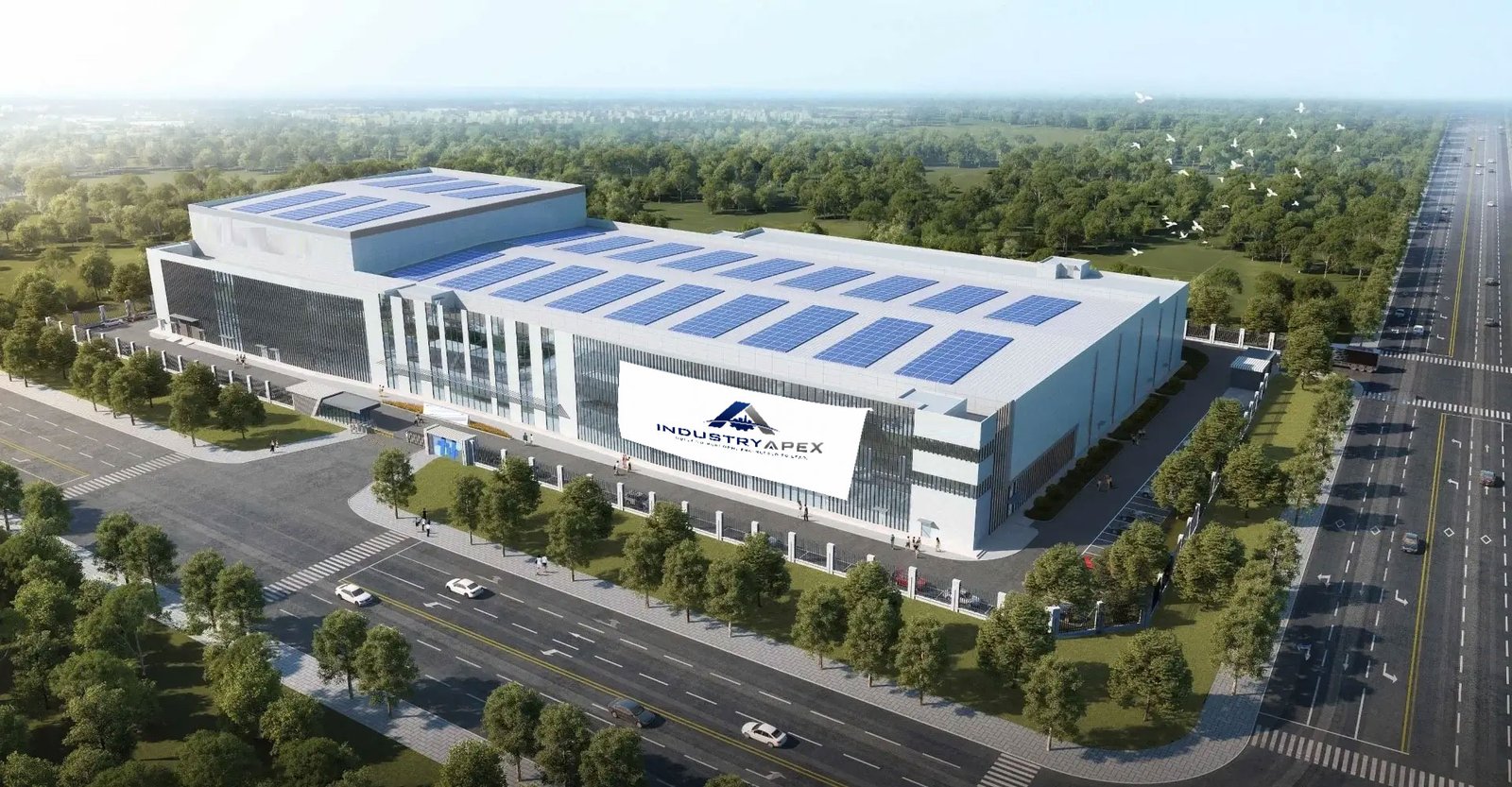
The manufacturing edge comes from a fully controlled precision manufacturing system supported by ERP and more than 30 years of experience. ERP-driven management is especially important in robotics programs because part numbers, revisions, batch traceability, delivery schedules, inspection records, and supplier coordination can quickly become difficult to manage. When robotics OEMs scale from prototype to pilot production and then to serial production, disciplined production control becomes a major competitive advantage.
Technically, IndustryApex Technology’s capability portfolio includes 3-axis and 5-axis CNC machining, EDM, precision grinding, and industrial ceramics. This combination is valuable because robotic assemblies rarely depend on a single process. A compact actuator housing may require 5-axis milling and precision boring. A hardened transmission component may require EDM followed by grinding. A wear-resistant positioning part may require carbide or ceramic processing. A fluid control element for robotic tooling may require precise spool, sleeve, or sealing geometry.
The ODM advantage is also visible in risk reduction. Robotics companies often face design changes during development. A partner with broad process capability can adapt quickly when a component changes material, gains a new sealing feature, requires tighter concentricity, or must be redesigned for weight reduction. Instead of restarting the supplier search, OEMs can work through the engineering challenge with an integrated manufacturer.
Supply chain resilience is another priority for 2026. Robotics programs are vulnerable to delays caused by specialty materials, heat treatment bottlenecks, surface treatment quality, inspection capacity, and inconsistent subcontracting. A supply chain integrator helps manage these variables by aligning process flow, vendor coordination, documentation, and production scheduling. For OEM buyers, this translates into fewer surprises, better communication, and improved continuity.
IndustryApex Technology’s experience across demanding sectors also strengthens its robotics support. Precision lessons from aerospace CNC machining and titanium aircraft structural components are relevant to lightweight robot arms and high-strength structural joints. Quality expectations from ISO-certified CNC machining for medical components are relevant to surgical robotics, laboratory automation, and life-science handling systems. Expertise in hydraulic pump parts supports robotic end-of-arm tooling, mobile robots, heavy automation, and fluid power modules where sealing, flow control, and wear resistance are critical.
4. Industry Applications
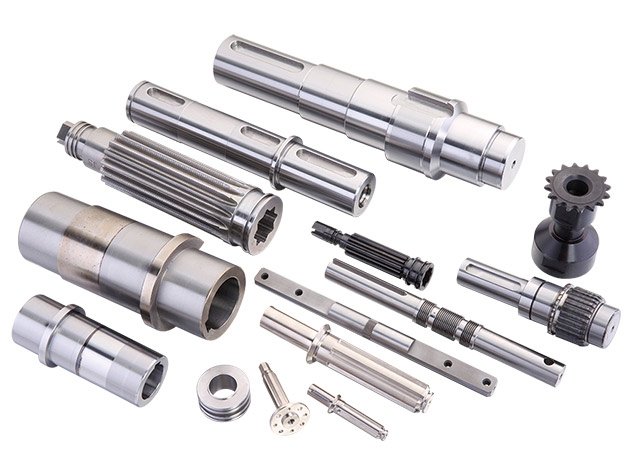
Micron-level robotics components are used across a growing range of industries. In industrial automation, robots must deliver high repeatability under continuous operation. Precision machined motor mounts, reducer housings, splined shafts, bearing seats, and transmission components improve alignment and reduce vibration. In welding, palletizing, machining tending, and assembly robots, this directly affects productivity and maintenance intervals.
In semiconductor automation, precision is even more unforgiving. Wafer handling robots, vacuum-compatible motion systems, inspection equipment, and micro-positioning modules require clean, stable, and tightly controlled components. Materials may need low particle generation, corrosion resistance, vacuum compatibility, and excellent dimensional stability. Industrial ceramics and precision-ground metallic components are often important in these systems because they can support wear resistance and thermal control.
In medical robotics, component quality affects both machine performance and patient safety. Surgical robot joints, instrument interfaces, positioning stages, and minimally invasive tool mechanisms depend on smooth motion, small clearances, and reliable sterilization-compatible materials. Titanium, stainless steel, and specialized surface finishes are frequently used. Consistency, traceability, and clean manufacturing practices are essential for this sector.
In logistics and warehouse automation, the pressure is different but equally demanding. Autonomous mobile robots, sorting systems, grippers, lifts, and conveyor-integrated robotic devices require durable parts that can be manufactured cost-effectively at scale. Shafts, wheels, brackets, gear elements, sensor mounts, and actuator components need stable quality because downtime in a logistics hub can rapidly become expensive.
In humanoid and service robotics, weight, compactness, and energy efficiency are central design drivers. Components must be small, strong, and precise. As joint density increases, manufacturers must produce more complex geometries in less space. Five-axis machining, precision turning, miniature grinding, EDM, and advanced materials will become increasingly important for compact actuator modules and dexterous end effectors.
In agricultural, construction, and field robotics, component suppliers face shock loads, dust, moisture, temperature variation, and long operating hours. Precision remains important, but durability and sealing performance are equally critical. Hydraulic and pump-related components, rugged shafts, wear-resistant sleeves, and corrosion-resistant housings support reliable operation in harsh environments.
Across all these applications, the central engineering challenge is the same: convert design intent into repeatable mechanical performance. Micron-level accuracy is valuable only when it survives material variation, machining stress, heat treatment, finishing, assembly, and real-world use. This is why experienced process engineering and supply chain control matter as much as machine capability.
5. Call to Action
The future of robotics will be built on precision components that are smaller, stronger, cleaner, more complex, and more reliable. By 2026, robotics OEMs and Tier 1 suppliers will increasingly seek manufacturing partners that can support early engineering collaboration, multi-process production, inspection discipline, and supply chain resilience.
IndustryApex Technology, through IndustryApex CNC, provides an integrated path from component concept to controlled production. With capabilities in 3-axis and 5-axis CNC machining, EDM, precision grinding, industrial ceramics, and ERP-supported manufacturing management, the company is prepared to support robotics programs that require micron-level performance and dependable global supply.
If your team is developing robotic actuators, precision transmission parts, medical robotic components, semiconductor automation modules, hydraulic tooling systems, or custom structural components, now is the time to align your design and supply chain strategy. Partnering with an experienced ODM and precision manufacturing integrator can reduce development risk, improve production stability, and accelerate time to market.
To discuss your next robotics component project, visit Contact Us and connect with the IndustryApex Technology engineering team.