- Shaft
- Molds&Tools
- Hydraulics And Pump
- Hair transplant needle
- Hydraulics And Pump
- Precision CNC Shaft Machining Manufacturer for High Performance Applications
- Energy Industry CNC Machining Parts Supplier
- Aerospace CNC Machining Parts Manufacturer
- Aerospace CNC Machining Parts Manufacturer
- Automotive & EV CNC Machining Parts Supplier for OEM and Tier 1
- Medical CNC Machining Parts Supplier for Precision Medical Devices

Ruby and Sapphire Component Machining for Fluid Control Systems | IndustryApex Technology

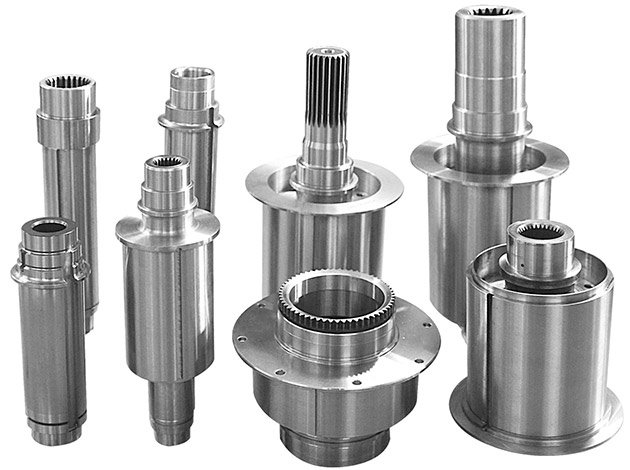
Ruby and Sapphire Component Machining for Fluid Control Systems
Ruby and sapphire are not decorative materials in precision manufacturing. In fluid control systems, they are engineered wear surfaces, flow-control inserts, jewel bearings, nozzle seats, and metering elements that survive abrasive media, high pressure, and dimensional drift far better than many metallic alternatives. For OEMs and Tier 1 suppliers, the value is not only in material hardness. It is in stable leakage performance, repeatable micro-geometry, long service life, and disciplined supply execution.
At IndustryApex Technology, branded in the market as IndustryApex CNC, ruby and sapphire machining sits inside a broader precision manufacturing and ODM framework. That matters because these parts are rarely purchased as isolated items. They sit inside valves, pumps, meters, analytical instruments, and regulated assemblies where engineering, traceability, and lead-time discipline are linked.
1. Executive Summary
Fluid control systems reward materials that preserve geometry under pressure and wear. Ruby and sapphire, both crystalline forms of aluminum oxide with distinct process requirements, are selected when conventional metals or polymers cannot maintain the same contact stability, scratch resistance, or contamination behavior. Their use is common in microfluidics, precision dosing, high-pressure metering, instrumentation, and specialty pump architectures.
The manufacturing challenge is straightforward to state and difficult to execute: the component must be cut, lapped, and inspected to extreme tolerances without introducing edge damage, microcracks, or surface defects that would compromise sealing or flow consistency. Unlike general-purpose machining, jewel component processing depends on controlled fixturing, diamond tooling, precision grinding, EDM-adjacent process planning for hybrid assemblies, and inspection systems that validate both geometry and surface integrity.
Supply chain performance is equally important. Most buyers need more than a part number. They need a partner able to convert a design into a stable production route, manage material sourcing, protect quality records, and support downstream assembly logic. That is where IndustryApex Technology positions itself: as a supply chain integrator and ODM solution provider with a fully controlled precision manufacturing system, ERP-driven execution, more than 30 years of experience, and capability across 3-5 axis CNC, EDM, precision grinding, and industrial ceramics.
2. Technical Deep Dive
Ruby and sapphire are often grouped together commercially, but process engineers should not treat them as identical. Sapphire is typically used where clear, hard, wear-resistant surfaces or transparent windows are required. Ruby, commonly doped with chromium, is selected for similar mechanical reasons and for applications where identification, optical response, or specific material behavior matters. In fluid control, both are used as high-hardness inserts and bearing surfaces because they resist erosion from particulate-laden fluids, maintain polished sealing faces, and support very small contact areas without rapid wear.
The main technical advantage is hardness and wear resistance, but that benefit comes with machining constraints. These materials are brittle. Conventional metal-cutting assumptions do not apply. Tool path planning must minimize localized stress, support clean chip-free removal, and avoid thermal gradients that can initiate fracture. Edge quality is not a cosmetic issue. A tiny edge chip can become a leak path, a crack starter, or a contamination source once the part is assembled into a dynamic system.
In practical production, several controls dominate the process:
- Geometry control: micro-holes, flow channels, seats, and capillary interfaces often require sub-100 micron predictability depending on the application.
- Surface finish: sealing and bearing faces frequently need fine polishing or precision lapping to reduce friction and leakage risk.
- Material handling: jewel parts must be held in fixtures that distribute load evenly and avoid point stress during clamping, transfer, and inspection.
- Process sequencing: roughing, shaping, edge conditioning, and final finishing must be planned as one controlled chain rather than disconnected operations.
Fluid control performance depends on where the jewel component sits inside the assembly. In a valve spool guide, sapphire may function as a durable bearing or seat that stabilizes motion and reduces wear. In a pump or dosing head, ruby nozzles and orifices may regulate flow with repeatable metering behavior. In analytical equipment, the component may manage contamination-sensitive fluid paths where the material itself must not shed particles or react with the medium. These are small parts with large consequences.
For buyers comparing suppliers, the key question is not whether a factory can machine hard materials. It is whether the factory can repeatedly produce the same functional outcome across lots, over time, and under the documentation burden that modern regulated supply chains require. That is why engineering maturity, not only machine capability, determines success.
3. The ODM & Supply Chain Advantage
Ruby and sapphire components are usually embedded in a larger OEM platform, which means the supplier must operate as more than a job shop. IndustryApex Technology’s core identity is that of a supply chain integrator and ODM solution provider. That distinction matters because the customer is often solving for design maturity, manufacturability, and launch risk at the same time.
A fully controlled precision manufacturing system reduces variation between design intent and production reality. When coupled with ERP, it gives the program team visibility into material status, routing, capacity, inspection gates, and shipment timing. For global OEM and Tier 1 suppliers, this is not administrative overhead. It is the mechanism that keeps development schedules intact and prevents hidden process drift from reaching the line.
The manufacturing edge is broad enough to support mixed technical demands. 3-5 axis CNC addresses complex structural interfaces and precision housing features. EDM supports intricate features where geometry or material combination requires controlled removal. Precision grinding is essential where flatness, parallelism, concentricity, or finish quality directly affect sealing or friction behavior. Industrial ceramics capability is also relevant, because many ruby and sapphire programs coexist with ceramic insulators, guides, or wear parts in the same fluid control architecture.
For procurement and engineering teams, this breadth creates a practical advantage. One supplier can participate earlier in the design phase, evaluate whether a jewel insert should be integrated into a ceramic or metal carrier, and help simplify the downstream sourcing stack. That reduces interface risk, especially when the component must be assembled into compact systems with tight thermal, dimensional, or cleanliness constraints.
The most effective ODM relationship also improves lifecycle management. If a product evolves from prototype to pilot to volume, the manufacturing route should evolve with it without changing the functional outcome. A supplier with stable process control, documented quality systems, and a long operating history is better positioned to support that transition than a fragmented network of specialist vendors.
For companies working across sectors such as aerospace parts and medical parts, the expectations are familiar: traceability, consistency, documentation, and controlled change management. Fluid control jewel components sit in the same operational logic even when the form factor is smaller. The cost of a deviation is often hidden until field testing or customer integration, which is why production discipline matters more than theoretical machining capability.
In supply chain terms, the win is simple. Reduce supplier fragmentation, keep the engineering dialogue inside one accountable manufacturing system, and align quality control with ERP-backed execution. That is how high-precision components move from specialty parts to dependable production assets.

4. Industry Applications
Ruby and sapphire component machining is most valuable where fluid behavior must remain stable despite wear, pressure, temperature changes, or contamination risk. The following applications illustrate why the material is selected and how the production requirements differ by sector.
Hydraulics and pump systems. Precision inserts, seats, and nozzles used in hydraulic and pumping equipment must resist erosion and preserve flow accuracy. For these programs, the component often works alongside metallic housings and hardened internals, so the match between jewel part geometry and the surrounding stack is critical. IndustryApex Technology’s hydraulics & pump parts capability reflects this type of integrated requirement, where wear resistance and stable metering directly affect performance.
Semiconductor and analytical fluid systems. Ultra-clean fluid delivery often depends on hard, chemically stable surfaces with minimal particulate generation. Ruby and sapphire are attractive because they support precise metering while helping maintain cleanliness standards. In these systems, even slight edge damage or surface contamination can affect repeatability or yield.
Medical and life science devices. Dosing, diagnostics, and surgical support equipment frequently require small fluid control elements that are repeatable and compatible with demanding cleaning or sterilization expectations. The design language is close to other high-risk precision programs: tight tolerances, documentation, and controlled materials. This is why the same manufacturing discipline seen in medical parts programs transfers naturally to jewel component work.
Aerospace and defense subsystems. Aircraft and flight-support systems may use precision fluid control elements in specialized instrumentation, actuation, or test equipment. The direct fluid contact surface may be tiny, but the quality expectation is high. Programs with aerospace requirements value suppliers that already understand controlled manufacturing environments, inspection rigor, and long-term stability.
Energy and industrial automation. In harsh environments, components that preserve flow characteristics under wear help lower maintenance frequency and protect system uptime. As automation systems become denser and more connected, reliability at the component level becomes a larger contributor to total equipment performance.
Across these applications, the underlying business logic is the same: the smaller the component, the larger the penalty for variation. Buyers need a partner who can connect material science, process planning, and supply assurance into one production system. For technical sourcing teams, that means fewer handoffs, faster design feedback, and less risk when programs move from prototype to volume.
5. Call to Action
If your program requires ruby or sapphire components for fluid control systems, the right starting point is a manufacturing review, not a price-only quote. The critical questions are functional: what surface is sealing, what medium is flowing, what wear mechanism is dominant, what tolerance stack controls performance, and how will the part be inspected and released for production?
IndustryApex Technology can support that conversation from concept through production with precision machining, grinding, EDM, industrial ceramics capability, and ERP-backed supply execution. For organizations that need a dependable ODM partner rather than a transactional vendor, the value is in reducing integration risk while preserving part performance.
Review the broader manufacturing platform at IndustryApex CNC or contact us to discuss your ruby and sapphire fluid control requirement, target tolerances, annual demand, and qualification plan. The fastest path to a stable production part is a technically grounded review early in the program.