- Shaft
- Molds&Tools
- Hydraulics And Pump
- Hair transplant needle
- Hydraulics And Pump
- Precision CNC Shaft Machining Manufacturer for High Performance Applications
- Energy Industry CNC Machining Parts Supplier
- Aerospace CNC Machining Parts Manufacturer
- Aerospace CNC Machining Parts Manufacturer
- Automotive & EV CNC Machining Parts Supplier for OEM and Tier 1
- Medical CNC Machining Parts Supplier for Precision Medical Devices

Industrial Ceramics Machining: Zirconia and Alumina Applications for OEM Supply Chains

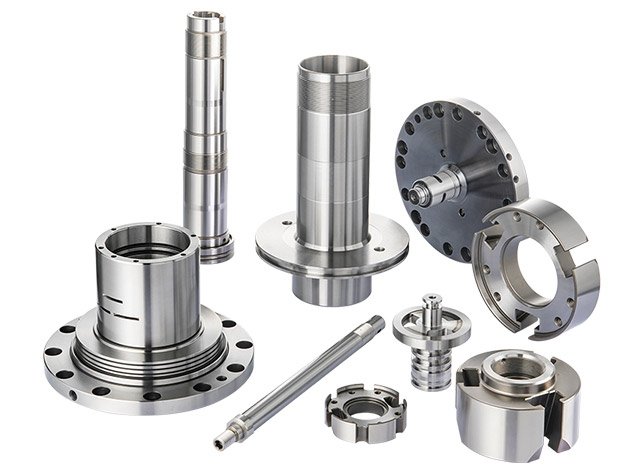
Industrial Ceramics Machining: Zirconia and Alumina Applications for OEM Supply Chains
1. Executive Summary
Industrial ceramics machining has become a strategic manufacturing capability for OEMs and Tier 1 suppliers that need components capable of surviving aggressive wear, high temperature, electrical insulation requirements, chemical attack, and dimensional stability challenges that exceed the limits of conventional metals. Among advanced ceramic materials, zirconia and alumina are two of the most widely specified options because they combine engineered hardness, corrosion resistance, thermal stability, and long service life in compact precision parts.
For global engineering teams, the key question is not simply whether zirconia or alumina is the better material. The real sourcing question is whether the supplier can convert a brittle, high-performance ceramic into a repeatable production component with controlled geometry, stable tolerances, reliable surface finish, and scalable delivery. Industrial ceramic parts often operate as bushings, seals, nozzles, plungers, pump components, spacers, guides, wear pads, insulating sleeves, metrology fixtures, and semiconductor or medical device components. A small deviation in flatness, cylindricity, edge condition, or surface integrity can determine whether the part extends equipment life or becomes the point of premature failure.
IndustryApex Technology, operating through IndustryApex CNC, approaches ceramic machining as part of a broader precision manufacturing and supply chain integration model. Instead of treating ceramics as an isolated process, we connect material selection, manufacturability review, CNC grinding, EDM-related support processes where applicable, inspection planning, packaging, and export logistics into one controlled workflow. Buyers can learn more about our broader precision manufacturing platform at IndustryApex CNC.
This article examines zirconia and alumina from an engineering and supply chain perspective. It explains where each material performs best, what machining constraints matter, how ceramic tolerances should be planned, and why an ODM partner with a controlled manufacturing system can reduce technical and procurement risk for international OEM programs.
2. Technical Deep Dive
Industrial ceramics differ from metals in their internal structure, mechanical response, and machining behavior. Metals generally deform plastically before fracture, while advanced ceramics are hard, chemically stable, and brittle. This brittleness is not a weakness when the part is properly designed and processed; it is the reason ceramics can deliver superior wear resistance and dimensional stability. However, it requires specialized machining strategies, fixture design, grinding parameters, and inspection procedures.
Zirconia, often supplied as yttria-stabilized zirconia, is valued for its high fracture toughness relative to many other ceramics. It offers excellent wear resistance, strong bending strength, low thermal conductivity, and good resistance to crack propagation. These characteristics make zirconia suitable for components subjected to sliding wear, intermittent contact, impact risk, or cyclic loading. Typical examples include ceramic plungers, valve components, bearing sleeves, pump shafts, wear guides, medical device parts, and forming tools. Zirconia is also frequently selected where a ceramic part must retain a polished surface finish under repeated mechanical contact.
Alumina, typically available in purity levels such as 95%, 96%, 99%, or 99.5%, is one of the most established engineering ceramics. It offers high hardness, strong electrical insulation, excellent chemical resistance, and good high-temperature capability. Alumina is widely used for insulating components, sensor housings, semiconductor fixtures, wear plates, mechanical seals, textile guides, nozzles, and analytical equipment parts. Higher purity alumina improves corrosion resistance, dielectric performance, and thermal performance, but may increase machining difficulty and cost. Material grade selection should therefore be tied to the actual operating environment rather than chosen by default.
The machining process for zirconia and alumina usually involves diamond grinding, precision lapping, polishing, and carefully controlled edge preparation. Depending on the geometry, parts may first be formed near-net-shape through pressing, injection molding, or green machining before sintering. After sintering, the material reaches its final hardness and requires abrasive machining. Because sintering shrinkage must be anticipated, design-for-manufacturability review is essential before volume production. Holes, slots, thin walls, sharp internal corners, long aspect-ratio bores, and ultra-tight concentricity requirements can all affect yield and cost.
Tolerance planning is one of the most important engineering steps. Ceramic components can be manufactured to high precision, but every tight tolerance must justify its functional value. For example, a ceramic sleeve used in a pump assembly may require excellent inner diameter roundness and surface finish, while a non-critical external chamfer may only need a protective edge break. Over-tolerancing ceramic parts can increase cycle time, inspection complexity, and scrap risk without improving field performance. The best practice is to define critical-to-quality features, clarify mating components, confirm measurement method, and agree on inspection references before tooling and process planning are finalized.
Surface finish also has a direct impact on function. In sliding or sealing applications, surface roughness affects friction, leakage, particle generation, and wear rate. A polished zirconia plunger can reduce abrasion against mating seals, while a finely ground alumina guide can maintain stable movement in high-speed equipment. Edge quality is equally important. Ceramics do not tolerate uncontrolled sharp edges in the same way that ductile metals do. Micro-chipping at corners can become a stress concentrator, so controlled chamfers, radii, and deburring specifications should be included in the drawing.
Thermal behavior must also be considered. Alumina provides good high-temperature performance and electrical insulation, while zirconia offers lower thermal conductivity and higher toughness. In assemblies where ceramics interface with stainless steel, titanium, aluminum, or engineering polymers, differences in coefficient of thermal expansion may influence fit, preload, and sealing performance. A component that performs well at room temperature may need design modification if it operates through thermal cycling, rapid heat-up, or cryogenic exposure.
3. The ODM & Supply Chain Advantage
Industrial ceramic machining is not only a technical operation; it is a supply chain discipline. Many OEM buyers have experienced the same pattern: a prototype supplier can produce a few ceramic samples, but cannot maintain stable yield, documentation, and delivery when demand scales. Others can machine simple parts but cannot provide manufacturability feedback, material alternatives, assembly knowledge, or cross-process integration. This is where IndustryApex Technology’s ODM and supply chain integrator model creates value.
As a supply chain integrator and ODM solution provider, IndustryApex Technology supports customers from concept review through production release. Our role is to help global OEM and Tier 1 suppliers convert functional requirements into manufacturable components, then manage the manufacturing route with a focus on quality, cost, and delivery. Ceramic components often belong inside larger mechanical systems, such as fluid control assemblies, medical devices, aerospace test equipment, analytical instruments, automation equipment, or high-wear industrial machinery. By understanding the surrounding assembly, we can recommend whether zirconia, alumina, stainless steel, titanium, carbide, or a hybrid solution is most appropriate.

Our manufacturing edge is a fully controlled precision manufacturing system supported by ERP and more than 30 years of accumulated manufacturing experience. ERP-driven production control is especially important for international buyers because ceramic parts may involve multiple linked stages: raw material procurement, blank preparation, sintering coordination, precision grinding, lapping, polishing, inspection, cleaning, packaging, and shipment. A controlled system improves traceability, reduces communication gaps, and supports consistent lead time planning.
IndustryApex Technology’s technical capabilities include 3-axis and 5-axis CNC machining, EDM, precision grinding, and industrial ceramics processing. While ceramics themselves are commonly shaped through abrasive machining rather than conventional chip-cutting, many ceramic projects require complementary metal components, fixtures, housings, shafts, inserts, or mating parts. The ability to manufacture both ceramic and metallic precision components within a coordinated supply chain can shorten development cycles and reduce supplier fragmentation. For example, a pump project may require zirconia plungers, stainless housings, precision sleeves, sealing hardware, and test fixtures. A medical device project may require alumina insulating parts together with titanium or stainless components. Instead of forcing the buyer to manage several specialized vendors, an integrated ODM partner can align interfaces, tolerances, and documentation.
This model is particularly valuable for OEM sourcing teams under pressure to reduce total landed cost while protecting technical performance. The lowest unit quote is rarely the lowest program cost if it leads to unstable quality, late deliveries, high incoming inspection burden, engineering rework, or inconsistent packaging. Ceramic parts can be sensitive to hidden defects, micro-chipping, and handling damage. Therefore, packaging engineering, inspection planning, and supplier accountability are not secondary details; they are part of the product.
IndustryApex Technology also helps customers optimize drawings for ceramic production. We review wall thickness, hole depth, corner radii, datum strategy, surface finish callouts, and tolerance stacks. Where appropriate, we may suggest changing a sharp internal corner to a radius, relaxing a non-functional tolerance, splitting a complex geometry into a ceramic-metal assembly, or selecting zirconia instead of alumina for toughness-critical service. These recommendations are not generic cost reductions; they are engineering decisions intended to improve manufacturability and field reliability.
4. Industry Applications
Zirconia and alumina components serve a wide range of industries because they solve problems that metals and polymers cannot address efficiently. In fluid control systems, ceramics are used for plungers, valve seats, metering components, bushings, and seal faces that must withstand abrasive media, chemical exposure, or long duty cycles. Zirconia is often preferred where toughness and polished wear performance are critical, while alumina is attractive for chemically aggressive or electrically insulating environments. Buyers developing pumps, hydraulic systems, and valve assemblies can also explore our related capabilities for hydraulic and pump parts.
In medical and life science equipment, ceramics are valued for wear resistance, chemical stability, insulation, and cleanability. Alumina can be used in insulating sleeves, analytical instrument components, and device subassemblies, while zirconia is known for toughness and smooth surface capability in selected medical technology applications. Because medical programs require process discipline and documentation, ceramic parts must be manufactured with strong inspection control and consistent traceability. IndustryApex Technology also supports precision production for medical components, surgical instruments, implants, and device parts.
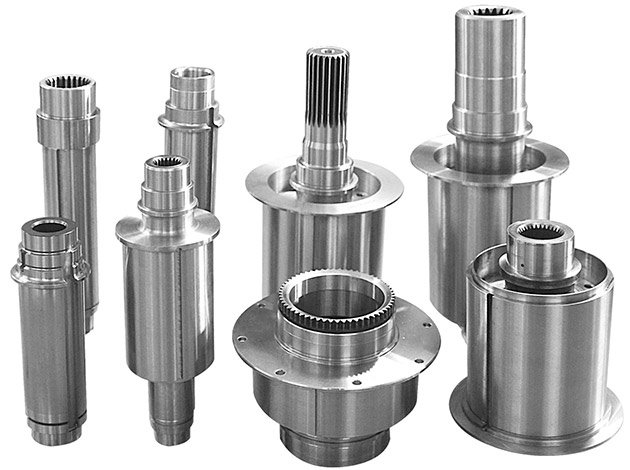
In aerospace and high-performance equipment, advanced ceramics may be applied in insulating components, sensor-related parts, wear-resistant guides, test fixtures, and high-temperature or low-outgassing environments. While aerospace assemblies often rely on titanium, aluminum, stainless steel, and nickel alloys, ceramic components can solve localized wear, heat, or electrical isolation challenges. The ability to manage ceramic and metallic components under one precision manufacturing framework is valuable for suppliers serving demanding aerospace programs. More information about our aerospace manufacturing scope is available on our aerospace CNC machining and aircraft parts page.
In semiconductor and electronics manufacturing, alumina is widely used because of its dielectric strength, thermal stability, and plasma or chemical resistance, depending on grade and process environment. Ceramic parts may include nozzles, spacers, vacuum-compatible fixtures, wafer handling supports, insulating rings, and precision alignment components. Dimensional stability and cleanliness are critical because contamination or particle generation can disrupt high-value production environments. Zirconia may also be selected in certain wear or precision positioning applications where toughness is required.
In industrial automation and machinery, ceramic wear components help reduce downtime. Textile guides, wire drawing guides, forming supports, cutting equipment guides, packaging machine wear rails, and abrasive handling components often benefit from alumina or zirconia. Even when the ceramic part costs more than a metal or polymer alternative, the total cost of ownership can be lower if it extends maintenance intervals, reduces lubrication needs, or prevents production stoppages.
In chemical processing and analytical instrumentation, alumina and zirconia provide corrosion resistance and dimensional stability in challenging environments. Components such as dosing elements, liners, seats, rods, and insulating parts may be exposed to solvents, acids, high-purity fluids, or abrasive powders. Material compatibility review is essential because no single ceramic is ideal for every chemical environment, but advanced ceramics often provide a strong balance of stability and mechanical performance.
Across these industries, the central engineering principle is application-specific selection. Zirconia is not universally superior because it is tougher, and alumina is not universally superior because it is harder or more insulating. The best material depends on load, sliding speed, mating material, lubrication, temperature, electrical requirements, chemical exposure, geometry, and cost target. A reliable manufacturing partner should help buyers compare these trade-offs before locking the design.
5. Call to Action
Industrial ceramics machining requires more than access to grinding equipment. It requires material knowledge, process discipline, inspection capability, supply chain coordination, and the willingness to challenge drawings before they become expensive production problems. Zirconia and alumina can deliver outstanding performance in pumps, medical devices, aerospace systems, semiconductor equipment, automation machinery, and chemical processing systems, but only when material selection and manufacturability are aligned from the beginning.
IndustryApex Technology, through IndustryApex CNC, supports global OEM and Tier 1 suppliers as a precision manufacturing partner, ODM solution provider, and supply chain integrator. With over 30 years of experience, ERP-controlled operations, 3-5 axis CNC machining, EDM, precision grinding, and industrial ceramics capability, we help customers move from prototype uncertainty to stable production supply.
If you are developing zirconia or alumina components, preparing to reshore or diversify your supply base, or struggling with ceramic part quality from an existing vendor, our engineering team can review your drawings, tolerances, materials, and application requirements. Contact us through the IndustryApex Technology contact page to discuss your next industrial ceramics machining project.