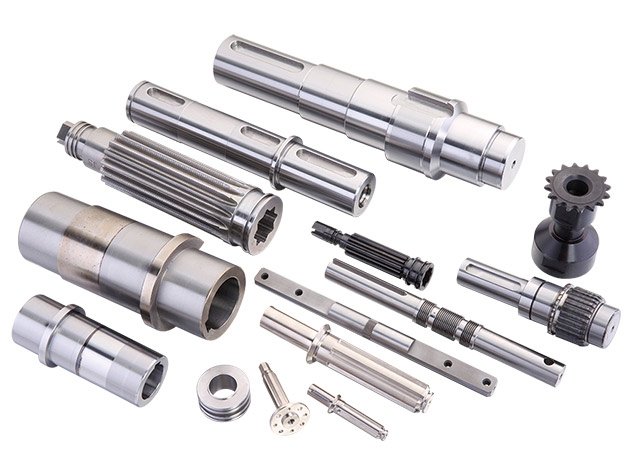
- Shaft
- Molds&Tools
- Hydraulics And Pump
- Hair transplant needle
- Hydraulics And Pump
- Precision CNC Shaft Machining Manufacturer for High Performance Applications
- Energy Industry CNC Machining Parts Supplier
- Aerospace CNC Machining Parts Manufacturer
- Aerospace CNC Machining Parts Manufacturer
- Automotive & EV CNC Machining Parts Supplier for OEM and Tier 1
- Medical CNC Machining Parts Supplier for Precision Medical Devices
The Role of Supply Chain Integrators in Agile Manufacturing: How ODM-Driven Precision Manufacturing Accelerates Global OEM Performance

Executive Summary
Agile manufacturing is no longer defined only by internal factory speed. For global OEMs and Tier 1 suppliers, true agility now depends on how well engineering, procurement, quality, and logistics operate as one synchronized system. This is where supply chain integrators create measurable value. By unifying sourcing, process planning, precision machining, inspection, and delivery control, they reduce friction across the manufacturing lifecycle and make it possible to respond quickly to design changes, demand volatility, and risk in the supply base.
In high-precision industries such as aerospace, medical, hydraulics, semiconductor equipment, and industrial automation, a supply chain integrator does more than move parts. It converts fragmented supplier networks into a controlled production ecosystem. That means fewer handoffs, shorter lead times, tighter traceability, and improved cost predictability. For organizations that need both custom engineering and repeatable production quality, the integrator model is increasingly the difference between reactive manufacturing and resilient, scalable manufacturing.
IndustryApex Technology, through the IndustryApex CNC platform, operates as both a supply chain integrator and an ODM solution provider. With over 30 years of experience, a fully controlled precision manufacturing system, ERP-enabled production management, and capabilities spanning 3-5 axis CNC machining, EDM, precision grinding, and industrial ceramics, it supports global OEM and Tier 1 requirements with a manufacturing model built for agility. Explore our home page to understand how integrated precision manufacturing can strengthen your supply continuity and product performance.
Technical Deep Dive
Agile manufacturing is often described as the ability to respond quickly to change. In practice, that response depends on system architecture. If engineering data, materials planning, process routing, production scheduling, and quality verification sit in separate silos, speed becomes fragile. Supply chain integrators solve this by building a connected operating model that aligns upstream and downstream activities under one technical and commercial framework.
At the engineering level, integration starts with manufacturability. A capable integrator reviews drawings, tolerances, material requirements, surface finish criteria, and critical-to-function dimensions before production begins. This early collaboration can reduce revision cycles and eliminate avoidable process failures. In industries where part geometry is complex and performance margins are narrow, these upstream decisions strongly influence yield, throughput, and lifecycle reliability.
One of the biggest operational benefits of integration is reduction of translation loss. In conventional multi-supplier workflows, design intent can be weakened as it moves from OEM engineering to procurement, then to subcontractors, and finally to the machine shop. Every transition introduces the risk of misinterpretation. A supply chain integrator minimizes this risk by owning the production logic end to end, ensuring that inspection plans, tooling strategy, and process capability remain aligned with the original technical specification.
ERP integration is equally important. A fully controlled precision manufacturing system supported by ERP enables real-time coordination of materials, work orders, machine capacity, quality documentation, and shipment readiness. This creates visibility across the production chain, allowing manufacturers to anticipate bottlenecks rather than discover them after delays occur. For global OEM programs, this visibility supports better inventory planning, more accurate delivery commitments, and improved customer communication.
From a process technology standpoint, agile manufacturing depends on access to flexible and repeatable capabilities. Multi-axis CNC machining allows complex components to be produced with fewer setups, reducing cumulative error and cycle time. EDM adds value where hard materials, internal features, or sharp corners must be formed with high precision. Precision grinding supports the tight dimensional control needed for bearing surfaces, hydraulic interfaces, and medical-grade components. Industrial ceramics broaden the material range for wear resistance, insulation, thermal stability, and chemical compatibility.
These technologies matter because modern supply chains are no longer based on one part type or one industry. A single integrator may support aerospace brackets, titanium medical components, fluid control elements, or high-wear industrial assemblies. The integration model gives customers one technical partner capable of managing multiple process families while maintaining consistent quality systems and production discipline.
Agility also depends on traceability. In regulated and high-reliability sectors, batch-level documentation, material certs, process records, and inspection data must remain linked throughout the product lifecycle. The more fragmented the supplier base, the harder this becomes. A supply chain integrator can standardize document control and audit readiness, reducing compliance burden for OEM quality teams and strengthening confidence during customer audits.
Finally, integrated manufacturing improves risk resilience. When demand shifts, lead-time disruptions occur, or raw material availability tightens, a fully controlled production system can reallocate capacity and adjust routing more efficiently than a loose supplier network. This flexibility is a core advantage of the integrator model in volatile markets.
The ODM & Supply Chain Advantage
For global OEMs and Tier 1 suppliers, the most valuable manufacturing partners are no longer just vendors. They are system-level collaborators who can turn product concepts into reliable supply programs. This is the strategic role of an ODM-focused supply chain integrator. Rather than acting only as a machining source, the integrator owns more of the production logic, helping customers shorten development cycles, reduce supplier complexity, and improve consistency across product generations.
IndustryApex Technology’s core identity as a supply chain integrator and ODM solution provider is central to its value proposition. In practical terms, this means the company can participate at multiple levels of the product lifecycle: design support, process selection, sourcing coordination, in-process control, final inspection, and delivery execution. That breadth is especially useful for customers who need a single accountable partner for engineered components that must meet strict performance and timeline requirements.
The manufacturing edge is built on a fully controlled precision manufacturing system with ERP integration and more than 30 years of experience. Experience matters because precision manufacturing is not simply a function of machine capability. It also depends on process knowledge, fixture strategy, tool path discipline, material behavior, thermal control, and inspection methodology. Over decades of production exposure, a manufacturer develops the ability to predict and prevent failure modes that would otherwise create scrap, rework, or delay.
For customers, this translates into better lead-time stability and lower total cost of ownership. A disciplined supplier ecosystem reduces the overhead associated with vendor management, qualification cycles, and quality escalation. When production is controlled through ERP, part status and capacity planning become easier to manage, helping customers build more accurate forecasts and support just-in-time or hybrid inventory strategies.
Technology capability is another critical differentiator. With 3-5 axis CNC machining, EDM, precision grinding, and industrial ceramics expertise, the integrator can address a broad range of component requirements without forcing customers to split programs across multiple suppliers. That matters for assemblies that combine hardened features, fine tolerances, challenging geometries, or specialized materials. It also matters when scale-up is required after prototyping, because the same engineering partner can support both initial validation and repeat production.
For OEM procurement teams, the advantage is not only technical. It is structural. A supply chain integrator reduces the number of interfaces that must be managed, which lowers communication overhead and improves accountability. Instead of coordinating raw material vendors, machining houses, finishing providers, and inspection labs separately, the customer works with one production system. That system can be easier to audit, easier to improve, and easier to scale.
As a result, ODM and integration capabilities are especially valuable for global programs where consistency across regions and product lines is essential. This includes complex, regulated, or mission-critical applications where quality deviations can have significant downstream consequences. IndustryApex Technology’s model is designed to serve these customers with a balance of engineering responsiveness, manufacturing discipline, and supply chain control.
Learn more about the company’s precision manufacturing scope on the IndustryApex CNC homepage, or contact the engineering team directly through the contact page to discuss a project.
Industry Applications
Supply chain integrators create value across industries where precision, traceability, and delivery reliability are essential. In aerospace, component geometry, material certification, and dimensional stability must meet demanding standards. Integrated manufacturing is especially useful for structural elements, titanium parts, and complex five-axis components. For aerospace-related programs, see our aerospace parts capability.
In medical manufacturing, agility must coexist with compliance and consistency. Surgical instruments, titanium implants, and high-precision device parts require reliable process control, clean documentation, and repeatability across batches. An integrated supply chain model helps reduce variation while supporting the traceability expectations of medical OEMs and contract manufacturers. Explore our medical parts manufacturing page for more detail.
Hydraulics and pump systems present a different challenge: performance depends on tight sealing surfaces, wear resistance, and stable tolerances over time. A supply chain integrator can support valve bodies, spools, sleeves, and pump components with the precision and repeatability needed for leak resistance and durability. See our hydraulics & pump parts offering.
Beyond these sectors, the integrator model also supports semiconductor equipment, automation, optics, energy systems, and custom industrial machinery. In each case, the pattern is the same: when product complexity rises and supply networks become more fragmented, the value of integration increases. OEMs need fewer communication gaps, more predictable quality, and partners that can adapt quickly without losing control of the production process.
The most successful supply chain integrators are not simply reacting to purchasing demand. They are shaping the production environment around customer goals. That means making engineering decisions with downstream supply risk in mind, selecting manufacturing methods that improve repeatability, and using centralized planning to keep delivery commitments realistic. For businesses serving high-value industrial markets, this combination can improve both competitiveness and resilience.
Call to Action
If your organization is seeking a manufacturing partner that can unify engineering support, precision production, and supply chain control, IndustryApex Technology is ready to help. As IndustryApex CNC, we support global OEMs and Tier 1 suppliers with a supply chain integrator model designed for agility, quality, and long-term program stability.
Whether you need complex CNC-machined components, EDM features, precision ground surfaces, or specialized industrial ceramic solutions, our team can help align design requirements with scalable production execution. Start a conversation through our Contact Us page and discover how integrated manufacturing can strengthen your supply chain performance.