- Shaft
- Molds&Tools
- Hydraulics And Pump
- Hair transplant needle
- Hydraulics And Pump
- Precision CNC Shaft Machining Manufacturer for High Performance Applications
- Energy Industry CNC Machining Parts Supplier
- Aerospace CNC Machining Parts Manufacturer
- Aerospace CNC Machining Parts Manufacturer
- Automotive & EV CNC Machining Parts Supplier for OEM and Tier 1
- Medical CNC Machining Parts Supplier for Precision Medical Devices

Custom Gear Manufacturing: Engineering Control from Prototype Validation to Mass Production

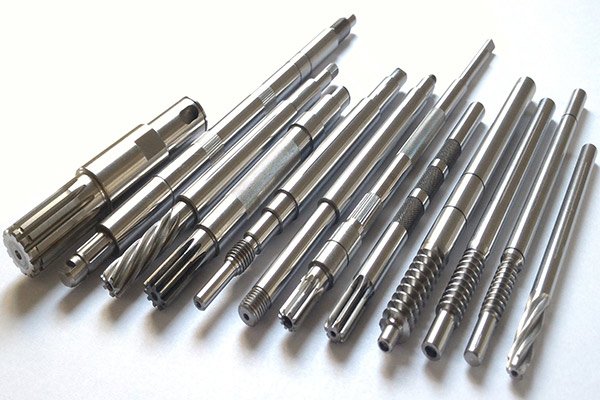
Custom Gear Manufacturing: Engineering Control from Prototype Validation to Mass Production
For OEMs and Tier 1 suppliers, custom gear manufacturing is not only a machining project. It is a reliability, cost, noise, durability, and supply continuity decision that affects the entire mechanical system. A gear may look like a compact component on a drawing, but its performance depends on tooth geometry, material cleanliness, heat treatment stability, surface integrity, metrology discipline, and the manufacturer’s ability to repeat the process across thousands or millions of cycles in the field.
IndustryApex Technology, operating globally through IndustryApex CNC, supports customers that need engineered gear and transmission components for demanding equipment platforms. Through a controlled precision manufacturing system, over 30 years of machining experience, and integrated ODM and supply chain support, we help buyers move from early prototype intent to repeatable mass production with fewer engineering loops and lower sourcing risk. More information about our broader manufacturing capabilities is available at IndustryApex CNC.
Executive Summary
Custom gear projects usually begin with a performance requirement: transmit a defined torque, fit within a constrained envelope, reduce backlash, withstand shock loading, operate quietly, or survive abrasive and high-temperature environments. The challenge is that these requirements compete with each other. A stronger tooth form may increase manufacturing difficulty. A tighter backlash target may require more precise housing alignment. A surface finish improvement may add grinding cost, while a material change may alter heat treatment distortion.
The best manufacturing route is therefore not selected only by looking at the gear drawing. It is selected by reviewing the gear as part of the system. Engineers must evaluate load spectrum, duty cycle, lubrication, mating component quality, shaft alignment, assembly tolerance stack, regulatory requirements, and service life expectations. For procurement teams, the same project must also be evaluated through production scalability, inspection cost, supplier stability, lead time, and documentation control.
A mature supplier reduces these risks by combining design-for-manufacturability feedback with controlled process execution. In prototype stages, the priority is to validate tooth geometry, material behavior, and assembly performance quickly. In pilot production, the priority shifts to process capability, tooling strategy, inspection repeatability, and heat treatment control. In mass production, the focus becomes repeatability, ERP-driven scheduling, lot traceability, cost control, and supply chain resilience.
For global OEMs and Tier 1 suppliers, this is where IndustryApex Technology’s role extends beyond machining. As a supply chain integrator and ODM solution provider, we coordinate precision manufacturing, finishing, metrology, material sourcing, and production planning into a practical delivery model. The result is not just a gear that meets print once, but a manufacturing system that can keep meeting print as demand scales.
Technical Deep Dive
Engineering a custom gear starts with defining the geometry and its functional target. Spur gears, helical gears, bevel gears, worm gears, internal gears, splined gears, and gear shafts each impose different manufacturing and inspection requirements. Tooth profile, pressure angle, module or diametral pitch, helix angle, face width, crowning, root fillet, runout, and surface finish all influence noise, load distribution, efficiency, and life. In precision assemblies, the gear cannot be treated as an isolated shape; it must be engineered with the mating gear, bearing locations, shaft rigidity, and housing geometry.
Material selection is one of the earliest decisions with long downstream consequences. Alloy steels such as 20CrMnTi, 40Cr, 42CrMo, and carburizing grades are common for high-strength transmission applications. Stainless steels may be required where corrosion resistance is essential. Bronze and brass are often used in worm gear sets because of friction behavior and anti-seizure performance. Engineering plastics may be selected for low noise, low weight, or dry-running applications, but require careful review of temperature, creep, and moisture absorption. For severe wear, ceramic or carbide-related solutions can be considered where the application justifies the cost and processing route.
Heat treatment must be engineered with machining strategy, not added as an afterthought. Carburizing, nitriding, induction hardening, quenching and tempering, and vacuum heat treatment each create different hardness profiles and distortion risks. Gear teeth may need hard wear surfaces while the core retains toughness. However, distortion after heat treatment can change lead, profile, bore concentricity, and runout. A capable manufacturer anticipates this by planning pre-machining stock, stress relief, controlled fixturing, and finish grinding allowances.
The machining route depends on volume, accuracy class, and geometry. Prototypes may use 3-axis or 5-axis CNC machining, wire EDM, gear milling, or flexible tooling to avoid long lead times. When the design stabilizes, hobbing, shaping, broaching, skiving, grinding, and specialized fixturing may be introduced to improve throughput and repeatability. EDM can solve fine internal features, sharp transitions, or difficult material conditions. Precision grinding is often required after heat treatment to control tooth surface, bore accuracy, and bearing interfaces.
Inspection is equally important. Gear quality cannot be proven by checking only outside diameter and bore size. Critical features may include profile deviation, lead deviation, pitch error, total cumulative pitch deviation, tooth thickness, radial runout, surface roughness, hardness depth, microstructure, and contact pattern. Coordinate measuring machines, gear measuring centers, surface roughness instruments, hardness testers, optical systems, and functional roll testing can all play a role. For safety-critical assemblies, documentation may include material certificates, heat treatment reports, dimensional inspection records, PPAP-style packages, and traceability data.
During prototyping, engineering teams should avoid optimizing only for the first sample. A prototype process that cannot transition into production creates cost and timing risk later. The better approach is to use prototype feedback to identify which features truly drive performance and which tolerances can be opened without affecting system behavior. This reduces unnecessary grinding, inspection burden, and scrap during mass production.
The ODM & Supply Chain Advantage
Custom gear manufacturing becomes significantly more efficient when the supplier can operate as both a precision manufacturer and a supply chain integrator. IndustryApex Technology’s core identity is built around this model. We support customers not only by producing parts, but by helping define a manufacturable route that connects engineering objectives with stable supply, cost discipline, and long-term production control.
Our manufacturing edge comes from a fully controlled precision manufacturing system supported by ERP and more than 30 years of experience. ERP control matters because gear programs often involve multiple process steps: raw material procurement, rough machining, heat treatment, finish machining, grinding, coating, inspection, packaging, and shipment. Without integrated scheduling and lot control, small delays in one process can affect the entire delivery chain. For global OEMs, this is especially important when parts are feeding assembly lines, service networks, or multi-country production programs.
IndustryApex Technology’s technical capabilities include 3-axis and 5-axis CNC machining, EDM, precision grinding, and industrial ceramics processing. This mix allows us to support complex gear-related components such as gear shafts, splined sleeves, actuator components, transmission housings, wear-resistant inserts, pump drive elements, and hybrid assemblies that require both metallic and advanced material expertise. Rather than forcing every project into one process, we select the route according to geometry, tolerance, batch size, and performance requirement.
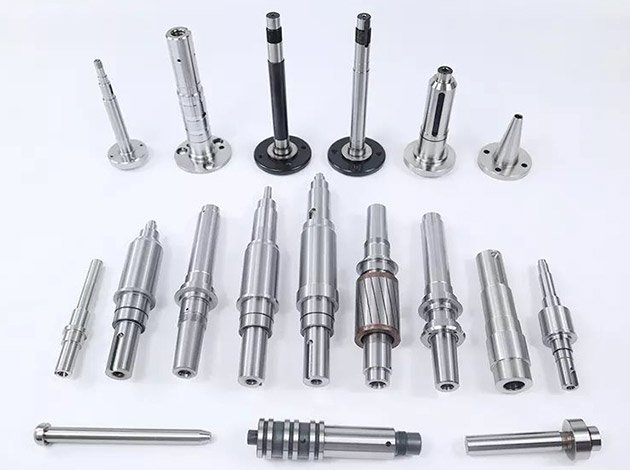
The ODM advantage is strongest when customers need more than build-to-print machining. Early collaboration can identify opportunities to simplify tooth geometry, improve datum strategy, reduce heat treatment distortion, standardize material supply, consolidate components, or select a finishing method that improves service life. In some projects, small design adjustments reduce total cost more than aggressive price negotiation ever could. This is especially true for gears with deep internal features, thin walls, high hardness, tight concentricity, or strict noise requirements.
For procurement and supply chain teams, supplier qualification must consider more than unit price. A low quote can become expensive if the supplier cannot manage documentation, dimensional consistency, capacity changes, or corrective action. Global OEM and Tier 1 suppliers need partners that can communicate clearly, protect engineering intent, scale production responsibly, and maintain traceability over time. IndustryApex Technology aligns its manufacturing and sourcing model around these expectations.
Another important supply chain issue is process ownership. When gear cutting, heat treatment, grinding, and inspection are loosely coordinated among disconnected vendors, accountability becomes difficult. A supply chain integrator reduces this fragmentation by managing the process route and quality checkpoints as a single program. This does not eliminate technical complexity, but it creates clearer responsibility and faster problem solving when tolerances, surface conditions, or delivery timing need adjustment.
Industry Applications
Custom gears and transmission components appear across industries where motion, torque, and precision must be controlled. In aerospace systems, weight reduction and reliability are central. Gear components may support actuators, landing systems, control mechanisms, cabin equipment, or structural movement assemblies. These parts often require high-strength materials, excellent traceability, and consistent inspection. IndustryApex Technology’s related aerospace machining capabilities can be reviewed through our aerospace CNC machining and aircraft structural components page.
In medical equipment, precision gears may be used in surgical tools, diagnostic devices, robotic systems, pumps, and positioning mechanisms. The requirements are different from heavy industry: compact geometry, smooth movement, clean surface condition, corrosion resistance, and documentation discipline often matter more than extreme torque. For customers developing medical devices or instruments, our ISO-certified CNC machining for medical components capabilities provide relevant context.
Hydraulic pumps, fluid control systems, and industrial drive units also depend heavily on gear quality. Gear pumps require accurate tooth geometry, tight clearances, controlled surface finish, and wear-resistant materials to maintain efficiency and reduce leakage. Pump drive components must handle pressure pulsation, lubrication variation, and continuous duty cycles. IndustryApex Technology supports related precision components for hydraulic pump parts, including demanding machined features used in fluid power systems.
Automotive, agricultural, construction, energy, robotics, packaging, and semiconductor equipment all create additional gear manufacturing challenges. Electric vehicles may need quieter gears with optimized surface texture. Construction machinery may require shock-load resistance and durable heat treatment. Robotics may require low backlash and compact design. Semiconductor and automation equipment often require motion stability, cleanliness, and precision over long duty cycles. In each sector, the manufacturing strategy must follow the operating environment rather than a generic gear production checklist.
For mass production, application knowledge also affects packaging, cleaning, rust prevention, and logistics. A precision ground gear damaged by poor handling is still a failed supply chain outcome. Export packaging, corrosion protection, part separation, labeling, and batch traceability must be planned with the same seriousness as machining. This is particularly important for international OEMs managing assembly plants across regions.
Call to Action
Custom gear manufacturing succeeds when engineering, process control, and supply chain execution are aligned from the beginning. The most reliable suppliers do not simply cut teeth into metal; they help customers validate geometry, stabilize materials, control heat treatment, verify critical dimensions, and scale production without losing technical discipline.
IndustryApex Technology, through IndustryApex CNC, works with global OEM and Tier 1 suppliers that need precision custom gears, splined shafts, transmission components, pump drive parts, actuator elements, and complex machined assemblies. Whether your project is at prototype review, pilot production, supplier transfer, or mass production ramp-up, our team can support engineering evaluation and manufacturing planning.
To discuss drawings, materials, annual demand, quality requirements, or an ODM manufacturing program, contact our engineering and supply chain team through IndustryApex CNC Contact Us. Early technical review is the best time to reduce cost, protect performance, and build a production route that can scale.