- Shaft
- Molds&Tools
- Hydraulics And Pump
- Hair transplant needle
- Hydraulics And Pump
- Precision CNC Shaft Machining Manufacturer for High Performance Applications
- Energy Industry CNC Machining Parts Supplier
- Aerospace CNC Machining Parts Manufacturer
- Aerospace CNC Machining Parts Manufacturer
- Automotive & EV CNC Machining Parts Supplier for OEM and Tier 1
- Medical CNC Machining Parts Supplier for Precision Medical Devices

Navigating ISO Standards for Medical CNC Machined Parts: Engineering and Supply Chain Guidance for OEMs


Navigating ISO Standards for Medical CNC Machined Parts
For medical device OEMs and Tier 1 suppliers, ISO compliance is not a paperwork exercise. It is a manufacturing control system that protects patients, stabilizes quality, and reduces supply chain risk. CNC machined medical parts often carry tight tolerances, complex geometries, demanding surface requirements, and material traceability obligations. When these parts become implants, surgical tools, diagnostic device components, robotic surgery hardware, or fluid-path assemblies, every machining decision must connect back to a controlled quality framework.
IndustryApex Technology, operating through IndustryApex CNC, supports global manufacturers as a precision machining partner for complex regulated components. Our role is both technical and operational: we help engineering and procurement teams translate ISO expectations into manufacturable parts, validated processes, inspection plans, and reliable production programs. Companies evaluating IndustryApex CNC precision manufacturing capabilities should view ISO readiness as a core sourcing criterion, not a final audit checklist.
1. Executive Summary
Medical CNC machined parts exist at the intersection of precision engineering, regulatory discipline, and supply chain execution. ISO 13485 is the central quality management standard for medical device manufacturing, but it is only one part of the landscape. Depending on the component function, buyers may also need evidence linked to ISO 9001, ISO 14971 risk management, ISO 10993 biocompatibility, ISO 2768 general tolerances, ISO 14644 cleanroom controls, and material or application-specific standards for titanium, stainless steel, cobalt-chrome, engineering plastics, ceramics, or other advanced materials.
The most successful sourcing programs treat these standards as design inputs from the beginning. They define critical-to-quality characteristics, inspection methods, documentation requirements, special process controls, packaging expectations, and change control rules before production release. This prevents late-stage rework, audit exposure, delayed validation, and avoidable supplier disputes.
For OEM supply chain leaders, the practical question is not simply whether a machining supplier can hold a tolerance. The more important question is whether that supplier can consistently reproduce the part under controlled conditions, document what was done, prove conformity, and respond quickly when engineering changes or capacity shifts occur. This is where an integrated manufacturing partner has a measurable advantage over a transactional job shop.
2. Technical Deep Dive
ISO 13485 establishes the quality management system expectations most relevant to medical device component manufacturing. For CNC machined parts, this means documented procedures for contract review, purchasing, production planning, process control, inspection, nonconforming product handling, corrective actions, traceability, and record retention. A machining supplier does not always own the finished medical device registration, but it must still operate with controls that support the OEM’s regulatory file and post-market obligations.
Traceability is one of the first technical pressure points. Medical parts may require full material certification, heat lot tracking, batch identification, manufacturing traveler records, inspection reports, and linkage between raw material, machining operations, finishing, cleaning, packaging, and shipment. For titanium implants, surgical stainless steel instruments, and high-precision device parts, traceability must remain intact even when secondary operations such as passivation, anodizing, electropolishing, laser marking, or sterilization-compatible packaging are involved. Our medical CNC machining services are structured around this requirement for controlled, auditable production.
Risk management is the second major layer. ISO 14971 is commonly owned by the device manufacturer, but component suppliers contribute to risk reduction through process capability, dimensional verification, material control, burr control, cleanliness, surface integrity, and documented handling rules. A small burr inside a cannulated surgical part, a tool mark in a fatigue-sensitive implant surface, or an uncontrolled edge break on a device interface can create downstream risk. Engineers should identify which features affect patient contact, mating performance, fatigue life, fluid flow, torque transmission, or assembly reliability, then assign inspection frequency and measurement technology accordingly.
Dimensional standards also matter. ISO 2768 may be used for general tolerances, but medical device drawings often require tighter local controls supported by GD&T. True position, profile, concentricity, flatness, perpendicularity, and surface finish callouts should be reviewed for measurement feasibility before quotation. A supplier should confirm not only that the part can be machined, but also that it can be measured repeatably with CMM, optical inspection, surface roughness equipment, pin gauges, thread gauges, air gauges, or custom fixtures.
Material standards and biocompatibility expectations are equally important. ISO 10993 is not a machining process standard, but surface condition, residual contamination, coolant compatibility, passivation quality, and cleaning validation can all influence the biocompatibility pathway. Titanium alloys such as Ti-6Al-4V, stainless steels such as 316L and 17-4PH, PEEK, PPSU, ceramics, and carbide each require different tooling strategies, coolant controls, deburring methods, and post-process handling.
Process validation should be scaled to part risk. Prototype machining may rely on first article inspection and engineering review, while production programs may require documented control plans, capability studies, frozen process parameters, approved inspection plans, and lot-based reporting. For high-risk parts, buyers should ask how the supplier controls tool wear, workholding repeatability, thermal variation, machine calibration, operator training, and nonconforming product segregation.
3. The ODM & Supply Chain Advantage
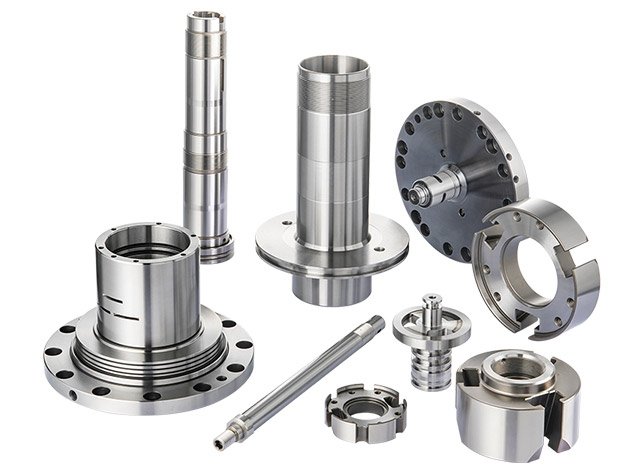
IndustryApex Technology’s operating model is built around a broader role than simple build-to-print machining. We act as a supply chain integrator and ODM solution provider for global OEM and Tier 1 customers that need precision parts, engineering support, controlled manufacturing, and dependable delivery. This is especially valuable in medical programs where drawings, regulatory expectations, supplier quality agreements, and production schedules must move together.
Our manufacturing edge comes from a fully controlled precision manufacturing system supported by ERP discipline and more than 30 years of machining experience. ERP visibility helps connect quotation, material procurement, production routing, inspection status, delivery commitments, and quality records. For supply chain teams, that control reduces uncertainty. For engineering teams, it creates a clearer path from prototype iteration to stable serial production.
Technically, IndustryApex Technology supports 3-axis, 4-axis, and 5-axis CNC machining, EDM, precision grinding, and industrial ceramics manufacturing. These capabilities matter because medical parts are rarely limited to one simple milling or turning operation. A surgical instrument may require multi-axis contouring, EDM-cut features, precision-ground interfaces, and fine edge control. A diagnostic equipment component may need flatness, alignment, insulation, and wear resistance. A miniature implantable part may require consistent surface texture and extremely stable micro-feature geometry.
The ODM advantage appears early in design review. Our engineers can assess wall thickness, tool access, datum strategy, tolerance stack-up, material selection, finishing requirements, and inspection feasibility before expensive validation work begins. When a drawing includes a tolerance that drives cost without improving function, we help the customer evaluate alternatives. When a feature is safety critical, we help strengthen the control plan. This approach improves manufacturability without weakening compliance.
Supply chain integration also matters when parts cross industry boundaries. Medical device manufacturers often use technologies proven in aerospace, fluid control, optics, and advanced industrial systems. IndustryApex’s experience with 5-axis aerospace titanium and structural components strengthens our discipline in fatigue-sensitive machining, high-value material control, and demanding inspection. Our experience with hydraulic pump parts and precision fluid control components supports applications where sealing, concentricity, surface finish, and leakage performance are critical.
For global OEMs and Tier 1 suppliers, the best supplier relationship is not based only on unit price. It is based on total risk, speed of technical response, documentation quality, process repeatability, and the ability to support lifecycle changes. A well-controlled ODM and manufacturing partner can shorten development cycles, reduce supplier count, improve accountability, and support more resilient medical device programs.
4. Industry Applications
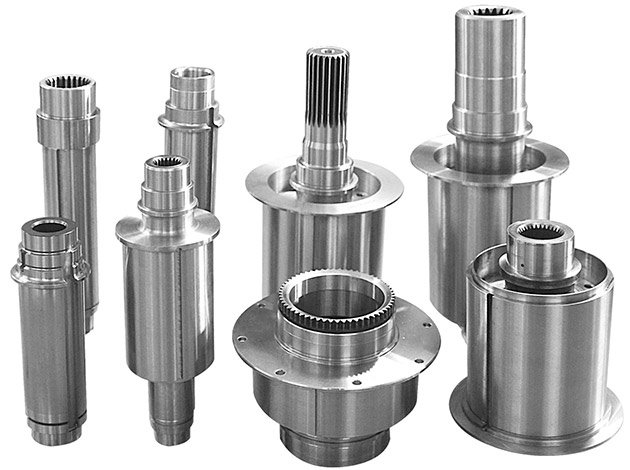
ISO-oriented CNC machining is used across a wide range of medical applications. Orthopedic and trauma products may include bone plates, screws, trial instruments, reamers, guides, and implant-adjacent components. These parts often involve titanium, stainless steel, cobalt-chrome, or engineering polymers, with requirements for burr-free edges, controlled radii, polished surfaces, and reliable lot records.
Surgical instruments require a different balance of properties. Handles, shafts, jaws, forceps components, endoscopic mechanisms, and robotic surgery interfaces must combine mechanical strength, ergonomic geometry, corrosion resistance, cleanability, and repeatable assembly fit. Multi-axis machining and precision grinding can help control mating features that affect tactile performance and surgeon confidence.
Diagnostic and analytical equipment uses CNC machined parts in housings, frames, fluidic manifolds, optical mounts, sensor carriers, heat sinks, and precision alignment hardware. In these systems, the part may not contact the patient, but dimensional stability and repeatable assembly remain essential. ISO-driven documentation helps OEMs prove that a production change did not compromise device performance.
Dental and laboratory applications also benefit from controlled precision machining. Implant abutment components, scanning hardware, holders, fixtures, micro-fluidic blocks, and specialty ceramic parts require close coordination between material behavior, machining strategy, and inspection. Industrial ceramics can provide wear resistance, electrical insulation, chemical resistance, and dimensional stability where metals or polymers are not ideal.
Drug delivery, wearable devices, and minimally invasive systems create additional challenges. These products often require small parts, thin walls, smooth internal passages, miniature threaded features, and compatibility with cleaning or sterilization processes. In high-volume programs, process capability and tool-life control become just as important as prototype accuracy.
Across these applications, the strongest sourcing strategy is to define component risk and supplier responsibility clearly. Engineering teams should classify critical features, procurement teams should confirm documentation expectations, and quality teams should align inspection and change control requirements before purchase orders are released. When these functions operate separately, ISO compliance becomes reactive. When they operate together, ISO standards become a practical framework for stable production.
5. Call to Action
Medical CNC machined parts demand more than precision equipment. They require a supplier that understands regulated manufacturing, technical risk, documentation discipline, and global supply chain execution. IndustryApex Technology combines more than 30 years of precision manufacturing experience with ERP-controlled operations, multi-process machining capabilities, and ODM engineering support for OEM and Tier 1 customers.
If your team is developing titanium implants, surgical instruments, diagnostic device parts, fluid control assemblies, ceramic components, or other high-precision medical hardware, engage IndustryApex Technology early in the design and sourcing process. Early review helps reduce manufacturability risk, clarify ISO-related documentation, and build a stronger path from prototype to production.
Visit IndustryApex CNC to review our precision manufacturing capabilities, or contact IndustryApex Technology to discuss drawings, materials, tolerances, inspection requirements, and supply chain objectives for your next medical CNC machining program.