- Shaft
- Molds&Tools
- Hydraulics And Pump
- Hair transplant needle
- Hydraulics And Pump
- Precision CNC Shaft Machining Manufacturer for High Performance Applications
- Energy Industry CNC Machining Parts Supplier
- Aerospace CNC Machining Parts Manufacturer
- Aerospace CNC Machining Parts Manufacturer
- Automotive & EV CNC Machining Parts Supplier for OEM and Tier 1
- Medical CNC Machining Parts Supplier for Precision Medical Devices

How ODM Solution Providers Are Transforming Medical Device Manufacturing

Executive Summary
Medical device manufacturers are under pressure from every direction: tighter regulatory scrutiny, shorter innovation cycles, rising component complexity, supply chain volatility, and the need to scale production without compromising patient safety. In this environment, the traditional contract manufacturing model is no longer enough. OEMs and Tier 1 suppliers increasingly need partners that can combine engineering, process development, precision manufacturing, quality control, and supply chain coordination into one integrated operating system.
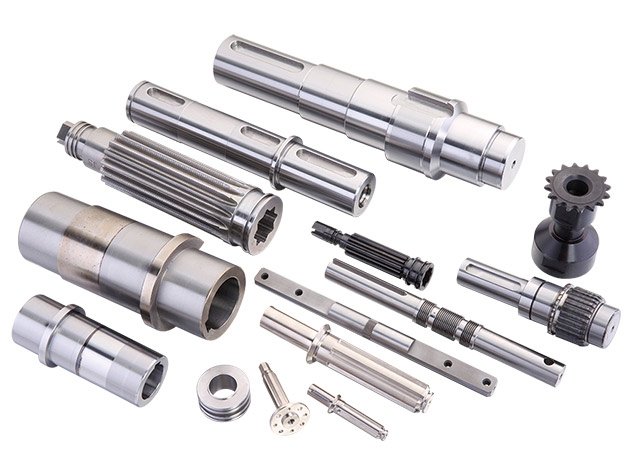
This is where ODM solution providers are changing the structure of medical device manufacturing. A capable ODM partner does more than machine a print. It interprets functional requirements, improves manufacturability, validates processes, manages critical suppliers, controls documentation, and supports the transition from prototype to repeatable production. For high-precision device parts, titanium implants, surgical instruments, pump components, ceramic insulators, micro-mechanical assemblies, and diagnostic equipment hardware, this integrated model reduces technical risk and improves time-to-market.
IndustryApex Technology, operating globally through IndustryApex CNC, is positioned around this exact requirement. As a supply chain integrator and ODM solution provider with more than 30 years of precision manufacturing experience, IndustryApex Technology supports global OEM and Tier 1 customers that need stable, controlled, and scalable component production. Through a fully controlled precision manufacturing system, ERP-driven production management, 3-5 axis CNC machining, EDM, precision grinding, and industrial ceramics capability, the company helps customers move from design intent to validated manufacturing execution.
For medical device companies, the strategic value is clear. The right ODM partner reduces supplier fragmentation, strengthens traceability, accelerates design-for-manufacturing decisions, and creates a more resilient route to compliant production. That matters not only for cost, but also for device reliability, audit readiness, and long-term lifecycle management.
Technical Deep Dive
Medical device manufacturing is defined by tolerance discipline, material behavior, surface integrity, cleanliness, and repeatability. A part may appear simple on a drawing, but its functional performance can depend on micron-level geometry, burr control, edge transitions, biocompatible material handling, and stable process capability over many production batches. This is why medical manufacturing requires engineering depth rather than commodity machining capacity.
Consider titanium implant components. Titanium alloys offer high strength-to-weight ratio, corrosion resistance, and biocompatibility, but they also create machining challenges. Poor thermal conductivity concentrates heat at the cutting zone, increasing tool wear and the risk of surface damage. Thin features may distort if fixturing and cutting strategy are not controlled. Surface finish must support the device function, whether the requirement is polished articulation, controlled roughness for osseointegration, or precise interface geometry for modular assembly.
Surgical instruments introduce a different set of priorities. Stainless steels must be machined, ground, and finished with close attention to edge quality, tactile performance, cleaning compatibility, and long service life. Components used in minimally invasive instruments may involve very small features, deep slots, thin walls, complex 3D contours, or mating surfaces that require consistent assembly feel. Dimensional inspection alone is not sufficient; the manufacturing process must also address burr prevention, passivation readiness, and repeatable functional performance.
Diagnostic and analytical equipment components often demand even tighter integration between precision machining and advanced materials. Fluid paths, optical housings, ceramic guides, sensor mounts, micro-positioning elements, and thermal control parts may combine CNC milling, turning, EDM, grinding, lapping, and custom fixture development. In these applications, variation in flatness, concentricity, roundness, surface texture, or hole position can affect system-level performance.
An ODM solution provider creates value by connecting these technical requirements to a stable manufacturing route. Design-for-manufacturing review is one of the first steps. Instead of waiting for production problems to appear after tooling and process planning, the ODM team evaluates datum strategy, tolerance stack-up, tool access, material condition, heat treatment effects, surface finishing requirements, inspection feasibility, and packaging constraints at an early stage.
For example, a medical housing with intersecting channels may require 5-axis CNC machining to reduce setups and improve positional accuracy. A small internal feature may be better produced by EDM than by forcing an unstable milling operation. A ceramic component may require diamond grinding and controlled handling instead of conventional metal-cutting assumptions. A sealing surface used in a pump or fluid control module may need a grinding process that delivers both flatness and repeatable surface texture. The technical advantage comes from selecting the correct process chain, not simply using the most available machine.
Quality planning is equally important. Medical device OEMs expect clear control plans, material traceability, inspection records, and process documentation. Critical-to-quality features must be identified and monitored. First article inspection, in-process checks, CMM verification, surface roughness measurement, gauge control, and nonconformance handling must work together as part of a disciplined quality system. When an ODM provider controls both engineering and manufacturing execution, lessons from inspection can flow back into fixture design, toolpath optimization, and process stabilization.
Digital production control also matters. ERP-based scheduling and traceability give customers better visibility into orders, materials, routing, capacity, and delivery risk. In regulated and high-reliability sectors, this operational transparency supports audit readiness and reduces the uncertainty that often appears when multiple suppliers handle different steps of the same component family.
The ODM & Supply Chain Advantage
The transformation of medical device manufacturing is not only technical. It is structural. Many OEMs historically built supply chains around separate vendors: one shop for prototypes, another for CNC production, another for grinding, another for EDM, another for special materials, and another for finishing or subassembly. That model can work when parts are simple and demand is stable. It becomes fragile when parts are complex, requirements change, or delivery windows tighten.
A supply chain integrator and ODM solution provider reduces that fragmentation. The partner becomes responsible for coordinating the manufacturing route, aligning process owners, controlling documentation, and protecting the customer from avoidable handoff risk. This is especially valuable for global OEM and Tier 1 suppliers that need production support across multiple programs, regions, and product generations.
IndustryApex Technology’s core identity is built around this integrated model. Through IndustryApex CNC, customers can access a manufacturing platform that combines engineering support, precision machining, special process coordination, inspection, and production management. The objective is not merely to quote a component, but to help customers build a dependable manufacturing solution.
The manufacturing edge comes from more than 30 years of experience and a fully controlled precision manufacturing system. ERP-based management supports order tracking, production planning, material coordination, and delivery control. This matters because medical device programs often require lifecycle consistency. A supplier may need to support prototype samples, pilot lots, validation builds, ramp-up production, and recurring orders over several years. Without disciplined production control, continuity becomes difficult.
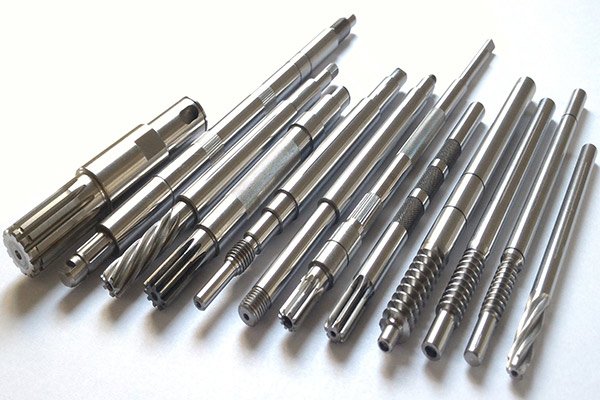
The technical capability base is also broad. 3-5 axis CNC machining enables complex geometries, reduced setups, and improved datum control. EDM supports hard materials, fine internal features, slots, and profiles that are difficult to mill conventionally. Precision grinding improves tight dimensional control, flatness, roundness, and finish on functional surfaces. Industrial ceramics capability adds another dimension for applications requiring wear resistance, insulation, chemical stability, low thermal expansion, or high hardness.
For medical device OEMs, this mix of capabilities can reduce design compromise. Engineers can specify the material and geometry that the application requires, then work with the ODM team to determine the most reliable process route. That improves the likelihood that the final product will meet functional, regulatory, and commercial requirements.
The supply chain benefit extends to risk management. When one integrated partner manages key manufacturing steps, communication is faster and accountability is clearer. Engineering changes can be assessed across machining, grinding, EDM, inspection, and delivery planning. Capacity constraints can be identified earlier. Quality issues can be traced to root cause more efficiently. Documentation can be standardized across the component family.
This approach is highly relevant to companies sourcing ISO-certified CNC machining for medical components, including titanium implants, surgical instruments, and precision device parts. It is also relevant to adjacent high-reliability markets where traceability and performance are essential, such as 5-axis aerospace CNC machining and critical fluid control hardware such as hydraulic pump parts. The industries differ, but the manufacturing principles overlap: stable processes, qualified materials, controlled geometry, and disciplined supply chain execution.
Industry Applications
ODM solution providers are becoming important across multiple medical and life science applications. In orthopedic and trauma devices, they support titanium and stainless steel components that require complex contouring, tight hole positioning, and controlled surface finish. Implant trials, instrument handles, drill guides, locking mechanisms, and modular interfaces all benefit from early manufacturability review and precision process control.
In surgical robotics and minimally invasive systems, component density is increasing. Small housings, miniature shafts, couplings, jaw components, sensor brackets, and motion transmission parts must be manufactured with high repeatability. A small error in concentricity or flatness can affect motion accuracy, feedback, or assembly performance. ODM support helps engineering teams translate compact design intent into production-ready components.
In diagnostic equipment, precision-machined parts often serve as the mechanical foundation for fluidics, optics, thermal management, and sample handling. These systems may use aluminum, stainless steel, titanium, ceramics, engineering plastics, and specialty alloys in the same product architecture. ODM providers with broad process knowledge can coordinate material-specific machining strategies and ensure that assembly-critical dimensions remain stable.

Medical pumps, fluid control assemblies, and laboratory automation systems also show why cross-industry expertise matters. Many of the same principles used in hydraulic and pump components apply to medical fluid handling: sealing surfaces, flow paths, wear resistance, precise bores, valve interfaces, and contamination control. A manufacturer that understands demanding industrial fluid control can adapt that discipline to medical and analytical applications where scale and cleanliness requirements may be different but functional reliability is equally important.
Industrial ceramics are another growth area. Ceramic parts may be used for electrical insulation, wear surfaces, chemical resistance, guides, bushings, spacers, and precision fixtures. Their hardness and brittleness require specialized grinding and handling knowledge. An ODM partner with ceramic capability can help determine whether alumina, zirconia, silicon nitride, or another material is appropriate for the function, then develop a manufacturing route that protects dimensional accuracy and edge integrity.
For global OEM and Tier 1 suppliers, the business case is practical. Engineering teams can reduce the number of disconnected suppliers. Procurement teams gain a more consolidated source for complex parts. Quality teams benefit from clearer documentation and traceability. Program managers can move from prototype to production with fewer handoff delays. The result is a manufacturing model better aligned with modern medical device development, where speed, compliance, and reliability must advance together.
Call to Action
Medical device manufacturing is entering a phase where supplier capability must be measured by more than machine lists and unit price. OEMs need partners that understand engineering intent, regulatory pressure, material behavior, process control, and supply chain execution. ODM solution providers are transforming the sector because they connect these requirements into one accountable manufacturing model.
IndustryApex Technology, through IndustryApex CNC, supports this shift with more than 30 years of precision manufacturing experience, ERP-managed production, 3-5 axis CNC machining, EDM, precision grinding, industrial ceramics, and integrated supply chain support. For OEM and Tier 1 teams developing medical components, surgical instruments, diagnostic equipment parts, or high-reliability assemblies, the right manufacturing partner can shorten development cycles and improve production confidence.
To discuss a current project, request a manufacturability review, or evaluate a precision component supply program, contact the IndustryApex Technology engineering team through the IndustryApex CNC contact page.