- Shaft
- Molds&Tools
- Hydraulics And Pump
- Hair transplant needle
- Hydraulics And Pump
- Precision CNC Shaft Machining Manufacturer for High Performance Applications
- Energy Industry CNC Machining Parts Supplier
- Aerospace CNC Machining Parts Manufacturer
- Aerospace CNC Machining Parts Manufacturer
- Automotive & EV CNC Machining Parts Supplier for OEM and Tier 1
- Medical CNC Machining Parts Supplier for Precision Medical Devices

2026 Trends in 5-Axis CNC Machining for Aerospace Components: Engineering and Supply Chain Analysis

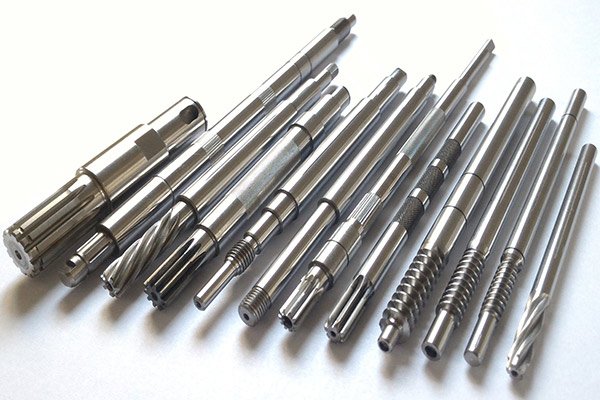
2026 Trends in 5-Axis CNC Machining for Aerospace Components
Executive Summary
In 2026, aerospace component sourcing is being shaped by a practical reality: aircraft programs need lighter, stronger, more integrated parts, while procurement teams need shorter qualification cycles, more resilient supply chains, and tighter cost control. Five-axis CNC machining sits at the center of that equation. It enables complex aerospace geometries to be machined with fewer setups, stronger datum control, improved surface consistency, and better repeatability across production batches.
For OEMs and Tier 1 suppliers, the main trend is not simply buying more machine time. The shift is toward integrated manufacturing partners that can support design-for-manufacturing review, process development, material management, precision machining, inspection planning, and delivery coordination under one controlled system. This is where Dixin Technology, operating through IndustryApex CNC, positions its value: not only as a machining supplier, but as a supply chain integrator and ODM solution provider for demanding industrial programs. Buyers evaluating IndustryApex CNC manufacturing capabilities are increasingly looking for this broader engineering and execution model.
The 2026 aerospace machining landscape is being influenced by five connected trends: wider use of 5-axis simultaneous machining for structural and engine-adjacent parts, higher demand for titanium and heat-resistant alloys, greater reliance on digital process control, supplier consolidation around qualified precision partners, and cross-industry transfer of ultra-precision manufacturing knowledge from medical, hydraulic, optics, and semiconductor-related sectors. The companies that win will be those that can prove process discipline before volume demand arrives.
Technical Deep Dive
Five-axis CNC machining is becoming the preferred process for aerospace components because aircraft part designs increasingly combine thin walls, deep pockets, sculpted surfaces, angled holes, organic weight-reduction features, and tight interface tolerances. Traditional three-axis machining can still produce many features, but it often requires multiple setups, custom fixtures, and higher risk of tolerance stack-up. Five-axis machining allows the cutting tool to approach the workpiece from optimized angles, reducing re-clamping, improving tool engagement, and helping maintain geometric relationships across critical surfaces.
One of the most important 2026 trends is the shift from using 5-axis machines only for difficult features to using them as the core production platform for entire aerospace part families. Brackets, housings, actuator components, impellers, structural fittings, sensor bodies, fuel system parts, and thermal management components are being designed with manufacturability around multi-axis machining from the beginning. This supports part consolidation, reduces assembly interfaces, and can lower downstream inspection and fastening costs.
Material strategy is another major driver. Titanium alloys remain essential for high strength-to-weight ratio and corrosion resistance, but they create heat, tool wear, and chatter challenges. Nickel-based superalloys and stainless alloys introduce similar concerns in hot-section, fluid, and high-load applications. High-performance aluminum alloys remain common for structural applications, but aerospace buyers are demanding tighter flatness, cleaner burr control, and more consistent anodizing or coating preparation. In each case, the machining process must control heat, cutting pressure, tool deflection, and residual stress.
In 2026, advanced toolpath strategy is no longer optional. High-efficiency milling, adaptive clearing, barrel cutters, trochoidal paths, and optimized lead-in and lead-out moves are being used to manage chip load and stabilize cutting forces. For thin-wall aerospace components, process engineers must balance material removal rate with wall stability. A fast cycle time is not valuable if it causes distortion after unclamping. The best suppliers are building processes around stable machining stages: roughing with controlled stock allowance, semi-finishing to release stress, inspection between operations when needed, and finishing with consistent tool pressure.
On-machine probing and closed-loop inspection are also becoming standard expectations. Probing can verify work offsets, fixture location, and key in-process dimensions before expensive finishing operations occur. For complex aerospace parts, this reduces scrap risk and improves confidence when parts move from prototype to low-volume production and then into repeat orders. Digital records from ERP, inspection systems, and production routing also help procurement and quality teams understand what happened during manufacturing, not only what was measured at final inspection.
The technical takeaway is clear: aerospace 5-axis CNC machining in 2026 is an engineered production discipline. It requires machine capability, but capability alone is not enough. The supplier must understand fixture design, tool selection, datum strategy, tolerance control, surface finish, heat treatment impact, coating allowance, deburring risk, and inspection method. Companies reviewing 5-axis aerospace CNC machining for titanium aircraft parts and structural components should evaluate the full process chain, not just the quoted unit price.
The ODM & Supply Chain Advantage
The strongest aerospace manufacturing trend for 2026 is the rise of the precision manufacturing partner as an ODM and supply chain integrator. OEMs and Tier 1 suppliers are under pressure to shorten development cycles while protecting quality and traceability. A supplier that only receives drawings and returns machined parts may still be useful, but it does not solve the broader sourcing problem. Engineering teams need early feedback on manufacturability, alternative process routes, risk features, material availability, tolerance feasibility, and cost drivers.
Dixin Technology supports this model through a fully controlled precision manufacturing system built on more than 30 years of manufacturing experience. The company combines 3-axis, 4-axis, and 5-axis CNC machining with EDM, precision grinding, and industrial ceramics capability. This matters because aerospace programs rarely depend on one process alone. A housing may require 5-axis contouring, EDM for internal features, grinding for precision interfaces, and controlled finishing for assembly readiness. A structural component may need fixturing support, rough machining, stress-relief planning, precision finishing, and documented dimensional control.
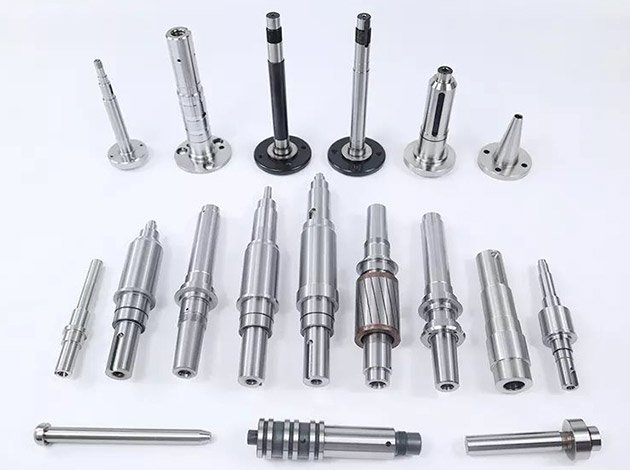
ERP-based management is especially important for global buyers. Aerospace supply chains are vulnerable to delays from raw material allocation, outside processing, inspection bottlenecks, packaging errors, and documentation gaps. A controlled ERP environment helps coordinate order status, routing, inventory, production scheduling, and delivery expectations. For buyers managing multi-country supply chains, this operational visibility can be as important as machine accuracy.
The ODM advantage is also visible during design optimization. When a supplier can participate before drawings are frozen, it can recommend radius changes that improve tool life, datum changes that simplify inspection, wall thickness adjustments that reduce distortion, and tolerance zoning that protects true functional requirements without over-machining noncritical surfaces. These engineering suggestions often reduce cost more effectively than late-stage price negotiation.
For global OEMs and Tier 1 suppliers, the best supply chain partner in 2026 is one that can bridge engineering, manufacturing, and procurement. Dixin Technology’s role is to help customers convert high-precision requirements into stable production methods while coordinating the manufacturing resources needed to deliver reliably. The same precision culture that supports aerospace work also applies to adjacent sectors such as ISO-certified CNC machining for medical components, titanium implants, and surgical instruments, where traceability, biocompatible materials, surface finish, and dimensional stability are also critical.
Industry Applications
Aerospace 5-axis CNC machining covers a wide range of component categories. Structural parts are one of the most active areas. These include brackets, ribs, frames, hinge fittings, seat track components, mounting blocks, and load-bearing aluminum or titanium elements. The trend is toward lightweighting through pocketing, lattice-inspired features, and part consolidation. Five-axis machining supports these geometries while maintaining access to angled faces, complex blends, and interface surfaces.
Engine-adjacent and propulsion-related parts are another important category, particularly where heat-resistant alloys, curved flow paths, and high-quality surfaces are required. Blades, impellers, diffusers, manifolds, and housings benefit from simultaneous 5-axis tool motion and stable surface finishing strategies. Even when a part is not located inside the hottest engine zone, aerospace buyers still expect disciplined control of burrs, edges, and mating surfaces because small defects can create assembly issues or flow disturbances.
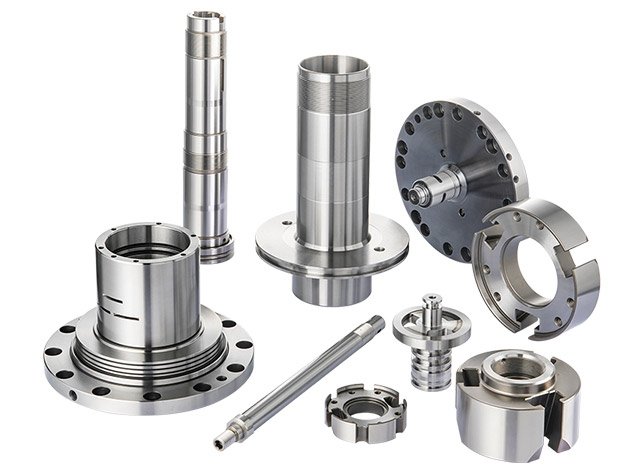
Fluid control and actuation systems are also moving toward more sophisticated machined designs. Hydraulic blocks, valve bodies, sleeves, spools, pump components, and actuator housings may require deep bores, intersecting passages, tight roundness, and clean sealing surfaces. Dixin Technology’s work in hydraulic pump parts and precision fluid control components is relevant to aerospace because similar manufacturing principles apply: leakage control, surface integrity, concentricity, and repeatable fit between moving components.
Avionics, sensors, and thermal management components are also growing areas for precision machining. As aircraft systems become more electrified and data-intensive, machined enclosures, heat sinks, connector bodies, and mounting interfaces must combine light weight with EMI shielding, heat transfer, and precise assembly features. Five-axis machining helps create compact shapes that fit into constrained aircraft spaces while maintaining proper alignment and contact surfaces.
Unmanned aerial systems, satellites, eVTOL aircraft, and advanced mobility platforms are adding further demand. These programs often require prototype speed, engineering iteration, and low-to-medium-volume production before designs stabilize. A manufacturing partner with ODM support can help customers avoid redesign cycles by identifying manufacturability concerns early. For emerging aerospace platforms, supply chain agility is often the difference between an engineering milestone and a missed delivery window.
The wider industrial lesson is that aerospace is not isolated. Precision capabilities developed for medical devices, hydraulic systems, industrial ceramics, optics-related components, and high-performance mechanical assemblies can strengthen aerospace manufacturing discipline. Cross-sector experience gives suppliers a broader toolkit for solving tolerance, material, and process problems. In 2026, buyers should look for this transfer of knowledge because many next-generation aerospace components combine requirements from multiple industries: low weight, thermal performance, fluid control, clean surfaces, tight tolerances, and stable repeatability.
Call to Action
For aerospace OEMs, Tier 1 suppliers, and engineering teams planning 2026 sourcing strategies, the key question is not whether 5-axis CNC machining is available. The key question is whether the supplier can convert complex component requirements into a controlled, repeatable, and scalable manufacturing process. Machine tools matter, but engineering judgment, ERP coordination, material planning, inspection discipline, and supply chain integration determine whether parts arrive correctly and on time.
Dixin Technology, through IndustryApex CNC, supports customers that need more than transactional machining. With more than 30 years of experience, a controlled precision manufacturing system, and capabilities across 3-axis to 5-axis CNC machining, EDM, precision grinding, and industrial ceramics, the company is positioned to support aerospace programs from manufacturability review through production delivery.
If your team is developing titanium aircraft components, precision structural parts, fluid control assemblies, or complex machined aerospace hardware, connect with Dixin Technology to review drawings, materials, tolerance requirements, and supply chain goals. Start the engineering discussion through the IndustryApex CNC contact page and evaluate how an ODM-focused manufacturing partner can support your 2026 aerospace sourcing strategy.