- Shaft
- Molds&Tools
- Hydraulics And Pump
- Hair transplant needle
- Hydraulics And Pump
- Precision CNC Shaft Machining Manufacturer for High Performance Applications
- Energy Industry CNC Machining Parts Supplier
- Aerospace CNC Machining Parts Manufacturer
- Aerospace CNC Machining Parts Manufacturer
- Automotive & EV CNC Machining Parts Supplier for OEM and Tier 1
- Medical CNC Machining Parts Supplier for Precision Medical Devices
Advanced EDM and Wire Cutting for Hard and Brittle Materials: Engineering and Supply Chain Analysis for OEM Buyers

Executive Summary
Hard and brittle materials are increasingly central to high-value manufacturing. Aerospace fuel systems rely on nickel alloys and carbide wear elements. Medical devices use titanium, cobalt-chromium, ceramics, and miniature hardened components. Fluid control assemblies require corrosion-resistant valve spools, sleeves, seals, and micro-orifice parts that hold geometry after heat treatment. Semiconductor, optics, mold, and energy applications continue to push tungsten carbide, technical ceramics, sapphire, Inconel, hardened tool steels, and composite conductive materials beyond the limits of conventional milling and turning.
For global OEM and Tier 1 sourcing teams, the challenge is not only whether a supplier can cut a difficult material. The real question is whether the supplier can maintain repeatable geometry, surface integrity, traceability, inspection discipline, and delivery stability when the part combines thin walls, small radii, deep profiles, sharp internal corners, micro features, or post-heat-treatment precision. This is where advanced electrical discharge machining, EDM drilling, sinker EDM, and wire EDM become strategic manufacturing tools rather than niche processes.
At Dixin Technology, operating globally as IndustryApex CNC, EDM and wire cutting are integrated into a controlled precision manufacturing system that also includes 3-5 axis CNC machining, precision grinding, industrial ceramics capability, quality engineering, and supply chain coordination. This combination matters because EDM is rarely an isolated step. It often follows CNC roughing, heat treatment, brazing, grinding, lapping, or coating, and it may precede assembly-level validation. Buyers gain the strongest outcome when the supplier can engineer the complete route, not merely quote one operation.
This article analyzes the technical role of EDM and wire cutting for hard and brittle materials, the manufacturing controls that determine quality, and the ODM supply chain advantages that reduce risk for OEM procurement, engineering, and supplier quality teams.
Technical Deep Dive
Electrical discharge machining removes material by controlled spark erosion rather than mechanical shearing. A shaped electrode or a moving wire creates rapid thermal discharges across a dielectric gap. Each discharge melts and vaporizes a microscopic amount of material, and flushing removes the debris. Because the cutting force is extremely low, EDM can machine hardened, wear-resistant, and fragile components without the tool pressure that causes cracking, deflection, burr formation, or cutter breakage in conventional machining.
Wire EDM is especially valuable for conductive hard materials such as tungsten carbide, hardened tool steel, H13, SKD11, stainless steel, titanium alloys, nickel superalloys, copper alloys, and selected conductive ceramic composites. A continuously fed brass, coated brass, or specialty wire follows a programmed path to generate accurate profiles, slots, tapers, punches, dies, gears, splines, valve lands, extrusion features, and precision apertures. Sinker EDM uses a shaped electrode, usually copper or graphite, to form cavities, ribs, blind pockets, undercuts, fine corners, and complex 3D surfaces that cannot be reached with a rotating cutter. Small-hole EDM creates starter holes, cooling channels, filtration holes, and micro passages in materials where drilling would be slow or unstable.
For hard and brittle materials, the primary engineering advantage is process stability after material hardening. In many components, the most accurate geometry must be created after heat treatment or sintering because the part moves during thermal processing. Wire EDM allows manufacturers to cut final profiles after hardness is established, preserving dimensional accuracy while avoiding secondary distortion. This is critical for carbide molds, cold heading dies, precision punches, ceramic-metal assemblies, high-pressure valve components, and thin aerospace or medical parts where a few microns of movement can change functional performance.
However, EDM is not automatically a precision solution. The final quality depends on discharge energy, pulse duration, wire tension, servo gap control, flushing, electrode wear compensation, dielectric condition, thermal management, and cut strategy. A rough cut removes material efficiently but leaves a thicker recast layer and higher surface roughness. Multiple skim cuts reduce thermal damage, improve straightness, tighten corner accuracy, and create a more stable surface. For high-end parts, engineering teams must specify not only dimensions but also surface finish, edge condition, microcrack limits, recast layer requirements, and inspection method.
Material behavior also differs sharply. Tungsten carbide conducts well but contains cobalt binder, so aggressive EDM parameters can alter the binder phase and reduce edge strength. Titanium alloys are sensitive to heat-affected surface conditions and require controlled finishing when fatigue performance matters. Nickel superalloys resist conventional cutting but respond well to EDM when flushing and power settings prevent microcracking. Advanced ceramics such as alumina and zirconia are generally non-conductive and may require grinding, ultrasonic machining, laser support, conductive assist techniques, or hybrid process planning rather than standard wire EDM. Conductive ceramics and ceramic-metal composites can be EDM processed, but engineering validation is required.
Dimensional accuracy in wire EDM is influenced by wire diameter, spark gap, machine thermal stability, wire lag, workpiece height, flushing pressure, and feature geometry. Tall workpieces can show taper or barrel error if compensation is weak. Sharp internal corners require realistic radius planning because the wire and discharge gap define the minimum achievable corner. Micro slots and thin webs require a balance between energy input and mechanical support, especially when the remaining section can move after stress relief. In practical production, a strong supplier will review drawings for EDM feasibility, recommend process allowances, and align tolerances with inspection capability before tooling begins.
Surface integrity is equally important. EDM can produce clean, burr-free edges, but it can also leave a recast layer if parameters are not controlled. For aerospace fatigue parts, medical instruments, implants, hydraulic sealing lands, and high-cycle tooling, recast layer management may require finishing passes, polishing, passivation, grinding, or validated cleaning. EDM oil and deionized water systems must be maintained to prevent contamination. When parts require cleanroom packaging, implant-level cleanliness, or fluid system cleanliness, EDM must be considered within the full cleaning and handling route.
The ODM and Supply Chain Advantage
Many suppliers can run EDM machines, but fewer can convert EDM capability into dependable global supply. For OEM buyers, the purchasing risk is usually hidden in transitions: design to process plan, prototype to production, machining to heat treatment, EDM to grinding, inspection to documentation, and factory output to international delivery. Dixin Technology positions itself as a supply chain integrator and ODM solution provider because advanced components require coordination across these transitions.
Our manufacturing edge is a fully controlled precision manufacturing system supported by ERP discipline and more than 30 years of manufacturing experience. ERP control is not a back-office detail; it affects engineering change management, material lot tracking, work order sequencing, inspection status, capacity planning, and delivery visibility. When a hard-material component requires several processes, the ability to control routing and data flow reduces the probability of missed revisions, wrong material condition, unplanned queue time, or incomplete inspection records.
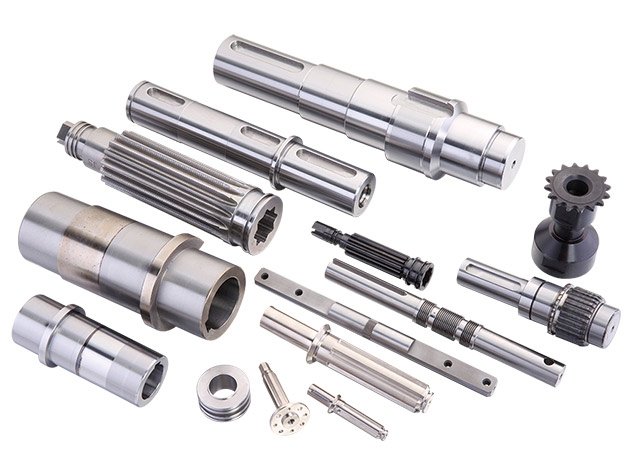
Dixin Technology combines 3-5 axis CNC machining, EDM, wire cutting, precision grinding, and industrial ceramics capability. This mix is important because the most efficient manufacturing route is often hybrid. A carbide die insert may need CNC electrode manufacturing, sinker EDM cavity forming, wire EDM external profiling, precision grinding of datums, polishing of working surfaces, and final dimensional inspection. A fluid control sleeve may need turning, heat treatment, internal grinding, wire EDM slots, lapping, cleaning, and pressure-related validation. A medical component may need 5-axis machining, fine EDM features, edge conditioning, passivation, and documented inspection. A supplier that controls these interactions can optimize cost and lead time while protecting performance.
As an ODM partner, Dixin Technology supports design-for-manufacturing decisions before production drawings become expensive constraints. For example, we can advise whether a small internal corner should be produced by wire EDM, whether a brittle section requires sacrificial support during cutting, whether a ceramic component should be redesigned as a ceramic-metal assembly, whether grinding should define a datum before EDM, or whether a tolerance should be shifted from a nonfunctional surface to a critical interface. These early decisions can reduce tool cost, scrap, and qualification delays.
The target audience for this model is global OEM and Tier 1 suppliers that need more than job-shop capacity. They need a partner that can receive complex drawings, protect intellectual property, verify manufacturability, coordinate materials and processes, document quality, and maintain stable delivery across prototype, pilot, and production volumes. For buyers managing supplier consolidation, an integrated ODM model can reduce administrative burden while improving technical accountability.
Dixin Technology also recognizes that different industries impose different documentation expectations. Aerospace programs may require strict material traceability, process records, first article inspection, and change control. Buyers can review our relevant capability for aerospace CNC machining and aircraft structural components. Medical programs may require ISO-driven process discipline, clean finishing, validated materials, and precise control of implant or instrument geometry; our experience in medical components, titanium implants, surgical instruments, and precision device parts supports that requirement. Hydraulic and pump systems require wear resistance, sealing accuracy, and repeatable flow features, which aligns with our work in hydraulic pump parts and fluid control components.
Industry Applications
In aerospace manufacturing, advanced EDM and wire cutting support titanium brackets, nickel alloy engine-related details, fuel system components, turbine tooling, cooling features, precision shims, and hardened fixtures. EDM is useful when high hardness, difficult geometry, or burr-sensitive features make mechanical machining inefficient. For flight-critical parts, the process plan must define surface integrity requirements, post-EDM finishing, and inspection evidence.
In medical manufacturing, EDM is used for surgical instrument jaws, micro slots, implant-related tooling, hardened guide components, miniature device parts, and precision cutting forms. The low-force nature of EDM helps preserve delicate geometries, while burr-free edges can reduce downstream handwork. Medical applications require careful cleaning, passivation where applicable, controlled edge breaks, and consistent documentation.
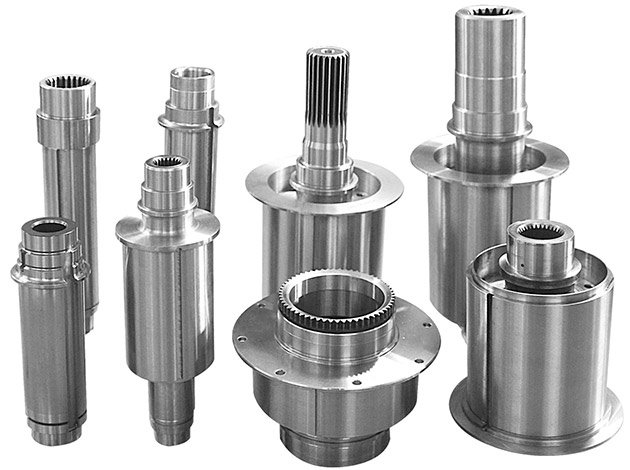
In hydraulics, pumps, and fluid control, EDM enables accurate metering slots, valve spool details, sleeve windows, orifices, wear-resistant inserts, and corrosion-resistant hardened parts. These components often combine tight roundness, straightness, concentricity, and surface finish requirements. EDM must therefore be coordinated with turning, grinding, honing, lapping, and functional inspection. The value is not just creating a slot; it is ensuring that the slot works within a sealed, pressure-loaded assembly.
In mold, die, and forming applications, wire EDM and sinker EDM are core technologies for carbide inserts, cold heading dies, extrusion tooling, stamping punches, progressive die components, and precision cavities. Carbide and hardened tool steel provide excellent wear life, but they are expensive to process incorrectly. Multi-pass wire EDM, electrode wear management, and grinding datum control help maintain tool life and dimensional repeatability.
In optics, semiconductor, and high-precision equipment, EDM may support fixtures, micro-positioning parts, ceramic-metal assemblies, hard stops, precision apertures, and wear-resistant guide elements. These sectors require stable materials, clean geometry, low burr risk, and repeatable batch control. For brittle materials such as sapphire, ruby, alumina, and zirconia, EDM may not always be the primary method, but it can be part of a broader process chain that includes precision grinding, lapping, polishing, laser operations, or assembly with conductive holders.
For drivetrain, engine, and energy applications, wire EDM is well suited for hardened gears, splined components, impellers, wear plates, seals, and specialty tooling. When part performance depends on fatigue life or contact behavior, EDM finishing strategy must be matched to the functional surface. A purchasing specification should therefore define not only dimensional tolerances, but also whether EDM surfaces are acceptable as-cut, require skim finishing, or need secondary polishing or grinding.
Call to Action
Advanced EDM and wire cutting are most valuable when they are engineered as part of a complete manufacturing and supply chain system. For hard and brittle materials, the winning supplier is the one that can balance discharge control, material behavior, surface integrity, inspection, documentation, and delivery reliability.
Dixin Technology, IndustryApex CNC, supports global OEM and Tier 1 customers with integrated precision manufacturing, ODM engineering support, ERP-controlled production, EDM and wire cutting, 3-5 axis CNC machining, precision grinding, and industrial ceramics capability. If your team is developing carbide tooling, hardened aerospace components, medical device parts, hydraulic and pump components, ceramic-metal assemblies, or other difficult precision parts, our engineering team can review drawings, recommend manufacturable process routes, and support prototype through production sourcing.
To discuss a project, request a manufacturing review, or evaluate Dixin Technology as a long-term supply chain partner, contact us.