- Shaft
- Molds&Tools
- Hydraulics And Pump
- Hair transplant needle
- Hydraulics And Pump
- Precision CNC Shaft Machining Manufacturer for High Performance Applications
- Energy Industry CNC Machining Parts Supplier
- Aerospace CNC Machining Parts Manufacturer
- Aerospace CNC Machining Parts Manufacturer
- Automotive & EV CNC Machining Parts Supplier for OEM and Tier 1
- Medical CNC Machining Parts Supplier for Precision Medical Devices

Titanium Implants in Medical CNC Machining: Engineering Challenges, Supply Chain Risks, and Scalable Solutions

Titanium Implants in Medical CNC Machining: Engineering Challenges, Supply Chain Risks, and Scalable Solutions
For medical device OEMs and Tier 1 suppliers, titanium implants represent one of the most demanding categories in precision manufacturing. The market needs smaller features, tighter tolerances, validated cleanliness, repeatable surface integrity, and secure supply continuity, often while product families expand across orthopedic, dental, spinal, trauma, and surgical device platforms. The engineering challenge is not simply machining titanium. The real challenge is controlling material behavior, dimensional stability, burr formation, traceability, post-processing, inspection, and delivery performance as one integrated system.
Executive Summary
Titanium and titanium alloys, especially Ti-6Al-4V and medical-grade variants, remain essential for implantable components because they combine high strength-to-weight ratio, corrosion resistance, fatigue performance, and biocompatibility. These same properties also create machining difficulty. Titanium has low thermal conductivity, high chemical reactivity at cutting temperatures, a strong tendency toward work hardening, and relatively low elastic modulus compared with steels. As a result, tool heat concentrates at the cutting edge, dimensional movement can appear after stress release, and surface defects can reduce fatigue life or create regulatory risk.
In medical CNC machining, success depends on a disciplined process architecture. Toolpath strategy, cutter geometry, coolant delivery, fixture rigidity, inspection planning, and process documentation must be engineered together. A supplier that treats titanium implants as standard machined parts may meet a prototype drawing once, but fail when the program moves into validation, lot production, or demand volatility. Dixin Technology, operating through the IndustryApex CNC platform at IndustryApex CNC, positions this work as an integrated engineering and supply chain discipline: design for manufacturability support, controlled CNC production, precision finishing, inspection, documentation, and scalable program management.
For buyers, the commercial risk is clear. Titanium implant programs frequently involve long qualification cycles, strict supplier approval, and expensive failure modes. A missed tolerance is not just a scrap event; it can delay validation, consume quality resources, or interrupt a surgical device launch. The most reliable sourcing strategy is to evaluate suppliers not only by machine list, but by their ability to control the complete manufacturing route from incoming material through final inspection and repeatable shipment.
Technical Deep Dive
Medical titanium machining starts with understanding heat. Titanium does not conduct heat away from the cutting zone efficiently, so the tool absorbs much of the thermal load. If speeds, feeds, engagement angles, and coolant strategy are not stable, the cutting edge degrades quickly and begins to smear, tear, or work-harden the surface. In implant components, this is unacceptable because surface integrity influences fatigue behavior, osseointegration performance, and the reliability of downstream polishing, blasting, coating, passivation, or cleaning operations.
Tooling selection must be matched to the part geometry and validation target. Sharp positive rake tools can reduce cutting forces, while optimized coatings and substrates help resist crater wear and notch wear. However, the answer is rarely a single premium tool. Reliable implant machining usually requires a validated tool life rule, controlled tool offsets, documented replacement intervals, and in-process inspection points that detect drift before nonconforming parts are produced. For long-running production, tool management becomes a quality system issue, not only a machining cost issue.
Fixture design is equally important. Implant components often include thin walls, curved surfaces, tapered interfaces, porous or textured zones, fine threads, locking features, and organic profiles. Titanium’s elasticity can allow a part to deflect during cutting and spring back after unclamping. Multi-axis machining helps reduce refixturing error, but it does not eliminate clamping distortion. The most stable process uses locating surfaces that reflect the functional datum scheme, soft jaws or custom fixtures that support delicate geometries, and probing routines that confirm position before critical machining operations.
Burr control is another core challenge. Small burrs around screw holes, slots, serrations, and intersecting features can be difficult to detect and difficult to remove without changing edge geometry. Manual deburring alone creates operator dependency. A stronger approach combines prevention and controlled removal: optimized tool entry and exit, climb milling where appropriate, micro-deburring tools, abrasive flow or media processes for suitable geometries, precision polishing, and microscopic inspection criteria. For implantable devices, the supplier must also understand that a visually acceptable edge may still be unacceptable if it traps contamination or alters functional assembly behavior.
Surface finish requirements vary widely across implants. Some interfaces require smooth bearing or mating surfaces. Others may require controlled roughness to support bone integration or coating adhesion. This creates a manufacturing paradox: the process must deliver tight geometry while preserving the intended surface condition. CNC machining may be followed by precision grinding, EDM for complex features, bead blasting, tumbling, polishing, cleaning, and passivation. Each step can change dimensions. Therefore, robust process planning anticipates stock allowance, surface transformation, and measurement method before the first production run.
Inspection also requires engineering judgment. Coordinate measuring machines, optical systems, surface roughness instruments, thread gages, contour measurement, and microscopic evaluation may all be necessary, depending on the implant type. For freeform orthopedic or spinal components, 5-axis machining and 3D inspection workflows are often essential. For dental and trauma devices, thread quality, taper fit, and edge condition may dominate the control plan. The inspection strategy should map directly to the drawing, functional risks, and regulatory documentation needs. IndustryApex CNC’s medical CNC machining capabilities are designed around these requirements, including precision machining of titanium implants, surgical instruments, and high-precision device parts.
The ODM & Supply Chain Advantage
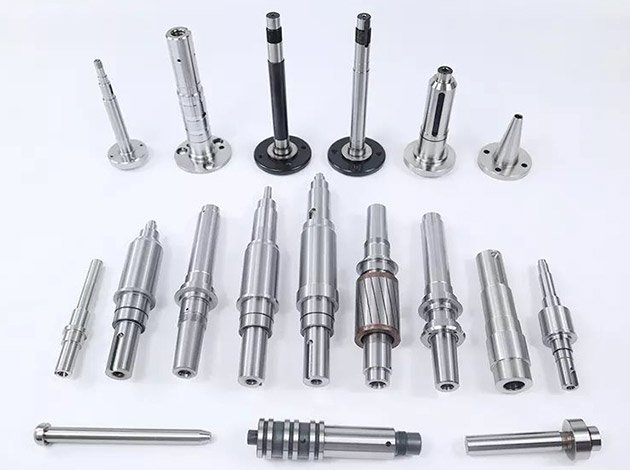
Many medical device companies need more than a part maker. They need an engineering manufacturing partner that can translate product intent into a stable production route, then protect that route through documentation, capacity planning, and supplier coordination. This is where Dixin Technology’s identity as a supply chain integrator and ODM solution provider becomes commercially important. In practice, ODM support means helping customers refine manufacturability, select appropriate production methods, define inspection plans, control component families, and move from prototype to repeatable production with fewer surprises.
The manufacturing edge is a fully controlled precision manufacturing system supported by ERP and more than 30 years of machining and industrial production experience. ERP control matters because medical supply chains depend on lot traceability, scheduling discipline, work order visibility, and repeatable routing. When titanium bar stock, special tools, outsourced finishing, inspection capacity, and delivery commitments are all managed separately, risk increases. When they are managed as one controlled system, customers gain better predictability across cost, lead time, and quality.
Dixin Technology’s technical platform includes 3-axis to 5-axis CNC machining, EDM, precision grinding, and industrial ceramics capability. That range is important because medical OEMs rarely source one isolated component forever. A program may begin with a machined titanium implant, then expand into surgical instruments, ceramic wear components, fixtures, trial parts, gauges, or related device hardware. A supplier with multi-process capability can support design evolution and reduce the burden of qualifying disconnected vendors for each new requirement.
Experience from adjacent high-performance industries also strengthens titanium implant manufacturing. Aerospace titanium parts, for example, require fatigue-conscious machining, lightweight structural design, tight documentation, and robust process control. The lessons from 5-axis aerospace CNC machining for titanium aircraft parts transfer directly to medical work where high-value components must meet demanding mechanical and dimensional requirements. Similarly, hydraulic and fluid-control programs require sealing surfaces, concentricity, wear resistance, and precision spool or sleeve behavior; Dixin’s experience with hydraulic pump parts contributes process discipline around fits, finishes, and repeatable production control.
For global OEM and Tier 1 suppliers, the supplier decision is ultimately about risk reduction. A capable ODM and supply chain partner can help evaluate whether a titanium implant design is practical to machine, where tolerances may drive unnecessary cost, which features create burr or inspection risk, and how to design a production route that supports validation. This is especially valuable for companies managing distributed engineering teams, global launches, dual-sourcing strategies, or demand spikes after regulatory approval.
Industry Applications

Titanium implant machining supports multiple medical application groups, each with different engineering priorities. Orthopedic implants such as plates, screws, stems, cups, and trauma fixation components require strength, fatigue resistance, controlled surface finish, and reliable edge quality. These parts often include complex contours and bone-contact surfaces that benefit from 5-axis CNC machining and carefully planned finishing.
Spinal implants introduce another layer of complexity. Cages, connectors, hooks, screws, and modular assemblies can include lattice-like features, angled holes, textured surfaces, and tight assembly interfaces. The machining process must control both macro geometry and micro surface condition. Even when additive manufacturing is used for porous structures, CNC machining often remains necessary for precision interfaces, threads, datum surfaces, and final finishing operations.
Dental implants and abutments demand excellent small-part precision. Thread profiles, taper connections, emergence profiles, and surface transitions must be repeatable at high volume. These components often push suppliers to combine turning, milling, micro-machining, polishing, and automated inspection. For buyers, the key question is whether the supplier can maintain dimensional capability across batches without relying on excessive sorting.
Surgical instruments and implant-related tooling are also part of the same ecosystem. Drivers, guides, reamers, trials, insertion tools, and fixtures must match the implant system accurately. A weak instrument can damage a premium implant or create operating-room friction. Manufacturing implant hardware and related instruments within a coordinated supply chain improves fit, traceability, and engineering feedback between components.
The same precision manufacturing logic applies beyond medical. High-reliability sectors such as aerospace, optics, energy, automation, fluid control, and advanced equipment manufacturing all require disciplined control of materials, geometry, and surfaces. For medical OEMs, this cross-industry capability is useful because it shows whether a supplier has already built habits around difficult alloys, high-value parts, complex documentation, and long-term production programs.
Call to Action
Titanium implant manufacturing is not a commodity sourcing exercise. It requires a supplier that understands machining physics, medical quality expectations, process validation, finishing risk, inspection strategy, and supply chain continuity. Dixin Technology combines ODM engineering support, fully controlled precision manufacturing, ERP-managed production, and more than 30 years of experience to help global OEM and Tier 1 customers move from complex design requirements to stable production.
If your team is developing titanium implants, surgical instruments, or high-precision medical device components, engage Dixin Technology early in the design and sourcing process. Early manufacturability review can reduce cost, shorten validation cycles, and prevent tolerance or surface requirements from becoming production bottlenecks. To discuss drawings, materials, tolerances, annual volumes, or supply chain requirements, contact the engineering team through IndustryApex CNC Contact Us.