- Shaft
- Molds&Tools
- Hydraulics And Pump
- Hair transplant needle
- Hydraulics And Pump
- Precision CNC Shaft Machining Manufacturer for High Performance Applications
- Energy Industry CNC Machining Parts Supplier
- Aerospace CNC Machining Parts Manufacturer
- Aerospace CNC Machining Parts Manufacturer
- Automotive & EV CNC Machining Parts Supplier for OEM and Tier 1
- Medical CNC Machining Parts Supplier for Precision Medical Devices

Custom Worm Wheel and Worm Gear Manufacturing Techniques for Precision OEM Supply Chains

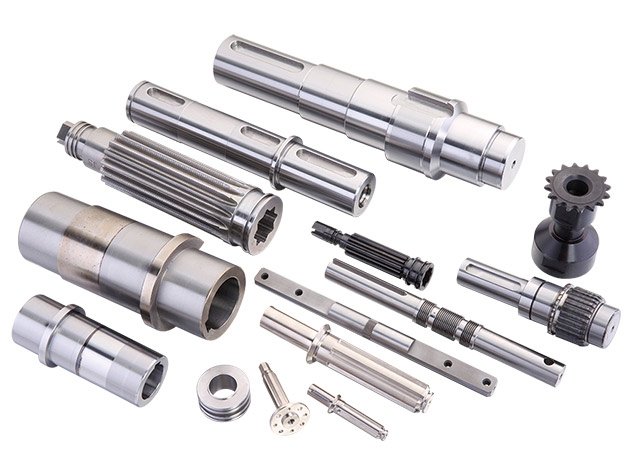
Custom Worm Wheel and Worm Gear Manufacturing Techniques for Precision OEM Supply Chains
1. Executive Summary
Custom worm wheel and worm gear systems are selected when engineers need compact torque multiplication, stable motion control, and reliable self-locking behavior in demanding mechanical assemblies. In industrial equipment, robotics, automation, fluid control, packaging, and heavy-duty transmission systems, these components are rarely standard parts. They are usually engineered to match a specific load profile, center distance, backlash requirement, duty cycle, and lubrication strategy. That makes manufacturing quality the decisive factor, not only geometry.
For OEMs and Tier 1 suppliers, worm gear performance depends on far more than tooth count. Material pairing, heat treatment, tooth flank accuracy, surface finish, and concentricity all affect wear, efficiency, noise, and service life. A worm wheel that is slightly off in pitch diameter or tooth alignment can run acceptably in light use and fail early in a real production environment. The same is true for the worm shaft, where profile accuracy and surface integrity determine how smoothly the system transmits load under continuous operation.
Dixin Technology, operating as IndustryApex CNC, addresses these requirements as both a supply chain integrator and an ODM solution provider. With a fully controlled precision manufacturing system, ERP-based process management, more than 30 years of experience, and capabilities spanning 3-5 axis CNC, EDM, precision grinding, and industrial ceramics, the company is positioned to support customers who need engineered transmission parts delivered with repeatable quality and disciplined logistics.
2. Technical Deep Dive
Worm gear manufacturing begins with the functional target, not the drawing alone. Engineers define reduction ratio, transmitted torque, operating speed, ambient conditions, duty cycle, lubrication, and allowable backlash. Those requirements then drive the tooth form, helix angle, center distance, and material selection. In many applications, the worm is hardened steel and the wheel is bronze or another wear-compatible alloy. This pairing is intentional: the harder worm resists deformation while the wheel sacrifices more slowly and can be replaced more economically.
Precision starts with blank preparation. Worm wheels are often rough machined first, then stress relieved if the material or section thickness demands it, and later finish-machined after heat treatment or aging. The blank must maintain stable geometry through the full process chain because any distortion becomes tooth error. For the worm shaft, bar stock or forged input material is commonly turned, centerless ground, or pre-machined before thread generation and final finishing.
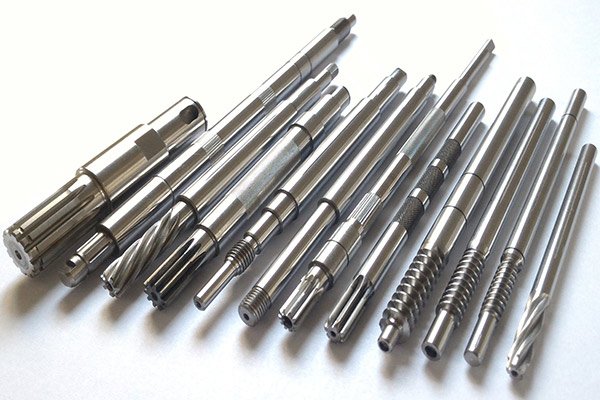
Tooth generation is the critical step. Worm wheels are commonly cut with hob-style methods, form tools, or dedicated gear generation strategies depending on batch size, accuracy target, and profile complexity. The worm itself may be threaded by CNC turning, thread grinding, or precision milling with a controlled toolpath when geometry or finish requirements are high. For tighter tolerances, post-machining processes such as grinding or lapping are used to refine the contact pattern and reduce surface roughness.
Heat treatment changes the problem from geometry creation to geometry preservation. If the worm requires carburizing, induction hardening, or another strengthening route, the process must be planned with allowance for distortion. The same is true for wheel materials that need aging or stabilization. Without process control, hardening can shift pitch, alter lead, or introduce runout that defeats the purpose of precision cutting. A mature manufacturer validates dimensions at each stage and uses controlled correction steps rather than treating heat treatment as a separate, disconnected event.
Surface finish is not cosmetic in worm gearing. It directly affects friction, temperature rise, and oil film behavior. Too rough a surface increases scuffing risk, while a poor tooth flank geometry creates uneven contact and localized stress. Precision grinding and fine finishing are therefore especially important for high-load or high-duty systems. This is one reason Dixin Technology combines CNC machining with precision grinding inside a controlled production environment rather than outsourcing key transitions in the process chain.
Inspection closes the loop. Gear measurement is not limited to basic diameter checks. Tooth profile, lead, backlash, runout, center distance, and contact pattern must be verified against engineering intent. For OEM programs, inspection data should also be traceable to batch, operation, and machine condition so that deviations can be contained quickly. That level of discipline is essential when worm gears are used in assemblies where a small error can cascade into higher vibration, heat, and warranty cost.
3. The ODM & Supply Chain Advantage
In custom transmission manufacturing, technical capability matters, but supply chain control often decides whether a program succeeds in production. Dixin Technology’s core identity is not only as a machining vendor but as a supply chain integrator and ODM solution provider. That distinction matters for global OEMs and Tier 1 suppliers that need engineering support, predictable lead times, and consistent quality across prototype, validation, and volume phases.
A fully controlled precision manufacturing system reduces handoffs, shortens decision cycles, and improves traceability. With ERP at the center of planning and execution, materials, work orders, inspection checkpoints, and delivery schedules can be coordinated as one workflow instead of a chain of disconnected transactions. For custom worm wheels and worm gears, this control helps stabilize dimensions across batches, manage material availability, and align post-process operations such as grinding, heat treatment, and final inspection.
The value of over 30 years of experience is not just institutional memory. It is process judgment. Experienced manufacturers understand which alloy pairs wear together well, where distortion typically appears after heat treatment, how to compensate for tooth form changes after finishing, and when a design should be adjusted for manufacturability. That knowledge reduces iteration cost for engineering teams and lowers the risk of late-stage redesign.
Technology coverage also matters because worm gear programs rarely live in isolation. A supplier capable of 3-5 axis CNC, EDM, precision grinding, and industrial ceramics can support more of the adjacent component set inside the same production system. That is useful when the gearset sits in a complex assembly with shafts, housings, precision inserts, wear parts, or ceramic-insulated elements. The result is better coordination across tolerances and fewer interface problems during final assembly.
For global OEMs and Tier 1 suppliers, the practical benefit is resilience. Engineering teams need a partner that can move from custom design review to production ramp without fragmenting responsibility. Dixin Technology’s model supports that requirement by combining design-informed manufacturing, process control, and integrated logistics. For programs that extend beyond transmission parts, the same manufacturing discipline applies across [Aerospace Parts](https://cnccomponents.industryapex.com/aerospace-cnc-machining-titanium-aircraft-parts-5-axis-aerospace-parts-aircraft-structural-components/), [Medical Parts](https://cnccomponents.industryapex.com/iso-certified-cnc-machining-for-medical-components-including-titanium-implants-surgical-instruments-and-high-precision-device-parts/), and [Hydraulics & Pump](https://cnccomponents.industryapex.com/hydraulic-pump-parts/) applications, where precision and traceability are equally important.
4. Industry Applications
Custom worm wheel and worm gear assemblies appear wherever compact high-ratio reduction and controlled motion are needed. In industrial automation, they are used in indexing systems, actuators, and positioning stages where repeatability matters. In machine tools and motion platforms, the gearset supports fine adjustment and load holding. In fluid control, they can appear in valve operators and pump-related mechanisms where low-speed torque transfer and stable positioning are required.
Construction machinery and heavy equipment also depend on worm gearing in auxiliary drives, steering-related mechanisms, and adjustable subsystems. These environments are harsh: shock load, contamination, temperature fluctuation, and interrupted lubrication all challenge gear life. Manufacturing quality becomes a form of insurance against downtime, which is why process stability and hardened contact surfaces matter so much in fielded equipment.
Specialized sectors place different demands on the same mechanical principle. In aerospace-adjacent equipment, low backlash and traceable production are central concerns. In medical and laboratory systems, quiet operation and clean manufacturing practices become more important. In energy systems, durability and thermal stability take priority. Even when the application changes, the manufacturing logic remains the same: accurate tooth geometry, controlled materials, and validated finishing steps.
For buyers evaluating custom worm gears, the right supplier should be able to interpret the end-use environment and adjust production accordingly. A part intended for light-duty adjustment will not need the same finishing strategy as a continuously loaded reducer in an automated production line. This is where a capable ODM partner adds value: the manufacturer can help translate application requirements into a production plan that supports performance, cost, and lead time together.
5. Call to Action
If your program requires custom worm wheel or worm gear manufacturing with controlled quality, stable supply, and engineering support across the full production cycle, Dixin Technology can help develop the right solution. Whether you are sourcing a new OEM transmission part, reworking an existing design for manufacturability, or consolidating suppliers for a more reliable chain of custody, the right manufacturing partner will reduce risk at every step.
Start with your application requirements, target life, load profile, and inspection expectations. From there, Dixin Technology can support a practical path from prototype to production with the discipline expected by global OEM and Tier 1 buyers. For project discussions and technical inquiries, use the Contact Us page or return to the Home page for broader manufacturing capabilities.