- Shaft
- Molds&Tools
- Hydraulics And Pump
- Hair transplant needle
- Hydraulics And Pump
- Precision CNC Shaft Machining Manufacturer for High Performance Applications
- Energy Industry CNC Machining Parts Supplier
- Aerospace CNC Machining Parts Manufacturer
- Aerospace CNC Machining Parts Manufacturer
- Automotive & EV CNC Machining Parts Supplier for OEM and Tier 1
- Medical CNC Machining Parts Supplier for Precision Medical Devices

Custom Gear Manufacturing From Prototyping to Mass Production | Dixin Technology

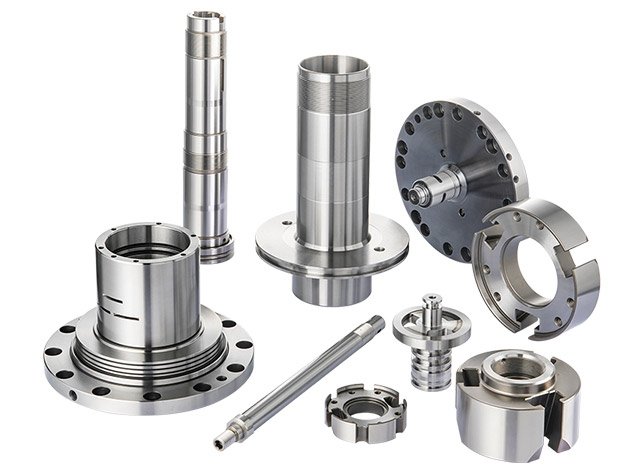
Custom Gear Manufacturing: From Prototyping to Mass Production
Custom gears sit at the intersection of precision engineering, production discipline, and supply chain control. When a gear fails, the issue is rarely only the geometry. It is usually a combination of material selection, heat treatment, profile accuracy, surface integrity, assembly tolerance, and repeatability across batches. For OEMs and Tier 1 suppliers, the challenge is not just making a good prototype. The real requirement is building a manufacturing path that can scale from a one-off validation part to stable, traceable, high-volume production without losing performance.
1. Executive Summary
Custom gear manufacturing demands a process framework that aligns design intent with downstream production realities. Prototyping confirms tooth form, backlash, load transfer, and fit; pilot runs verify process capability; mass production requires controlled machining, inspection, and logistics discipline. Dixin Technology, operating under the IndustryApex CNC platform, supports this transition as both a precision manufacturer and a supply chain integrator. With over 30 years of experience, ERP-controlled operations, and advanced capabilities across 3-5 axis CNC, EDM, precision grinding, and industrial ceramics, the company is structured to serve global OEM and Tier 1 programs that need repeatable quality, stable lead times, and technical accountability.
For buyers in aerospace, medical, hydraulics, and other high-reliability sectors, gear manufacturing is rarely isolated from the rest of the bill of materials. A competent supplier must understand adjacent component families, interface tolerances, and certification expectations. That is why applications involving aerospace parts, medical parts, and hydraulics and pump components often benefit from the same precision manufacturing infrastructure used for gear programs.
2. Technical Deep Dive
Gear manufacturing starts with the functional requirements, not the drawing alone. The engineer must define torque, speed, duty cycle, noise limits, lubrication regime, service environment, and allowable wear before selecting gear type and material. Spur gears are straightforward and efficient, helical gears improve load sharing and reduce noise, bevel gears transmit motion across angles, and worm gears provide high reduction in compact spaces. Each geometry carries different sensitivities in tooth flank accuracy, thermal distortion, and finishing strategy.
Prototype gears are typically used to confirm package fit, contact pattern, and performance under real operating conditions. At this stage, designers often iterate tooth modifications, root fillets, lead crown, and microgeometry to correct load concentration or reduce vibration. Machining strategy matters immediately. For low-quantity samples, CNC milling, gear hobbing, shaping, or wire EDM may be used depending on geometry and material. When the design matures, process selection must shift toward methods that can repeat the tooth form with higher throughput and lower variation.
Material selection is central to gear life. Carbon steels, alloy steels, stainless steels, tool steels, brass, bronze, and engineered ceramics all have distinct tradeoffs. Steel gears generally dominate power transmission because they support carburizing, nitriding, induction hardening, and precision grinding. Bronze and other copper alloys are often used where lubrication or galling resistance is important. Ceramic gears are niche but valuable in corrosive, high-temperature, or electrically sensitive environments where dimensional stability and wear resistance outweigh fracture concerns.
Heat treatment is one of the most important but most underestimated variables in gear production. A gear can machine well in the soft state and still fail in service if distortion after hardening is not controlled. For production release, the process route must account for pre-heat treatment stock allowance, quench distortion, post-hardening grind stock, and inspection strategy. Tooth profile and runout must be verified after heat treatment, not just before it. That is where precision grinding becomes essential, especially for gears used in aerospace, medical devices, and high-load industrial drives.
Surface finish and tooth accuracy directly affect noise, efficiency, and durability. A gear that is dimensionally acceptable but rough on the flank can still generate excessive friction, heat, and micropitting. Fine grinding, honing, and deburring are therefore part of the functional process, not cosmetic finishing. In production, inspection must cover pitch, profile, helix, concentricity, runout, hardness, and surface integrity. This is also where digital process control matters. Statistical feedback from production measurements should be used to maintain capability over time rather than reacting only after a rejection occurs.
3. The ODM & Supply Chain Advantage
For many OEMs, the real bottleneck is not the gear itself. It is the coordination required to move from design freeze to stable supply. This is where an ODM-oriented manufacturing partner offers more value than a single-process job shop. Dixin Technology is positioned as a supply chain integrator and ODM solution provider, which means the company can support not only part fabrication but also process planning, material coordination, production staging, and delivery control across the full lifecycle.
The manufacturing edge comes from a fully controlled precision manufacturing system supported by ERP and more than 30 years of experience. That combination matters because custom gear programs tend to suffer when sourcing, machining, heat treatment, inspection, and packaging are handled as disconnected steps. ERP-controlled production creates traceability across orders, revision history, material lots, and delivery schedules. For global OEM and Tier 1 suppliers, this reduces ambiguity and improves predictability across long-term programs and multi-part assemblies.
Tech capability is equally important. Dixin Technology’s broader platform includes 3-5 axis CNC machining, EDM, precision grinding, and industrial ceramics. In practice, this means gear programs can be supported alongside related precision parts such as housings, shafts, fixtures, wear components, and specialty assemblies. The result is better integration between mating parts and fewer tolerance stack-up problems. It also gives procurement teams a more efficient way to consolidate suppliers without compromising technical control.
From a sourcing perspective, the advantage is structural. A customer bringing a prototype gear to production usually needs support for drawings, material substitution review, manufacturability feedback, process validation, and stable replenishment planning. A supplier with only machine capacity may provide the part, but not the manufacturing logic behind it. A supply chain integrator can manage the path from engineering sample through pilot lot to recurring production while maintaining consistency in quality and lead time.
In regulated or performance-critical environments, this model is especially relevant. Aerospace teams need strict traceability and precision. Medical teams need material discipline and clean manufacturing control. Fluid power customers need wear resistance and dependable repeatability. Because these sectors often overlap in tolerances and documentation demands, a precision partner that already serves aerospace, medical, and hydraulic and pump applications can often shorten qualification cycles and reduce rework at the system level.

4. Industry Applications
Custom gears appear across a wide range of industries, but the engineering priorities shift by sector. In aerospace, weight reduction, fatigue resistance, and traceability are critical. Gear components may be part of actuation systems, auxiliary drive units, or precision mechanisms where low noise and high reliability are required. Tight control over material condition and dimensional stability is essential.
In medical equipment, gears are used in imaging systems, surgical devices, automation modules, and compact power transmission assemblies. Here, the focus is on precision, smooth motion, clean manufacturability, and compatibility with demanding regulatory expectations. Materials and finishes must be selected with the end-use environment in mind, especially where corrosion resistance and cleanliness matter.
Hydraulics and pump systems place different demands on gears and related rotating parts. Wear resistance, pressure stability, and long service intervals are important, especially when the gear is part of a pump drive, metering mechanism, or fluid control subsystem. In these programs, the gear is only one element in a larger mechanical environment, so component consistency and interface accuracy become decisive.
Industrial automation, construction machinery, drivetrain systems, and specialized transmission products also rely on custom gears to translate torque reliably under dynamic loading. These applications often require a balance of robustness and cost control, making scalable manufacturing discipline particularly important. For teams working in these markets, reviewing related capability pages such as IndustryApex CNC can help map gear requirements to the wider precision part portfolio.
5. Call to Action
If your program is moving from prototype gears to production release, the next step is not simply finding a machine shop. It is selecting a manufacturing partner that can protect dimensional intent, manage supply chain complexity, and deliver repeatable quality at scale. Dixin Technology supports OEM and Tier 1 buyers with controlled precision manufacturing, ODM capability, and cross-process integration for demanding industrial programs.
For engineering review, sourcing discussions, or production planning support, contact the team through Contact Us. If you are building a multi-part program that includes gears, housings, shafts, or high-precision assemblies, a consolidated supplier model can reduce risk and improve launch readiness.