- Shaft
- Molds&Tools
- Hydraulics And Pump
- Hair transplant needle
- Hydraulics And Pump
- Precision CNC Shaft Machining Manufacturer for High Performance Applications
- Energy Industry CNC Machining Parts Supplier
- Aerospace CNC Machining Parts Manufacturer
- Aerospace CNC Machining Parts Manufacturer
- Automotive & EV CNC Machining Parts Supplier for OEM and Tier 1
- Medical CNC Machining Parts Supplier for Precision Medical Devices
Hydraulic Pump Parts Reliability: Precision Grinding for OEM Performance and Supply Chain Stability

Executive Summary
Hydraulic pump parts operate under a narrow margin for error. In pumps used across construction equipment, industrial automation, energy systems, and mobile machinery, even small dimensional drift can alter volumetric efficiency, increase leakage, raise heat, and shorten service life. For OEMs and Tier 1 suppliers, reliability is not achieved by material selection alone. It depends on how consistently critical surfaces are ground, how tightly concentricity and form are controlled, and how well the manufacturing system prevents variation from entering the process in the first place.
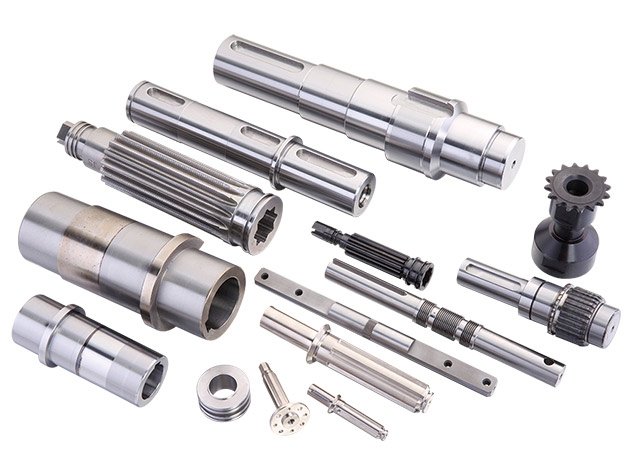
Precision grinding is central to that reliability. It is the process that turns machined blanks into stable functional components with controlled roundness, surface finish, and positional accuracy. In hydraulic pump parts, grinding affects valve spools, sleeves, shafts, bearing journals, seal faces, and mating surfaces that must preserve hydraulic efficiency under repeated load cycles. When executed inside a controlled manufacturing system, grinding also strengthens supply assurance by reducing scrap, improving repeatability, and enabling predictable volume delivery.
Dixin Technology, operating under IndustryApex CNC, supports this requirement as a supply chain integrator and ODM solution provider. With fully controlled precision manufacturing, ERP-driven coordination, more than 30 years of experience, and capabilities spanning 3-5 axis CNC, EDM, precision grinding, and industrial ceramics, the company is positioned to serve global OEM and Tier 1 supply programs where quality, timing, and traceability are equally important. Learn more about our broader capabilities at IndustryApex CNC and our dedicated hydraulic pump parts page.
Technical Deep Dive
Hydraulic pump reliability begins with geometry. A pump can be designed around sound thermodynamics and fluid mechanics, but if the parts that define internal clearances are out of tolerance, the assembly will still lose efficiency. Precision grinding is used because it can remove material in very controlled increments while maintaining the form and surface requirements that hydraulic components demand.
For rotating or reciprocating hydraulic elements, the key performance variables are roundness, cylindricity, surface finish, parallelism, and coaxiality. These attributes directly influence leakage paths and friction. A polished-looking surface is not enough. The surface must be produced to the correct roughness profile and texture direction so that lubrication films are maintained without creating excessive drag or wear. In pump shafts and journals, grinding also helps prevent vibration-induced wear by holding the geometry required for stable rotation.
Valve spools and sleeves are especially sensitive. Their function depends on a controlled fit between moving surfaces, often with very small clearances. If the spool is not ground consistently, the result is erratic control response, internal leakage, or sticking during thermal expansion. Sleeve bores must likewise remain round and coaxial so that flow paths remain predictable. In this environment, precision grinding is not a finishing step in the cosmetic sense. It is a functional process that defines whether the assembly will operate within the intended pressure band.
Material selection affects the grinding strategy. Alloy steels commonly used in hydraulic systems can be hardened, nitrided, or otherwise treated to increase wear resistance. That improves service life, but it also raises process difficulty. Grinding wheels, feeds, dressing schedules, coolant management, and in-process inspection must be matched to the material condition. If thermal damage or microcracking is introduced during grinding, the part may pass initial inspection and still fail in service. For this reason, process control matters as much as machine capability.
Surface integrity is a core requirement. Grinding burn, residual tensile stress, and localized overheating can reduce fatigue resistance and compromise sealing surfaces. In pump parts that experience continuous pressure cycling, such defects often become field failures long after shipment. A disciplined manufacturing process therefore includes temperature control, wheel condition management, consistent fixturing, and inspection protocols that verify the functional result, not only the nominal dimensions.
Another issue is stack-up. Hydraulic pumps often involve multiple parts whose tolerances accumulate across the assembly. Even when each individual part meets its drawing dimension, the final assembly may drift if the process is not designed around the full system. Precision grinding helps compress that variation. When paired with CNC machining, EDM where needed, and careful process sequencing, it creates a stronger final envelope for fit and function.
Production quality also depends on measurement discipline. High-precision metrology should be part of the same control loop as the grinding operation. Roundness testers, surface roughness measurement, coordinate inspection, and gauge calibration all help ensure that the process remains stable over time. For OEM programs, the value of this inspection is not only defect detection. It is trend visibility. A supplier who can detect drift early can intervene before the variation spreads across a production lot.
The ODM & Supply Chain Advantage

Hydraulic pump parts are rarely purchased as isolated components. They are part of a broader sourcing model that includes design adaptation, volume scheduling, quality assurance, and supply continuity. That is why an ODM and supply chain integrator can offer more value than a single-process job shop. The ability to translate engineering intent into repeatable production, then coordinate that production through an ERP-controlled system, materially changes the risk profile for the buyer.
Dixin Technology’s role as a supply chain integrator and ODM solution provider is relevant here because hydraulic programs frequently require mixed-process manufacturing. A single part may pass through CNC turning or milling, EDM, precision grinding, heat treatment coordination, final inspection, and packaging controls. Managing those steps through one controlled system shortens communication loops, reduces handoff losses, and improves accountability. For global OEM and Tier 1 suppliers, that structure is especially important when production is distributed across multiple plants or delivery windows are tight.
The manufacturing edge is not simply the presence of equipment. It is the discipline of a fully controlled precision manufacturing system supported by ERP. ERP integration gives production planning, purchasing, quality, and shipment visibility across the same data set. That matters in hydraulic supply chains because demand is often volatile and programs may span prototype, pilot, and mass production phases. Stable scheduling and traceability are as important as machining accuracy. With more than 30 years of experience, the company can manage both the technical and operational sides of that requirement.
Technology breadth also matters. 3-5 axis CNC supports complex pump geometries, mounting features, and housing interfaces. EDM is useful where hard materials, internal features, or tight corner conditions make conventional machining inefficient. Precision grinding is essential for the functional surfaces that define pump performance. Industrial ceramics broaden the material toolkit for wear, insulation, or corrosion-resistant applications where fluid conditions or cycle life require more than steel alone. This mix allows engineering teams to choose the right process path instead of forcing every part into the same manufacturing method.
For buyers, the ODM model can reduce development friction. If a hydraulic pump component needs a geometry change, a surface strategy adjustment, or a material substitution, a manufacturing partner with design-for-manufacture experience can adapt the part without breaking the production system. That is a practical advantage in cost control, lead-time reduction, and long-term supply resilience. Explore the related technical scope through the hydraulics & pump page, or contact the engineering team through Contact Us.
Industry Applications
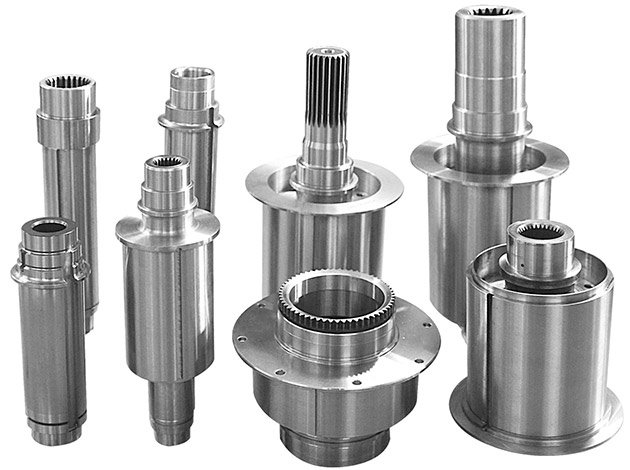
Hydraulic pump parts appear across sectors that depend on controlled force, high duty cycles, and predictable maintenance intervals. In construction machinery, pumps and related components support lifting, digging, steering, and actuation functions where failure can halt equipment and disrupt project schedules. In agricultural machines, durability is critical because equipment must tolerate dust, load variation, and long operating hours under changing field conditions.
Industrial automation is another major use case. Hydraulic systems in presses, handling equipment, and specialty production lines require repeatable motion and stable pressure delivery. Here, precision grinding contributes to consistent response and reduced downtime. The same is true in energy systems, where hydraulic components may serve control, actuation, or support functions in harsh environments where temperature and contamination control are ongoing concerns.
Aerospace-related hydraulic systems demand an even stricter interpretation of reliability. Although not every pump component is aerospace-specific, the production standards used for critical motion systems often parallel those in the aerospace sector: traceability, process validation, and controlled surface quality. For related high-precision programs, see our Aerospace Parts capability page. In medical manufacturing, the same precision discipline appears in device components and implant-adjacent hardware where surface quality and repeatability are non-negotiable; related capabilities are available on our Medical Parts page.
Across all these markets, the common requirement is the same: a supplier must be able to produce parts that hold tolerance in volume, not just in a sample run. Precision grinding is one of the few processes that can reliably support that requirement when combined with a controlled manufacturing system. That is why hydraulic pump parts are a strong indicator of a supplier’s real process maturity. They reveal whether a manufacturer can deliver not just shaped metal, but consistent functional performance across supply cycles.
Call to Action
If your hydraulic program depends on tight tolerances, stable surface integrity, and dependable delivery, the manufacturing model matters as much as the drawing. Dixin Technology supports OEM and Tier 1 sourcing with integrated precision manufacturing, ERP-driven control, and a process stack built for complex hydraulic pump parts.
Review our hydraulic capabilities at Hydraulics & Pump, explore adjacent precision programs at IndustryApex CNC, and reach the team through Contact Us to discuss specifications, drawings, and sourcing requirements.