- Shaft
- Molds&Tools
- Hydraulics And Pump
- Hair transplant needle
- Hydraulics And Pump
- Precision CNC Shaft Machining Manufacturer for High Performance Applications
- Energy Industry CNC Machining Parts Supplier
- Aerospace CNC Machining Parts Manufacturer
- Aerospace CNC Machining Parts Manufacturer
- Automotive & EV CNC Machining Parts Supplier for OEM and Tier 1
- Medical CNC Machining Parts Supplier for Precision Medical Devices

Titanium Implants: Challenges and Solutions in Medical CNC Machining

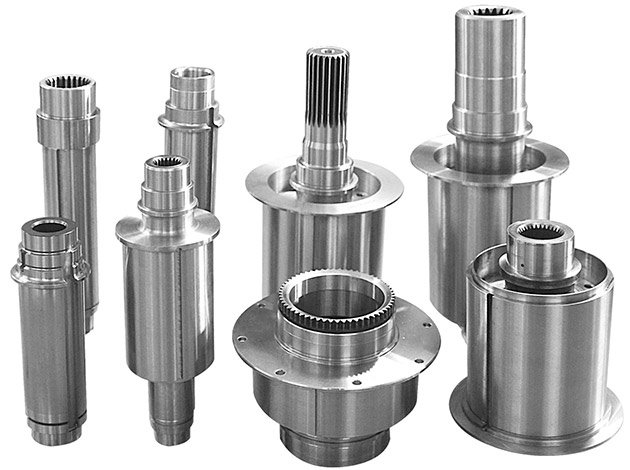
Titanium Implants: Challenges and Solutions in Medical CNC Machining
Medical titanium implant manufacturing sits at the intersection of material science, precision engineering, regulatory discipline, and supply chain control. For OEMs and Tier 1 suppliers, success depends on repeatable machining outcomes, traceable quality systems, and a manufacturing partner that can scale without sacrificing tolerances, surface integrity, or delivery confidence.
Executive Summary
Titanium is the preferred material for many orthopedic, dental, and trauma implants because it combines high strength-to-weight ratio, corrosion resistance, biocompatibility, and long-term performance in the human body. Those same properties make it difficult to machine. Titanium generates heat quickly, work-hardens under poor cutting conditions, reacts strongly to tool wear, and can compromise surface finish and dimensional stability if process control is weak.
In medical CNC machining, the central challenge is not simply making a part to print. It is producing a clinically reliable component with consistent microgeometry, stable surface condition, validated cleanliness, and documented traceability across every batch. That requires process engineering that accounts for toolpaths, fixturing, coolant delivery, chip evacuation, metrology, and post-processing. It also requires a supply chain model that reduces handoffs, compresses lead time, and maintains control over critical operations.
Dixin Technology, operating as IndustryApex CNC, is positioned around that requirement set as a supply chain integrator and ODM solution provider. With a fully controlled precision manufacturing system, ERP-driven execution, more than 30 years of experience, and capability across 3-5 axis CNC, EDM, precision grinding, and industrial ceramics, the company is structured to support global OEM and Tier 1 requirements for complex medical components, including titanium implants and associated device parts. Relevant capability coverage also extends across adjacent sectors such as aerospace parts, hydraulics and pump components, and other precision assemblies through the IndustryApex CNC home page.
Technical Deep Dive
Titanium machining is difficult because the material concentrates heat at the cutting edge instead of carrying it away with chips. That drives rapid tool wear, edge chipping, built-up edge formation, and inconsistent surface integrity. For implant manufacturers, the consequence is not limited to tool cost. Excess heat can alter near-surface properties, increase burr formation, and create secondary finishing work that risks dimensional drift on critical features such as threads, bores, mating faces, and porous interface zones.
The first engineering control point is material selection. Implant-grade titanium alloys, especially Ti-6Al-4V, are widely used because they balance strength, corrosion resistance, and biocompatibility. However, alloy variability, incoming bar quality, and residual stress can influence machinability. A disciplined supplier qualification process should include material certs, lot traceability, and controlled storage to prevent mix-ups and contamination.
The second control point is cutting strategy. Titanium favors sharp, wear-resistant tooling, short tool engagement, conservative radial stepovers in finishing, and stable chip load. Toolpath design should minimize dwell time and recutting of chips. High-pressure coolant or directed coolant is often essential to reduce thermal loading and evacuate chips from deep pockets or complex implant geometries. In 5-axis machining, tool orientation can be optimized to maintain effective cutting angles and reduce burrs on contoured surfaces.
Fixturing is equally important. Implants and preforms often have thin walls, non-uniform walls, or organic geometry that can distort under clamping force. Custom fixtures, vacuum assists, soft jaws, and process-specific datum strategies help protect geometry while preserving repeatability. For parts with high aspect ratios or multiple sides of access, 5-axis machining reduces setup count and cumulative error. For ultra-fine features, EDM can be used where cutter access or burr control becomes a limiting factor.
Surface finish and edge quality matter because implants interact with biological tissue and, in some cases, with fixation hardware. Machining alone may not deliver the required surface condition. Precision grinding, controlled deburring, polishing, and validated cleaning processes are often needed. In some implant applications, surface topography is part of the functional design. That means the manufacturing plan must preserve intended texture while eliminating harmful burrs, embedded debris, and stress risers.
Inspection closes the loop. Medical CNC machining demands more than sampling one or two dimensions. A robust quality plan includes in-process probing, CMM validation, surface inspection, tool wear monitoring, first article approval, and lot-level traceability. For mission-critical parts, statistical process control is necessary to detect drift before it becomes scrap or field risk. Cleanroom-compatible packaging, controlled handling, and documentation discipline are the final steps that separate commodity precision machining from implant-ready manufacturing.
The ODM & Supply Chain Advantage
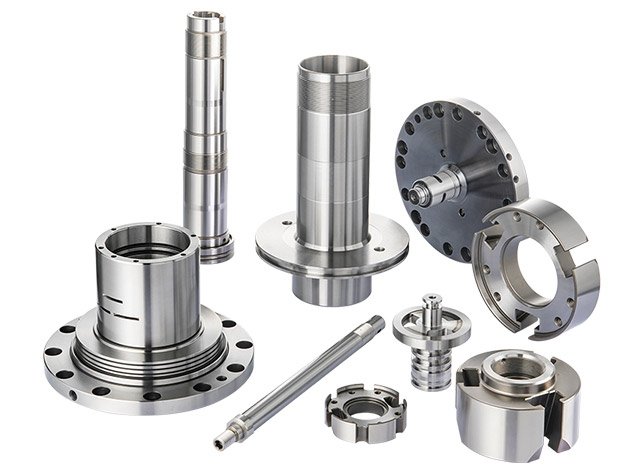
For many medical buyers, the limiting factor is not whether a supplier can machine titanium once. It is whether the supplier can support design intent, production stability, and commercial scale over the full product lifecycle. This is where Dixin Technology’s ODM and supply chain model becomes strategically important.
As a supply chain integrator and ODM solution provider, Dixin Technology can align engineering, sourcing, process development, and final delivery inside one controlled manufacturing framework. That reduces the friction created by fragmented outsourcing, where machining, finishing, inspection, and logistics are split across unrelated vendors. In implant production, every handoff is a risk point for contamination, delay, or specification drift. A controlled system reduces those risks by keeping accountability in one operating model.
The company’s manufacturing edge is its fully controlled precision manufacturing system supported by ERP. In practical terms, ERP integration improves lot traceability, capacity planning, routing discipline, and documentation consistency. For global OEM and Tier 1 suppliers, this matters because medical programs often involve repeated launches, engineering changes, and regulated supplier audits. A structured system can respond faster to revision control, demand shifts, and documentation requests without losing process visibility.
More than 30 years of experience also matters, especially in sectors where tolerances are tight and downstream failure is expensive. Mature manufacturing organizations tend to have stronger tacit knowledge around tool wear behavior, material response, fixture design, and inspection planning. When that experience is paired with 3-5 axis CNC, EDM, precision grinding, and industrial ceramics, the result is a broader manufacturing envelope for complex medical parts. That range supports not only titanium implant geometry, but also related device interfaces, housings, and functional subcomponents that may require mixed-process manufacturing.
For procurement teams, the ODM model changes the conversation from price per part to system value. The key questions become whether the supplier can co-develop manufacturable geometry, maintain stable quality across volume, and manage critical path supply without constant intervention. In that sense, Dixin Technology is not just a machining source. It is a manufacturing partner designed to absorb complexity upstream and deliver predictable output downstream. Learn more through the Contact Us page for program discussions and technical inquiries.
Industry Applications
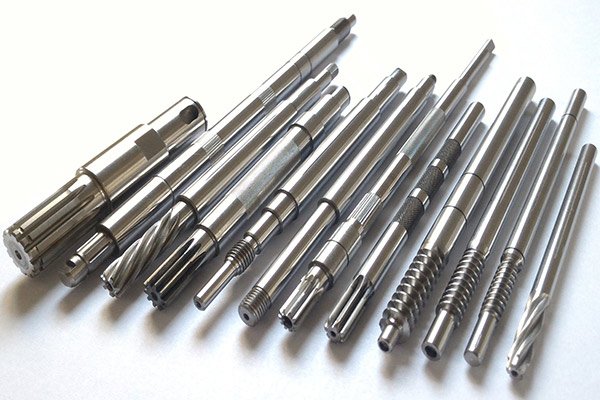
Titanium implant machining spans multiple medical submarkets, each with distinct performance requirements. Orthopedic implants such as bone plates, spinal components, fixation hardware, and joint-related parts demand high strength, precise geometry, and stable interfaces. Dental implants and abutment-related components require excellent dimensional accuracy, surface integrity, and compatibility with sterilization and clinical handling. Trauma and reconstructive components often require compact, highly repeatable features that can be produced in mixed volumes.
Beyond the implant itself, the medical device supply chain often includes surgical instruments, trial components, custom fixtures, and high-precision device parts. These are good candidates for advanced CNC machining because they typically combine functional complexity with strict dimensional control. Dixin Technology’s medical machining capability, which is reflected in its medical parts capability, aligns with this broader ecosystem of precision production.
The relevance of this capability extends beyond healthcare. The same manufacturing discipline used for titanium implants often transfers to aerospace and fluid control programs, where traceability, repeatability, and process stability are equally critical. That cross-industry competence strengthens supplier resilience because it demonstrates control over demanding materials and geometries in multiple regulated or performance-sensitive sectors. It also supports capacity balancing when long lead-time medical programs compete with other precision work.
For OEMs and Tier 1 suppliers, the practical value is clear. A supplier that can move between medical, aerospace, hydraulics, and other precision markets typically brings stronger process discipline, better routing control, and a more resilient operations model. That improves the odds of on-time delivery, controlled quality, and responsive engineering support when implant programs move from prototype to validation to serial production.
Call to Action
If your program involves titanium implants, medical device components, or other high-precision parts that depend on stable process control, the right manufacturing partner should contribute more than machining capacity. It should contribute engineering support, supply chain discipline, and documented repeatability from first article through production release.
Dixin Technology, under the IndustryApex CNC platform, is built to support that need with integrated ODM services, controlled precision manufacturing, ERP-based execution, and deep multi-process capability. For technical discussion, sourcing alignment, or new program review, start with the Contact Us page.