- Shaft
- Molds&Tools
- Hydraulics And Pump
- Hair transplant needle
- Hydraulics And Pump
- Precision CNC Shaft Machining Manufacturer for High Performance Applications
- Energy Industry CNC Machining Parts Supplier
- Aerospace CNC Machining Parts Manufacturer
- Aerospace CNC Machining Parts Manufacturer
- Automotive & EV CNC Machining Parts Supplier for OEM and Tier 1
- Medical CNC Machining Parts Supplier for Precision Medical Devices

Large-Scale Machining for OEM Supply Chains: Gantry Milling and Crankshaft Grinding

Large-Scale Machining: Gantry Milling and Crankshaft Grinding for OEM Supply Chains
Large-scale machining is no longer only a question of machine size. For global OEMs and Tier 1 suppliers, the real challenge is integrating heavy-duty gantry milling, crankshaft grinding, inspection, logistics, documentation, and repeatable process control into one reliable supply chain. Dixin Technology, operating through IndustryApex CNC, supports customers that need large structural components, rotating shafts, engine-related parts, hydraulic systems, aerospace assemblies, and high-precision industrial components produced with engineering discipline and production stability.
1. Executive Summary
Gantry milling and crankshaft grinding represent two of the most demanding areas in precision manufacturing. Gantry milling is used for oversized parts requiring rigid cutting, large travel, tight geometric control, and stable datum management. Crankshaft grinding is used to achieve accurate journal geometry, surface finish, roundness, concentricity, and fatigue-resistant functional surfaces on crankshafts, eccentric shafts, and other rotating power-transmission components.
In B2B sourcing, these processes matter because large parts often carry high material value, long lead times, and significant downstream risk. A dimensional defect on a large machine base, turbine frame, hydraulic block, aerospace structural member, or crankshaft can delay final assembly and create expensive rework. Buyers therefore need more than a machining vendor. They need an ODM-oriented manufacturing partner that can evaluate manufacturability, stabilize process flow, coordinate suppliers, maintain quality records, and scale from prototype to batch production.
Dixin Technology is positioned as a supply chain integrator and ODM solution provider for global OEM and Tier 1 customers. Through a fully controlled precision manufacturing system supported by ERP, over 30 years of manufacturing experience, and capabilities including 3-5 axis CNC machining, EDM, precision grinding, and industrial ceramics, the company helps customers reduce sourcing complexity while improving part reliability. Learn more about our integrated CNC manufacturing platform at IndustryApex CNC.
2. Technical Deep Dive
Gantry milling is often selected when the workpiece is too large, too heavy, or too structurally complex for conventional vertical or horizontal machining centers. Typical parts include machine frames, mold bases, welded structures, aerospace panels, rail and guide components, gear housings, pump bodies, and large brackets. The gantry configuration provides a wide bridge structure and extended X, Y, and Z travel, allowing the cutting tool to move over the component while the workpiece remains securely fixtured. This reduces handling risk and helps maintain datum integrity during roughing, semi-finishing, and finishing.
The engineering foundation of gantry milling is rigidity. Large cutters generate substantial cutting forces, especially when removing material from cast steel, alloy steel, stainless steel, aluminum plate, titanium, or welded fabrications. Machine stiffness, spindle torque, thermal stability, and fixture design directly affect flatness, parallelism, perpendicularity, hole location, and surface finish. For large-scale parts, the process plan must also account for internal stress release. Rough machining may be followed by stress relief, stabilization, or rest periods before final finishing. Without this sequence, an oversized component can move after machining, producing out-of-tolerance surfaces during assembly.
Datum strategy is equally important. Engineers must define the primary, secondary, and tertiary references before the first cut. On a large part, a poor datum decision can compound error across hundreds or thousands of millimeters. Dixin Technology evaluates clamping points, machining allowance, inspection access, material deformation, and lifting orientation to ensure the process supports final functional requirements. For parts that require multi-face machining, indexing accuracy and coordinate transformation become key process controls.
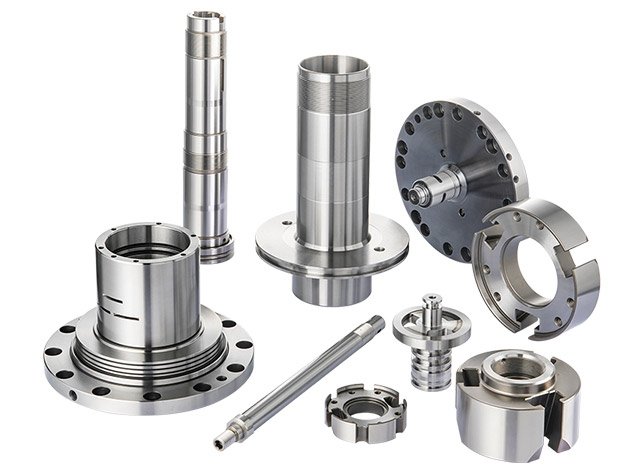
Crankshaft grinding demands a different but equally disciplined approach. A crankshaft is a rotating component that converts reciprocating motion into rotational output. It may contain main journals, crank pins, counterweights, oil holes, fillets, keyways, and gear or pulley interfaces. Grinding must deliver tight diameter control, roundness, cylindricity, runout, surface roughness, and fillet integrity. The grinding wheel, coolant delivery, dressing method, in-process gauging, and support system all influence final quality.
The most critical risk in crankshaft grinding is not only dimensional error. It is the introduction of surface damage, grinding burn, tensile stress, chatter marks, or fillet weakness that can reduce fatigue life. For this reason, process parameters must be validated around wheel speed, workpiece speed, feed rate, spark-out time, coolant pressure, and wheel dressing frequency. Journals and pins require consistent geometry, but fillets are especially important because they carry high stress concentration during service. A properly controlled grinding operation preserves the fatigue performance designed into the shaft.
Large crankshafts, eccentric shafts, and custom rotating shafts often require several operations before grinding: turning, deep-hole drilling, milling of oil passages, heat treatment, straightening, semi-grinding, inspection, and final grinding. Each step affects the next. For example, heat treatment can cause distortion, while inadequate straightening can lead to uneven grinding stock. Dixin Technology approaches these parts as complete manufacturing programs rather than isolated grinding jobs, coordinating process flow to minimize cumulative variation.
Inspection closes the technical loop. For gantry-milled parts, inspection may include CMM measurement, laser tracking, height gauges, granite layout, surface roughness testing, and geometric tolerance verification. For crankshafts, inspection may include journal diameter measurement, runout checks, roundness testing, surface finish verification, hardness testing, magnetic particle inspection, and concentricity validation. In both cases, manufacturing accuracy must be documented in a format useful to OEM engineering and quality teams.
3. The ODM and Supply Chain Advantage
Large-scale machining is often outsourced because it requires specialized equipment, experienced operators, inspection resources, and supplier coordination. However, outsourcing becomes risky when customers must separately manage material suppliers, heat treatment vendors, rough machining workshops, grinding suppliers, coating providers, logistics partners, and inspection laboratories. Every handoff adds communication burden and schedule uncertainty. This is why Dixin Technology emphasizes the role of a supply chain integrator and ODM solution provider, not only a part maker.
As an ODM partner, Dixin Technology supports customers early in the project lifecycle. Engineering teams can review drawings, material selections, tolerance stacks, GD&T requirements, surface treatment options, and manufacturing feasibility. When design changes are needed to improve manufacturability, reduce cost, or stabilize quality, the discussion can happen before production begins. This approach is especially valuable for large gantry-milled structures and crankshafts because design decisions directly influence fixture complexity, machining sequence, inspection method, and lead time.
The manufacturing edge comes from a fully controlled precision manufacturing system with ERP management and more than 30 years of experience. ERP visibility helps align purchasing, production planning, tooling, work-in-process tracking, inspection, and delivery commitments. For global OEMs, this is not a minor administrative feature; it is a key risk-control mechanism. When lead times are long and parts are expensive, customers need traceability, predictable scheduling, and transparent project status.
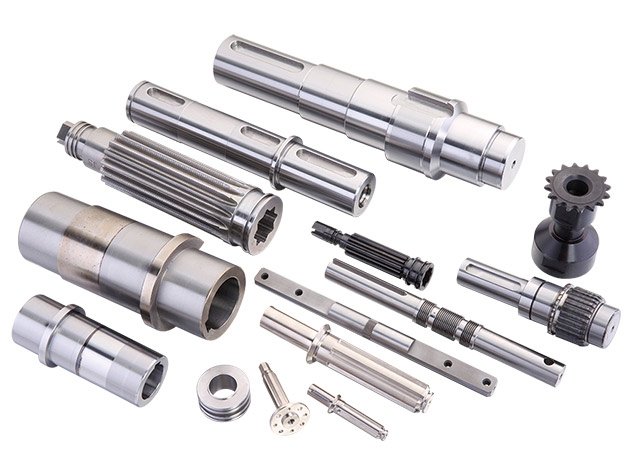
Dixin Technology combines 3-5 axis CNC machining, EDM, precision grinding, and industrial ceramics capabilities within a coordinated production network. This allows the team to support complex parts that require more than one process family. A large housing may require gantry milling, precision boring, surface grinding, drilling, tapping, deburring, and coating. A rotating shaft may require turning, milling, heat treatment, cylindrical grinding, thread grinding, keyway machining, balancing, and final inspection. A ceramic or wear-resistant component may require specialized grinding and material handling. By integrating these capabilities, Dixin Technology reduces the number of suppliers customers need to qualify and manage.
The supply chain advantage is also visible in quality planning. Before production, engineers can define critical-to-quality features, inspection frequency, process capability targets, material certificates, heat treatment records, and packaging requirements. During production, ERP-supported workflow control helps maintain job status and documentation. After production, inspection reports and packaging standards support international shipment and receiving inspection. This is particularly important for Tier 1 suppliers serving automotive, energy, aerospace, heavy equipment, medical, and fluid-control markets.
For international purchasing teams, communication quality is part of manufacturing quality. A supplier that understands technical drawings but cannot manage schedule updates, export packing, corrective actions, engineering revisions, and long-term replenishment will struggle to support OEM programs. Dixin Technology positions IndustryApex CNC as a technical and commercial interface for customers that need precision machining with supply chain discipline.
4. Industry Applications
Large-scale gantry milling and crankshaft grinding support many industrial sectors, but each sector has different priorities. In drivetrain and engine applications, crankshafts, eccentric shafts, splined shafts, gear housings, bearing seats, and structural frames require durability and geometric precision. Grinding quality affects friction, lubrication, sealing, vibration, and fatigue life. Gantry milling supports the large fixtures, housings, and equipment structures that keep powertrain systems aligned.
In aerospace manufacturing, large aluminum, titanium, and high-strength alloy components often require multi-axis machining, stable fixturing, and strict traceability. Structural parts must meet demanding weight, strength, and dimensional requirements. Dixin Technology supports customers seeking precision-machined aircraft and structural components through its aerospace-focused capabilities, including the solutions described at aerospace CNC machining and aircraft structural components. Gantry milling is particularly relevant for frames, plates, ribs, tooling, and large fixtures used in aircraft production.
Hydraulic and pump systems also benefit from large-scale precision machining. Pump housings, hydraulic manifolds, valve blocks, cylinders, sleeves, and rotating elements require accurate ports, sealing faces, bores, and wear surfaces. In heavy equipment, energy, marine, and industrial automation, these components must function under pressure, load, temperature variation, and continuous duty cycles. Dixin Technology provides related solutions for hydraulic pump parts, where machining precision is directly tied to leakage control, efficiency, and service life.
Medical and chemical industries require a different emphasis: cleanliness, biocompatible materials, corrosion resistance, and reliable documentation. While crankshafts are not typical medical components, the same precision grinding and process-control mindset applies to surgical instruments, titanium implants, device components, pump parts, and chemically resistant assemblies. Customers can explore these capabilities through ISO-certified CNC machining for medical components. The link between large-scale industrial machining and medical precision is process maturity: both require controlled inputs, validated operations, and documented outputs.
Energy and heavy machinery sectors depend heavily on large machined structures and rotating components. Wind energy, oil and gas, compressors, generators, mining machinery, construction equipment, and agricultural machinery often use oversized parts with demanding tolerances. Gantry milling enables accurate machining of frames, housings, platforms, and mounting interfaces. Crankshaft and eccentric shaft grinding supports engines, presses, pumps, and reciprocating machinery. In these sectors, the commercial value of machining is measured not only by unit price but by uptime, maintenance reduction, assembly efficiency, and lifecycle performance.
Mold manufacturing and industrial automation also rely on large, stable, high-accuracy surfaces. Mold plates, dies, machine bases, automation frames, and robot system components require flatness, hole-position accuracy, and repeatability across large areas. Gantry milling can reduce setup changes and improve consistency, while precision grinding can finish critical surfaces that influence assembly and motion accuracy.
5. Call to Action
If your organization is sourcing large gantry-milled components, crankshafts, eccentric shafts, hydraulic parts, aerospace structures, or high-precision CNC components, the right supplier decision can reduce risk across engineering, purchasing, production, and after-sales service. Dixin Technology combines ODM engineering support, ERP-driven manufacturing control, 3-5 axis CNC machining, EDM, precision grinding, industrial ceramics, and more than 30 years of experience to support demanding OEM and Tier 1 supply chains.
Whether you are developing a new product, transferring production from an unstable supplier, or consolidating machining vendors for global sourcing efficiency, IndustryApex CNC can help evaluate drawings, tolerances, materials, process flow, quality documentation, and delivery planning. To discuss your next large-scale machining project, visit Contact Us and connect with the Dixin Technology engineering and supply chain team.