- Shaft
- Molds&Tools
- Hydraulics And Pump
- Hair transplant needle
- Hydraulics And Pump
- Precision CNC Shaft Machining Manufacturer for High Performance Applications
- Energy Industry CNC Machining Parts Supplier
- Aerospace CNC Machining Parts Manufacturer
- Aerospace CNC Machining Parts Manufacturer
- Automotive & EV CNC Machining Parts Supplier for OEM and Tier 1
- Medical CNC Machining Parts Supplier for Precision Medical Devices

Cold Heading Tooling vs. CNC Machining: Which Process Is Right for Your Project?

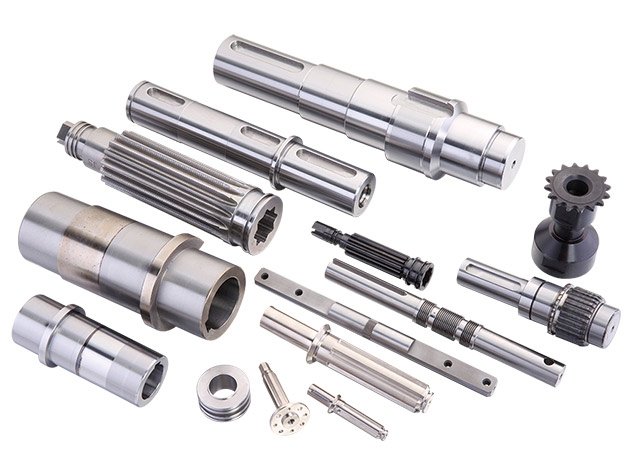
Cold Heading Tooling vs. CNC Machining: Which Process Is Right for Your Project?
Choosing between cold heading tooling and CNC machining is not a question of which process is better in the abstract. It is a question of geometry, volume, material behavior, tolerance risk, downstream assembly needs, and total landed cost. For OEMs and Tier 1 suppliers, the right answer changes by part family, annual demand, and supply chain structure. Dixin Technology, operating as IndustryApex CNC, supports both sides of that decision through a fully controlled precision manufacturing system built for repeatability, traceability, and global delivery.
1. Executive Summary
Cold heading tooling is built for high-volume production of fasteners and axisymmetric parts where material is plastically formed rather than cut away. It excels when the part has stable geometry, strong grain flow requirements, and large annual quantities that justify tooling investment. CNC machining is better suited to complex geometries, tight feature control, lower to medium volumes, and parts that require frequent design changes or mixed-material flexibility.
The practical distinction is economic as much as technical. Cold heading usually wins on unit cost once production scales, because it converts material efficiently and cycles parts quickly. CNC machining usually wins on flexibility, prototype speed, and complex features such as pockets, angled holes, thin walls, and non-rotational forms. A project can also move between both methods over its life cycle: CNC for validation and bridge supply, then cold heading for mature, stable demand.
For buyers managing global sourcing risk, the process choice must also account for supply chain robustness. Dixin Technology integrates ERP-driven planning, more than 30 years of experience, and capabilities across 3-5 axis CNC, EDM, precision grinding, and industrial ceramics to support OEM and Tier 1 programs that require both engineering discipline and delivery reliability. Learn more about our capabilities on the Home page.
2. Technical Deep Dive
Cold heading, sometimes grouped with cold forming or cold forging, shapes metal at room temperature using high-tonnage presses and multi-station tooling. The process begins with wire stock cut to length. That blank is then upset, extruded, headed, trimmed, or pierced through a sequence of dies and punches. Because the material is not heated to forging temperature, the metal flow is controlled by tooling geometry and press energy. The result is a dense component with favorable grain alignment and minimal scrap.
CNC machining, by contrast, removes material from bar stock, plate, forgings, castings, or preform blanks using subtractive cutting. Milling, turning, drilling, boring, and multi-axis interpolation create the final feature set. This makes CNC ideal for complex part families and precision surfaces that would be difficult or uneconomic to form. It also supports frequent revisions because the process change is usually program-based rather than tooling-based.
From a manufacturing engineer’s perspective, the most important difference is not just the machine. It is the design envelope each process imposes. Cold heading rewards parts with symmetry, consistent wall thickness, and formed features that can be generated by axial force. It penalizes abrupt geometry changes, unsupported protrusions, and shapes that exceed the flow limits of the alloy. CNC machining tolerates more geometric freedom but introduces chip waste, longer cycle times, and fixture complexity. For high-performance components, that tradeoff can be justified by tighter functional control.
Tooling is the second major differentiator. Cold heading requires hardened dies, punches, guides, and carefully staged forming sequences. The upfront engineering effort is substantial, but once stable, the process can produce millions of parts with consistent economics. CNC tooling is lighter from a capital standpoint, but the recurring cost is embedded in machine time, tool wear, and labor. That means the crossover point depends on part complexity, tolerance bands, and volume commitments rather than on any universal rule.
Material behavior also matters. Cold heading improves strength in many ferrous applications because the formed grain structure follows the part shape. It is often a strong fit for fasteners, pins, bushings, and simple connectors. CNC machining is preferable for titanium, aluminum, stainless steel, engineering plastics, ceramics, and mixed-material assemblies where the finished geometry or surface specification cannot be achieved by cold forming alone. For aerospace programs, the choice often lands on CNC because of the need for complex structural features and controlled machining of high-value alloys. See our Aerospace Parts capability for representative work in that segment.
The quality profile differs as well. Cold heading generally produces less surface interruption and better material utilization, but die wear can affect dimensional drift if process control is weak. CNC machining can hold excellent dimensional accuracy and surface finish, but the process depends on fixture repeatability, tool condition, and in-process inspection discipline. In medical manufacturing, where traceability and dimensional consistency are critical, CNC is often the practical route for implants, device housings, and precision subassemblies. Our Medical Parts page shows the type of controlled output required in regulated environments.
Decision makers should also compare lead time. Cold heading may look slow initially because tooling development takes time, but once the process is launched, production throughput is very high. CNC machining can start faster for prototypes and low volumes, yet large production runs can consume machine capacity quickly. If a project needs rapid design iteration, CNC is usually the lower-risk entry point. If the design is frozen and demand is stable, cold heading can deliver a better cost curve over time.
3. The ODM & Supply Chain Advantage
For global OEMs and Tier 1 suppliers, the process decision is rarely isolated from supply chain design. The question is not simply whether the part can be made. It is whether the part can be made consistently, economically, and with enough process control to support long-term program stability. This is where Dixin Technology’s position as a supply chain integrator and ODM solution provider becomes strategically useful.
A fully controlled precision manufacturing system changes the risk profile. When ERP is used to coordinate procurement, scheduling, quality records, and shipment control, the buyer gains better visibility into capacity and delivery commitments. That matters when the sourcing model spans multiple components, changing forecasts, and engineering revisions. Dixin Technology’s more than 30 years of experience also matters because process selection is rarely a textbook exercise. Real programs involve material substitutions, tolerance stack-ups, packaging constraints, and customer-specific quality gates that require disciplined execution.
The value of a multi-process platform is flexibility without fragmentation. A project may require 3-5 axis CNC for complex interfaces, EDM for difficult features, precision grinding for tight finishing requirements, and industrial ceramics for wear or thermal stability. Instead of managing separate vendors for each specialization, buyers can consolidate engineering coordination under one accountable manufacturing partner. That reduces communication overhead and lowers the chance of specification drift between stages.
For supply chain teams, this also improves resilience. A single ODM partner with integrated manufacturing capability can support prototype development, pilot builds, volume production, and engineering changes without transferring the program across multiple vendors. That is especially relevant when serving the hydraulics, aerospace, medical, and fluid control sectors, where part criticality is high and quality escape costs are severe. Explore related hydraulic component work on our Hydraulics & Pump page.

4. Industry Applications
In automotive and transportation supply chains, cold heading often fits fasteners, shafts, pins, and connector-style parts that demand high volume and predictable unit economics. CNC machining is better for brackets, housings, housings with internal passages, and precision interfaces that must integrate with multiple assemblies. Many programs use both: formed fasteners alongside machined housings and support hardware.
In aerospace, CNC machining usually has the advantage because of complex geometry, alloy sensitivity, and strict traceability requirements. Structural parts, fittings, and titanium components often require multi-axis control and detailed inspection documentation. Cold heading is useful in narrower areas such as certain fastener families, but the application window is smaller than in general industrial production.
In medical manufacturing, CNC machining is typically preferred for implants, surgical instruments, and device components with complex surface or dimensional requirements. The regulatory environment rewards precision, repeatability, and material versatility. Cold heading can still serve selected high-volume simple parts, but the process is less universal in this sector than it is for standard fastening systems.
In hydraulics and fluid control, the decision depends on the exact component. Valve spools, sleeves, manifolds, pump parts, and sealing interfaces often call for precision machining because of concentricity, surface finish, and leakage control. Where the part family is a simple pin, plug, or connector, cold heading may offer a more efficient route. Our Hydraulics & Pump page highlights the level of precision these systems usually require.
In industrial equipment, construction machinery, and automation, the answer is often mixed. Cold heading is efficient for repetitive hardware, while CNC machining supports structural components, functional housings, and parts that must be customized to the machine architecture. For buyers in these sectors, the best sourcing strategy is usually a process portfolio, not a single-process doctrine.
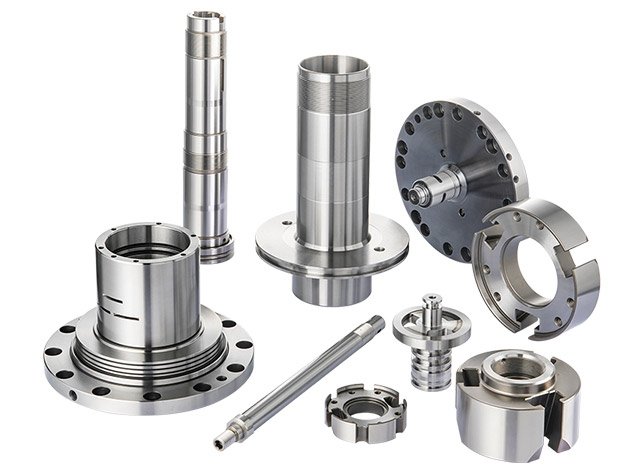
5. Call to Action
If your project involves a stable, high-volume, symmetry-friendly part, cold heading tooling may be the best route. If it involves complex geometry, early-stage validation, frequent revisions, or broad material flexibility, CNC machining is usually the better starting point. In many real programs, the right answer is a staged plan that begins with CNC and transitions to formed production once the design is frozen and demand is proven.
Dixin Technology can help you evaluate the right manufacturing path using engineering data, supply chain constraints, and lifecycle cost considerations rather than assumptions. For OEM and Tier 1 sourcing teams, that means fewer handoffs, tighter execution, and a clearer route from prototype to scale. To discuss your project, contact our team through the Contact Us page.