- Shaft
- Molds&Tools
- Hydraulics And Pump
- Hair transplant needle
- Hydraulics And Pump
- Precision CNC Shaft Machining Manufacturer for High Performance Applications
- Energy Industry CNC Machining Parts Supplier
- Aerospace CNC Machining Parts Manufacturer
- Aerospace CNC Machining Parts Manufacturer
- Automotive & EV CNC Machining Parts Supplier for OEM and Tier 1
- Medical CNC Machining Parts Supplier for Precision Medical Devices

Integrating 3D Printing with Traditional CNC Machining for Rapid Prototyping

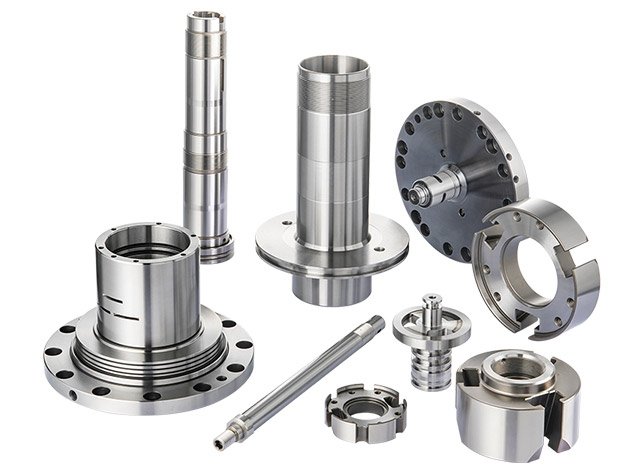
Integrating 3D Printing with Traditional CNC Machining for Rapid Prototyping
For global OEMs and Tier 1 suppliers, rapid prototyping is no longer only a question of producing a first physical sample. Engineering teams must validate form, fit, function, manufacturability, material performance, regulatory requirements, and supply-chain feasibility within increasingly compressed development cycles. Combining additive manufacturing with traditional CNC machining creates a practical bridge between early design iteration and production-ready component development.
3D printing delivers speed and geometric freedom, while CNC machining provides dimensional accuracy, surface quality, material integrity, and repeatable finishing. Used as an integrated process rather than as competing technologies, these methods enable manufacturers to select the right process for each feature, development stage, and risk profile. Dixin Technology, operating through IndustryApex CNC, supports this integrated approach with precision manufacturing, engineering coordination, and supply-chain execution for demanding industrial applications.
1. Executive Summary
Traditional prototyping often forces a choice between speed and production relevance. A fully machined prototype can accurately represent the final material and tolerances, but it may require substantial programming, tooling preparation, and machine time. A 3D-printed prototype can be produced quickly and economically, but its anisotropic strength, surface texture, dimensional behavior, and material characteristics may not accurately predict the performance of a machined production component.
An integrated workflow addresses both limitations. Additive manufacturing is used for rapid concept models, complex internal geometries, ergonomic studies, and early assembly checks. CNC machining is then applied to critical interfaces, datum surfaces, holes, threads, sealing areas, bearing seats, and other features requiring tight control. This hybrid approach reduces iteration time while preserving the engineering value of production-representative testing.
The greatest benefit extends beyond the prototype itself. When additive and subtractive processes are managed within one engineering and supply-chain framework, design feedback can move more quickly into manufacturability review, material selection, quality planning, cost estimation, and production scheduling. OEMs receive a clearer path from digital model to qualified component, with fewer handoffs between disconnected suppliers.
For buyers, the approach can reduce development risk in five ways: earlier design verification, lower prototype cost, faster identification of tolerance problems, improved communication between engineering and procurement, and better continuity between prototype and serial production. The correct implementation depends on process selection, datum strategy, inspection planning, and a clear understanding of which characteristics must be representative of the final part.
2. Technical Deep Dive
The integration begins with process segmentation. Engineers should divide the part into functional zones rather than assigning the entire component to one technology. Additive manufacturing is well suited to low-volume geometries with complex channels, lattice structures, lightweighting features, organic transitions, and rapidly changing external forms. CNC machining is preferred for precision interfaces and surfaces that establish assembly relationships.
A printed near-net-shape blank can be designed with machining allowance on selected areas. After printing, the component is fixtured and machined to establish primary datums, secondary references, mounting faces, holes, and functional contours. This method is particularly useful when the component has a complex body but only a limited number of high-precision interfaces. It can substantially reduce the amount of material removed by CNC while maintaining accuracy where it matters most.
Datum planning is critical. Additive parts may have distortion, layer-related variation, residual stress, or support-removal marks. The first CNC operation should therefore create stable reference surfaces that can be used for subsequent setups and inspection. Depending on the geometry, manufacturers may machine a temporary locating feature, use sacrificial stock, or employ probing to align the digital model with the actual printed condition.
Material selection must also reflect the purpose of the prototype. Polymer printing may be sufficient for clearance checks, packaging studies, and ergonomic evaluation. Functional prototypes may require engineering polymers, carbon-reinforced materials, metal additive manufacturing, or a machined alloy that matches production requirements. When strength, fatigue, thermal expansion, corrosion resistance, or biocompatibility is being evaluated, the prototype process and material should be selected with final-use conditions in mind.
Surface finishing is another area where the technologies complement each other. Printed surfaces can exhibit stair-stepping, porosity, directional texture, or support scars. CNC machining can improve critical surfaces to the required roughness and dimensional tolerance. Additional operations such as precision grinding, deburring, polishing, coating, anodizing, passivation, or heat treatment may then be applied according to the component specification.
Inspection should be defined before production begins. Critical dimensions can be verified with coordinate measuring machines, optical inspection, gauges, probing systems, or specialized functional fixtures. For complex parts, inspection data can be compared directly with the nominal CAD model to identify distortion and establish corrective actions. The results should feed back into both the additive build strategy and the CNC program, rather than being treated only as a final acceptance record.
Manufacturing engineers should also consider the digital thread. Revision-controlled CAD files, build parameters, CNC programs, inspection plans, material certificates, and change records should remain connected. This is especially important when multiple prototype iterations are produced. A controlled digital workflow prevents outdated models from entering production and allows engineering teams to understand whether a change originated in geometry, additive parameters, machining strategy, or finishing.
Hybrid manufacturing is not automatically the fastest option. It creates value when the process boundary is deliberately designed. A simple aluminum bracket may be faster and less expensive to machine directly. A complex manifold, lightweight structural component, or customized medical device may benefit significantly from printing followed by precision machining. The correct decision should consider part volume, geometry, material, tolerance, surface requirements, inspection burden, and expected design changes.
In practical terms, the most effective workflow is iterative. The first printed model may validate assembly and envelope requirements. A second hybrid prototype may validate interfaces and function. A later CNC-machined sample may confirm production material behavior and final inspection requirements. Each stage should answer a defined engineering question, ensuring that prototype spending produces actionable information rather than simply producing more physical parts.
3. The ODM & Supply Chain Advantage
The technical process is only one part of rapid prototyping. Supplier structure has a direct effect on development speed, communication quality, and the transition to production. Dixin Technology’s core identity is that of a supply chain integrator and ODM solution provider. This allows engineering, manufacturing, quality, and sourcing considerations to be coordinated through a single accountable partner.
For global OEM and Tier 1 suppliers, this model reduces the friction created when design review, additive production, CNC machining, finishing, inspection, and logistics are managed by separate vendors. A single integrated team can evaluate whether a feature should be printed, machined, ground, formed, or redesigned. It can also identify potential issues related to material availability, fixture design, inspection access, packaging, export documentation, and future production capacity.
Dixin Technology’s manufacturing edge is supported by a fully controlled precision manufacturing system with ERP integration and more than 30 years of experience. ERP control helps connect quotations, engineering revisions, purchasing, work orders, production status, quality records, and shipment information. For customers managing multiple development programs, this visibility supports more reliable planning and reduces the risk that a prototype becomes disconnected from the eventual supply chain.
The company’s technology capabilities include 3-axis to 5-axis CNC machining, EDM, precision grinding, and industrial ceramics. These capabilities extend the available process window for hybrid prototypes. Five-axis machining can reduce setups and improve access to complex surfaces. EDM can address intricate profiles, narrow slots, and hard materials. Precision grinding can establish tight dimensional relationships and superior surface finishes. Industrial ceramics can support applications requiring wear resistance, electrical insulation, high-temperature stability, or chemical resistance.
ODM collaboration also changes how design decisions are made. Instead of reviewing a drawing only for whether it can be produced, an experienced manufacturing partner can assess the complete product intent. This may include recommending a different alloy, adjusting a wall thickness, separating a printed body from a machined insert, changing a datum scheme, or redesigning a seal interface for more stable production. These decisions can improve cost, quality, and lead time before the design becomes difficult to change.
Supply-chain resilience is increasingly important during prototyping because development schedules often depend on small quantities of specialized materials and components. A controlled supplier network can consolidate purchasing, qualify alternate sources, and coordinate secondary processes. This is valuable for aerospace, medical, fluid-control, energy, and automation programs where documentation, traceability, and process consistency are essential.
The transition from prototype to production should be planned from the beginning. Prototype inspection data can help establish control plans, tolerance priorities, process capability targets, and supplier responsibilities. A component that begins as a printed concept model can evolve into a machined, ground, coated, or ceramic-enhanced production part without requiring a complete supplier reset.
Customers can review Dixin Technology’s broader precision manufacturing capabilities through the IndustryApex CNC home page. For organizations that need a partner capable of managing engineering development and component supply, the key advantage is continuity: the same manufacturing knowledge used to accelerate the prototype can support qualification, production ramp-up, and ongoing improvement.
4. Industry Applications
Aerospace: Aerospace programs frequently require lightweight structures, complex ducting, brackets, housings, and titanium components. Additive manufacturing can accelerate geometry exploration and weight-reduction studies, while CNC machining establishes accurate mounting faces, bores, and interfaces. For production-representative development involving titanium aircraft parts and structural components, buyers can review aerospace CNC machining capabilities. The hybrid workflow is particularly useful when engineering teams must balance low mass with inspection and assembly requirements.
Medical devices: Medical components may involve customized geometry, tight tolerances, smooth surfaces, and strict material or documentation requirements. Printing can support anatomical models, instrument concepts, and customized design iterations. CNC machining and precision finishing can then produce accurate interfaces, surgical instrument features, and high-precision device parts. For projects involving titanium implants, surgical instruments, and regulated components, customers can explore ISO-certified medical CNC machining.
Hydraulics and pumps: Fluid-control components demand reliable sealing surfaces, concentric bores, controlled clearances, and resistance to wear and pressure. Additive manufacturing can help evaluate manifold layouts, port arrangements, and internal flow concepts. CNC machining is then used for valve seats, spool bores, threads, and sealing surfaces. The hydraulic pump parts resource provides a relevant reference for components where dimensional integrity directly affects system performance.
Industrial automation: Automation builders often need customized grippers, sensor mounts, end-effectors, nests, and machine interfaces. A printed first article can rapidly validate reach, clearance, and operator access. CNC machining can refine wear surfaces, dowel locations, and repeatable locating features before the design is released for a larger build.
Energy and process equipment: Energy systems may require heat-resistant, corrosion-resistant, electrically insulating, or wear-resistant components. Hybrid prototyping allows teams to examine assembly and serviceability quickly while reserving high-accuracy processes for functional interfaces. Industrial ceramics and precision grinding can be introduced when metallic or polymeric prototypes cannot represent the required operating conditions.
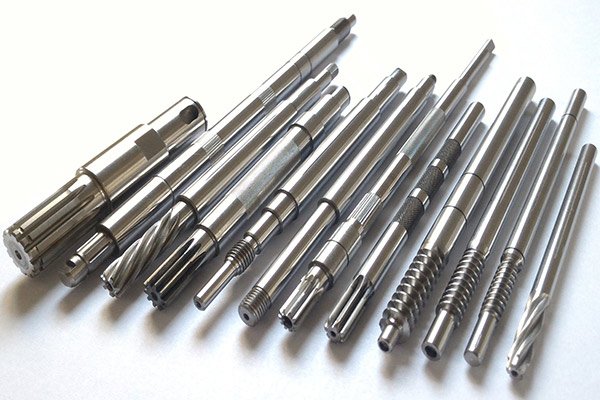
Automotive and drivetrain: Vehicle development depends on rapid iteration, packaging validation, and testing under vibration, heat, and load. Printed parts can support early packaging and airflow studies, while CNC-machined shafts, gears, housings, and mounting components provide more representative functional data. This division helps engineering teams test the right characteristics at the right point in the program.
Across these industries, the procurement objective is not simply to locate a supplier that owns a printer or CNC machine. It is to select a manufacturing partner that understands which characteristics must be representative, which can remain approximate, and how the prototype should evolve into a stable production process.
5. Call to Action
Integrating 3D printing with traditional CNC machining gives engineering teams a faster and more controlled route from concept to qualified component. Additive manufacturing accelerates geometry and assembly validation; CNC machining delivers precision, material relevance, and functional confidence. When these processes are coordinated through an experienced ODM and supply-chain partner, prototype decisions can be connected directly to quality planning, production readiness, and long-term supply.
Dixin Technology supports global OEMs and Tier 1 suppliers with a controlled precision manufacturing system, ERP-supported project coordination, more than 30 years of experience, and capabilities spanning 3-axis to 5-axis CNC machining, EDM, precision grinding, and industrial ceramics. Share your CAD model, target material, tolerance requirements, prototype quantity, and validation objectives with the IndustryApex CNC team. A manufacturing review can identify the most effective combination of additive, subtractive, finishing, inspection, and supply-chain processes for your next development program.