- Shaft
- Molds&Tools
- Hydraulics And Pump
- Hair transplant needle
- Hydraulics And Pump
- Precision CNC Shaft Machining Manufacturer for High Performance Applications
- Energy Industry CNC Machining Parts Supplier
- Aerospace CNC Machining Parts Manufacturer
- Aerospace CNC Machining Parts Manufacturer
- Automotive & EV CNC Machining Parts Supplier for OEM and Tier 1
- Medical CNC Machining Parts Supplier for Precision Medical Devices

Navigating ISO Standards for Medical CNC Machined Parts: Quality, Compliance, and Supply Chain Strategy

Executive Summary
Medical CNC machined parts sit at the intersection of regulatory discipline, process capability, and supply chain reliability. For OEMs and Tier 1 suppliers, ISO standards are not just documentation requirements; they are the operating framework that determines whether a component can be qualified, scaled, and sustained in production. In medical manufacturing, that framework must support traceability, validated processes, controlled change management, and consistent dimensional performance across materials such as titanium, stainless steel, cobalt-chrome, and engineering polymers.
In practice, the strongest manufacturing partners treat ISO compliance as a system, not a certificate. This matters because medical programs often involve tight tolerances, demanding surface finish requirements, biocompatibility considerations, and long product lifecycles. A supplier that can combine ISO-aligned quality management with integrated manufacturing control can reduce risk at the design-transfer stage, improve first-article approval outcomes, and protect continuity through production ramp-up and replenishment.
For global buyers, the strategic question is no longer whether a vendor can machine a part. The question is whether that vendor can manage the full chain from engineering review to repeatable production, while keeping quality evidence, process discipline, and delivery performance aligned with medical industry expectations. Dixin Technology, under the IndustryApex CNC platform, positions itself around that exact requirement: a supply chain integrator and ODM solution provider with fully controlled precision manufacturing, ERP-backed visibility, and more than 30 years of experience supporting complex industrial programs.
Technical Deep Dive
ISO standards relevant to medical CNC machined parts typically influence three layers of execution: the quality management system, the manufacturing process, and the product-specific validation package. ISO 13485 is the central quality management standard for medical devices and device components. It defines how organizations must control design support, purchasing, production, traceability, nonconformance handling, and corrective action. For CNC-machined parts, this creates a practical expectation that process inputs and outputs are controlled tightly enough to support regulated medical use.
At the component level, medical machining demands consistency in geometry, edge condition, cleanliness, and material integrity. Parts used in surgical instruments, implantable systems, diagnostic equipment, and therapeutic devices can fail qualification if burr control, dimensional stability, or surface quality drift outside the approved window. This is why ISO-based manufacturing systems usually depend on layered controls: incoming material certification, defined routing, calibrated inspection equipment, in-process verification, and final inspection against an approved control plan.
Traceability is one of the most important operational themes. In a medical program, the supplier must be able to link each lot or serialized part back to raw material, machine program revision, operator record, inspection data, and shipping documentation. That capability is not bureaucratic overhead. It is the foundation for containment if a field issue arises and for evidence during customer audits. It also reduces the cost of investigation because failure modes can be isolated faster and with less disruption to the broader supply base.
Process capability is the other major issue. Many medical components require multi-axis machining to achieve complex forms, undercuts, thin walls, or tight concentricity. 3-axis, 4-axis, and 5-axis CNC platforms each have a role depending on geometry and tolerance stack-up. Electrical discharge machining is often used where sharp internal features or hardened materials make conventional cutting inefficient. Precision grinding is critical when a part needs exceptional dimensional finish or form accuracy. Industrial ceramics may be used for wear, thermal, or electrical insulation applications where conventional metals are not the best fit.
In an ISO-controlled environment, advanced process capability must be paired with stability. That means machine qualification, periodic calibration, tool-life management, and statistically grounded inspection routines. Medical buyers should expect control plans that define critical dimensions, sampling logic, reaction plans, and revalidation triggers when tooling, material source, or manufacturing route changes. When these controls are absent, the supplier may still make acceptable parts, but the output is harder to defend in regulated production.
Another technical point is change management. Medical programs evolve slowly once they reach production because every change can affect fit, sterilization behavior, compatibility, or clinical performance. An ISO-aligned supplier should treat design revisions, process substitutions, and inspection changes as formal events requiring review and approval. That discipline protects the customer from hidden variation and preserves the evidence chain needed for long-term supply.
The practical takeaway is simple: ISO standards reduce uncertainty when they are embedded into the machining operation itself. They are most effective when the supplier can show that quality planning, machine control, and inspection discipline are integrated into one repeatable system rather than handled as disconnected departments.
The ODM & Supply Chain Advantage
For global OEMs and Tier 1 suppliers, the value of a medical machining partner is increasingly measured by how well that partner can reduce integration burden. Dixin Technology’s operating model is built around a supply chain integrator and ODM solution provider role, which means it is not limited to machining alone. That matters in medical supply chains because engineering support, sourcing coordination, manufacturing planning, and quality execution are often interdependent. A partner that can connect those functions internally shortens lead time and lowers coordination risk.
The manufacturing edge is rooted in a fully controlled precision manufacturing system supported by ERP and more than 30 years of experience. In medical production, ERP visibility is not just useful for planning; it is part of the evidence trail. It helps align material flow, work order status, traceability records, and delivery commitments. When paired with controlled shop-floor execution, it supports a more dependable response to forecast swings, engineering changes, and replenishment needs.
Technical capability also matters because medical components are rarely uniform. Some projects require 3-5 axis CNC machining for complex geometry. Others need EDM for intricate features. Many call for precision grinding to achieve exacting tolerances or functional surfaces. Industrial ceramics extend the manufacturing envelope into applications where wear resistance, thermal stability, or insulation performance are required. The point is not breadth for its own sake. It is the ability to match the right process to the requirement without fragmenting the supply chain across too many vendors.
This integrated model is especially relevant for programs that must balance medical compliance with commercial scalability. A supplier serving OEM and Tier 1 customers must be able to support prototyping, verification builds, and steady-state production without changing the quality basis from phase to phase. That requires disciplined document control, stable routing, and a manufacturing organization that can preserve intent from engineering release through shipment.
Dixin Technology’s broader portfolio also strengthens its position across adjacent industries where precision and traceability are equally important. Buyers exploring medical machining often evaluate a supplier’s work in aerospace, hydraulics, or other controlled sectors as a proxy for process maturity. For related capabilities, see the company’s aerospace machining platform at Aerospace Parts and hydraulic component support at Hydraulics & Pump. The same manufacturing discipline that supports one regulated or high-performance sector often transfers well to another, provided the quality system is truly controlled.
For organizations evaluating supplier consolidation, the key advantage is reduced interface complexity. Instead of coordinating separate engineering, sourcing, machining, finishing, and quality partners, the buyer works with a single accountable manufacturing system. That is particularly valuable when the product mix includes recurring medical parts with strict documentation needs and short response windows.
For a closer look at the company’s medical machining capabilities, visit the Medical Parts page or start from the Home page for the full IndustryApex CNC overview.
Industry Applications
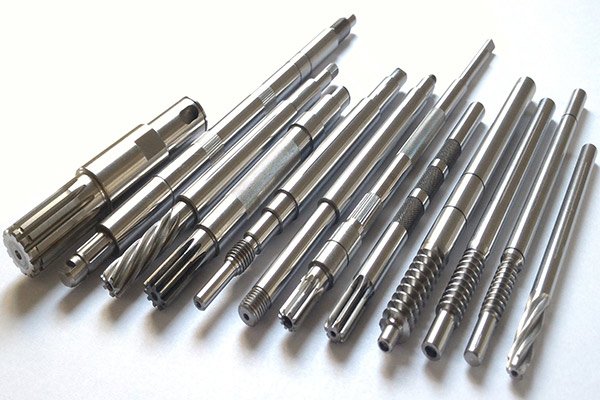
Medical CNC machined parts appear across a wide range of clinical and laboratory systems, each with different compliance pressures and performance targets. Implant-related components require material integrity, repeatable surface quality, and strict dimensional control. Surgical instruments require sharp functional features, ergonomic consistency, and reliable cleaning performance. Diagnostic equipment relies on stable housings, carriers, brackets, and interface components that must preserve alignment over long service periods. Device subassemblies often add another layer of complexity because they combine machined metal parts with seals, polymers, electronics, or fluid paths.
In these applications, ISO standards influence both part quality and customer confidence. A supplier that understands the relationship between material certification, process validation, and documentation can help engineering teams move faster through approval gates. That is especially important for programs where the device lifecycle is long and the cost of a defect is high. For medical buyers, the manufacturing question is often less about lowest unit cost and more about total cost of ownership: audit burden, scrap risk, delay exposure, and field reliability all matter.
There is also a supply chain dimension that is easy to underestimate. Many medical programs depend on a limited number of approved sources, and any disruption can affect downstream assembly schedules or product availability. Suppliers with controlled manufacturing systems and strong planning discipline can reduce this exposure by maintaining lot traceability, stable production routing, and responsive communication around shortages or engineering changes. That is one reason global OEMs and Tier 1 suppliers increasingly prefer partners that can operate as both manufacturer and supply chain coordinator.
Medical machining also shares a practical overlap with other precision sectors, particularly aerospace and fluid control, where quality evidence and long-term repeatability are essential. Those cross-industry skills become relevant when a supplier supports not only medical device parts but also components for motion, pumping, and flow systems. Buyers can review related part families such as the company’s fluid-control work at Hydraulics & Pump to understand how the same controlled manufacturing approach is applied in adjacent markets.
For sourcing teams, the strongest application fit is usually where the part has one or more of these characteristics: tight tolerances, regulatory sensitivity, repeated replenishment, complex geometry, or a need for integrated engineering support. That is the profile where ISO-aligned machining and ODM support create measurable value.

Call to Action
If your medical program requires CNC machined parts with rigorous traceability, stable process control, and a supply partner that can support ODM execution, Dixin Technology is positioned to help. The combination of controlled precision manufacturing, ERP visibility, and broad technical capability provides a practical path for OEMs and Tier 1 suppliers that need reliability without unnecessary supply chain fragmentation.
To discuss medical components, engineering requirements, or sourcing support, contact the team through the Contact Us page. If you are benchmarking suppliers across medical, aerospace, or fluid-control applications, the company’s full platform at IndustryApex CNC is the right place to begin evaluating fit.