- Shaft
- Molds&Tools
- Hydraulics And Pump
- Hair transplant needle
- Hydraulics And Pump
- Precision CNC Shaft Machining Manufacturer for High Performance Applications
- Energy Industry CNC Machining Parts Supplier
- Aerospace CNC Machining Parts Manufacturer
- Aerospace CNC Machining Parts Manufacturer
- Automotive & EV CNC Machining Parts Supplier for OEM and Tier 1
- Medical CNC Machining Parts Supplier for Precision Medical Devices
Optimizing Supply Chains with Low MOQ Micro-Batch Production for Precision CNC Components

Executive Summary
For global OEMs and Tier 1 suppliers, supply chain optimization is no longer limited to annual cost-down negotiations or offshore sourcing at maximum volume. Volatility in demand, engineering change cycles, geopolitical risk, long logistics lanes, and inventory carrying costs have changed the economics of precision component procurement. In this environment, low MOQ micro-batch production has become a strategic manufacturing model—not just a purchasing convenience.
Micro-batch production refers to the controlled manufacture of small, repeatable batches of precision components, often used for validation builds, pilot production, service parts, customization programs, and phased ramp-up. When supported by advanced CNC machining, ERP-driven production planning, disciplined quality systems, and supplier integration, low MOQ production allows buyers to reduce inventory exposure while maintaining engineering flexibility.
Dixin Technology, operating globally as IndustryApex CNC, supports this transition as both a precision manufacturing partner and an ODM supply chain integrator. Through fully controlled manufacturing capabilities—including 3-axis to 5-axis CNC machining, EDM, precision grinding, industrial ceramics processing, and engineered component development—we help customers move from uncertain prototype purchasing to scalable, supply-chain-ready production programs. More information about our manufacturing platform is available at IndustryApex CNC.
The central value of low MOQ micro-batch production is balance. It bridges the gap between prototype machining and mass production. It enables engineering teams to test real components under real operating conditions, while procurement teams avoid excessive minimum order commitments. For regulated or high-performance industries such as aerospace, medical devices, hydraulics, semiconductor equipment, optics, energy, and automation, this model can improve speed, reduce risk, and create a more resilient sourcing architecture.
Technical Deep Dive
Low MOQ micro-batch production is not simply “small quantity machining.” In a professional engineering supply chain, it requires a technical system capable of maintaining dimensional stability, process repeatability, material traceability, and cost control across small lots. The challenge is that many traditional production systems are optimized for long runs. Tooling cost, machine setup time, inspection planning, and purchasing overhead can make small batches expensive if the supplier lacks the right manufacturing architecture.
A robust micro-batch model begins with design-for-manufacturability review. Before machining starts, the supplier should analyze tolerance stack-ups, material selection, surface finish requirements, datum strategy, heat treatment distortion, coating compatibility, and inspection methods. This is especially important for low MOQ production because there is less room to absorb engineering inefficiency across a large order volume. A tolerance that is unnecessarily tight, a radius that requires specialty tooling, or a surface finish that demands additional polishing can significantly affect unit cost and lead time.
At Dixin Technology, micro-batch workflows are typically structured around controlled process routing. Depending on part geometry and performance requirements, a component may move through CNC milling, CNC turning, 5-axis machining, wire EDM, sinker EDM, precision grinding, lapping, honing, deburring, cleaning, and final inspection. For high-hardness materials, complex internal profiles, or components requiring micron-level repeatability, EDM and grinding can be essential complements to CNC machining.
ERP-controlled production planning is another core element. In micro-batch production, visibility matters as much as machine capability. An ERP system allows engineering orders, raw material lots, work-in-process status, inspection results, outsourcing steps, and shipment plans to be coordinated in real time. This reduces the risk of schedule drift, duplicate purchasing, missing documentation, or uncontrolled engineering revisions.
Another technical requirement is fixture strategy. For low MOQ projects, dedicated production fixtures may not always be economical, but relying only on manual setups can compromise consistency. The optimal approach may include modular fixturing, soft jaws, zero-point clamping, palletized workholding, or hybrid fixtures that can support future ramp-up. The objective is to reduce setup time while preserving repeatable part location and process control.
Inspection planning must also be scaled intelligently. In high-volume manufacturing, statistical process control may rely on sampling plans across thousands of units. In low MOQ production, the sample size is smaller, so the inspection strategy must be more deliberate. First-article inspection, critical-to-quality feature verification, CMM measurement, surface roughness testing, thread gauging, concentricity checks, flatness inspection, and visual defect control may all be applied depending on application risk.
Material management is equally important. Micro-batch production often involves specialized materials such as titanium, stainless steel, tool steel, aluminum alloys, copper alloys, engineering plastics, tungsten carbide, zirconia ceramics, alumina ceramics, silicon nitride, and sapphire-related materials. Small-lot purchasing must still preserve material certificates, heat numbers, traceability, and incoming inspection. For aerospace, medical, energy, and fluid control applications, traceability is not optional; it is a foundation of supplier credibility.
From a cost perspective, micro-batch production shifts the discussion from lowest unit price to lowest total supply chain cost. A customer may pay more per piece than a large-volume production run, but save substantially by avoiding obsolete inventory, large warehouse commitments, emergency expediting, and engineering rework. When demand is uncertain or product design is still maturing, the total economic benefit can be significant.
The ODM & Supply Chain Advantage
The strongest low MOQ programs are built by suppliers that understand both manufacturing and supply chain integration. Dixin Technology’s core identity is not limited to being a machining vendor. We operate as a supply chain integrator and ODM solution provider for global OEM and Tier 1 customers that require engineered precision components, stable delivery, and technical collaboration.
As an ODM partner, we support customers beyond drawing-to-part machining. Our team can participate in early-stage manufacturability review, process selection, material optimization, assembly interface evaluation, cost reduction, and production transition planning. This is particularly valuable when customers are developing new products, localizing component supply, dual-sourcing critical parts, or converting legacy components into more reliable, manufacturable designs.
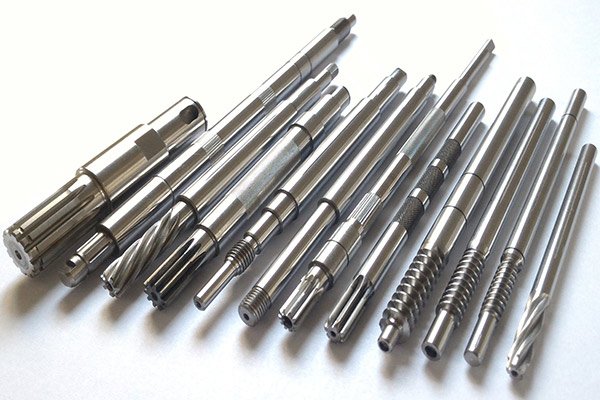
Our manufacturing edge is built on a fully controlled precision manufacturing system supported by ERP and more than 30 years of accumulated experience. Full control means customers are not forced to manage a fragmented chain of disconnected workshops. Instead, critical processes can be coordinated under one engineering and quality framework, improving communication, accountability, and delivery predictability.
Our technical capabilities include 3-axis, 4-axis, and 5-axis CNC machining for complex prismatic parts and contoured surfaces; CNC turning for shafts, sleeves, bushings, and rotational components; EDM for hard metals and intricate features; precision grinding for tight tolerances and superior surface finish; and industrial ceramics manufacturing for wear-resistant, electrically insulating, chemically stable, or high-temperature components. These capabilities allow us to support micro-batch projects across metals, ceramics, carbides, and advanced materials.
The supply chain advantage becomes especially clear when a customer needs a program to evolve over time. A typical project may begin with 5 to 20 engineering samples, move into a 50 to 200 piece validation lot, then transition into recurring batches of 500 or more pieces as demand stabilizes. A supplier without scalable process discipline may perform well at the prototype stage but fail during ramp-up. Conversely, a mass-production supplier may be unwilling to support early low MOQ stages. Dixin Technology is structured to bridge this gap.
Low MOQ production also supports risk diversification. Many OEMs are now moving away from single-source dependency for critical parts. Micro-batch qualification enables buyers to validate alternate suppliers without committing to large volumes immediately. This helps procurement teams build approved supplier redundancy while controlling budget impact.
For global OEMs, logistics integration is another advantage. Micro-batches can be scheduled around demand windows, engineering milestones, field service requirements, or product launch phases. Instead of receiving excessive inventory months before it is needed, buyers can coordinate staged deliveries. This improves cash flow and reduces storage pressure, especially for expensive precision components with high material value.
The ODM model also helps with documentation. Customers often need inspection reports, material certificates, process records, surface treatment documentation, and packaging control. When these records are integrated into the production workflow, micro-batch orders can meet professional supply chain standards rather than being treated as informal prototype jobs.
Industry Applications
Low MOQ micro-batch production has broad relevance, but its highest value appears in industries where component failure is expensive, product life cycles are complex, and engineering requirements change frequently.
Aerospace and Defense
Aerospace supply chains require precision, traceability, and controlled ramp-up. Aircraft structural components, titanium brackets, actuator parts, fuel system components, and interior mechanical assemblies often begin with small qualification lots before moving into production. Low MOQ machining helps engineering teams validate form, fit, and function while avoiding premature inventory commitments. Dixin Technology supports demanding aerospace component requirements through advanced machining methods described on our aerospace CNC machining parts page.
Medical Devices and Surgical Instruments
Medical device development frequently involves iterative design, clinical evaluation, and controlled launch quantities. Titanium implants, stainless steel surgical instruments, orthopedic tools, diagnostic equipment parts, and high-precision device components may require small batches with strict inspection and documentation. Low MOQ production enables device manufacturers to refine designs while preserving supply chain discipline. Our capabilities for medical-grade precision components are detailed at ISO certified CNC machining for medical components.
Hydraulics, Pumps, and Fluid Control
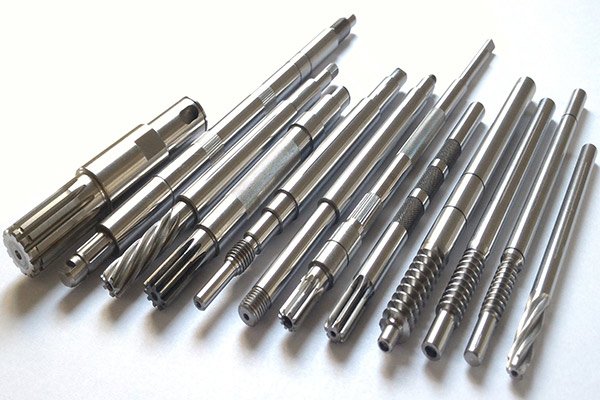
Hydraulic systems depend on tight fits, stable geometry, and excellent surface finish. Valve spools, sleeves, pump shafts, pistons, manifolds, sealing interfaces, and precision fluid control parts often require small replacement batches, customized variants, or controlled validation lots. Micro-batch manufacturing is ideal for pump and hydraulic system suppliers that need to support multiple equipment platforms without excessive inventory. Related capabilities are available on our hydraulic pump parts page.
Semiconductor Equipment and Automation
Semiconductor and automation equipment manufacturers often manage low-volume, high-complexity bills of materials. Precision brackets, ceramic insulators, vacuum-compatible parts, motion components, grippers, nests, and alignment fixtures may be ordered in small quantities but require exceptional accuracy. Low MOQ production supports frequent equipment revisions and customer-specific configurations.
Energy and Industrial Machinery
Energy systems, test equipment, turbine support components, sealing parts, sensor housings, and industrial machine assemblies often require durable materials and controlled processes. Micro-batch production allows operators and equipment builders to source replacement parts, upgrade components, or test material improvements without waiting for large production campaigns.
Optics, Ceramics, and Advanced Materials
For optics and high-performance instruments, small-batch production is common because each assembly may be highly specialized. Precision ceramic parts, sapphire components, optical mounts, alignment structures, and wear-resistant guides benefit from machining suppliers that understand advanced materials and fine tolerances. The ability to combine CNC machining, grinding, EDM, and ceramic processing is a strong advantage for these applications.
Call to Action
Low MOQ micro-batch production is not a compromise; when engineered correctly, it is a competitive supply chain strategy. It helps OEMs and Tier 1 suppliers reduce inventory risk, accelerate product development, qualify alternate suppliers, support customization, and bridge the gap between prototype and production.
Dixin Technology, through IndustryApex CNC, combines precision manufacturing, ODM engineering support, ERP-based production control, and more than 30 years of experience to help global customers build more resilient component supply chains. Whether you need a small validation batch, a repeatable low-volume production program, or a scalable path from prototype to mass production, our team can support your technical and commercial goals.
To discuss your next micro-batch CNC machining or ODM component program, please contact Dixin Technology. Share your drawings, material requirements, target quantities, inspection needs, and delivery schedule, and our engineering team will help evaluate the most efficient production route.