- Shaft
- Molds&Tools
- Hydraulics And Pump
- Hair transplant needle
- Hydraulics And Pump
- Precision CNC Shaft Machining Manufacturer for High Performance Applications
- Energy Industry CNC Machining Parts Supplier
- Aerospace CNC Machining Parts Manufacturer
- Aerospace CNC Machining Parts Manufacturer
- Automotive & EV CNC Machining Parts Supplier for OEM and Tier 1
- Medical CNC Machining Parts Supplier for Precision Medical Devices
Ruby and Sapphire Component Machining for Fluid Control Systems | Precision ODM Supply Chain Solutions

Ruby and Sapphire Component Machining for Fluid Control Systems
Executive Summary
Ruby and sapphire components play a specialized role in fluid control systems where wear resistance, dimensional stability, and leak-resistant performance matter more than raw throughput. In pumps, valves, flow meters, analytical instruments, and high-pressure dispensing assemblies, these hard material components are often selected for their ability to maintain a stable geometry at contact points that would rapidly degrade softer metals or polymers. The result is more consistent flow behavior, longer service intervals, and improved process reliability in systems that run continuously or handle abrasive, corrosive, or ultra-clean media.
For OEMs and Tier 1 suppliers, the value is not simply the material itself. The value lies in how the component is engineered, machined, lapped, inspected, and integrated into the broader supply chain. Ruby and sapphire parts are unforgiving to poor process control. Microcracks, edge damage, ovality, or poor surface finish can turn a promising part into an early failure. That is why production planning, tooling strategy, dimensional metrology, and packaging discipline are as important as cutting capability.
Dixin Technology, operating as IndustryApex CNC, approaches these parts as both a manufacturing and supply chain problem. The company combines precision machining with ODM support, controlled production flow, and ERP-driven coordination to reduce risk from prototype through volume delivery. For buyers seeking a stable supplier for fluid control applications, the practical question is not whether ruby and sapphire can be machined, but whether they can be delivered consistently at the quality level the system demands. For an overview of the company’s broader capabilities, see the IndustryApex CNC home page.
Technical Deep Dive
Ruby and sapphire are both forms of crystalline aluminum oxide, with ruby typically identified by chromium doping and sapphire used more broadly across technical applications. In fluid control systems, these materials are chosen for their exceptional hardness, chemical resistance, and ability to preserve critical wear surfaces under repeated sliding, throttling, or sealing contact. They are commonly used in nozzles, seats, orifices, jewel bearings, flow restrictors, sensor interfaces, and precision guide elements.
The machining challenge begins with brittleness. Unlike ductile metals, ruby and sapphire do not tolerate aggressive feeds, unstable fixtures, or thermal shock. Production methods therefore favor controlled grinding, EDM where appropriate for adjacent hard materials, precision lapping, and polishing processes that minimize subsurface damage. Achieving final performance depends on more than hitting a nominal diameter. Surface integrity, edge condition, concentricity, flatness, and microgeometry all influence how fluid passes through the component and how well adjacent seals or moving parts behave.
In practical manufacturing terms, the process usually starts with the right blank geometry and crystal orientation. Orientation affects chipping tendency and the way the material responds to material removal. After rough shaping, the part is brought to size using fine abrasive control, then verified with optical and dimensional inspection. Because the tolerance stack in fluid control assemblies is often narrow, the part must be judged in relation to the mating system, not in isolation. A nominally acceptable jewel that is slightly out of round or has edge microfracture can still create leakage, unstable metering, or accelerated seat wear.
The dominant engineering risks are familiar but severe: chipping at entry and exit points, damaged sealing surfaces, residual stress from thermal input, contamination embedded during polishing, and failure to protect the part during handling and transit. For this reason, the best suppliers design the entire process around low-contact handling, clean packaging, and inspection gates tied to the most failure-sensitive features. That is especially important in high-purity fluid circuits and medical or analytical equipment, where trace contamination can be as damaging as dimensional error.
Material selection also shapes the economics of the part. Ruby and sapphire are rarely the cheapest route to a fluid control function, but they are often the lowest-risk route over the service life of the system. In corrosive media, for example, a harder metallic seat may still degrade, while a properly manufactured sapphire insert can maintain stable performance far longer. In this context, design for manufacturability matters. A geometry that looks efficient in CAD can become a yield problem if it concentrates stress at thin walls, sharp inside corners, or unsupported edges.
For fluid control programs that combine precision, wear resistance, and process cleanliness, material-specific engineering is essential. Related high-precision applications can be seen in hydraulic and pump components, where sealing performance and wear behavior are similarly critical. In advanced sectors such as aerospace parts and medical components, the same discipline around traceability, precision, and surface control applies, even when the material system differs.
The ODM & Supply Chain Advantage
For global OEMs and Tier 1 suppliers, ruby and sapphire component sourcing is rarely just a machining purchase. It is a program management decision. Dixin Technology’s advantage is built around its core identity as a supply chain integrator and ODM solution provider. That means the company is structured to move from concept support and process selection to controlled manufacturing and delivery planning without forcing the customer to manage every interface separately.
That model matters in hard-to-machine technical ceramics and jewel components because program stability depends on coordinated execution. A fully controlled precision manufacturing system supported by ERP reduces ambiguity around work order status, material flow, inspection checkpoints, and shipment timing. Over 30 years of experience also changes the risk profile: long-run process knowledge helps the team anticipate where defects tend to emerge, how tolerances drift, and which design choices are likely to create bottlenecks later in the life of the program.
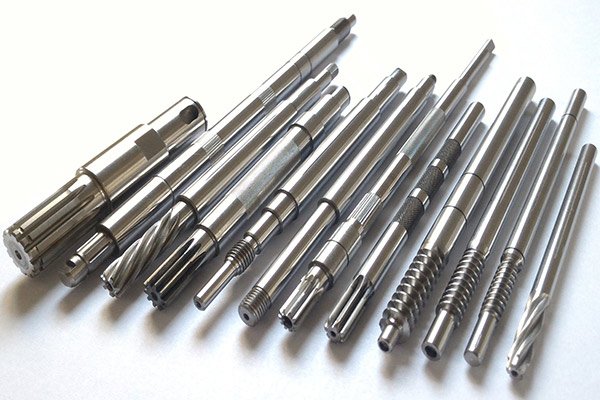
The manufacturing edge comes from breadth and control. Dixin Technology’s capability set includes 3-axis to 5-axis CNC machining, EDM, precision grinding, and industrial ceramics processing. That mix is important because ruby and sapphire components often sit inside assemblies that also contain precision metal seats, shafts, housings, or ceramic mating features. A supplier that can coordinate these adjacent parts is better positioned to manage interface tolerances and assembly fit. The result is fewer handoffs, tighter accountability, and better alignment between engineering intent and delivered product.
Supply chain integration also supports cost discipline. Technical customers often focus narrowly on piece price, but the more meaningful cost is total program cost: scrap, rework, late shipments, assembly failures, and field service events. An ODM-oriented partner can reduce that burden by aligning design, process, and logistics around the application outcome. That is particularly useful for customers operating in regulated or high-reliability markets, where documentation and repeatability are non-negotiable.
For buyers managing a global sourcing base, supplier consistency matters as much as technical capability. The strongest programs are built on clear specifications, stable process windows, and disciplined change control. Dixin Technology’s structure is built for that reality. The company is not only a machine shop; it is an execution partner for components where precision and continuity are inseparable. For direct program discussions, use the contact page.
Industry Applications
Ruby and sapphire components are used wherever fluid systems demand hard, clean, stable contact surfaces. In industrial fluid control, that includes precision valves, metering assemblies, microfluidic instruments, high-pressure nozzles, and wear points inside pumps and dispensers. The materials are especially effective when the media is abrasive, chemically aggressive, or difficult to isolate from contamination.
In hydraulic and pump systems, jewel components can support stable flow control, reduce localized wear, and help maintain predictable response over long duty cycles. In semiconductor tools and laboratory instrumentation, sapphire parts can preserve precision while resisting chemical attack and supporting clean operation. In medical devices, where cleanliness and repeatability are central, hard ceramic and jewel components can be valuable in dosing, diagnostic, and fluid pathway assemblies. Similar design logic appears in other precision sectors, but the acceptance criteria are often stricter in fluid control because small dimensional changes can immediately affect throughput, pressure drop, or leakage.
These parts also appear in systems where moving fluids carry abrasive particles or where repeated throttling would quickly erode softer surfaces. In such cases, sapphire seats, ruby restrictors, and precision orifices help maintain the intended flow curve and limit maintenance frequency. The payoff is not merely longer life; it is also process stability. When a fluid control assembly holds its geometry, upstream and downstream operations stay more predictable.
Selection of the right supplier should consider more than material availability. Buyers should evaluate whether the manufacturer can manage brittle-material handling, post-process inspection, packaging, and long-term repeatability across batches. They should also consider whether the same supplier can support other related parts in the system, from housings and support structures to precision metal interfaces. That is why many programs benefit from working with a broader precision partner rather than a single-process vendor.

Across these applications, the underlying requirement is the same: controlled performance under harsh operating conditions. Ruby and sapphire parts are not generic commodities. They are engineered interfaces that protect the fluid control system from wear, leakage, and instability. When the part is designed correctly and manufactured under disciplined process control, it becomes a small but decisive contributor to uptime, quality, and system reliability.
Call to Action
If your program depends on ruby or sapphire components for fluid control systems, the next step is to align the part design with a supplier capable of managing both precision manufacturing and delivery reliability. Dixin Technology supports OEM and Tier 1 customers with ODM development, controlled production, and integrated supply chain execution for hard material components and related assemblies.
Share your drawings, target tolerances, application environment, and annual demand profile, and the engineering team can assess manufacturability, risk points, and sourcing strategy. Start the discussion through the contact us page to move from concept to a production-ready supply plan.