- Shaft
- Molds&Tools
- Hydraulics And Pump
- Hair transplant needle
- Hydraulics And Pump
- Precision CNC Shaft Machining Manufacturer for High Performance Applications
- Energy Industry CNC Machining Parts Supplier
- Aerospace CNC Machining Parts Manufacturer
- Aerospace CNC Machining Parts Manufacturer
- Automotive & EV CNC Machining Parts Supplier for OEM and Tier 1
- Medical CNC Machining Parts Supplier for Precision Medical Devices

Custom Gear Manufacturing: From Prototyping to Mass Production for OEMs and Tier 1 Suppliers

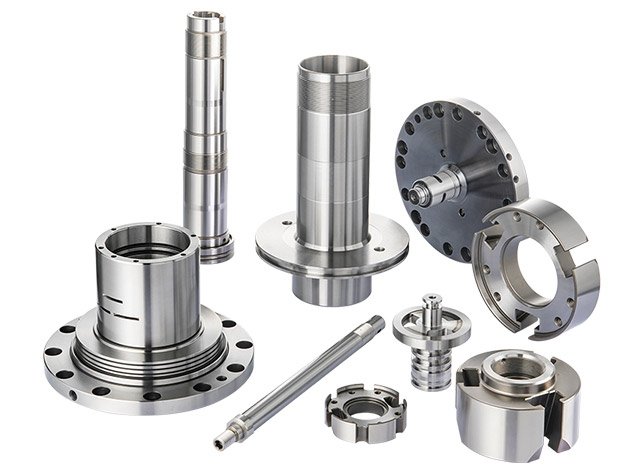
Custom Gear Manufacturing: From Prototyping to Mass Production
1. Executive Summary
Custom gear manufacturing is a systems problem, not just a machining problem. For OEMs and Tier 1 suppliers, the real challenge is delivering gears that meet load, noise, wear, and dimensional targets while also fitting a production model that can move from prototype validation to stable mass production without repeated redesign. That transition depends on more than a capable machine shop. It requires process discipline, material control, inspection rigor, and supply chain coordination from the first sample through the final production run.
Dixin Technology, operating under IndustryApex CNC, approaches gear programs as an integrated manufacturing and supply chain task. With over 30 years of experience, a fully controlled precision manufacturing system, and ERP-based production management, the company supports customers that need predictable quality across 3- to 5-axis CNC machining, EDM, precision grinding, and industrial ceramics. For buyers sourcing gear-related components in aerospace, hydraulics, medical equipment, and heavy industry, that combination reduces risk at the technical and commercial levels.
For project teams evaluating suppliers, the key question is whether the manufacturing partner can preserve geometry, surface finish, concentricity, and repeatability while scaling volume. The best answer comes from a supplier that can prototype quickly, control process variation, and manage downstream delivery with the same discipline as upstream design intent. That is the operating model behind successful custom gear programs.
2. Technical Deep Dive
Gear performance is defined by a small set of tightly coupled variables: tooth profile accuracy, pitch consistency, runout, flank finish, hardness, and alignment with mating components. A prototype gear can appear dimensionally correct and still fail in assembly, noise, or endurance testing if those variables are not controlled together. This is why custom gear manufacturing begins with engineering review, not with a machine setup.
During prototyping, the manufacturing team must translate design intent into a process route that matches the material and performance requirement. For simple spur and helical gears, the route may involve CNC turning, gear cutting, heat treatment, and finish grinding. For more demanding applications, especially those with tight noise or transmission efficiency requirements, the final dimensional stability often depends on precision grinding after heat treatment. If the gear interfaces with shafts, housings, or fluid-control elements, tolerance stack-up across the full assembly becomes just as important as the gear itself.
Material selection is equally central. Alloy steels remain common for power transmission because they balance machinability, hardenability, and wear resistance. Stainless steels may be needed where corrosion resistance dominates. Specialty applications may require titanium, hardened tool steels, or ceramic-related components depending on the environment and duty cycle. The process must account for how each material behaves during machining, thermal processing, and inspection. A supplier serving aerospace parts and medical parts must also be able to document traceability and maintain process consistency under stricter quality expectations.
Prototype validation typically focuses on fit, load-bearing behavior, and repeatability under real assembly conditions. Engineers examine tooth contact patterns, backlash, profile deviation, and surface integrity. If the part is intended for hydraulic or pump systems, pressure cycling and contamination resistance may matter as much as geometric accuracy. If the application is drivetrain or engine-related, the dominant risks often shift to fatigue, vibration, and acoustic performance. The manufacturing route must support those risks with the right sequence of cutting, heat treatment, deburring, grinding, and inspection.
Scaling into mass production changes the priorities. The prototype phase can tolerate slower setup and more manual intervention; production cannot. Mass production requires stable fixtures, validated tool life, controlled inspection intervals, and a documented process window that operators can repeat. ERP integration helps here because it connects material intake, work order control, traceability, capacity planning, and shipment readiness. When a gear program moves from tens of pieces to thousands, the supplier’s ability to control flow becomes part of product quality.
Quality assurance should be designed into the process rather than added at the end. Coordinate measuring machines, profile measurement, runout checks, hardness verification, and surface roughness inspection are standard tools in a serious gear workflow. For higher-risk programs, first article inspection, in-process checks, and final statistical verification reduce the chance that a subtle process shift escapes detection. The point is not to inspect more; it is to inspect in ways that confirm the process is under control.
3. The ODM & Supply Chain Advantage
For many global OEMs and Tier 1 suppliers, the main constraint is not engineering imagination. It is coordination. A gear supplier may be able to make a part, but can it support design iterations, maintain stable lead times, and absorb the operational complexity of a multi-part assembly program? This is where Dixin Technology’s position as a supply chain integrator and ODM solution provider matters.
The manufacturing edge is based on a fully controlled precision manufacturing system supported by ERP and more than 30 years of experience. That structure matters because gear programs often fail at handoffs: design to process, process to inspection, inspection to shipment, shipment to assembly. When those handoffs are managed inside one controlled system, the result is less rework, clearer accountability, and better delivery predictability. For sourcing teams, that directly reduces total landed risk.
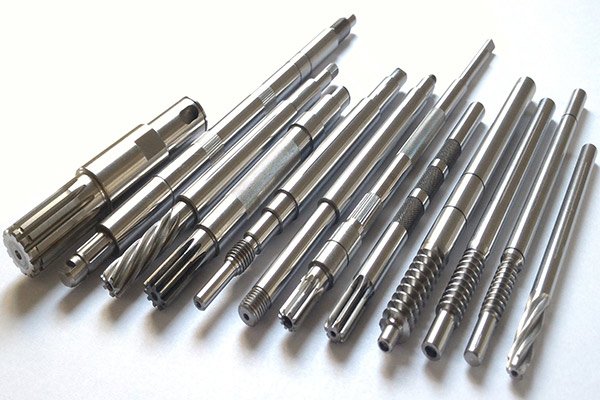
Technically, the capability set is broader than standard gear cutting. 3- to 5-axis CNC machining supports complex housings, carriers, and adjacent components. EDM is useful where hard materials, intricate features, or tight internal geometry require nontraditional removal methods. Precision grinding supports the final accuracy and surface integrity that transmission components need after heat treatment. Industrial ceramics expand the design space for wear-resistant, electrically insulating, or high-temperature applications. This combination is useful because gear programs rarely involve only one part number; they usually include mating components and related structural pieces that must work together.
For OEMs, ODM support is valuable when product differentiation depends on integration rather than on a single standalone gear. A supplier with design-for-manufacture input can help reduce unnecessary complexity, improve manufacturability, and stabilize cost as the program scales. For Tier 1 suppliers, the value is different but equally important: a dependable manufacturing partner that can absorb forecast changes, maintain traceability, and support recurring delivery without sacrificing precision.
Supply chain resilience is now a technical requirement. Buyers need alternative sourcing logic, consistent material access, and process visibility. A supplier that manages ERP-linked production and controlled workflows is better positioned to support this requirement than a shop that relies on disconnected scheduling and ad hoc quality checks. In practical terms, that means faster response to engineering changes, fewer late-stage surprises, and a more reliable path from prototype approval to serial production.
4. Industry Applications
Custom gear manufacturing serves a wide range of industries, but the engineering constraints vary sharply by sector. In aerospace, weight, fatigue resistance, and traceability are central. Gear-related parts must often be produced alongside precision structural components and other high-tolerance assemblies, which is why suppliers with aerospace machining experience are valuable for both production and documentation discipline. Learn more about related capabilities on the Aerospace Parts page.
In medical manufacturing, the focus shifts to material integrity, cleanliness, and repeatable dimensional control. Gear mechanisms may appear in surgical devices, diagnostic systems, pumps, or precision instruments, where failure tolerance is extremely low. Programs that require ISO-aligned production practices and tight process control should be evaluated with the same rigor used for other medical components. Related capabilities are outlined on the Medical Parts page.
Hydraulics and pump systems present a different set of demands. Gear-driven assemblies in these environments must withstand pressure, wear, and contamination while holding efficient operation over long service intervals. Surface finish, lubrication compatibility, and concentricity become operational variables, not just drawing requirements. For this application area, see Hydraulics & Pump.
Beyond these sectors, custom gears support automation, construction machinery, energy systems, and industrial drives. In each case, the component is only one part of a larger mechanical chain. That is why production partners need to understand not just the print, but also the load path, mating surfaces, service environment, and supply chain timing. A gear that is technically correct but delivered late, inconsistently, or without reliable inspection data is not a production-ready solution.
5. Call to Action
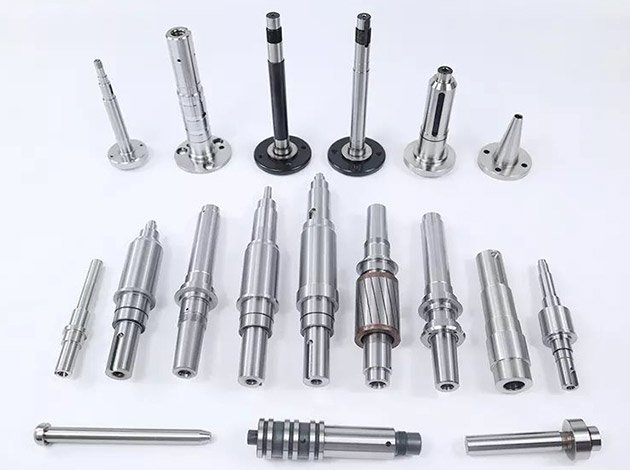
If your program requires custom gear manufacturing that can move cleanly from prototype validation to mass production, Dixin Technology is built for that transition. The combination of controlled precision manufacturing, ERP-driven production management, and multi-process capability supports OEMs and Tier 1 suppliers that need both technical consistency and supply chain reliability.
For new development work, request engineering review early so the process route, tolerances, materials, and inspection plan can be aligned before tooling or volume commitments are made. For active sourcing programs, use a supplier that can support the full lifecycle, not just the first sample. Start the conversation through Contact Us or explore the company’s broader manufacturing capabilities at the Home page.