- Shaft
- Molds&Tools
- Hydraulics And Pump
- Hair transplant needle
- Hydraulics And Pump
- Precision CNC Shaft Machining Manufacturer for High Performance Applications
- Energy Industry CNC Machining Parts Supplier
- Aerospace CNC Machining Parts Manufacturer
- Aerospace CNC Machining Parts Manufacturer
- Automotive & EV CNC Machining Parts Supplier for OEM and Tier 1
- Medical CNC Machining Parts Supplier for Precision Medical Devices

How ODM Solution Providers Are Transforming Medical Device Manufacturing

How ODM Solution Providers Are Transforming Medical Device Manufacturing
Medical device manufacturers are under pressure to launch products faster, maintain uncompromising quality, control costs, and build supply chains that can withstand material shortages, regulatory changes, and geopolitical disruption. Original design manufacturing (ODM) solution providers are becoming an important strategic response. By combining engineering support, precision machining, process development, quality management, and supply chain coordination, an experienced ODM partner can help global OEMs and Tier 1 suppliers move from concept to qualified production with fewer handoffs and lower execution risk.
For Dixin Technology, operating through the IndustryApex CNC platform, ODM is more than outsourced machining. It is an integrated manufacturing model that connects product requirements with design-for-manufacturing decisions, validated processes, controlled production capacity, and dependable delivery. This approach is particularly valuable for medical components such as titanium implants, surgical instruments, diagnostic equipment parts, fluid-control components, and high-precision device assemblies.
1. Executive Summary
The traditional medical device supply chain often separates product design, process engineering, component manufacturing, finishing, inspection, and logistics among multiple suppliers. Each transition introduces communication gaps, duplicated validation work, schedule uncertainty, and opportunities for dimensional or documentation errors. An ODM solution provider reduces this fragmentation by taking responsibility for a broader portion of the product realization process.
The strongest ODM partners combine three capabilities. First, they understand regulated product development and the functional requirements behind critical dimensions, surface finishes, material selection, and cleanliness. Second, they operate a controlled manufacturing system with the equipment and process knowledge required for difficult materials and complex geometries. Third, they coordinate suppliers, production planning, quality records, and delivery through a connected operational structure.
This model creates measurable advantages for medical device companies. Engineering teams receive earlier feedback on manufacturability. Procurement teams gain a more stable source of supply. Quality teams can work with a clearer chain of responsibility and more consistent documentation. Operations teams gain improved visibility into capacity, production status, and risk. Most importantly, OEMs can focus internal resources on clinical performance, regulatory strategy, and market development while their manufacturing partner manages repeatable industrial execution.
ODM does not eliminate the OEM’s responsibility for product definition or regulatory compliance. Instead, it strengthens the manufacturing foundation that supports those responsibilities. The result is a more responsive, traceable, and scalable route to production.
2. Technical Deep Dive
Medical device manufacturing demands a higher level of process discipline than ordinary job-shop production. A component may require tight positional tolerances, controlled surface roughness, burr-free edges, specific material certificates, validated cleaning, and complete inspection records. The part may also be difficult to produce because it combines thin walls, deep cavities, interrupted cuts, miniature features, or complex freeform surfaces.
An ODM provider addresses these requirements at the design stage. Engineers review the three-dimensional model, drawing, tolerance scheme, material specification, and functional interfaces before production begins. They assess datum strategy, tool access, workholding, wall thickness, distortion risk, chip evacuation, and inspection accessibility. This early review can identify tolerances that are functionally unnecessary, surfaces that need a different process, or geometry that would create avoidable production risk.
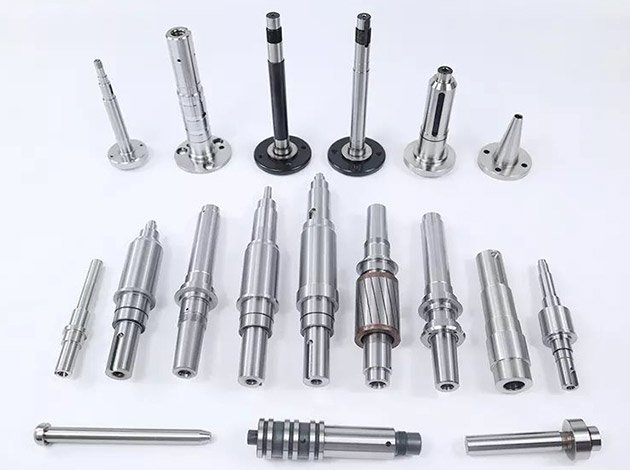
For complex components, a combination of technologies may be necessary. Three-axis CNC machining remains effective for many prismatic parts, while four- and five-axis machining can reduce setups and improve positional accuracy across multiple surfaces. Electrical discharge machining is useful for intricate profiles, narrow slots, hardened materials, and features that are difficult to reach with conventional cutting tools. Precision grinding can deliver tight size control and fine surface finishes on shafts, sleeves, guide components, and other high-contact parts.
Material behavior is another central consideration. Titanium is valued for strength, corrosion resistance, and biocompatibility, but it generates heat and can be challenging to machine consistently. Stainless steels, cobalt-chrome alloys, PEEK, ceramics, and other advanced materials each require different tooling, cutting parameters, fixturing methods, and inspection practices. Industrial ceramics introduce additional concerns involving brittleness, edge integrity, thermal effects, and post-machining finishing.
Process control must continue after cutting. A robust manufacturing plan defines incoming material verification, first-article inspection, in-process checks, final dimensional inspection, surface evaluation, cleaning controls, packaging, and record retention. Coordinate measuring machines, optical measurement systems, calibrated gauges, and documented inspection procedures help confirm that the component conforms to its design intent.
Manufacturing data is increasingly important in this environment. ERP-connected production planning can link purchase orders, material batches, routings, work instructions, inspection status, and shipment information. When the system is properly controlled, a manufacturer can identify the current status of each order, evaluate capacity constraints, trace material usage, and respond more quickly to engineering changes. That visibility supports both operational decisions and customer audits.
For OEMs evaluating a supplier, the relevant question is therefore not simply whether a machine can produce a part. The more important question is whether the supplier can repeat the result, document the result, and scale the result without compromising quality. Dixin Technology’s medical component machining capabilities are positioned around this broader requirement.
3. The ODM & Supply Chain Advantage
The core identity of an effective ODM provider is that of a supply chain integrator and ODM solution provider. This means the partner is accountable for coordinating the technical and commercial activities required to move a component or subassembly from specification to dependable delivery. The objective is not to insert another layer into the supply chain. It is to reduce the number of disconnected interfaces that an OEM must manage.
Dixin Technology brings more than 30 years of manufacturing experience to this model. Its manufacturing edge is based on a fully controlled precision manufacturing system supported by ERP. In practical terms, this creates a structured connection between customer requirements, engineering review, process planning, purchasing, production, inspection, and logistics. A controlled system helps prevent informal workarounds and makes production information easier to review when requirements change or an audit occurs.
The technology portfolio supports the varied needs of medical device supply chains. Three- to five-axis CNC machining addresses complex metallic components and multi-surface parts. EDM supports intricate geometries and difficult-to-machine features. Precision grinding provides the dimensional and surface control required for precision fits and moving interfaces. Industrial ceramics capability expands the range of materials available for wear-resistant, electrically insulating, chemically stable, or high-temperature applications.
These capabilities matter because medical products rarely consist of one simple part made from one standard material. A device may combine machined housings, miniature shafts, fluid-control elements, ceramic insulation, precision sleeves, and custom fixtures. An ODM partner with a broad technical base can help consolidate responsibility for these parts while maintaining a consistent quality framework.
Supply chain integration also changes how risk is managed. During quoting, the provider can identify long-lead materials, specialized finishing requirements, inspection bottlenecks, and capacity limitations. During production, ERP data can support schedule monitoring and exception management. During delivery, standardized documentation and packaging controls reduce the likelihood that compliant parts are delayed by incomplete records or handling issues.
For global OEM and Tier 1 suppliers, this structure is valuable at both low and high volumes. Early-stage programs may require rapid prototypes, design feedback, and limited production quantities. Mature programs may require repeatability, forecast-based capacity planning, engineering-change control, and multi-year supply continuity. The ODM model can support both phases when the provider has the equipment, systems, and organizational discipline to scale with the program.
Supplier consolidation must still be approached carefully. The goal is not to place every process with one company without assessing capability. OEMs should evaluate certifications, quality systems, traceability, measurement capacity, change-control procedures, business continuity planning, and experience with comparable materials and tolerances. A capable ODM relationship is built on transparent technical reviews, defined acceptance criteria, and regular performance measurement.
4. Industry Applications
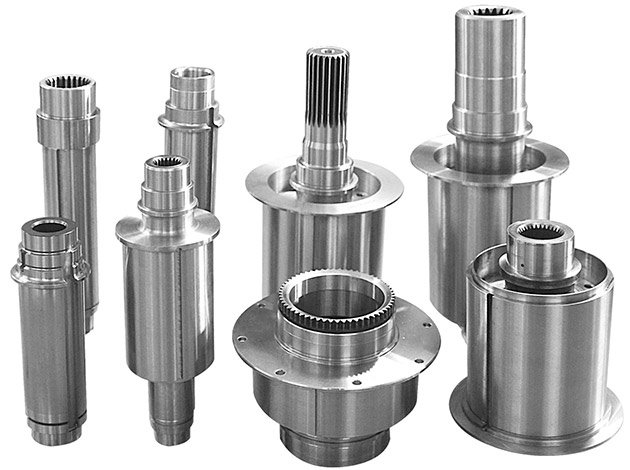
ODM solution providers are influencing several medical manufacturing applications. In orthopedic and implantable products, titanium and cobalt-chrome components may require complex surfaces, controlled finishing, and careful dimensional inspection. The supplier’s ability to manage material certification, machining strategy, burr removal, cleaning, and packaging is critical to a reliable production process.
Surgical instruments present a different challenge. Instruments often combine ergonomic requirements with thin sections, articulated interfaces, narrow channels, and high wear resistance. Precision machining and grinding can support repeatable fit and movement, while process control helps maintain edge quality and surface condition across production batches.
Diagnostic and laboratory equipment manufacturers frequently need low- to medium-volume custom components. These parts may include precision housings, optical mounts, sensor interfaces, fluid paths, and alignment structures. An ODM partner can help adapt production methods to changing designs while preserving a documented manufacturing baseline.
Fluid-management systems are another important area. Pumps, valves, manifolds, sleeves, and spools must often maintain accurate clearances and reliable sealing performance. Experience with precision hydraulic pump parts and fluid-control components can provide relevant process knowledge for medical dosing systems, laboratory instruments, and equipment used in sterilization or treatment environments.
Medical robotics and automated equipment place additional demands on dimensional stability and assembly accuracy. Robot joints, drive elements, instrument interfaces, and structural components may require multiple machining operations and close control of geometric relationships. Reduced setups, suitable fixturing, and coordinate-based inspection can help protect accuracy throughout the manufacturing route.
The same engineering principles apply across adjacent regulated industries. Aerospace programs, for example, also depend on material traceability, complex five-axis machining, and consistent inspection. Dixin Technology’s aerospace precision machining experience illustrates how controlled processes can support demanding applications where performance and documentation are closely linked.
Across these applications, the practical value of ODM is measured by outcomes: shorter development cycles, fewer supplier interfaces, better production visibility, improved repeatability, and a lower total cost of coordination. These benefits become more significant as product portfolios expand and OEM engineering teams manage multiple programs simultaneously.
5. Call to Action
Medical device manufacturers should evaluate ODM partners as extensions of their engineering and supply chain organizations, not only as machining vendors. The right provider should be able to participate in design reviews, explain process risks, recommend practical manufacturing solutions, control production data, and provide clear evidence of conformance.
Dixin Technology, through IndustryApex CNC, supports global OEMs and Tier 1 suppliers with integrated precision manufacturing, ODM coordination, and supply chain execution. To discuss a medical component, prototype, recurring production program, or complex material requirement, visit the IndustryApex CNC home page or contact the engineering team. A detailed drawing, three-dimensional model, material specification, expected annual volume, and required quality documentation will help establish the most effective manufacturing route.