- Shaft
- Molds&Tools
- Hydraulics And Pump
- Hair transplant needle
- Hydraulics And Pump
- Precision CNC Shaft Machining Manufacturer for High Performance Applications
- Energy Industry CNC Machining Parts Supplier
- Aerospace CNC Machining Parts Manufacturer
- Aerospace CNC Machining Parts Manufacturer
- Automotive & EV CNC Machining Parts Supplier for OEM and Tier 1
- Medical CNC Machining Parts Supplier for Precision Medical Devices
Hydraulic Pump Parts: Ensuring Reliability Through Precision Grinding

Hydraulic Pump Parts: Ensuring Reliability Through Precision Grinding
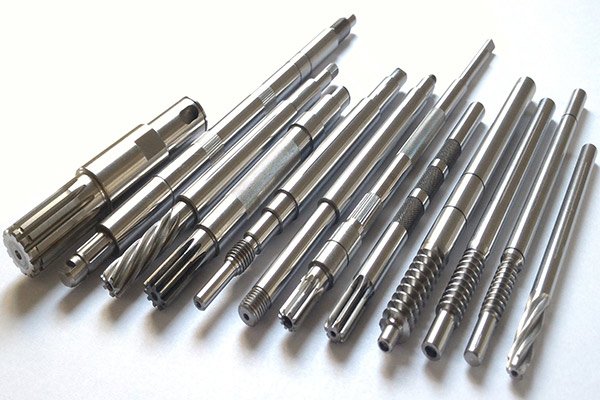
Hydraulic pumps operate under demanding conditions where pressure, friction, contamination, and thermal cycling can quickly expose weaknesses in component design or manufacturing. For OEMs and Tier 1 suppliers, the reliability of a pump is therefore inseparable from the dimensional accuracy, surface integrity, material control, and traceability of its internal parts. Precision grinding is one of the most important manufacturing processes for achieving these requirements, particularly on shafts, sleeves, valve interfaces, bearing seats, pistons, gears, and other components that must maintain controlled contact and fluid performance over long service intervals.
Dixin Technology, operating through IndustryApex CNC, supports global customers with precision-manufactured components and supply chain coordination for hydraulic systems. Its capabilities extend from engineering review and process development to CNC machining, precision grinding, inspection, and production management. This integrated model helps customers source dependable hydraulic pump parts while reducing coordination risk across multiple suppliers.
1. Executive Summary
Hydraulic pump reliability depends on more than achieving a nominal dimension on a drawing. The component must retain its geometry under load, provide the correct surface finish for sealing or bearing contact, resist wear and fatigue, and remain consistent across production batches. Precision grinding provides the final control required for many of these performance-critical features.
Compared with a rougher machining process, grinding can deliver tighter dimensional tolerances, improved roundness, controlled cylindricity, and a predictable surface texture. These characteristics directly influence leakage, volumetric efficiency, noise, vibration, heat generation, and operating life. However, grinding must be managed as part of a complete manufacturing system. Material condition, heat treatment, grinding parameters, coolant control, fixturing, metrology, and post-process handling all affect the final result.
For global OEM and Tier 1 procurement teams, the key supply chain question is how to obtain this level of control repeatedly and at the required production volume. A manufacturing partner with in-house process capabilities, ERP-based production control, and experience across related precision industries can provide stronger accountability than a fragmented sourcing model. Dixin Technology combines more than 30 years of manufacturing experience with CNC machining, EDM, precision grinding, and industrial ceramics to support demanding hydraulic applications.
2. Technical Deep Dive
Why grinding matters in hydraulic pump components
Hydraulic pumps convert mechanical input into fluid flow and pressure. Their internal components must work with small clearances while moving at high speed or carrying substantial load. In vane, gear, piston, and specialized pump designs, even minor deviations can affect the relationship between rotating and stationary surfaces.
For example, a shaft journal that is slightly out of round can create uneven bearing loading. A sleeve with excessive taper may produce inconsistent clearance along the travel path. A rough sealing surface can accelerate wear or damage a mating seal, while an overly smooth surface may reduce the ability of the interface to retain a lubricating film. Precision grinding allows these characteristics to be controlled as functional requirements rather than treated as cosmetic finishing details.
Critical features controlled by precision grinding
- Diameter and size: Accurate diameters establish the working clearance between shafts, sleeves, pistons, gears, and bearing surfaces.
- Roundness: Consistent radial geometry helps distribute contact forces and prevents localized leakage or wear.
- Cylindricity: Controlled form along the length of a component supports stable movement and alignment.
- Surface roughness: The correct texture supports sealing, lubrication, sliding behavior, and resistance to adhesive wear.
- Concentricity: Coaxial relationships between journals, shoulders, splines, and functional diameters reduce vibration and uneven loading.
- Flatness and parallelism: These features are important on plates, valve interfaces, thrust surfaces, and components that must maintain uniform contact.
Grinding is particularly valuable after heat treatment. Hardening improves wear resistance, but it can also introduce distortion. A controlled grinding operation can restore critical geometry while preserving the material properties established during heat treatment.
Managing grinding quality and thermal damage
Precision grinding is not simply a matter of removing a small amount of material. Excessive grinding force, an unsuitable wheel specification, insufficient coolant flow, or a poorly controlled infeed can generate localized heat. Thermal damage may appear as burns, rehardening, soft spots, microcracks, or residual tensile stress. These defects may not be obvious during visual inspection, yet they can reduce fatigue life or cause premature failure in service.
A robust process therefore begins with material and heat-treatment verification. The grinding wheel, dressing method, speed, feed, spark-out, coolant concentration, and filtration must be selected for the material and geometry. Operators and process engineers should also monitor wheel loading, part temperature, and dressing frequency. Where required, inspection can include hardness checks, magnetic particle testing, surface roughness measurement, roundness analysis, and microscopic examination.
Metrology and functional verification
Hydraulic components should be measured using equipment appropriate to their risk profile and tolerance requirements. Coordinate measuring machines can verify geometric relationships, while roundness and form testers evaluate circular features that directly affect sealing and motion. Air gauges, bore gauges, profilometers, and calibrated dimensional tools can support production inspection and rapid feedback.
Measurement results should be connected to the manufacturing record rather than stored as isolated inspection documents. This is important for traceability, corrective action, and process capability analysis. When a customer identifies a field issue, a controlled data trail can help determine whether the cause relates to raw material, heat treatment, grinding, assembly, contamination, or another stage of production.
Design for manufacturability
Reliability begins before production. During design review, engineers should consider grinding allowance, datum strategy, clamping surfaces, access for the wheel, transitions between diameters, and the risk of stress concentration at shoulders or grooves. Tight tolerances should be assigned to functional features that influence performance, while non-critical features should remain practical for stable production.
Surface specifications should also reflect the actual application. A drawing that identifies only a general roughness value may not fully define waviness, lay direction, edge condition, or allowable grinding marks. Clear technical requirements help the manufacturer choose the correct process and help the customer avoid disputes caused by ambiguous acceptance criteria.
3. The ODM & Supply Chain Advantage
For hydraulic pump manufacturers, sourcing individual operations from separate machining, grinding, heat-treatment, and inspection vendors can create gaps in responsibility. Each supplier may meet its own purchase order while no single party owns the complete component outcome. This fragmented structure can increase lead times, complicate engineering changes, and make it difficult to identify the source of variation.
Dixin Technology is positioned as a supply chain integrator and ODM solution provider. This means the relationship can cover more than contract machining. The team can participate in design-for-manufacturing review, material and process planning, prototype development, production ramp-up, inspection planning, and ongoing supply coordination. For OEM and Tier 1 customers, the benefit is a more direct connection between technical requirements and factory execution.
The manufacturing edge is supported by a fully controlled precision manufacturing system with ERP-based production management and more than 30 years of experience. ERP control can connect quotations, bills of materials, process routes, work orders, inventory, inspection records, and shipment status. This creates better visibility for customers managing forecast changes, scheduled releases, engineering revisions, and multi-part assemblies.
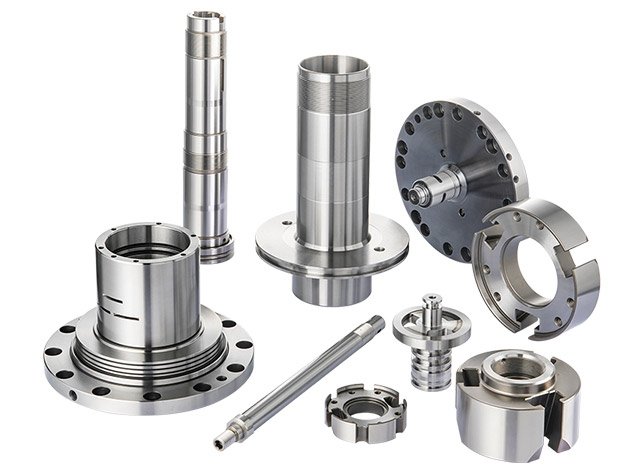
Dixin Technology’s technical capabilities include three- to five-axis CNC machining, EDM, precision grinding, and industrial ceramics. This range is relevant to hydraulic applications because pump assemblies often combine turned or milled bodies, hardened shafts, precision bores, close-tolerance sleeves, complex grooves, wear-resistant inserts, and specialized ceramic components. A partner able to coordinate these processes can reduce unnecessary transfers and preserve stronger process ownership.
Supporting global procurement objectives
Supply chain performance is measured by more than unit price. Procurement teams also evaluate quality risk, capacity, responsiveness, documentation, change control, packaging, and the supplier’s ability to support future products. An integrated ODM partner can help standardize these factors across a product family.
For new hydraulic components, the supplier should provide a clear development path from drawing review to first article approval and serial production. This may include manufacturability feedback, tolerance analysis, sample inspection, capability studies, process validation, and controlled pilot runs. For mature parts, the focus may shift to cost optimization, cycle-time reduction, yield improvement, and dual-source risk management without compromising the validated process.
The same precision disciplines used in hydraulics can also support adjacent sectors. Dixin Technology’s experience with aerospace CNC machining reflects the importance of traceability and demanding geometric control, while its work with medical components demonstrates the value of disciplined inspection and documentation. These cross-industry capabilities can strengthen manufacturing methods for hydraulic customers with stringent reliability expectations.
4. Industry Applications
Precision-ground hydraulic pump parts serve a broad range of equipment where fluid power must remain stable under continuous or intermittent duty. The exact component mix depends on the pump architecture, pressure range, fluid type, speed, and environmental conditions.
Mobile hydraulics
Construction machinery, agricultural equipment, forestry vehicles, and material-handling systems expose pumps to vibration, shock loads, temperature variation, and contamination. Ground shafts, sleeves, pistons, and bearing interfaces help maintain alignment and efficiency despite demanding field conditions. Consistent parts also simplify service replacement and reduce the risk of premature assembly wear.
Industrial machinery
Manufacturing lines, injection molding equipment, presses, machine tools, and automation systems rely on predictable hydraulic response. In these applications, dimensional consistency supports repeatable actuation and helps control energy consumption. Precision-ground components can contribute to lower internal leakage, stable pressure generation, and reduced maintenance interruptions.
Energy and process equipment
Pumps used in energy, chemical, and process environments may operate for long periods under elevated loads or with specialized fluids. Material selection, coatings, heat treatment, and surface finish must be considered together. Grinding provides the geometric control needed to make these material strategies effective at the working interface.
Specialized fluid-control systems
Hydraulic power units, servo systems, and high-response fluid-control assemblies often require close clearances and precise motion. Components such as valve spools, sleeves, pistons, and precision shafts may require grinding to achieve the required fit and response. Dixin Technology can also support related precision CNC component requirements when a customer needs multiple part families from one manufacturing partner.
Across these applications, reliability is best evaluated as a system of controls. A high-quality ground surface cannot compensate for incorrect material, poor cleanliness, improper assembly, or uncontrolled storage. The supplier’s process should therefore address inspection, deburring, washing, corrosion prevention, protective packaging, and lot traceability. These downstream controls help preserve the performance achieved during grinding until the component reaches final assembly.
5. Call to Action
Hydraulic pump reliability is built through controlled details: stable material properties, accurate geometry, suitable surface texture, controlled thermal effects, and complete production traceability. Precision grinding is a decisive step because it establishes the functional surfaces that govern clearance, sealing, bearing behavior, wear, and efficiency.
For OEMs and Tier 1 suppliers, the strongest results come from engaging a partner early enough to influence manufacturability and process control. Dixin Technology can support hydraulic pump parts from engineering review and prototype development through precision machining, grinding, inspection, and production supply coordination.
Share your drawings, performance requirements, material specifications, annual volumes, and quality standards with the IndustryApex CNC team. Contact Dixin Technology to discuss a precision manufacturing and ODM supply solution for your next hydraulic pump program.