- Shaft
- Molds&Tools
- Hydraulics And Pump
- Hair transplant needle
- Hydraulics And Pump
- Precision CNC Shaft Machining Manufacturer for High Performance Applications
- Energy Industry CNC Machining Parts Supplier
- Aerospace CNC Machining Parts Manufacturer
- Aerospace CNC Machining Parts Manufacturer
- Automotive & EV CNC Machining Parts Supplier for OEM and Tier 1
- Medical CNC Machining Parts Supplier for Precision Medical Devices

Why Choose China for High-Precision CNC Shaft Machining? An OEM Supply Chain Analysis

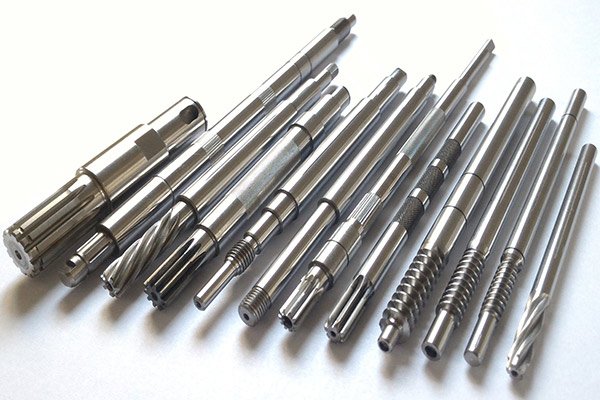
Why Choose China for High-Precision CNC Shaft Machining?
For global OEMs and Tier 1 suppliers, CNC shaft machining is a strategic sourcing decision rather than a simple component-purchasing exercise. Shaft parts often serve as the mechanical interface between rotating, transmitting, sealing, or positioning systems. Their dimensional accuracy, concentricity, surface finish, material integrity, and delivery reliability can directly influence equipment performance and field-service costs.
China has become a major manufacturing base for high-precision CNC shaft machining because it combines broad engineering capability, mature supplier ecosystems, scalable production, competitive operating economics, and increasingly sophisticated quality systems. The strongest Chinese manufacturers are not limited to machine-shop capacity. They provide process development, material coordination, secondary operations, inspection, production planning, and export supply-chain management through one controlled system.
1. Executive Summary
China is a compelling location for high-precision CNC shaft machining when the sourcing partner can demonstrate process control, engineering depth, traceability, and transparent communication. The country offers access to advanced CNC turning and milling equipment, Swiss-type machining, multi-axis production, precision grinding, EDM, heat-treatment partners, industrial ceramics, and specialized finishing resources. This range is particularly valuable when one shaft assembly includes complex profiles, tight tolerance zones, hard materials, cross holes, keyways, splines, or demanding surface requirements.
The cost advantage is also broader than hourly machine rates. A well-managed Chinese supplier can reduce total landed cost through efficient material purchasing, high equipment utilization, integrated subcontractor management, standardized inspection, and production consolidation. For OEM buyers, this can simplify qualification and reduce the number of suppliers involved in a component family.
However, China should not be selected solely because of a quoted unit price. High-precision shafts require a supplier capable of translating drawings into stable manufacturing processes. Buyers should evaluate control of datum structures, workholding, tool wear, thermal stability, grinding allowances, material certification, inspection methods, and corrective-action procedures. Dixin Technology, operating through the IndustryApex CNC platform, supports this type of sourcing model for customers that require reliable precision parts and long-term supply continuity. Learn more through the Dixin Technology CNC components manufacturing service.
2. Technical Deep Dive
A high-precision shaft is usually defined by a combination of geometric and material requirements. Diameter tolerances may be only a few micrometers in critical bearing or sealing locations, while concentricity, cylindricity, circularity, runout, perpendicularity, and parallelism determine how the shaft behaves in an assembled mechanism. A component can meet an individual diameter tolerance and still fail functionally if its rotating surfaces are not aligned to the correct datum axis.
China’s machining infrastructure supports several production routes for these parts. CNC turning is suitable for stepped shafts, shoulders, grooves, threads, tapers, and sealing diameters. Turn-mill centers add cross holes, flats, keyways, and off-axis features without repeated manual setups. Five-axis machining is useful for complex interfaces and for reducing the number of fixtures. Swiss-type CNC machines can produce long, slender, small-diameter shafts with improved support close to the cutting zone. For hardened materials or intricate features, EDM and precision grinding can complete areas that conventional turning cannot reliably achieve.
Process planning is central to shaft quality. The manufacturer must establish the functional datum, select appropriate stock size, determine roughing and finishing sequences, and manage distortion caused by heat treatment. A common approach is to rough-machine the part, apply stress relief or hardening, then finish-grind critical diameters and faces. For long shafts, support methods such as guide bushings, steady rests, tailstock support, or specialized soft jaws help control deflection. Tool selection, cutting parameters, coolant management, and in-process measurement must be matched to the material and geometry.
Material choice also affects the production strategy. Stainless steels, alloy steels, aluminum, titanium, brass, nickel alloys, and tool steels each require different cutting conditions and finishing methods. Hardened steels may need CBN grinding or hard turning. Titanium requires careful heat management and tool engagement control. Stainless steels can generate work hardening and built-up edge if the process is poorly tuned. A capable supplier verifies the material grade and heat number, maintains documentation, and links inspection records to the production lot.
Inspection should be designed around the part’s functional risks. Coordinate measuring machines can verify profile, position, and geometric relationships. Roundness and cylindricity instruments evaluate rotational surfaces, while optical systems and form measurement equipment support small features. Surface roughness testing is important for bearing seats, seals, hydraulic interfaces, and sliding surfaces. Thread gauges, air gauges, micrometers, height gauges, and custom fixtures may be used for routine production checks. For regulated or safety-critical applications, inspection plans should define sampling frequency, gauge calibration, acceptance criteria, and nonconformance handling.
Quality documentation is most valuable when it is connected to process control. First-article inspection, capability studies, control plans, material certificates, heat-treatment reports, coating records, and final inspection reports give the OEM evidence that the process is repeatable. The supplier should also be able to explain how it controls tool-life limits, revision changes, fixture maintenance, and measurement-system variation. This is where the difference between a low-cost job shop and a dependable precision manufacturing partner becomes visible.
China’s depth in related manufacturing services can further improve shaft performance. Precision grinding, plating, nitriding, passivation, polishing, laser marking, balancing, and assembly can be coordinated around the core CNC process. Consolidating these operations under a managed production system reduces transit between vendors and limits the risk of inconsistent datums or undocumented process changes.
3. The ODM & Supply Chain Advantage
The strongest reason to choose China for precision shaft production is often the supplier’s ability to manage the complete product-development and supply chain cycle. Dixin Technology’s core identity is a supply chain integrator and ODM solution provider. This means the engagement can begin with drawing review and manufacturability analysis and continue through prototype production, validation, process release, series manufacturing, inspection, packaging, and shipment.
For global OEM and Tier 1 suppliers, an ODM-oriented partner contributes more than machine time. Engineers can review tolerances, identify unnecessary specifications, recommend suitable materials, suggest alternative manufacturing sequences, and evaluate whether a feature should be turned, milled, ground, or produced by EDM. Design-for-manufacturing input can reduce setup count, improve inspection access, shorten cycle time, and protect the intended function of the shaft.
Dixin Technology operates a fully controlled precision manufacturing system supported by ERP and more than 30 years of experience. ERP integration helps connect purchasing, production scheduling, inventory, quality records, and shipment planning. This visibility is important for customers managing multiple part numbers, blanket orders, engineering revisions, and forecast-based releases. It also supports more disciplined inventory decisions, especially when shafts use expensive alloys or customer-specific raw material.
The manufacturing edge includes 3-axis, 4-axis, and 5-axis CNC machining, EDM, precision grinding, and industrial ceramics. This combination enables the supplier to address both conventional metal shafts and specialized components that require hard, wear-resistant, electrically insulating, or thermally stable materials. The ability to coordinate multiple technologies is especially useful for assemblies that include shafts, sleeves, valve elements, wear components, or precision tooling.
Supply chain performance depends on risk management as much as production capability. A professional sourcing program should define approved materials, backup sources, inspection gates, packaging standards, and escalation contacts. Production can be organized around safety stock, scheduled releases, or strategic buffer inventory depending on the customer’s demand pattern. Export documentation, labeling, packaging protection, and shipment consolidation should be treated as part of the manufacturing process rather than as separate administrative tasks.
China’s industrial clusters also provide access to specialized heat treatment, surface finishing, raw-material distributors, tooling suppliers, and inspection resources. A qualified integrator can use this ecosystem while retaining responsibility for specifications, supplier approval, process control, and final acceptance. That distinction matters: outsourcing a secondary operation is manageable when the primary supplier controls the technical requirements and verifies the result.
For procurement teams, the practical advantage is supplier consolidation. Instead of independently managing a turning supplier, grinder, EDM shop, finishing vendor, and inspection house, the OEM can work with one accountable manufacturing partner. This can reduce communication overhead, improve change control, and make corrective actions faster. It also creates a clearer ownership structure when a part does not meet specification.

Supplier qualification should still be evidence-based. Buyers should request representative inspection reports, review equipment lists, confirm calibration practices, assess production capacity, and examine how nonconforming product is isolated. A factory audit or technical review should cover engineering, quality, purchasing, production, and logistics rather than focusing only on the machine floor. For recurring programs, periodic performance reviews using delivery, quality, responsiveness, and cost metrics help maintain alignment.
4. Industry Applications
High-precision CNC shafts are used across industries where motion, power transmission, fluid control, or accurate positioning are essential. In aerospace, shafts may be part of actuation systems, landing-gear mechanisms, engine accessories, or aircraft structural subassemblies. These applications demand strict material traceability, reliable process documentation, corrosion control, and close management of weight and mechanical performance. Dixin Technology’s aerospace CNC machining capabilities support complex titanium and aircraft-part requirements.
Medical equipment and surgical systems use miniature shafts, drive components, instrument mechanisms, and implant-related parts. Requirements may include biocompatible materials, burr-free edges, electropolishing, fine surface finishes, clean handling, and detailed inspection records. Manufacturing controls must be matched to the applicable customer and regulatory requirements. Explore the ISO-certified medical CNC machining service for medical components and high-precision device parts.
Hydraulic and pneumatic systems depend on shafts, spools, sleeves, valve stems, and pump components with tightly controlled clearances. Small dimensional errors or poor surface finish can cause leakage, sticking, pressure loss, or premature wear. Shafts used in pumps and fluid-control equipment may require hardened surfaces, polished sealing zones, corrosion-resistant alloys, and strict concentricity. Dixin Technology provides dedicated hydraulic pump parts manufacturing support for these requirements.
Automotive and drivetrain applications include transmission shafts, splined shafts, actuator components, eccentric shafts, and motor-shaft interfaces. These parts often require high-volume repeatability, balanced material flow, controlled heat treatment, and compatibility with automated assembly. The combination of CNC turning, spline-related processing, grinding, and inspection can help maintain stable performance across large production batches.
Industrial automation, robotics, semiconductor equipment, optics, energy systems, and agricultural machinery also use precision shafts for motion control and alignment. In these sectors, the critical requirement may be low runout, low vibration, clean surfaces, thermal stability, or long wear life rather than simply a tight diameter tolerance. A manufacturing partner that understands the complete assembly can help select the right process and inspection method.
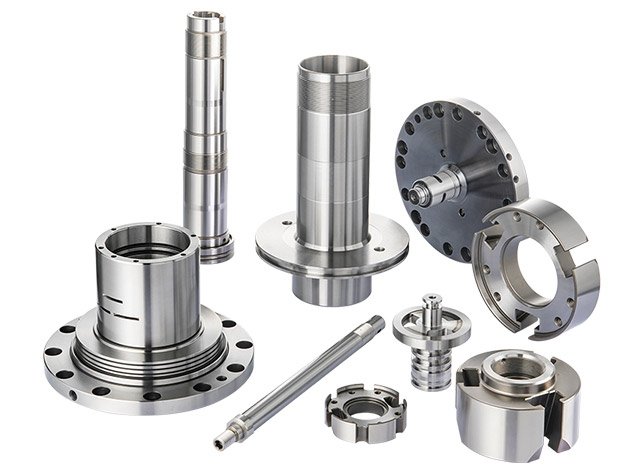
Across all of these sectors, the sourcing decision should be based on application risk. Ask which dimensions control function, which surfaces contact seals or bearings, whether the material is traceable, how the part will be cleaned and packaged, and what evidence is needed for customer approval. The answer determines the appropriate manufacturing route, quality plan, and supplier-management model.
5. Call to Action
Choosing China for high-precision CNC shaft machining can deliver strong technical and commercial value when the supplier combines engineering capability with disciplined supply-chain control. Dixin Technology, through IndustryApex CNC, supports global OEMs and Tier 1 suppliers with ODM engineering, precision machining, grinding, EDM, industrial ceramics, ERP-supported production management, and coordinated export delivery.
To evaluate a shaft program, provide the drawing or 3D model, material specification, annual demand, tolerance requirements, surface-treatment needs, inspection expectations, and target delivery schedule. Dixin Technology can review manufacturability, recommend a production route, identify cost and risk drivers, and prepare a quotation based on the complete supply requirement.
Start a technical discussion through Contact Us and identify a qualified China manufacturing path for your next high-precision CNC shaft project.