- Shaft
- Molds&Tools
- Hydraulics And Pump
- Hair transplant needle
- Hydraulics And Pump
- Precision CNC Shaft Machining Manufacturer for High Performance Applications
- Energy Industry CNC Machining Parts Supplier
- Aerospace CNC Machining Parts Manufacturer
- Aerospace CNC Machining Parts Manufacturer
- Automotive & EV CNC Machining Parts Supplier for OEM and Tier 1
- Medical CNC Machining Parts Supplier for Precision Medical Devices
Industrial Ceramics Machining: Zirconia and Alumina Applications for OEM Supply Chains

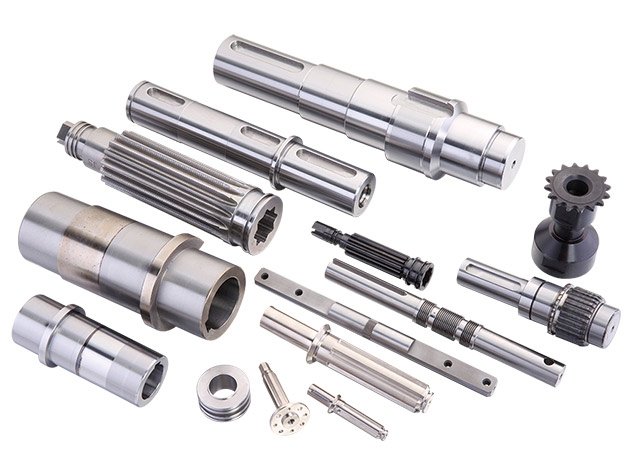
Industrial Ceramics Machining: Zirconia and Alumina Applications for OEM Supply Chains
Executive Summary
Industrial ceramics are increasingly specified where metals, engineering plastics, and conventional coatings cannot maintain performance under abrasion, heat, corrosion, electrical isolation, or demanding dimensional-stability requirements. Among the most widely used technical ceramics, zirconia and alumina provide distinct but complementary material profiles for global OEMs and Tier 1 suppliers. Their use spans semiconductor equipment, fluid-control systems, medical devices, aerospace assemblies, automation equipment, pumps, precision fixtures, and wear-critical production tooling.
However, selecting a ceramic grade is only the beginning. The real engineering challenge is translating a material specification into repeatable, inspectable, and commercially viable components. Ceramic machining requires different process planning from metal machining because the materials are hard, brittle, abrasive, and sensitive to grinding stress, edge condition, and geometry. A supplier must control material condition, machining sequence, diamond-tool selection, grinding parameters, fixturing, inspection, packaging, and lot-level traceability.
Dixin Technology, operating through IndustryApex CNC, supports OEM procurement and engineering teams with an integrated precision-manufacturing approach. By combining ceramic capability with 3-5 axis CNC machining, EDM, precision grinding, ERP-based planning, and controlled supplier coordination, Dixin Technology helps customers reduce sourcing fragmentation while maintaining quality control from prototype through production.
This article examines the engineering differences between zirconia and alumina, explains the machining and quality considerations that determine delivered performance, and outlines how an ODM-oriented supply-chain partner can support complex industrial ceramic programs.
Technical Deep Dive
Alumina and zirconia are both oxide ceramics, but they should not be treated as interchangeable. Their relative strengths influence component geometry, operating environment, manufacturing route, cost profile, and inspection plan. Engineering teams should evaluate the full system requirement rather than selecting a material solely from a property table.
Alumina: Hardness, Insulation, and Cost Efficiency
Alumina, commonly specified in grades such as 95%, 96%, 99%, and 99.5% aluminum oxide, is a proven industrial ceramic for wear resistance, electrical insulation, chemical stability, and elevated-temperature operation. Higher purity generally improves electrical, thermal, and corrosion-related performance, although it can also affect manufacturing cost and available forming routes.
Its high hardness makes alumina especially effective for guide components, insulating spacers, nozzles, valve seats, electrical fixtures, wear pads, textile guides, metering elements, semiconductor fixtures, and components exposed to abrasive media. Alumina also retains useful properties at temperatures that would degrade many polymers and weaken conventional metal assemblies.
The machining tradeoff is brittleness. Tight internal radii, thin walls, sharp transitions, deep unsupported pockets, and aggressive clamping can create chipping or fracture risk. Good design-for-manufacturing practice uses generous corner radii, controlled edge breaks, sufficient section thickness, realistic geometric tolerances, and datum strategies compatible with grinding-based finishing. Where possible, a near-net ceramic blank should be formed before sintering and finished afterward only on functional surfaces.
Zirconia: Toughness and Wear Performance
Zirconia, particularly yttria-stabilized zirconia or Y-TZP, is valued for its comparatively high fracture toughness among structural ceramics. It combines high hardness with strong resistance to wear and useful resistance to crack propagation. This makes zirconia suitable for parts that may experience impact loading, cyclic contact, high-pressure sealing, sliding wear, or more demanding handling conditions than alumina can reliably tolerate.
Common zirconia applications include pump plungers, seal rings, valve components, bearing elements, guide pins, cutting and forming tools, chemical-processing parts, medical device elements, and precision fixtures. Its smooth achievable surface finish and resistance to abrasion can also make it useful in flow-control and motion systems where surface damage would accelerate leakage or wear.
Zirconia is denser and often more expensive than alumina. It may also have different aging considerations depending on grade, processing history, operating temperature, moisture exposure, and service duration. The correct selection requires material certificates, application-specific validation, and alignment between the ceramic manufacturer, machining partner, and customer engineering team.
Machining and Finishing Considerations
Most high-precision ceramic components are machined after sintering because sintering causes shrinkage that makes final dimensions difficult to guarantee in the green state. Post-sinter machining typically relies on diamond grinding, diamond drilling, lapping, polishing, ultrasonic-assisted methods where appropriate, and specialized tooling strategies. Conventional milling approaches designed for steel or aluminum are generally unsuitable for finished technical ceramics.
Process planning begins with the functional requirements: dimensional tolerance, flatness, parallelism, roundness, surface roughness, edge condition, leakage performance, electrical characteristics, and load path. The manufacturing sequence should minimize stress concentrations and avoid removing critical support surfaces too early. For example, a ceramic sleeve may require controlled OD and ID grinding, followed by end-face grinding and final lapping to achieve sealing-face requirements.
Inspection must reflect the actual failure modes of ceramic parts. Beyond conventional dimensional checks, programs may require surface-finish measurement, visual edge inspection, concentricity verification, dye penetrant or other appropriate non-destructive methods where applicable, material certification review, and lot traceability. Packaging also matters: finished ceramic components need separation and protective handling to prevent edge damage during transit and assembly.
The ODM & Supply Chain Advantage
For global OEMs and Tier 1 suppliers, industrial ceramic sourcing often becomes difficult when a component requires both specialized ceramic processing and adjacent precision-manufacturing operations. A ceramic part may interface with stainless steel, titanium, aluminum, carbide, engineered plastics, seals, fasteners, or complex machined housings. Managing separate vendors for every process can increase lead time, dilute accountability, and create dimensional mismatch at assembly.

Dixin Technology is positioned as a supply-chain integrator and ODM solution provider, not simply a source of individual machined parts. This approach supports customers that need material and process coordination, manufacturability feedback, prototype iteration, documentation alignment, production planning, and supplier-managed delivery. The goal is to provide a controlled path from design intent to repeatable production output.
With more than 30 years of precision-manufacturing experience, Dixin Technology operates a fully controlled manufacturing system supported by ERP planning. ERP-based coordination improves visibility across material procurement, work orders, production capacity, inspection status, inventory, and shipment timing. For procurement teams, this structure helps reduce the uncertainty that can arise when custom components move through disconnected subcontractors.
The manufacturing capability set includes 3-5 axis CNC machining, EDM, precision grinding, and industrial ceramics. This combination is important because many engineered assemblies cannot be optimized through a single process. CNC machining supports complex metal structures, housings, and interfaces. EDM can produce difficult profiles and features in electrically conductive materials. Precision grinding establishes highly controlled dimensional and surface conditions. Ceramic machining extends the manufacturing envelope to applications requiring dielectric performance, exceptional wear resistance, corrosion resistance, or high-temperature stability.
From an ODM perspective, supplier involvement should begin early. Dixin Technology can review drawings for ceramic-specific risks such as impractical corner geometry, insufficient wall thickness, unnecessary ultra-tight tolerances, inspection ambiguity, unsupported threads, sharp sealing edges, and material-grade uncertainty. The review can then consider how ceramic components interface with metal mating parts, elastomeric seals, bearings, or fastened assemblies. Early feedback reduces redesign cycles and helps avoid a common sourcing failure: a component that appears manufacturable on a drawing but is not economical or reliable at the required production volume.
Supply-chain integration also supports resilience. Where approved alternatives are required, the team can assess material availability, blank-form lead times, process capacity, logistics constraints, and quality documentation before an interruption reaches the assembly line. This is particularly valuable for custom ceramic parts, where changing material supplier, sintering route, or finishing process without engineering control can alter performance significantly.
Industry Applications
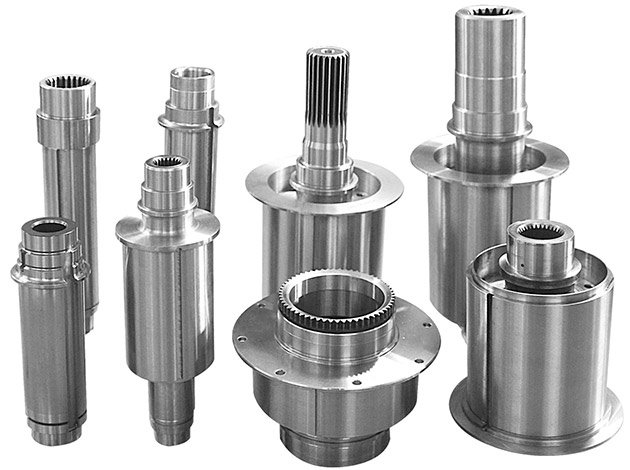
Semiconductor and Electronics Manufacturing
Alumina is widely used for electrical insulation, high-temperature fixtures, wafer-processing supports, vacuum-system components, and wear-resistant guides. Its dielectric properties and cleanliness potential make it relevant in equipment where electrical isolation and particle-control disciplines are important. Zirconia may be selected where mechanical toughness, polished contact surfaces, or high-wear motion interfaces are required.
Fluid Control, Hydraulics, and Pumps
Industrial ceramics provide major value in aggressive fluid and high-cycle flow-control systems. Zirconia plungers, sleeves, seats, and sealing components can resist wear from abrasive media while maintaining stable geometry. Alumina can support chemically resistant and electrically isolating functions. For related engineered assemblies, Dixin Technology supports sourcing of hydraulic and pump components that must work with demanding sealing, pressure, and surface-finish requirements.
Medical Devices and Analytical Equipment
Medical and laboratory equipment can require ceramics for insulation, corrosion resistance, precision fluid handling, nonmagnetic behavior, wear performance, and biocompatibility-related material strategies. The component design and validation route must be matched to the specific regulatory and end-use environment. Dixin Technology’s medical CNC machining capabilities complement ceramic programs where precision metal housings, instruments, or device interfaces are also required.
Aerospace and Advanced Industrial Systems
Aerospace applications may use technical ceramics in electrical isolation, sensor-related hardware, thermal-management interfaces, wear systems, and specialized fixtures. Material approval, traceability, inspection planning, and controlled configuration management are essential because component performance is tied to broader safety and qualification requirements. Dixin Technology also provides aerospace CNC machining for titanium and structural components, supporting multi-material programs where ceramic and metal parts must be engineered together.
Automation, Tooling, and General Manufacturing
For automated production lines, ceramics can improve uptime in grippers, nests, guides, bushings, rollers, nozzles, cutting interfaces, and wear contact points. The strongest business case is usually not the lowest purchase price. It is the reduction of replacement frequency, downtime, contamination risk, or product damage. Engineers should quantify the full cost of ownership, including maintenance labor, lost production, rejected parts, and changeover intervals.
Call to Action
Industrial ceramic projects succeed when material selection, component geometry, finishing requirements, inspection criteria, and supply-chain planning are addressed as one engineering system. Whether the requirement is a zirconia wear component, an alumina insulating part, or a multi-material OEM assembly, Dixin Technology can help evaluate manufacturability and develop a practical production route.
Contact Dixin Technology through IndustryApex CNC to discuss drawings, tolerances, target quantities, material requirements, quality documentation, and delivery expectations for your next industrial ceramics machining program.