- Shaft
- Molds&Tools
- Hydraulics And Pump
- Hair transplant needle
- Hydraulics And Pump
- Precision CNC Shaft Machining Manufacturer for High Performance Applications
- Energy Industry CNC Machining Parts Supplier
- Aerospace CNC Machining Parts Manufacturer
- Aerospace CNC Machining Parts Manufacturer
- Automotive & EV CNC Machining Parts Supplier for OEM and Tier 1
- Medical CNC Machining Parts Supplier for Precision Medical Devices
Sourcing Aerospace CNC Parts: What Tier 1 Suppliers Look For

Sourcing Aerospace CNC Parts: What Tier 1 Suppliers Look For
Aerospace CNC sourcing is not a conventional procurement exercise. Tier 1 suppliers must protect program schedules, airworthiness requirements, traceability, structural performance, and long-term production continuity at the same time. The right machining partner is therefore evaluated as an engineering and supply-chain contributor, not simply as a source of finished parts.
1. Executive Summary
When Tier 1 aerospace suppliers source machined components, they look beyond quoted unit price and nominal dimensional capability. They need evidence that a supplier can translate complex engineering requirements into repeatable production outcomes across prototype, qualification, ramp-up, and sustained serial delivery. That includes disciplined process control, material traceability, inspection planning, capacity management, and transparent communication when technical or supply risks emerge.
Aerospace parts commonly involve titanium alloys, high-strength aluminum, stainless steels, nickel-based superalloys, and engineered plastics or ceramics. These materials impose different machining challenges, including work hardening, heat management, tool wear, deformation risk, burr control, and surface-integrity requirements. A supplier may produce a visually acceptable component while still creating unacceptable risk through unsupported setups, incomplete records, uncontrolled process changes, or inconsistent material lots.
For global OEMs and Tier 1 organizations, the strongest CNC partners combine engineering depth with operational resilience. They demonstrate stable multi-axis machining, robust inspection methods, effective nonconformance handling, and a practical understanding of how design decisions affect manufacturability, lead time, quality, and total landed cost. Dixin Technology, operating through IndustryApex CNC, supports this model as a precision manufacturing and supply-chain integration partner for demanding industrial programs.
The sourcing decision should be based on a structured evaluation: technical fit, quality-system maturity, traceability, capacity, material controls, supply-chain visibility, response speed, and lifecycle support. Suppliers that can validate these capabilities with documentation, sample parts, process reviews, and consistent delivery data are positioned to become strategic partners rather than transactional machine shops.
2. Technical Deep Dive
Tier 1 aerospace buyers begin with the engineering definition. A complete request for quotation should include controlled drawings, revision status, material specifications, applicable standards, critical characteristics, surface-finish requirements, inspection expectations, annual demand, batch size, packaging requirements, and delivery milestones. Missing or ambiguous information often becomes a source of unplanned cost and schedule disruption after production begins.
Part geometry directly influences supplier selection. Thin-wall housings, deep cavities, compound-angle features, turbine-adjacent hardware, structural brackets, complex manifolds, and precision interfaces may require 4-axis or 5-axis machining to preserve datum relationships while reducing the number of setups. Every additional setup introduces a potential stack-up error, handling risk, and scheduling burden. A capable supplier should be able to explain its fixturing approach, datum strategy, tool-access plan, machine envelope, and proposed inspection sequence before the first production order is released.
Material expertise is equally important. Titanium alloys such as Ti-6Al-4V require controlled cutting conditions because their low thermal conductivity concentrates heat near the cutting edge. Excessive heat may accelerate tool wear, affect surface integrity, and create variation between batches. Aluminum aerospace grades may machine quickly but can distort when residual stresses are released from thin sections. Nickel alloys demand rigid machines, conservative parameters, and careful tool-life management. Tier 1 buyers should ask how the supplier develops machining parameters, manages tool offsets, validates coolant strategy, and controls material handling for each alloy family.
Critical dimensions should be treated as process characteristics, not merely final inspection results. A supplier that only checks a part after machining has limited ability to prevent variation. Stronger operations establish in-process controls for key features, use qualified gauges or coordinate measuring machines, maintain inspection records, and react to trends before a part falls outside tolerance. For aerospace applications, dimensional control must also be connected to datums, assembly interfaces, functional fit, and downstream processes such as coating, anodizing, heat treatment, or non-destructive testing.
Traceability is a central sourcing requirement. Tier 1 suppliers generally expect material certifications tied to lot identity, controlled purchase records, revision-controlled travelers, inspection reports, and clear segregation of conforming and nonconforming material. The objective is to preserve a documented chain from incoming raw stock through machining, secondary processing, final inspection, packaging, and shipment. This record becomes essential when a quality investigation, customer audit, or program change requires rapid containment and root-cause analysis.
Surface integrity deserves specific attention. Aerospace performance can depend on more than dimensional conformity. Burrs, machining marks, embedded contamination, sharp edges, residual stress, and unsupported finishing processes can affect fatigue performance, sealing behavior, corrosion resistance, or assembly reliability. Specifications should define deburring, edge-break, roughness, cleanliness, and cosmetic requirements with enough precision to avoid subjective acceptance criteria. Suppliers should also identify which secondary operations are performed internally and which are managed through qualified external sources.
First article and production-part validation provide an important readiness gate. A robust first article package typically verifies drawing conformance, material documentation, key process steps, inspection results, and any required outside processing. More importantly, it confirms that the supplier can reproduce the part using the intended production route. Tier 1 teams should assess whether the sample was made under representative conditions or through exceptional manual intervention that will not be sustainable in serial production.
Risk management separates capable aerospace suppliers from general-purpose machining sources. Buyers should evaluate single-point dependencies in equipment, tooling, fixtures, materials, special processes, logistics routes, and technical personnel. A supplier with one machine capable of a critical operation may still be viable, but the risk must be visible and have a mitigation plan. Practical controls can include alternate approved equipment, duplicate fixtures, safety stock for long-lead materials, qualified backup sources, and documented recovery procedures.
Finally, engineering communication affects total program cost. The best suppliers raise manufacturability concerns early, support tolerance rationalization where permitted, propose more stable datum schemes, and identify features that may drive disproportionate setup time or inspection complexity. This is not a request to compromise aerospace requirements. It is a structured design-for-manufacturing discussion that protects functional intent while improving repeatability, yield, and lead time.
3. The ODM & Supply Chain Advantage
For aerospace programs with demanding lead times and evolving technical requirements, a sourcing partner must coordinate more than machining. Dixin Technology is positioned as a supply-chain integrator and ODM solution provider, supporting customers that need engineered precision components delivered through a controlled and responsive manufacturing network. This model gives global OEMs and Tier 1 suppliers a single technical interface while maintaining visibility across material sourcing, manufacturing, inspection, finishing, and delivery.
The core advantage is a fully controlled precision manufacturing system supported by ERP-based planning and more than 30 years of manufacturing experience. ERP discipline helps connect demand signals, production schedules, material status, work orders, inventory, and shipment commitments. For procurement and supplier-quality teams, this creates a more reliable basis for planning than disconnected manual tracking. It also supports earlier escalation when material availability, machine loading, or outside-process timing threatens a committed date.
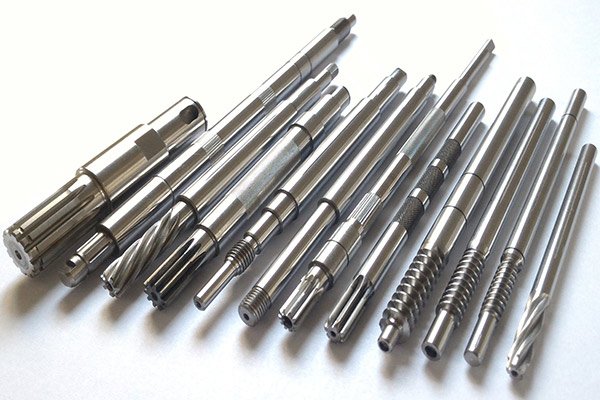
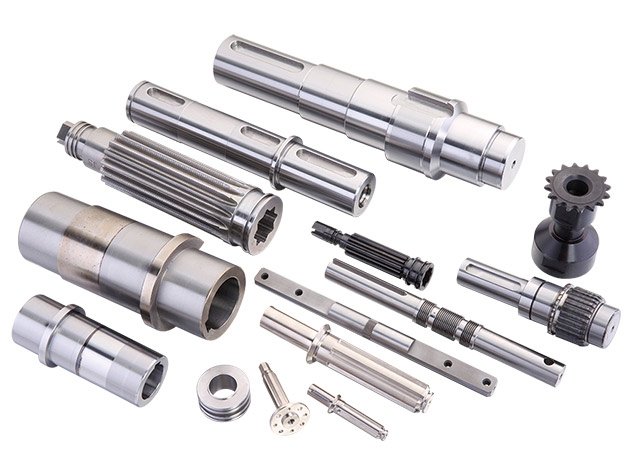
Dixin Technology’s technical platform includes 3-axis, 4-axis, and 5-axis CNC machining, EDM, precision grinding, and industrial ceramics capabilities. This range matters because aerospace assemblies often combine prismatic parts, complex freeform surfaces, high-precision bores, difficult internal features, hardened materials, and wear-resistant or electrically insulating components. Matching each requirement to the right process reduces unnecessary handling and enables a more coherent process route.
Five-axis machining is particularly valuable for aerospace structural and flight-critical support components where compound angles, deep pockets, and tightly controlled relationships between multiple faces make repeated repositioning inefficient. EDM can address fine slots, difficult-to-machine geometries, and hard materials where conventional cutting is constrained. Precision grinding supports demanding roundness, flatness, surface finish, and dimensional control. Industrial ceramic capability expands the available solution space for high-temperature, wear, insulation, and chemically resistant applications.
An ODM-oriented relationship also supports earlier engineering collaboration. Rather than waiting for a fully locked drawing package, procurement and engineering teams can involve the manufacturing partner during concept refinement, prototype planning, and pre-production review. The supplier can provide feedback on material availability, tolerances, feature accessibility, expected cycle time, inspection strategy, and likely supply risks. Early involvement is especially useful when launching new programs, transitioning production from an incumbent source, or consolidating a fragmented supply base.
Supply-chain integration should not obscure accountability. Tier 1 buyers should still expect controlled specifications, agreed quality criteria, traceable records, change notification, documented corrective action, and clear ownership for delivery performance. The right partner makes this easier by providing a defined communication path from engineering review through order management and shipment. For aerospace sourcing teams, the result is fewer handoffs, faster issue resolution, and a more complete view of technical and commercial risk.
4. Industry Applications
Aerospace CNC parts span a wide range of functions, and each application creates a different sourcing profile. Structural components may require lightweight aluminum or titanium machining, close control of profile tolerances, and carefully managed distortion. Examples include brackets, frames, ribs, housings, mounts, actuator interfaces, and machined structural components. Review Dixin Technology’s aerospace CNC machining capabilities for applications involving titanium aircraft parts, 5-axis machining, and aircraft structural components.
Engine, drivetrain, and fluid-management applications frequently involve heat-resistant alloys, precision bores, threaded interfaces, sealing surfaces, and complex internal passages. These parts may include valve bodies, pump elements, manifolds, sleeves, shafts, and actuator hardware. Manufacturing routes must account for pressure integrity, burr removal, cleanliness, and dimensional repeatability. For components with similar fluid-control requirements, Dixin Technology also supports hydraulic pump parts where controlled interfaces and precision machining are essential.
Avionics, sensing, and optical equipment require another combination of capabilities. Machined enclosures, precision mounts, heat sinks, sensor bodies, and alignment components often demand tight positional tolerances, controlled finishes, and careful protection during handling. Some applications can benefit from ceramic materials because of their thermal, electrical, or wear properties. Supplier evaluation should include not only machine capability but also measurement competence and packaging methods that preserve sensitive finished surfaces.
Medical manufacturing offers a useful adjacent benchmark for aerospace sourcing because it similarly depends on traceable materials, precision interfaces, strict inspection, and controlled documentation. The processes used for ISO-certified medical CNC components, including titanium implants and high-precision instruments, demonstrate why material discipline and process repeatability remain important across regulated high-value industries.

Across these applications, Tier 1 suppliers seek a manufacturer that understands the relationship between the individual component and the wider assembly. The requirement is not simply to meet dimensions on a drawing. It is to deliver parts that assemble correctly, perform consistently, arrive on schedule, and remain traceable throughout the program lifecycle.
5. Call to Action
When sourcing aerospace CNC parts, evaluate suppliers on their ability to combine precision manufacturing, engineering communication, traceability, process control, and supply-chain reliability. A detailed technical review before nomination can prevent costly issues during qualification and production ramp-up.
Dixin Technology supports global OEMs and Tier 1 suppliers with integrated ODM and precision manufacturing solutions for complex CNC components. To discuss an aerospace RFQ, drawing package, prototype requirement, or supply-chain challenge, contact Dixin Technology.