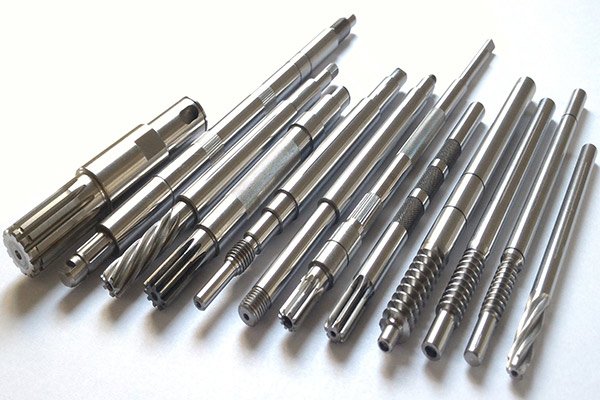
- Shaft
- Molds&Tools
- Hydraulics And Pump
- Hair transplant needle
- Hydraulics And Pump
- Precision CNC Shaft Machining Manufacturer for High Performance Applications
- Energy Industry CNC Machining Parts Supplier
- Aerospace CNC Machining Parts Manufacturer
- Aerospace CNC Machining Parts Manufacturer
- Automotive & EV CNC Machining Parts Supplier for OEM and Tier 1
- Medical CNC Machining Parts Supplier for Precision Medical Devices
Optimizing Supply Chains with Low MOQ Micro-Batch Production

Optimizing Supply Chains with Low MOQ Micro-Batch Production
For global OEMs and Tier 1 suppliers, supply chain performance increasingly depends on flexibility, traceability, and the ability to scale production without creating excess inventory. Low minimum order quantity (MOQ) micro-batch production provides a practical way to balance these requirements. Instead of committing to large production runs before demand, validation, or design maturity is established, manufacturers can release controlled quantities of precision components, evaluate performance, and expand production based on verified requirements.
For engineered products, this model is more than a purchasing tactic. It is a manufacturing strategy that connects product development, supplier qualification, inventory planning, quality assurance, and production scaling. When supported by an experienced supply chain integrator and ODM solution provider such as Dixin Technology, operating as IndustryApex CNC, low MOQ production can reduce supply chain exposure while preserving technical control.
1. Executive Summary
Low MOQ micro-batch production is the controlled manufacture of relatively small quantities of custom parts, assemblies, or subcomponents before full-volume production begins. It is particularly valuable for industries with high part complexity, strict qualification requirements, uncertain demand, or frequent engineering changes.
The model improves supply chain resilience in five ways. First, it limits working capital tied up in unfinished or obsolete inventory. Second, it enables early verification of dimensions, materials, tolerances, surface finishes, and assembly performance. Third, it allows OEMs to introduce products or engineering revisions without waiting for high-volume tooling or large supplier commitments. Fourth, it creates a staged path from prototype to pilot production and then to repeatable volume manufacturing. Finally, it improves communication between engineering, procurement, quality, and manufacturing teams by generating real production data earlier in the product lifecycle.
However, low MOQ does not mean low complexity. Small batches can carry high setup costs, require specialized process planning, and expose weaknesses in supplier coordination. The strongest results occur when the supplier has integrated engineering, production, inspection, enterprise resource planning (ERP), and sourcing capabilities. This integration converts a series of small orders into a controlled production program.
2. Technical Deep Dive
Micro-batch production begins with a manufacturing strategy that separates fixed process costs from variable unit costs. In conventional high-volume sourcing, setup, programming, fixture, inspection, and material costs are distributed across many parts. In a low MOQ program, these costs represent a larger proportion of the unit price. The objective is therefore not simply to minimize the purchase quantity, but to reduce avoidable rework, shorten process changeovers, and preserve the approved manufacturing route for future batches.
Design for manufacturability is central to this approach. Engineers should review datum structures, tool access, internal radii, wall thickness, thread specifications, tolerance allocation, and material availability before releasing a small batch. A design that is technically machinable may still be inefficient if it requires repeated custom setups, excessive probing, uncommon cutting tools, or difficult inspection methods. A supplier with experience in 3-axis, 4-axis, and 5-axis CNC machining can identify opportunities to consolidate operations while maintaining dimensional control.
Process stability must also be considered at low quantities. A micro-batch should use documented work instructions, controlled programs, calibrated inspection equipment, and clearly defined acceptance criteria. The first article may require detailed verification, but subsequent batches should be able to follow a repeatable process with limited variation. This is where digital production control becomes important. ERP systems can connect purchase orders, material certifications, revision-controlled drawings, routings, inspection records, inventory status, and shipment information in a single operational flow.
Material strategy is another major factor. Long-lead alloys, engineered plastics, ceramics, and specialty coatings can undermine the responsiveness of a low MOQ program if they are purchased only after every order is placed. A qualified supplier can recommend approved material substitutes, maintain controlled stock of frequently used grades, or establish blanket purchasing arrangements. These options should be managed carefully: material substitutions require customer approval, and stock should remain traceable to heat numbers, certificates, and applicable quality requirements.
Inspection planning should match the risk of the component. Critical dimensions may require coordinate measuring machine verification, optical measurement, surface roughness testing, hardness testing, or functional gauging. Noncritical features may be controlled through in-process checks and sampling. The key is to define the control plan before production rather than treating inspection as a final administrative step. For regulated applications, records should support lot traceability and demonstrate that the delivered parts conform to the approved revision.
Low MOQ production is also compatible with a staged inventory model. An OEM may hold a small quantity of finished parts, while the supplier maintains approved raw material or semi-finished stock. When demand is confirmed, the supplier can complete the next operation and ship the replenishment batch quickly. This arrangement reduces finished-goods exposure while retaining responsiveness. It is especially useful for spare parts, service components, launch programs, and products with variable demand.
Commercial terms should reflect the technical structure of the work. Instead of evaluating only piece price, procurement teams should consider total landed cost, setup amortization, freight, inspection, carrying cost, scrap risk, engineering support, and the financial impact of delayed delivery. A slightly higher price for a small batch may produce a lower total cost when it prevents overproduction, design obsolescence, or an expensive line stoppage.
3. The ODM & Supply Chain Advantage
The most effective low MOQ programs are supported by a supplier that can contribute beyond machine capacity. Dixin Technology, under the IndustryApex CNC brand, operates as a supply chain integrator and ODM solution provider. This identity is important because low-volume manufacturing often involves decisions that cross traditional departmental boundaries. Material sourcing, process engineering, tooling, inspection, packaging, documentation, and logistics must work together to deliver a reliable result.
Dixin Technology’s manufacturing edge is a fully controlled precision manufacturing system supported by ERP and more than 30 years of manufacturing experience. For an OEM or Tier 1 supplier, this provides a structured path from drawing review to production release. Engineering data can be evaluated alongside available equipment, process capability, inspection requirements, and delivery constraints. The result is a sourcing relationship based on manufacturing evidence rather than a simple quotation exchange.
The company’s technical capabilities include 3-axis to 5-axis CNC machining, electrical discharge machining (EDM), precision grinding, and industrial ceramics. This combination is valuable when a component contains complex geometries, difficult materials, narrow tolerances, or multiple finishing requirements. A part may begin with CNC roughing, move to EDM for a fine feature, receive precision grinding for a critical surface, and require ceramic processing or a specialized finishing operation. Coordinating these capabilities through one manufacturing system can reduce handoffs, communication gaps, and uncontrolled variation.
For global OEMs and Tier 1 suppliers, supplier consolidation should be approached selectively. The objective is not to place every component with one source regardless of risk. Instead, an integrated ODM partner can manage technically related components, provide manufacturing feedback during design development, and establish a scalable supply route for approved products. This helps customers standardize documentation, improve revision control, and reduce the number of interfaces that procurement and quality teams must manage.
An ODM relationship can also improve product development speed. When the supplier understands the intended function, operating environment, critical-to-quality features, and expected production lifecycle, it can recommend process changes that support performance and cost objectives. Examples include adjusting a machining datum to improve repeatability, changing a feature sequence to reduce distortion, revising a surface finish specification to match the functional requirement, or designing a fixture that can be reused across multiple batches.
Supply chain integration becomes particularly valuable during demand transitions. A program may begin with ten or twenty development parts, progress to a pilot batch, and then require hundreds or thousands of units after customer approval. The supplier must preserve the original quality requirements while increasing throughput. Documented programs, stable fixtures, validated inspection methods, and ERP-based planning create continuity across these stages.
Quality and communication remain essential. Customers should receive clear quotations, lead-time assumptions, material and process information, inspection deliverables, and change-control procedures. In return, the supplier needs complete drawings, 3D models where applicable, technical specifications, forecast information, and prompt feedback on sample results. This shared discipline allows low MOQ manufacturing to function as a controlled supply chain model rather than an isolated prototype service.
4. Industry Applications
Low MOQ micro-batch production is useful across sectors where component value, qualification effort, or demand uncertainty makes large initial orders risky.
Aerospace and Defense
Aerospace programs often require complex structural components, titanium parts, lightweight brackets, housings, and specialized tooling in controlled quantities. Small batches support development builds, repair programs, aircraft modifications, and qualification activities while preserving material and process traceability. Customers can review inspection results and functional fit before releasing larger quantities. Dixin Technology’s aerospace CNC machining capabilities are relevant for components requiring multi-axis access and demanding engineering controls.
Medical Equipment and Devices
Medical manufacturers frequently manage multiple product revisions, specialized materials, and strict documentation requirements. Low MOQ production can support surgical instrument development, diagnostic equipment, implant-related components, and precision device parts without creating excessive inventory before design verification is complete. Parts can be manufactured in controlled lots so that engineering teams can validate fit, finish, cleaning compatibility, and assembly performance. Relevant capabilities include ISO-certified CNC machining for medical components.
Hydraulics and Fluid Control
Hydraulic valves, pump components, spools, sleeves, manifolds, and custom shafts often require tight fits and controlled surface finishes. Micro-batches allow manufacturers to validate leakage performance, wear behavior, and interaction between mating parts before committing to larger production volumes. This is useful for custom equipment, replacement parts, agricultural machinery, construction machinery, and industrial fluid-control systems. Dixin Technology supplies hydraulic pump parts for applications where dimensional consistency and functional reliability are essential.
Industrial Automation and Machinery
Automation builders may need low quantities of custom brackets, end-effectors, drive components, guide parts, fixtures, and replacement assemblies. Demand can vary according to customer projects, making large inventory commitments difficult to justify. A repeatable micro-batch program provides parts when required and supports machine customization without sacrificing production control.
Energy, Optics, and Advanced Components
Energy equipment, optical systems, semiconductor support equipment, and industrial ceramic applications commonly involve expensive materials, specialized geometries, and limited initial demand. Small controlled releases reduce technical and financial risk while engineering teams validate performance. The same approach can support spare parts and aftermarket programs in which annual demand is low but delivery expectations are high.
Across these industries, the best operating model combines a documented initial batch, structured feedback, demand visibility, and a preapproved scale-up plan. The supplier should know which features are critical, which processes are capacity constrained, and which materials or finishes could affect lead time. The customer should know how pricing and delivery will change as quantities increase. This transparency supports better forecasting and more resilient sourcing decisions.
5. Call to Action
Low MOQ micro-batch production can help global OEMs and Tier 1 suppliers reduce inventory risk, accelerate product validation, and build a more responsive supply chain. The results depend on selecting a partner that combines precision manufacturing, engineering judgment, quality control, and supply chain coordination.
Share your drawings, 3D models, materials, target quantities, tolerances, inspection requirements, and expected production schedule with Dixin Technology. The team can review manufacturability, recommend an appropriate batch strategy, and define a practical path from development parts to repeat production. Contact Dixin Technology to discuss your next CNC machining, EDM, precision grinding, or industrial ceramics requirement.