- Shaft
- Molds&Tools
- Hydraulics And Pump
- Hair transplant needle
- Hydraulics And Pump
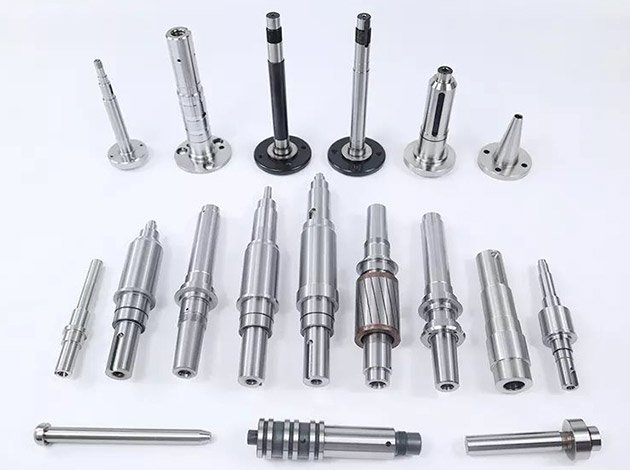
- Precision CNC Shaft Machining Manufacturer for High Performance Applications
- Energy Industry CNC Machining Parts Supplier
- Aerospace CNC Machining Parts Manufacturer
- Aerospace CNC Machining Parts Manufacturer
- Automotive & EV CNC Machining Parts Supplier for OEM and Tier 1
- Medical CNC Machining Parts Supplier for Precision Medical Devices

Cold Heading Tooling vs. CNC Machining: Which Manufacturing Method Is Right for Your Project?


Cold Heading Tooling vs. CNC Machining: Which Manufacturing Method Is Right for Your Project?
For OEMs and Tier 1 suppliers, selecting between cold heading tooling and CNC machining is a manufacturing strategy decision, not simply a choice between two production processes. The right method affects part geometry, material utilization, tooling investment, dimensional consistency, lead time, unit cost, and supply chain resilience.
Cold heading is highly effective for producing large quantities of fasteners and rotationally formed components with repeatable features. CNC machining is more flexible and is often the better choice for complex geometries, lower production volumes, tight tolerances, engineering changes, and high-value components. In many projects, the most efficient answer is a hybrid supply chain that combines near-net-shape forming with precision machining and inspection.
1. Executive Summary
Cold heading, also called cold forming or cold forging, uses dies and punches to plastically deform wire or bar stock at room temperature. The process can produce thousands or millions of parts with excellent material utilization and fast cycle times once the tooling is qualified. It is particularly suitable for standard and specialized fasteners, pins, rivets, sleeves, bushings, and other parts with a predominantly axial form.
CNC machining removes material through controlled cutting, milling, turning, drilling, or boring. It offers a broader design envelope and can achieve intricate profiles, undercuts, cross-holes, nonstandard threads, and highly controlled datum relationships. CNC is also well suited to prototypes, pilot runs, replacement parts, and production programs where design maturity or demand is uncertain.
The decision should be based on total cost of ownership rather than quoted piece price alone. Cold heading typically requires higher upfront investment for die design, punches, process development, and qualification. However, that investment can be recovered quickly at high annual volumes. CNC machining generally minimizes initial tooling cost, but its cycle time, cutting-tool consumption, material waste, and labor content may result in a higher unit cost at scale.
A practical decision framework should evaluate five factors: annual demand, part geometry, material behavior, tolerance requirements, and program maturity. Buyers should also assess whether the supplier can integrate tooling, forming, machining, heat treatment, surface finishing, inspection, packaging, and logistics under one controlled system.
2. Technical Deep Dive
Cold heading begins with a carefully specified wire or cut blank. The blank is fed into a heading machine, positioned in a die, and struck by a punch or a sequence of punches. Metal flows into the cavity to create the head, shoulder, flange, point, or other formed feature. Multi-die headers can perform several operations in sequence, allowing complex fastener shapes to be formed at high speed.
The principal technical advantage is material efficiency. Because the workpiece is displaced rather than extensively cut away, cold heading can produce a near-net-shape component with limited scrap. Grain flow may also follow the formed profile, which can improve fatigue performance in appropriate applications. These advantages are valuable in automotive, industrial equipment, fluid control, and structural fastening programs.
Cold heading does not eliminate engineering constraints. The material must have sufficient ductility and a suitable work-hardening response. Excessive reduction, sharp transitions, inadequate radii, or poorly balanced forming stages can cause laps, cracks, buckling, die wear, or dimensional drift. Stainless steels, nickel alloys, titanium, and other difficult-to-form materials may require specialized lubrication, annealing, staged reductions, or alternative process routes.
Tooling design is central to cold heading performance. Die material, carbide grade, punch geometry, clearances, surface finish, alignment, and cooling all influence tool life and part quality. Tooling must also account for springback, material variation, coating thickness, and downstream operations. A supplier with internal die engineering and manufacturing capability can shorten the feedback loop between tool design, trial production, measurement, and correction.
CNC machining uses programmed toolpaths to remove material from a workpiece. Turning is efficient for shafts, pins, sleeves, and other rotational components. Milling supports flats, pockets, slots, angled surfaces, and three-dimensional profiles. Live tooling and mill-turn platforms can combine operations, while three-axis, four-axis, and five-axis machining enable progressively more complex part orientations.
The major strength of CNC is design freedom. A machined component can include intersecting bores, precision shoulders, eccentric features, complex contours, fine threads, and application-specific interfaces without requiring a dedicated forming die for every geometry. CNC also supports rapid engineering changes because the primary process adjustment is usually a program, fixture, or tooling revision rather than a complete die redesign.
That flexibility has tradeoffs. Machining may generate substantial chips, particularly when starting from oversized billet or bar. Deep cavities and difficult materials can increase cycle time and tool wear. Fixturing must maintain workholding stability and preserve datum integrity across operations. For high-precision parts, process control must include tool-offset management, in-process probing, temperature control, first-article inspection, and statistical monitoring.
Dimensional requirements should be reviewed feature by feature. Cold heading can hold excellent repeatability on formed diameters and head dimensions after process stabilization, but secondary machining may be required for critical faces, bores, threads, or concentricity. CNC can directly control those features, although achievable tolerances depend on material, machine condition, workholding, tool access, thermal effects, and inspection capability. Neither process should be selected solely from a general tolerance table; the complete stack-up must be analyzed.
Hybrid processing often provides the strongest technical and commercial result. A cold-headed blank can reduce raw material consumption and machining time, while CNC finishing can establish precise datums and functional surfaces. Conversely, CNC may be used for low-volume tooling inserts or development parts before a stable design is transferred to cold heading for volume production. This staged approach limits early risk while preserving a path to lower recurring cost.
| Decision factor | Cold heading tooling | CNC machining |
|---|---|---|
| Best volume range | Medium to very high volume | Prototype to medium volume |
| Initial investment | Higher due to dies and process development | Lower, with fixtures and programming required |
| Material utilization | Typically excellent | Depends on stock size and geometry |
| Geometry flexibility | Best for formable, axially oriented shapes | Broad range of complex geometries |
| Engineering changes | May require tooling revision | Usually faster to implement |
| Secondary operations | Often required for critical features | Can be integrated into the machining route |
3. The ODM & Supply Chain Advantage
Process selection becomes more reliable when the manufacturing partner is involved before the design is frozen. Dixin Technology, operating through IndustryApex CNC, serves as a supply chain integrator and ODM solution provider for global OEM and Tier 1 suppliers. This role extends beyond make-to-print production. It includes design-for-manufacturing review, process selection, tooling strategy, supplier coordination, quality planning, and delivery management.
For a cold heading program, an integrated partner can evaluate whether the part should be formed in one operation or several stages, determine whether a standard wire diameter is practical, recommend radii and transitions, and identify where secondary turning or grinding will be needed. For a CNC program, the same partner can review datum schemes, fixture access, tool reach, chip evacuation, stock allowance, and inspection strategy before production begins.
Dixin Technology’s manufacturing edge is a fully controlled precision manufacturing system supported by ERP and more than 30 years of manufacturing experience. ERP-based planning helps connect engineering data, purchasing, production scheduling, inventory, quality records, and shipment status. This visibility matters when a program includes custom tooling, multiple materials, several processing stages, or synchronized deliveries to more than one customer facility.
The technical platform includes three-axis through five-axis CNC machining, EDM, precision grinding, and industrial ceramics. These capabilities allow a project to be managed across complementary processes rather than fragmented among disconnected vendors. EDM can produce intricate profiles and hard-material features. Precision grinding can establish critical sizes, flatness, roundness, and surface finish. Industrial ceramic capability supports demanding wear, insulation, thermal, and chemical-resistance requirements.
ODM support is especially valuable when the customer has a performance requirement but is still refining the component architecture. Manufacturing engineers can compare cold heading, CNC machining, grinding, EDM, ceramic production, and hybrid routes against the actual operating environment. The result may be a redesigned part with fewer operations, improved reliability, lower total cost, and a more resilient source strategy.
Supply chain risk should be measured across the entire program lifecycle. A low unit price is not beneficial if tooling ownership is unclear, replacement dies have long lead times, inspection data is incomplete, or a secondary supplier cannot reproduce the process. An integrated partner should define tooling maintenance, spare-component strategy, change control, traceability, nonconformance handling, and contingency capacity in the commercial and technical documentation.
For buyers evaluating suppliers, useful qualification questions include: Who owns the dies and CNC programs? Where are tool trials performed? How are material certificates and lot traceability maintained? Which operations are subcontracted? What inspection equipment is available internally? How are engineering changes approved? Can the supplier support both prototype machining and volume forming? These questions reveal whether the supplier is equipped to manage the full manufacturing system or only one isolated operation.

4. Industry Applications
Automotive and drivetrain programs frequently use cold heading for fasteners, pins, retainers, and formed shafts because production volumes are high and repeatability is critical. CNC machining remains important for prototype validation, low-volume variants, complex housings, and finishing operations that establish functional interfaces.
In aerospace, part value and certification requirements often outweigh the fastest cycle time. CNC machining is widely used for lightweight structural components, brackets, fittings, and components made from titanium or nickel-based alloys. Complex aerospace programs may combine five-axis machining with grinding, EDM, and rigorous inspection. Explore Dixin Technology’s aerospace CNC machining and titanium aircraft parts capabilities for applications requiring controlled geometry and traceable production.
Medical device manufacturers need repeatable processes, cleanable surfaces, biocompatible materials, and precise interfaces. CNC machining is often preferred for surgical instruments, implant components, and high-precision device parts because designs can be customized and tolerances can be tightly managed. Cold heading may be appropriate for selected small components when material and geometry support the forming process. Dixin Technology supports ISO-certified CNC machining for medical components, including titanium implants and surgical instruments.
Hydraulic and pump equipment depends on concentricity, surface finish, sealing integrity, and wear resistance. Valve spools, sleeves, fittings, pins, and retainers may be formed, turned, ground, or machined depending on their geometry and quantity. Critical spool and sleeve surfaces often require precision finishing and inspection to control leakage and response. Review the hydraulic pump parts manufacturing resource for examples of fluid-control component requirements.
Industrial automation, construction machinery, energy equipment, and agricultural machinery typically include a mixture of production profiles. Standardized pins and fasteners can justify cold heading, while customized wear components, shafts, housings, and tooling inserts may be better suited to CNC machining, grinding, EDM, or industrial ceramics. The best route is usually determined by the functional surface and annual demand for each individual component, not by the industry label alone.
5. Call to Action
The choice between cold heading tooling and CNC machining should begin with a structured review of geometry, material, annual volume, tolerances, quality requirements, and supply chain objectives. Cold heading is compelling when demand is high, the design is stable, and the geometry can be formed efficiently. CNC machining is compelling when flexibility, complex features, low initial tooling cost, or rapid design iteration is the priority. A hybrid route can combine the economic advantages of forming with the precision of machining and grinding.
Dixin Technology and IndustryApex CNC can help global OEM and Tier 1 engineering teams evaluate the complete manufacturing route, from prototype and design-for-manufacturing analysis through tooling, production, inspection, and delivery. Visit the IndustryApex CNC home page to review available manufacturing capabilities, or contact the engineering team with your drawings, material specification, expected volume, tolerance requirements, and target schedule.