- Shaft
- Molds&Tools
- Hydraulics And Pump
- Hair transplant needle
- Hydraulics And Pump
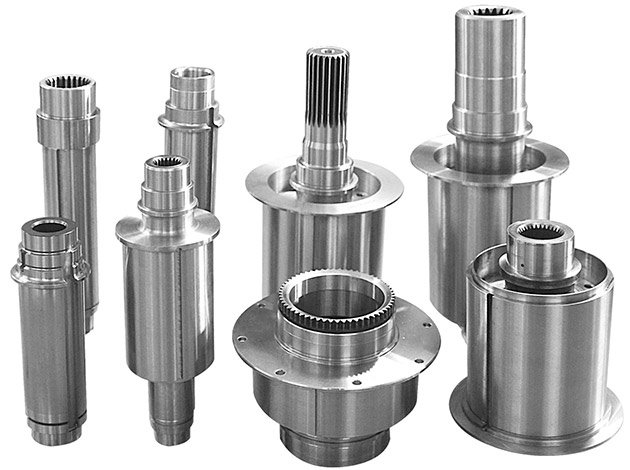
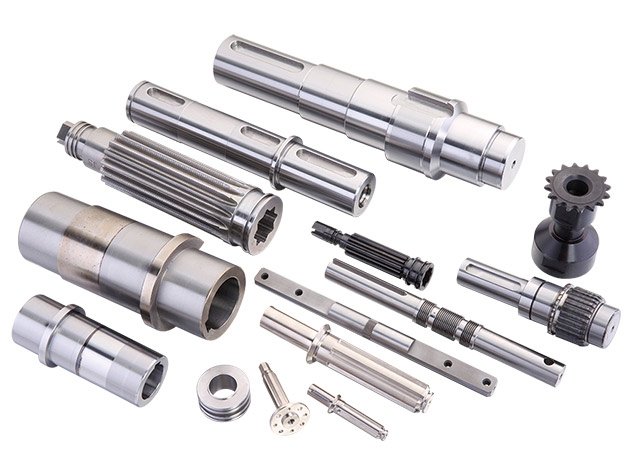
- Precision CNC Shaft Machining Manufacturer for High Performance Applications
- Energy Industry CNC Machining Parts Supplier
- Aerospace CNC Machining Parts Manufacturer
- Aerospace CNC Machining Parts Manufacturer
- Automotive & EV CNC Machining Parts Supplier for OEM and Tier 1
- Medical CNC Machining Parts Supplier for Precision Medical Devices

2026 Trends in 5-Axis CNC Machining for Aerospace Components: Engineering and Supply Chain Outlook


2026 Trends in 5-Axis CNC Machining for Aerospace Components
As aerospace programs move toward higher production rates, lighter structures, more integrated propulsion systems, and stricter traceability requirements, 5-axis CNC machining is becoming a central manufacturing capability rather than a specialty process. In 2026, global OEMs and Tier 1 suppliers are evaluating machining partners on more than their ability to hold tight tolerances. They need predictable capacity, material expertise, digital process control, robust quality documentation, and supply-chain resilience across complex component families.
Executive Summary
The 2026 aerospace machining environment is defined by a simultaneous demand for precision, throughput, and supply-chain certainty. Aircraft structural components, engine-adjacent parts, flight-control hardware, brackets, housings, manifolds, and complex titanium assemblies increasingly require multi-axis machining strategies that reduce setups while protecting critical geometric relationships. Five-axis CNC machining supports these requirements by allowing the cutting tool and workpiece to approach complex features from multiple orientations in a single controlled process.
For aerospace procurement teams, the strategic value is clear: fewer setups can reduce accumulated datum error, shorten lead times, lower work-in-process inventory, and improve consistency between prototype and production batches. However, 5-axis capability alone is not sufficient. Reliable aerospace supply depends on disciplined process planning, validated workholding, material traceability, in-process inspection, machine availability, and supplier communication that connects engineering requirements with production realities.
At Dixin Technology, IndustryApex CNC, the focus is on combining controlled precision manufacturing with ODM-oriented supply-chain coordination. This model helps aerospace customers transition from design intent to repeatable manufacturing while balancing cost, risk, and delivery performance. The following analysis examines the technical and sourcing trends shaping 5-axis aerospace machining in 2026.
Technical Deep Dive
Five-axis CNC machining is particularly effective for aerospace parts because many components combine complex surface geometry with tightly controlled interfaces. A typical machined aircraft part may include thin walls, deep pockets, compound-angle holes, contoured surfaces, threaded features, precision bores, and datums that must remain aligned after substantial material removal. Traditional 3-axis machining can produce many of these features, but it often requires multiple fixtures and repeated repositioning. Each additional setup introduces handling time and potential variation.
In 2026, optimized 3+2 positioning and simultaneous 5-axis toolpaths are being selected more deliberately according to feature risk, machine dynamics, material behavior, and inspection strategy. Indexed 3+2 machining remains highly valuable for rigid prismatic features, angled faces, and positional drilling where a stable cutting orientation improves productivity. Simultaneous 5-axis motion is increasingly used for continuous surfaces, impellers, blisks, aerodynamic profiles, complex contours, and areas where tool-vector control is necessary to avoid collisions or maintain favorable cutting conditions.
Titanium, nickel-based superalloys, high-strength aluminum alloys, and corrosion-resistant steels continue to dominate demanding aerospace applications. Titanium machining requires careful control of heat generation, tool engagement, coolant delivery, and chip evacuation. Because titanium has relatively low thermal conductivity, heat can concentrate at the cutting edge and accelerate tool wear. Modern 5-axis toolpaths help maintain more consistent engagement and allow shorter cutting tools to reach difficult areas, improving rigidity and reducing deflection. For thin-walled titanium structures, process engineers must also balance metal removal rate against residual stress release and vibration risk.
Aluminum aerospace structures create a different challenge. High material removal volumes and thin final sections make fixture design, toolpath sequencing, and distortion management essential. Adaptive roughing, high-efficiency milling, controlled stock allowance, and staged finishing can help maintain geometric stability. The most capable machining programs integrate simulation before cutting, monitor actual cycle performance, and use standardized tooling data to reduce variation across machines and production shifts.
Inspection is also evolving from a final-gate activity into a connected manufacturing control loop. In-process probing, tool measurement, coordinate measuring machine verification, and digital inspection records enable manufacturers to identify drift earlier and document conformance more effectively. For aerospace components, a capability study must consider more than a single favorable sample. It should demonstrate repeatability across material lots, tooling life stages, fixtures, and scheduled production runs.
Another 2026 trend is the tighter integration of CAM programming, machine simulation, and production scheduling. Digital twins and collision-verification tools help programmers validate machine kinematics, fixture clearances, tool reach, and rotary-axis behavior before a job reaches the shop floor. This is particularly important for expensive aerospace billets and castings, where a collision or programming error can create a significant cost and delivery impact. The result is not merely faster programming; it is a more reliable route from approved process plan to stable production output.
OEMs and Tier 1 suppliers should therefore evaluate 5-axis suppliers through a process-capability lens. Relevant questions include: Can the supplier establish reliable datums and workholding for the component? Is the machining sequence designed around material stress and feature accessibility? Are tool-life controls and inspection checkpoints documented? Can the supplier maintain traceability from incoming material through finished-part shipment? These questions reveal whether a supplier can support production-grade aerospace work rather than only produce a successful first article.
The ODM & Supply Chain Advantage
Aerospace sourcing decisions increasingly favor manufacturing partners that can coordinate engineering, production, and supply-chain execution. Dixin Technology operates as a supply-chain integrator and ODM solution provider for global OEMs and Tier 1 suppliers. This position is valuable when a program requires more than a purchase order for individual machined parts. Customers often need manufacturability feedback, qualified material sourcing, process selection, production planning, quality documentation, packaging control, and a communication structure that supports program changes without disrupting delivery.
Dixin Technology’s manufacturing edge is built on a fully controlled precision manufacturing system supported by ERP management and more than 30 years of manufacturing experience. ERP-connected production control provides a practical foundation for material tracking, capacity planning, routing visibility, inventory coordination, and delivery management. For customers managing aerospace programs across multiple component numbers, this visibility helps reduce uncertainty around order status and makes supply planning more actionable.
The available technology portfolio includes 3-axis to 5-axis CNC machining, EDM, precision grinding, and industrial ceramics. This breadth matters because aerospace components often require hybrid manufacturing routes. A complex body may need 5-axis milling for primary geometry, EDM for difficult internal profiles or sharp features, and precision grinding for surfaces with demanding size, roundness, or finish requirements. Industrial ceramic capability can also support specialized high-temperature, wear-resistant, or electrically insulating applications where conventional metallic materials are not the best engineering choice.
ODM support should begin early in the product lifecycle. Before production release, engineering teams benefit from a structured review of tolerances, material specification, surface finish, inspection access, batch size, and critical-to-function features. This review can identify tolerances that are unnecessarily expensive, features that require specialized workholding, or inspection requirements that should be clarified before serial manufacturing. The objective is not to weaken design requirements. It is to align the design with a controlled and economically sustainable manufacturing method.
Supply-chain resilience in 2026 also depends on reducing avoidable dependencies. Aerospace programs are vulnerable to material shortages, long lead-time tooling, constrained machine capacity, and logistical disruptions. A supply-chain integrator can mitigate these risks by coordinating approved material alternatives where permitted, planning safety stock for repeat components, standardizing tooling across part families, and using transparent production milestones. The strongest supplier relationship is based on early risk visibility rather than late-stage expediting.
Cross-industry experience also strengthens process discipline. The precision and traceability required in medical CNC machining reinforce capabilities in titanium processing, fine surface control, and documentation. Experience producing hydraulic pump parts contributes expertise in precision bores, sealing interfaces, fluid pathways, and functional component assemblies. Applied correctly, these adjacent competencies support aerospace programs without treating aerospace requirements as interchangeable with other industries.
Industry Applications
The aerospace sector uses 5-axis CNC machining across commercial aviation, business aviation, rotorcraft, defense platforms, space systems, and advanced air mobility programs. In aircraft structures, machined aluminum and titanium components include frames, ribs, fittings, brackets, hinge supports, seat-track hardware, equipment mounts, and structural joints. These parts frequently require multi-face machining, controlled wall thickness, precise hole patterns, and reliable datum relationships for assembly.
Engine and propulsion applications require machining strategies that account for high-temperature alloys, difficult geometries, and stringent functional requirements. Components may include housings, impeller-related features, support structures, fuel-system hardware, and precision interfaces. While individual components vary substantially by program, the manufacturing priorities remain consistent: stable material removal, dependable tooling, controlled burr management, dimensional verification, and complete traceability.
Flight-control and actuation systems also benefit from 5-axis machining. Housings and mechanical interfaces often incorporate complex mounting faces, intersecting passages, high-accuracy bores, and sealing features. These components demand thoughtful orientation planning so the machining process can preserve relationships between critical holes, bearing seats, and attachment surfaces. EDM and grinding may be incorporated when geometry or finish requirements exceed the practical limits of milling alone.
For aerospace buyers seeking production-ready capability, Dixin Technology’s aerospace CNC machining services provide a focused route for titanium aircraft parts, 5-axis aerospace parts, and machined structural components. The key commercial advantage is the ability to evaluate part geometry, process requirements, and supply expectations as one connected manufacturing program rather than as isolated machining transactions.
Emerging aerospace categories will further increase demand for flexible multi-axis capacity. Electric propulsion architectures may introduce new thermal-management and structural components. Space hardware often requires high-value, low-to-medium volume precision parts with rigorous documentation. Advanced air mobility platforms seek lightweight structures and rapid development cycles. Across these applications, a supplier’s ability to move from prototype learning to controlled repeat production will be an important competitive differentiator.
Call to Action
For global aerospace OEMs and Tier 1 suppliers, 2026 will reward sourcing strategies that connect advanced machining capability with disciplined supply-chain management. Five-axis CNC machining can reduce setup-related variation, improve access to complex features, and support lighter, more integrated component designs. Its full value is achieved when it is supported by robust engineering review, material traceability, ERP-based production control, multi-process capability, and responsive program communication.
Dixin Technology, IndustryApex CNC, supports aerospace manufacturing programs with controlled precision production, ODM collaboration, and supply-chain integration. Contact the team to discuss a new aerospace component, an existing part transfer, a cost-and-manufacturability review, or a long-term production sourcing requirement through the Dixin Technology contact page.