- Shaft
- Molds&Tools
- Hydraulics And Pump
- Hair transplant needle
- Hydraulics And Pump
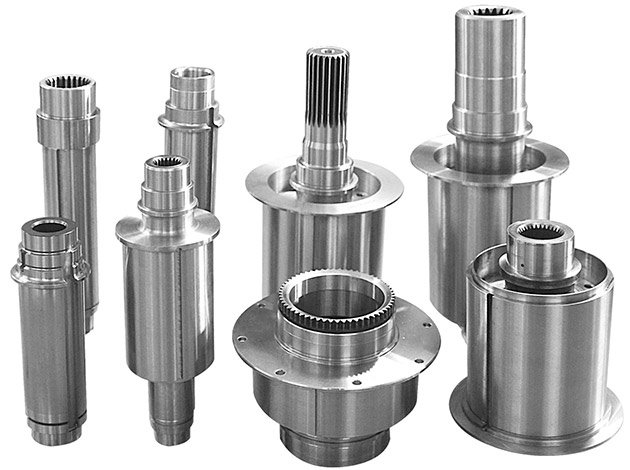
- Precision CNC Shaft Machining Manufacturer for High Performance Applications
- Energy Industry CNC Machining Parts Supplier
- Aerospace CNC Machining Parts Manufacturer
- Aerospace CNC Machining Parts Manufacturer
- Automotive & EV CNC Machining Parts Supplier for OEM and Tier 1
- Medical CNC Machining Parts Supplier for Precision Medical Devices
Why Choose China for High-Precision CNC Shaft Machining? Engineering, Quality, and Supply Chain Advantages

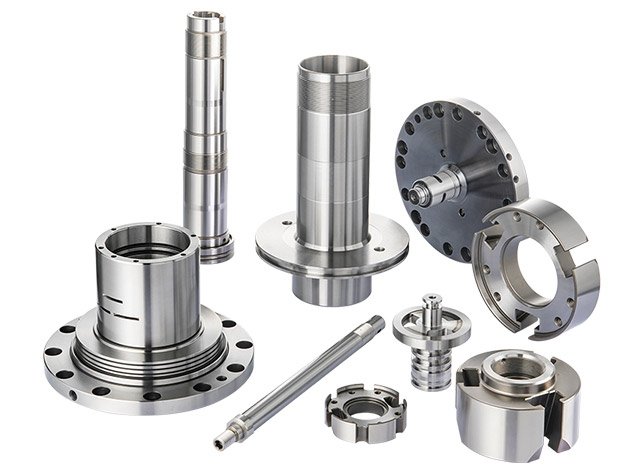
Why Choose China for High-Precision CNC Shaft Machining?
For OEMs and Tier 1 suppliers, a precision shaft is rarely a simple turned component. It may transmit torque, maintain concentricity across bearing seats, seal pressurized fluid, position a rotor, or synchronize motion in an assembly where microns affect performance. Selecting a machining partner therefore requires more than comparing quoted unit prices. It requires evaluating process control, material sourcing, metrology, production scalability, engineering responsiveness, and supply-chain resilience.
1. Executive Summary
China has become a strategic sourcing location for high-precision CNC shaft machining because its manufacturing ecosystem combines deep machining capacity with increasingly mature quality systems, flexible production models, and integrated supply networks. For global manufacturers, the strongest value proposition is not simply lower labor cost. It is the ability to obtain technically demanding shaft components from a coordinated production system that can combine CNC turning, milling, grinding, EDM, heat treatment, surface finishing, inspection, packaging, and export logistics.
High-precision shafts commonly require demanding specifications: tight diameter tolerances, controlled runout, precise concentricity between multiple journals, stable surface finish, accurately machined threads or splines, and reliable material properties after thermal processing. These requirements become more complex when a shaft includes eccentric features, cross holes, keyways, deep bores, gear interfaces, or nonstandard materials. A capable Chinese supplier can consolidate these operations while maintaining traceability from raw material to final inspection.
Dixin Technology, operating through IndustryApex CNC, supports this model as a supply-chain integrator and ODM solution provider for global OEM and Tier 1 programs. With more than 30 years of manufacturing experience and a controlled precision manufacturing system, the company helps customers move from drawings and prototypes through qualified production and repeatable deliveries. The result is a sourcing approach that balances precision, speed, cost discipline, and long-term manufacturability.
2. Technical Deep Dive
Precision shaft machining begins with a clear understanding of the component’s functional datums. A shaft drawing may specify several diameters, but the critical requirement is often the geometric relationship between them. Bearing journals, seal lands, gear locations, flange faces, and threaded ends must be machined from a datum strategy that preserves alignment through every operation. For example, a part may require a journal tolerance measured in microns, a low total indicated runout value, and a surface finish appropriate for a dynamic seal. Meeting one dimension independently is insufficient if the complete functional stack-up is not controlled.
Chinese CNC shaft machining suppliers have expanded their ability to manage these requirements through multi-axis turning centers, turn-mill equipment, in-process probing, automatic bar feeding, and dedicated grinding operations. Three-axis CNC machining provides efficient support for flats, holes, keyways, and milled features. Four-axis and five-axis capability enables more complex angular features, intersecting geometry, and one-setup machining strategies that reduce positional error. For parts with narrow slots, hardened features, or intricate internal profiles, EDM can provide a controlled alternative to conventional cutting.
Grinding remains essential for many high-performance shaft applications. CNC turning is productive and flexible, but centerless, cylindrical, internal, and profile grinding are often required to achieve fine dimensional control, low roughness, and stable geometry after heat treatment. A well-planned route may rough-turn a steel blank, apply stress relief or hardening, finish-machine selected features, then grind bearing seats and sealing surfaces. This staged approach minimizes distortion risk while protecting the relationship between functional surfaces.
Material selection is equally important. Common shaft materials include carbon steel, alloy steel, stainless steel, aluminum alloys, titanium, brass, copper alloys, engineering plastics, and specialty materials. Alloy steel may be selected for torsional strength and heat-treatment response, while stainless steel can provide corrosion resistance in marine, food-processing, medical, or fluid-control environments. Titanium can reduce weight and resist corrosion in aerospace and medical applications, but its thermal behavior and tendency to work harden demand careful tooling, cutting parameters, and fixturing.
Inspection must follow the component’s actual risk profile. Incoming material verification, first-article inspection, in-process checks, and final inspection should be linked to the drawing’s critical-to-quality characteristics. Typical inspection equipment includes micrometers, bore gauges, height gauges, roughness testers, hardness testers, optical systems, and coordinate measuring machines. For rotating components, suppliers should also verify runout, coaxiality, cylindricity, and concentricity where specified. Records should identify the batch, material lot, revision level, measurement result, and release status so customers can maintain traceability within their own quality systems.
Design for manufacturability is another practical advantage. An experienced engineering team can identify dimensions that increase unnecessary grinding time, difficult-to-source material conditions, fragile thread transitions, impractical tolerances, or inspection requirements that do not match a part’s functional need. This does not mean reducing quality. It means translating performance requirements into a production route that is reliable at volume and defensible in total cost.
3. The ODM & Supply Chain Advantage
The most compelling reason to source high-precision CNC shafts from China is the density of the supporting industrial ecosystem. A shaft program often depends on more than one machine shop. It may require forged or bar-stock inputs, heat treatment, grinding, plating, anodizing, laser marking, custom gauges, protective packaging, and coordinated international shipment. Managing these suppliers separately can create quality gaps, schedule uncertainty, and difficult accountability. A supply-chain integrator provides a more controlled path from technical requirement to delivered component.
Dixin Technology’s core identity is as a supply-chain integrator and ODM solution provider. This is particularly valuable when an OEM needs a manufacturing partner that can review drawings, recommend manufacturable improvements, manage multiple specialized processes, and provide a single accountable commercial interface. Instead of treating the shaft as an isolated purchase order, the program is evaluated as part of an assembly, production schedule, quality plan, and lifecycle cost model.
The manufacturing edge comes from a fully controlled precision manufacturing system supported by ERP and more than 30 years of experience. ERP-supported planning improves visibility across material procurement, work orders, capacity, quality records, and delivery commitments. For customers, this creates a more disciplined response to schedule changes, engineering revisions, lot traceability, and repeat orders. It also supports structured communication when requirements evolve from prototype quantities to pilot production and serial supply.
Technical capability should be matched to the shaft’s geometry rather than defined by a single machine type. Dixin Technology combines 3-5 axis CNC machining, EDM, precision grinding, and industrial ceramics capability. CNC processes support productive machining of shaft diameters, shoulders, flanges, holes, threads, and milled interfaces. EDM addresses complex conductive-material features where conventional tools are constrained. Precision grinding supports critical journals and surface requirements. Industrial ceramics expertise is relevant for applications requiring electrical insulation, high-temperature stability, wear resistance, or chemically resistant companion components.
For global OEMs and Tier 1 suppliers, this integrated model reduces supplier-management burden without removing engineering control. Customers can retain ownership of drawings, specifications, approval criteria, and change procedures while gaining access to an organized manufacturing network. The practical benefits include faster quotation of complex routes, consolidated quality responsibility, lower transaction costs, simplified logistics, and more scalable capacity when demand rises.
Effective sourcing still requires disciplined supplier qualification. Buyers should define material standards, critical dimensions, GD&T, surface requirements, heat-treatment conditions, acceptance sampling, documentation needs, packaging requirements, and delivery terms before production release. They should review first articles, establish a controlled revision process, and align quality evidence with the component’s application risk. A capable ODM partner makes this process easier by turning engineering requirements into routings, control plans, and inspection checkpoints that production teams can execute consistently.
4. Industry Applications
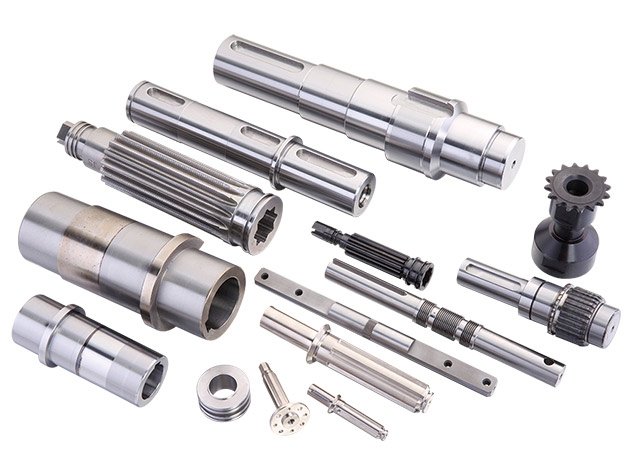
Precision shafts serve a broad range of industrial markets because rotational and linear motion systems are central to modern equipment. In automotive and drivetrain assemblies, shafts may transfer torque, locate gears, support rotating components, or interface with splines and bearings. Components such as eccentric shafts, transmission shafts, motor shafts, and actuator shafts require controlled geometry to prevent vibration, noise, premature wear, or assembly failure.
Fluid-control equipment is another important application. Pump shafts, valve spools, sleeves, and actuator shafts work in environments where surface finish, hardness, straightness, and corrosion resistance directly affect sealing performance and service life. For high-pressure systems, a small defect on a sealing land or a deviation in coaxiality can contribute to leakage, unstable response, or accelerated seal wear. Customers sourcing these parts can review Dixin Technology’s experience with hydraulic pump and fluid-control components when defining a precision manufacturing route.
Aerospace production demands strict material control, document discipline, and repeatable machining of lightweight, high-strength materials. Shafts and rotating interfaces used in aircraft-related systems may require titanium, stainless steel, aluminum, or specialized alloys, as well as advanced multi-axis machining and rigorous inspection. Learn more about the company’s capabilities for aerospace CNC machining and titanium aircraft parts.
Medical-device applications place equally high expectations on precision, surface integrity, cleanliness, and material compatibility. Shafts used in surgical instruments, diagnostic equipment, robotic mechanisms, and precision devices need reliable dimensional consistency, especially where the component interfaces with bearings, couplings, seals, or finely controlled motion systems. Dixin Technology also supports ISO-certified machining for medical components, including titanium parts and high-precision device elements.
Additional demand comes from robotics, industrial automation, energy equipment, semiconductor machinery, packaging systems, agricultural machinery, construction equipment, optics, and general industrial machinery. Across these sectors, the engineering question remains consistent: can the supplier repeatedly deliver the diameter, runout, surface, material, and traceability requirements needed for the intended duty cycle? China’s mature machining ecosystem is well positioned when the answer depends on coordinated specialist processes rather than basic turning alone.
5. Call to Action
Choosing China for high-precision CNC shaft machining is most effective when the supplier is selected for engineering control and supply-chain capability, not merely for a low initial quote. Dixin Technology helps global OEMs and Tier 1 suppliers source shafts and related precision components through an integrated model covering manufacturability review, CNC machining, EDM, grinding, specialized materials, inspection coordination, and export-ready delivery.
Share your drawings, annual volume, target materials, tolerances, critical inspection requirements, and application conditions with the Dixin Technology team. Contact Dixin Technology to discuss a prototype, qualification build, or scalable production program for high-precision CNC shaft machining.