- Shaft
- Molds&Tools
- Hydraulics And Pump
- Hair transplant needle
- Hydraulics And Pump
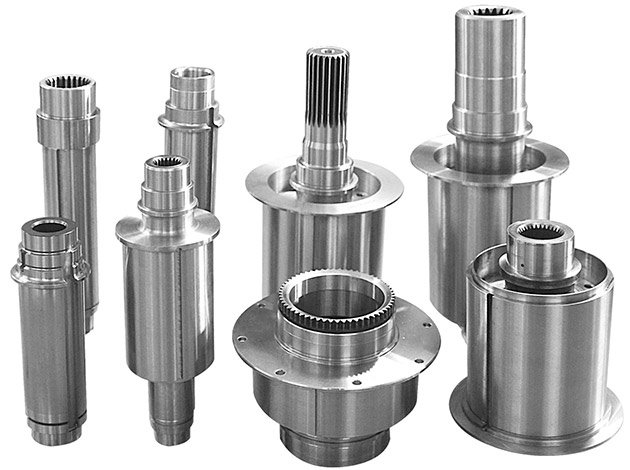
- Precision CNC Shaft Machining Manufacturer for High Performance Applications
- Energy Industry CNC Machining Parts Supplier
- Aerospace CNC Machining Parts Manufacturer
- Aerospace CNC Machining Parts Manufacturer
- Automotive & EV CNC Machining Parts Supplier for OEM and Tier 1
- Medical CNC Machining Parts Supplier for Precision Medical Devices

The Future of Robotics Components: Micron-Level Precision in 2026

The Future of Robotics Components: Micron-Level Precision in 2026
Executive Summary
Robotics is moving from isolated automation cells to adaptive production systems that work alongside people, inspect their own output, and respond to changing demand in real time. In 2026, the limiting factor is increasingly not robot software alone. It is the mechanical integrity of the components behind every axis, end effector, fluid circuit, sensing platform, and motion transfer assembly.
Micron-level precision is now a commercial requirement for many robotics programs. Small dimensional deviations can create cumulative positioning error, excessive backlash, leakage, premature bearing wear, thermal instability, or inconsistent force control. These risks grow as OEMs pursue higher payload-to-weight ratios, faster cycle times, smaller installations, and greater reliability in unattended environments.
For global OEMs and Tier 1 suppliers, component sourcing must therefore combine precision manufacturing capability with material engineering, inspection discipline, traceability, and supply-chain responsiveness. Dixin Technology, operating through IndustryApex CNC, supports this requirement as a supply-chain integrator and ODM solution provider for precision-engineered components. The objective is not simply to machine a drawing; it is to deliver repeatable component performance at production scale.
Technical Deep Dive
Robotic accuracy begins with the geometric quality of individual parts. A harmonic-drive housing, precision shaft, splined sleeve, gripper jaw, servo mounting plate, hydraulic spool, or optical sensor mount may each appear straightforward in isolation. Once assembled, however, their tolerances interact. Concentricity, perpendicularity, flatness, surface finish, fit class, and material condition all influence the final behavior of the robotic system.
Micron-level work requires manufacturers to manage the full process chain. The initial machining strategy must consider stock condition, datum structure, tool reach, clamping force, heat generation, and the order of operations. A part can meet a feature-level size requirement yet still fail in assembly if datum transfer is weak or distortion occurs after unclamping. For robotic components, critical relationships often matter more than any single linear dimension: bore-to-bore position, shaft-to-bearing-seat runout, gear-interface concentricity, and sealing-land finish are typical examples.
In 2026, robotics designs are also driving more mixed-material requirements. Aluminum alloys remain important where mass reduction is essential. Hardened steels and alloy steels support wear resistance and load-bearing interfaces. Stainless steel is common in washdown, food, and medical automation environments. Titanium can be relevant for lightweight structures and specialized high-performance equipment, while industrial ceramics provide exceptional hardness, wear resistance, electrical insulation, and thermal stability in demanding applications.
Surface engineering is equally decisive. Precision grinding can establish fine dimensional control and low-roughness functional surfaces on shafts, sleeves, bearing interfaces, and sealing elements. EDM enables difficult geometries and high-hardness materials where conventional cutting becomes inefficient or introduces tool-access constraints. Multi-axis CNC machining makes it possible to retain critical relationships in fewer setups, reducing accumulated error while enabling complex contours, angled bores, and compact structural designs.
Inspection must be designed into production rather than treated as a final sorting step. A robust quality plan links critical-to-function characteristics to in-process checks, calibrated measuring equipment, documented inspection records, and defined reaction plans. Where parts support high-speed or high-force robotics, process capability and lot-level traceability are especially important because a component issue can affect safety, uptime, and warranty exposure across an installed fleet.
Thermal behavior is another increasing concern. Robots generate heat through motors, gearboxes, controllers, friction, and external process conditions. Differential expansion across materials can shift preload, affect sensor alignment, or compromise tight fits. Engineering teams should specify tolerances in the context of service temperature, coating thickness, heat treatment, and post-processing. The best component strategy balances nominal accuracy with stable real-world performance.
The ODM & Supply Chain Advantage
For robotics procurement teams, the challenge is rarely finding a supplier that can produce one prototype. The challenge is building a dependable pathway from design validation to sustained production without losing dimensional consistency, commercial control, or delivery visibility. Dixin Technology addresses this requirement through a fully controlled precision manufacturing system supported by ERP and more than 30 years of manufacturing experience.
As a supply-chain integrator and ODM solution provider, Dixin Technology helps customers coordinate manufacturing methods, materials, quality documentation, production planning, and delivery requirements across complex component families. This model is valuable when an OEM needs machined metal parts, ground precision interfaces, EDM features, ceramic elements, or complementary processes delivered as a controlled program rather than managed through disconnected vendors.
The manufacturing platform includes 3-axis to 5-axis CNC machining, EDM, precision grinding, and industrial ceramics. These capabilities support robotics components ranging from structural frames and transmission interfaces to wear-resistant guides, insulating fixtures, precision shafts, and fluid-control elements. The practical advantage is process selection based on functional requirement. A complex housing can be machined on multi-axis CNC equipment; a hardened internal profile can be produced by EDM; a critical journal can be finished by grinding; and a high-wear insulating component can be developed in industrial ceramic material.
ERP-backed production control strengthens visibility across quoting, material planning, work orders, inspection, and delivery coordination. For global OEM and Tier 1 supply chains, this supports more disciplined management of revisions, batch tracking, lead-time commitments, and program changes. It also creates a stronger foundation for risk management when demand shifts or a robotics launch moves from pilot volumes into serial production.
The ODM role matters when a customer has an intended function but needs engineering support to convert it into a manufacturable, cost-effective component. Early design-for-manufacturing review can identify overly tight nonfunctional tolerances, inaccessible features, unnecessary setups, unstable wall sections, or material choices that create avoidable lead-time risk. Conversely, it can protect the features that genuinely determine robotic accuracy and lifecycle performance.
A capable precision partner should also support supply continuity. This means understanding approved materials, alternate process routes, inspection requirements, packaging needs, and the different logistics expectations of prototype, ramp-up, and production phases. In robotics, a delayed low-cost part can halt a high-value assembly. Supply-chain resilience must be evaluated alongside piece price.
Industry Applications
Industrial robots remain the largest demand center for precision motion components. Six-axis arms, collaborative robots, palletizers, welding cells, and machine-tending systems require accurate housings, joints, flanges, shafts, brackets, and custom end-effector parts. As collaborative systems become lighter and more responsive, component stiffness and tolerance control become more important because structural deflection directly affects repeatability.
Semiconductor and electronics automation place particularly stringent demands on contamination control, compact geometry, precision alignment, and repeatable handling. Components for wafer transfer, vision positioning, inspection stations, and micro-assembly equipment may require fine finishes, controlled materials, and carefully managed packaging. Optical systems add further sensitivity, because positional changes at a mount or adjustment interface can alter calibration and inspection reliability.
Medical robotics combines precision with regulated quality expectations. Surgical-assist mechanisms, laboratory automation, diagnostic equipment, and pharmaceutical handling systems require components that support cleanliness, corrosion resistance, repeatable motion, and documented manufacturing control. Dixin Technology’s experience with precision CNC machining for medical components is relevant where robot-adjacent systems need titanium, stainless steel, instrument-grade, or high-precision device parts.
Aerospace robotics and automated inspection systems require lightweight, rigid, and traceable parts for drilling, fastening, metrology, and composite handling. These programs often demand complex machined structures and exact geometric relationships. The same multi-axis machining discipline that supports aerospace CNC machining and aircraft structural components can support demanding robotic frames, mounts, and motion assemblies.
Fluid-powered robotics, mobile automation, and heavy-duty end effectors depend on precise hydraulic interfaces. Valve spools, sleeves, pump components, manifolds, and sealing surfaces must control flow under pressure while resisting wear. For these use cases, Dixin Technology’s capabilities for hydraulic pump parts support the precision requirements behind reliable actuation and fluid management.
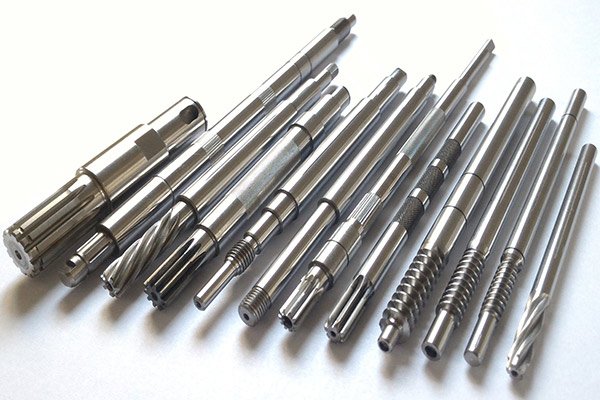
Across these sectors, the pattern is consistent: higher automation value depends on more reliable physical interfaces. Robots can only achieve their programmed precision when the parts transmitting force, position, fluid, and measurement are manufactured with equivalent discipline.
Call to Action
Robotics programs in 2026 need component partners that can connect engineering intent to scalable manufacturing execution. Dixin Technology provides precision manufacturing, ODM support, and integrated supply-chain coordination for global OEMs and Tier 1 suppliers requiring CNC machining, EDM, precision grinding, and industrial ceramic solutions.
For a review of robotic component drawings, material options, tolerance strategy, or production requirements, contact Dixin Technology. Engage early to align manufacturability, quality control, and supply continuity before critical designs enter production.