- Shaft
- Molds&Tools
- Hydraulics And Pump
- Hair transplant needle
- Hydraulics And Pump
- Precision CNC Shaft Machining Manufacturer for High Performance Applications
- Energy Industry CNC Machining Parts Supplier
- Aerospace CNC Machining Parts Manufacturer
- Aerospace CNC Machining Parts Manufacturer
- Automotive & EV CNC Machining Parts Supplier for OEM and Tier 1
- Medical CNC Machining Parts Supplier for Precision Medical Devices

Custom Worm Wheel and Worm Gear Manufacturing Techniques for Global OEMs

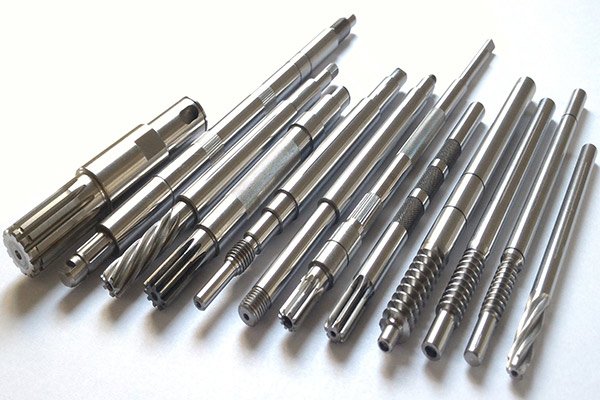
Custom Worm Wheel and Worm Gear Manufacturing Techniques for Global OEMs
Executive Summary
Custom worm wheel and worm gear assemblies remain essential motion-control components where high reduction ratios, compact packaging, controlled torque transmission, and self-locking behavior are required. They are widely used in industrial automation, valves, lifting systems, aerospace actuation, medical equipment, pump drives, packaging machinery, and specialized vehicle systems. Although the basic geometry appears straightforward, reliable worm gear production requires disciplined engineering across gear design, material selection, machining, heat treatment, inspection, lubrication, and final assembly.
For global OEMs and Tier 1 suppliers, the challenge is not simply sourcing a machined worm and wheel. The actual requirement is a validated transmission pair that achieves its specified backlash, contact pattern, load capacity, efficiency, service life, noise level, and traceability requirements in the intended operating environment. Small deviations in lead angle, center distance, tooth profile, concentricity, material hardness, or surface condition can cause accelerated wear, excess heat, vibration, inconsistent positioning, or premature failure.
Dixin Technology, operating through IndustryApex CNC, supports custom worm gear programs with an engineering-led precision manufacturing approach. By integrating machining processes, supply-chain coordination, quality controls, and ODM support, the company helps customers move from drawings and prototypes to stable production supply. The goal is to ensure the worm wheel and worm gear pair functions as a system, not merely as two independently manufactured parts.
Technical Deep Dive
A worm gear drive typically consists of a threaded worm, often resembling a screw, meshing with a worm wheel. The worm is usually the driving member, while the wheel is a helical gear designed to match the worm’s lead, pressure angle, pitch, handedness, and axial geometry. In many applications, the arrangement enables substantial speed reduction in a single stage. Depending on the number of worm starts and wheel teeth, ratios can range from low reduction designs to ratios exceeding 60:1.
The engineering process begins with the functional specification. Designers must define transmitted torque, input speed, duty cycle, allowable backlash, required ratio, target efficiency, ambient conditions, lubrication method, shock-load exposure, life expectancy, mounting arrangement, and applicable standards. For positioning systems, backlash and repeatability may dominate the design. For lifting or valve-actuation equipment, static load capability, self-locking characteristics, and safety margins may be the primary considerations. For high-speed industrial applications, heat generation, efficiency, and noise control become critical.
Worm geometry directly influences performance. A single-start worm provides a higher reduction ratio and can support self-locking behavior under appropriate friction conditions, but it generally produces lower mechanical efficiency than a multi-start configuration. Two-start, three-start, or four-start worms increase lead angle and can improve efficiency, while reducing the likelihood of self-locking. Engineering teams must evaluate this tradeoff in the context of actual loads, lubricants, material pairings, and temperature conditions rather than assuming self-locking solely from nominal geometry.
Material pairing is equally important. A common configuration uses an alloy steel worm and a bronze worm wheel. The hardened steel worm provides strength and wear resistance, while the bronze wheel offers conformability, anti-seizure properties, and good sliding behavior. Tin bronze, aluminum bronze, and specialized copper alloys may be selected based on load, speed, lubrication, corrosion exposure, and budget. For severe conditions, wheel materials may require enhanced fatigue strength or a steel hub with a bonded, cast, or mechanically retained bronze rim. The worm itself may use carburized alloy steel, nitrided steel, through-hardened steel, or stainless steel when corrosion resistance is necessary.
Precision manufacturing begins with controlled raw-material procurement and material verification. The worm blank is typically produced by CNC turning to establish shaft diameters, bearing journals, shoulders, threads, and datum features. The tooth form may then be generated through thread milling, whirling, hobbing, grinding, or specialized worm milling processes. Selection depends on the module or diametral pitch, material condition, accuracy requirement, lot size, and final heat-treatment strategy. For high-load applications, tooth geometry is usually roughed before heat treatment and finish-ground afterward to achieve the required lead accuracy and surface finish.
The worm wheel can be produced through gear hobbing, CNC milling, shaping, or dedicated generating methods. Gear hobbing remains an efficient approach for production quantities because it generates the tooth form with consistent indexing and repeatability. However, custom low-volume programs, complex integrated housings, unusual wheel profiles, and prototype work may be better suited to multi-axis CNC machining. The wheel bore, keyway, spline, mounting flange, and hub features must be machined in a datum-controlled sequence so the tooth pitch diameter remains concentric to the mounting reference.
Heat treatment must be planned with machining allowances and distortion control in mind. Carburizing can produce a hard, wear-resistant case on steel worms while retaining a tough core. Nitriding offers high surface hardness with lower distortion and is valuable when close dimensional control is needed. Induction hardening may be appropriate for selected shaft or tooth regions. After heat treatment, precision grinding is often required for bearing journals, sealing diameters, and worm flanks. A fine ground finish reduces friction, supports lubricant film formation, and improves contact consistency with the wheel.
Inspection should validate both individual components and the final mesh. Critical checks include worm lead error, flank profile, pitch variation, wheel runout, bore concentricity, tooth thickness, hardness, surface finish, center distance, axial positioning, and backlash. Coordinate measuring machines, gear measurement systems, optical comparators, profilometers, and functional rolling tests can be used according to the component’s risk profile. Contact-pattern testing with marking compound helps reveal whether the load is distributed across the intended tooth area. This final functional verification is especially important because a dimensionally acceptable worm and wheel can still perform poorly when assembled if datums or center distance are not controlled.
Lubrication is an integral design variable rather than a post-production decision. Worm gears experience substantial sliding contact, so lubricant viscosity, additive package, operating temperature, and seal compatibility affect efficiency and wear. The selected bronze alloy and worm surface treatment must also be compatible with the lubricant chemistry. In applications that use food-grade oils, vacuum environments, cleanrooms, or extreme temperatures, the manufacturing and materials plan should be aligned early with the operating constraints.
The ODM & Supply Chain Advantage
Dixin Technology’s core identity is as a supply-chain integrator and ODM solution provider for precision-engineered components. For OEMs, this model reduces the coordination burden created when gears, shafts, housings, bearings, treatments, coatings, and inspection services are sourced separately. A custom worm gear assembly depends on the relationship among these features. Managing them through a controlled manufacturing system improves accountability for fit, function, delivery, and corrective action.
With more than 30 years of manufacturing experience, Dixin Technology applies a fully controlled precision manufacturing system supported by ERP-based production management. This creates stronger control over material flow, work-order status, process routing, revision management, batch traceability, capacity planning, and delivery coordination. For global sourcing teams, ERP discipline supports clearer communication on lead times and allows manufacturing changes to be evaluated before they create downstream supply interruptions.
The manufacturing platform combines 3-axis, 4-axis, and 5-axis CNC machining with EDM, precision grinding, and industrial ceramics capabilities. CNC turning and milling support worm shafts, wheel hubs, mounting features, housings, and associated drivetrain parts. Precision grinding enables accurate bearing surfaces and refined worm flanks after hardening. EDM is valuable for difficult geometries, hardened tooling features, internal forms, and tight-tolerance elements that would be inefficient or impractical through conventional cutting. Industrial ceramic capability provides options for specialized wear, insulation, chemical-resistance, and thermal-performance applications.
ODM support begins before production. Engineers review drawings, tolerances, materials, GD&T, inspection requirements, and assembly interfaces to identify manufacturability concerns. Where appropriate, Dixin Technology can recommend tolerance rationalization, datum strategy, material alternatives, manufacturing sequences, and design changes that improve repeatability without compromising functional intent. This early involvement can prevent costly redesigns after prototype release and creates a more stable path from sample approval to serial production.
For supply chains serving global OEMs and Tier 1 suppliers, the value lies in coordinated execution. A worm wheel may require bronze casting or bar stock, CNC finishing, tooth generation, balancing, surface treatment, inspection, packaging, and shipment documentation. The matching worm may require alloy-steel sourcing, turning, heat treatment, grinding, coating, and functional matching. Dixin Technology coordinates these interdependent operations through a single quality and delivery framework, helping customers reduce vendor fragmentation and administrative overhead.
Quality planning should scale with application criticality. Prototype orders may need first-article inspection reports and dimensional records. Production programs may require control plans, material certificates, process capability monitoring, lot traceability, PPAP-style documentation, or customer-specific inspection formats. The manufacturing team can align packaging, corrosion protection, labeling, and export documentation with the customer’s receiving and production requirements. This is particularly important for components that travel across multiple facilities before final assembly.
Industry Applications
Worm gear technology is used across diverse industries because it combines directional change, speed reduction, and high torque multiplication in a compact assembly. In factory automation, worm drives support rotary tables, conveyor systems, indexing devices, robotic end-effectors, linear actuator mechanisms, and packaging equipment. The ability to maintain position under load is particularly useful in controlled motion systems, provided the design accounts for real friction and dynamic conditions.
In fluid handling and valve automation, worm gear assemblies are common in quarter-turn valves, gate valves, pumps, dosing equipment, and flow-control systems. These applications often require corrosion-resistant materials, sealed housings, predictable actuation torque, and long service intervals. Dixin Technology’s experience with hydraulic pump parts supports the broader precision requirements of fluid-control equipment, including shafts, housings, sleeves, spools, and transmission-related components.
Aerospace programs demand strong process control, weight-conscious material selection, traceability, and tight geometric tolerances. Worm mechanisms can be found in actuation, positioning, support, and auxiliary systems where compact high-ratio reduction is needed. For aerospace supply programs, customers can review Dixin Technology’s capabilities for aerospace CNC machining and aircraft structural components. Complex work in this sector benefits from multi-axis machining, controlled inspection, and disciplined documentation.
Medical and laboratory equipment also use miniature or precision worm drives for imaging systems, diagnostic instruments, surgical equipment, automated sample handling, and adjustable mechanical assemblies. These applications may require small modules, low backlash, quiet operation, cleanable surfaces, and compatibility with corrosion-resistant or biocompatible materials. Dixin Technology’s ISO-certified CNC machining for medical components demonstrates the precision manufacturing discipline relevant to demanding medical-device supply chains.
Additional use cases include construction machinery, agricultural equipment, renewable-energy positioning systems, marine controls, automotive mechanisms, food-processing equipment, and heavy-duty lifting devices. Each sector presents different tradeoffs among cost, load, environmental resistance, accuracy, and service life. A capable manufacturing partner should translate those application conditions into a documented material, machining, treatment, inspection, and packaging plan.
Call to Action
Whether your program requires prototype worm gears, matched worm wheel assemblies, hardened and ground worms, bronze gear wheels, integrated housings, or production-scale supply, Dixin Technology can provide engineering and manufacturing support from design review through delivery. The team works with global OEMs and Tier 1 suppliers that need dependable precision components, traceable processes, and coordinated supply-chain execution.
Contact Dixin Technology through IndustryApex CNC to discuss your custom worm gear requirements, drawings, target volumes, inspection specifications, and project schedule.