- Shaft
- Molds&Tools
- Hydraulics And Pump
- Hair transplant needle
- Hydraulics And Pump
- Precision CNC Shaft Machining Manufacturer for High Performance Applications
- Energy Industry CNC Machining Parts Supplier
- Aerospace CNC Machining Parts Manufacturer
- Aerospace CNC Machining Parts Manufacturer
- Automotive & EV CNC Machining Parts Supplier for OEM and Tier 1
- Medical CNC Machining Parts Supplier for Precision Medical Devices
Cold Heading Tooling vs. CNC Machining: Choosing the Right Manufacturing Method for Your Project

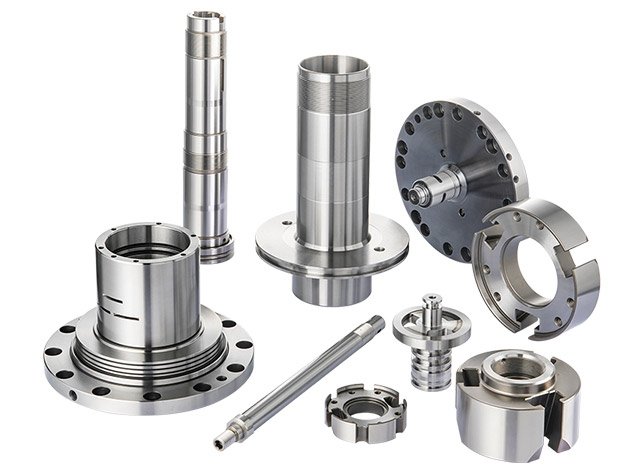
Cold Heading Tooling vs. CNC Machining: Which Is Right for Your Project?
For OEMs and Tier 1 suppliers, selecting between cold heading and CNC machining is not simply a process decision. It determines piece cost, design freedom, material utilization, qualification timing, tooling exposure, supply continuity, and the ability to respond to changing demand. The correct choice depends on the part geometry, annual volume, tolerance stack-up, material requirements, secondary operations, and lifecycle stage of the program.
1. Executive Summary
Cold heading and CNC machining solve different manufacturing problems. Cold heading is a high-productivity metal forming process in which wire or rod stock is cut to length and plastically formed in dies under high compressive force. It is especially effective for fasteners, pins, rivets, studs, collars, and other rotational or near-net-shape components produced in medium-to-high volumes. Because the process displaces material instead of removing it, cold heading can achieve excellent material yield, fast cycle times, and favorable mechanical properties through uninterrupted grain flow.
CNC machining is a subtractive process that creates features by removing material with controlled cutting tools. It provides substantially broader geometric freedom, practical support for low-to-medium production volumes, and strong capability for complex tolerances, threads, cross-holes, pockets, non-round profiles, and engineered surfaces. A CNC route is often the most commercially sound choice during prototype and bridge production, for high-complexity parts, or when annual demand does not justify dedicated heading tooling.
The practical answer is frequently a hybrid manufacturing route. A cold-headed blank can establish the high-volume external form and reduce material waste, while CNC turning, milling, grinding, EDM, or secondary forming completes critical features. This approach combines heading economics with machining accuracy. At Dixin Technology, operating through IndustryApex CNC, engineering teams evaluate the entire component lifecycle rather than comparing a single machine-hour rate. The goal is to establish a production route that meets functional requirements while controlling total landed cost and program risk.
2. Technical Deep Dive
Cold heading begins with qualified coil wire or bar stock, typically carbon steel, alloy steel, stainless steel, aluminum, copper, or selected specialty alloys. The material is cut into a slug and transferred through a progressive die sequence. Each station redistributes metal into the desired profile through upsetting, extrusion, piercing, trimming, or other forming actions. Multiple blows may be used to create heads, collars, flanges, reduced diameters, recesses, and near-net-shape geometries.
The strongest technical advantage of cold heading is material efficiency. A machined fastener or shaft-like component can produce a significant volume of chips, especially when starting from larger-diameter bar stock. A headed component uses a slug closer to the final part mass. For high-volume programs, reduced scrap can materially affect raw-material spend, waste handling, and sustainability metrics. Cold forming can also preserve grain flow around the formed shape, often improving fatigue performance and impact resistance compared with a fully machined equivalent.
However, cold heading is constrained by forming physics. The part must be suitable for wire-fed or slug-fed production, and each deformation step must stay within the material’s workable limits. Severe reductions, thin unsupported walls, deep internal features, sharp transitions, unusual asymmetry, and large length-to-diameter ratios may require specialized tooling, intermediate annealing, or an alternative process. Tooling design is therefore central to success. Die material selection, punch geometry, lubrication, extrusion ratios, alignment, and die stress management all influence output stability and tool life.
CNC machining uses programmable 3-axis, 4-axis, or 5-axis motion to generate features directly from a digital model. This provides flexibility that cold heading cannot match. A CNC program can support engineering changes without replacing a full die set, making it highly effective for design validation, low-volume launches, service parts, and products with frequent revisions. CNC machining can also create precise internal bores, complex thread forms, keyways, flats, radial holes, sealing grooves, impeller profiles, and geometric datum relationships that would be impractical to form directly.
Tolerance capability should be assessed feature by feature rather than by process label. Cold heading can reliably control many external dimensions when tooling, material, and process conditions are stable. Yet critical fits, concentricity, surface finish, or precision diameters commonly require secondary operations such as turning, thread rolling, drilling, reaming, centerless grinding, or precision grinding. CNC machining can achieve tight tolerances directly, but cycle time rises with every feature, setup, tool change, and inspection requirement. For a large production run, a seemingly simple CNC part may become expensive because the same cycle is repeated thousands or millions of times.
Lead time also follows the program stage. CNC machining can start quickly once material, tooling, fixtures, and a validated program are available. Cold heading requires more front-end engineering: die design, tooling manufacture, sampling, setup development, dimensional validation, and capability confirmation. This initial investment is rational when production volume is sufficient to amortize it. A robust sourcing decision should compare total program cost across expected annual demand, including tooling, qualification, material yield, secondary processing, inspection, logistics, and inventory strategy.
A useful decision framework begins with volume. CNC machining generally favors prototypes, low-volume programs, complex components, and uncertain demand. Cold heading becomes increasingly favorable when annual volume is repeatable, geometry is formable, and the part can be standardized around a stable design. The break-even point varies substantially by material, size, tolerance, number of heading stations, secondary operations, and tooling complexity. It should be modeled using actual component data rather than a generic unit-volume threshold.
Part design is the next consideration. Designers should review whether noncritical machined features can be converted into formed features, whether transitions can use radii appropriate for die life, and whether tolerances can be allocated to functional surfaces rather than applied uniformly. Design for manufacturability discussions early in the program can reduce cost without compromising performance. For mission-critical assemblies, the best answer may be a cold-headed blank with selectively machined interfaces, retaining process capability where it creates value.
3. The ODM & Supply Chain Advantage
Process selection is only one part of a successful component program. Global OEMs and Tier 1 suppliers need a supplier that can coordinate design feedback, material sourcing, controlled manufacturing, secondary operations, quality documentation, packaging, and delivery planning. Dixin Technology serves as a supply chain integrator and ODM solution provider, helping customers convert functional requirements into a manufacturable and scalable production strategy.
With more than 30 years of manufacturing experience, Dixin Technology operates a fully controlled precision manufacturing system supported by ERP-based planning and traceability. This supports practical visibility across raw material, work-in-process, production scheduling, inspection status, and shipment readiness. For buyers managing multiple part numbers and global production schedules, this integrated control reduces handoffs and helps identify supply risks before they become line-down events.
The manufacturing platform extends beyond conventional CNC production. Capabilities include 3-axis to 5-axis CNC machining, EDM, precision grinding, and industrial ceramics, allowing the engineering team to select processes according to functional need rather than forcing every component through one equipment category. Cold heading tooling programs can be supported with precision-made dies, punches, inserts, guides, carbide tooling elements, and wear-resistant components. This is particularly important where tooling performance directly affects part consistency, uptime, and total cost per piece.
For OEM programs, an ODM approach can improve both launch speed and long-term resilience. Early engagement allows Dixin Technology to evaluate raw material form, tolerancing strategy, tooling architecture, inspection methods, packaging requirements, and second-source planning before volumes increase. Instead of treating manufacturing as a post-design transaction, the supply chain is engineered around the complete lifecycle of the component.
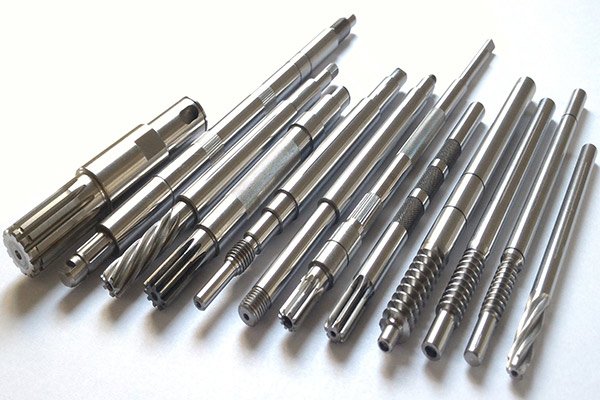
ERP-supported planning is especially relevant when a component requires multiple manufacturing stages. A headed blank may move to CNC machining, heat treatment, grinding, coating, cleaning, final inspection, and kitting. Each handoff introduces schedule and quality risk when managed across disconnected suppliers. An integrated supplier can establish routing, lot control, inspection gates, and delivery priorities around the finished-part requirement. The resulting system is more responsive to demand changes and more defensible during supplier audits.
4. Industry Applications
In automotive, drivetrain, and industrial equipment applications, cold heading is widely used for bolts, studs, pins, shafts, collars, and high-strength fastening elements. High demand stability and repeatable geometries make forming economics compelling. When the component includes precision journals, splines, cross-drilled passages, or sealing surfaces, a headed blank followed by CNC and grinding operations can provide a balanced route.
Fluid-control systems require close control of surfaces that govern leakage, pressure response, and wear. Valve elements, sleeves, pins, and fastening hardware may benefit from cold heading for blank creation, followed by precision machining and grinding for the functional interfaces. Dixin Technology’s experience with hydraulic pump parts and fluid-control components supports process selection around pressure integrity, material behavior, and dimensional repeatability.
Aerospace sourcing requires a more selective assessment. Material traceability, tight tolerance requirements, specialized alloys, and lower production volumes can make CNC machining the primary route for many structural and flight-critical parts. Still, cold-formed fasteners and headed blanks remain relevant where approved materials, process qualification, and stable demand support the investment. Explore Dixin Technology’s capabilities for aerospace CNC machining and titanium aircraft parts when complex geometry and documented precision are central requirements.
Medical device manufacturing similarly favors CNC machining for implants, surgical instruments, and intricate device components where geometry, surface condition, biocompatible material handling, and lot traceability are critical. Cold heading can still be valuable for high-volume, formable hardware used within assemblies, provided that validation and material controls are established. For relevant production support, review Dixin Technology’s ISO-certified CNC machining for medical components.
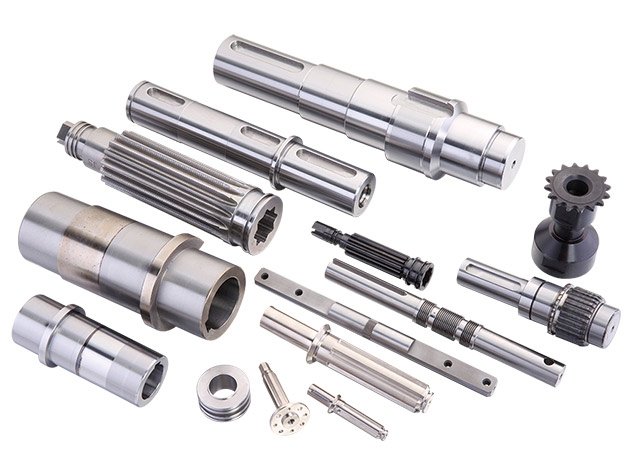
Across these sectors, the common principle is straightforward: use cold heading where volume, material utilization, and formed strength create measurable advantage; use CNC machining where complexity, precision, flexibility, or lower demand dominates; and use a combined route when it lowers total cost while protecting functional performance.
5. Call to Action
Before finalizing a manufacturing route, provide Dixin Technology with the part drawing, material specification, annual volume forecast, critical tolerance requirements, target application, and expected program life. Our engineering team can assess cold heading feasibility, CNC machining requirements, secondary-process needs, tooling investment, and supply-chain implications to recommend a practical production plan.
Contact Dixin Technology to request a manufacturability review, quotation, or sourcing discussion for your next OEM or Tier 1 component program.