- Shaft
- Molds&Tools
- Hydraulics And Pump
- Hair transplant needle
- Hydraulics And Pump
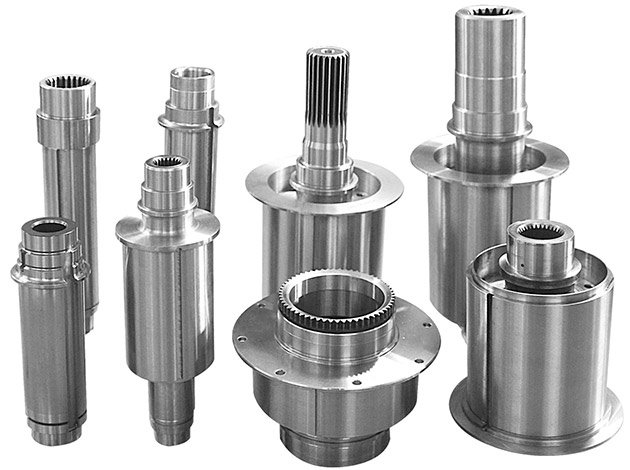
- Precision CNC Shaft Machining Manufacturer for High Performance Applications
- Energy Industry CNC Machining Parts Supplier
- Aerospace CNC Machining Parts Manufacturer
- Aerospace CNC Machining Parts Manufacturer
- Automotive & EV CNC Machining Parts Supplier for OEM and Tier 1
- Medical CNC Machining Parts Supplier for Precision Medical Devices
The Role of Supply Chain Integrators in Agile Manufacturing

The Role of Supply Chain Integrators in Agile Manufacturing
For global OEMs and Tier 1 suppliers, manufacturing agility is no longer defined simply by fast machining. It depends on how effectively engineering data, material availability, process capability, quality control, logistics, and supplier accountability are connected. A supply chain integrator creates that connection, turning a fragmented production network into a controlled system capable of responding to demand changes without compromising precision, traceability, or delivery performance.
1. Executive Summary
Agile manufacturing is the ability to move from changing customer requirements to qualified production output with speed, control, and repeatability. In high-precision industries, this involves much more than selecting a CNC machine shop. OEM procurement and engineering teams must coordinate raw-material sourcing, design-for-manufacturability review, process selection, prototype validation, inspection planning, batch production, secondary operations, packaging, and international delivery.
When these functions are managed through separate suppliers, the customer becomes the de facto coordinator. This creates gaps in responsibility, delayed communication, inconsistent quality documentation, and longer response times when drawings, volumes, or specifications change. A supply chain integrator addresses this problem by taking ownership of the manufacturing system around the component, not merely the machining operation itself.
Dixin Technology, operating through IndustryApex CNC, supports this model as a supply chain integrator and ODM solution provider for complex precision components. By coordinating engineering, controlled manufacturing resources, process planning, and supply-chain execution, the organization helps global customers reduce supplier-management burden while gaining a more adaptable path from requirement to delivery.
The value is particularly important in sectors where product changes are frequent, tolerances are demanding, and supply interruptions have outsized costs. Aerospace structures, medical devices, hydraulic systems, energy equipment, automation assemblies, and industrial machinery all require manufacturing partners that can manage variability without losing process discipline.
2. Technical Deep Dive
Agility in precision manufacturing begins with information flow. A revised CAD model, dimensional tolerance update, material substitution request, or forecast change must move quickly through a controlled technical workflow. The manufacturing response should identify impacts on fixtures, tooling, machining sequence, inspection methods, subcontracted processes, lead time, and cost before production is released.
Supply chain integrators establish this workflow by connecting engineering and operations through shared planning controls. Rather than treating sourcing as a transaction after design is complete, the integrator brings manufacturing knowledge into the decision process earlier. This improves design for manufacturability, identifies difficult-to-source materials or finishes, and prevents late-stage discoveries that can delay qualification or production.
For CNC-machined components, capability matching is a central technical task. A simple prismatic part may be efficiently produced with three-axis machining, while multi-angle features, compound surfaces, deep cavities, or complex datum relationships may require four- or five-axis machining. Electrical discharge machining may be necessary for intricate internal geometries, hardened materials, or features that conventional cutting cannot produce reliably. Precision grinding becomes critical when the functional requirement depends on fine surface finish, roundness, flatness, or highly controlled diameter tolerances.
The integrator evaluates these requirements as a complete process chain. This includes material condition, machining allowance, tool accessibility, workholding stability, datum strategy, heat-treatment distortion risk, inspection sequence, and packaging protection. The objective is not simply to make a conforming first article. It is to establish a process that remains capable as demand scales, production lots vary, and customer schedules shift.
Material planning is equally important. Agile production cannot depend solely on expedited purchasing after an order is received. Integrators use demand visibility, approved material alternatives, supplier performance data, and inventory strategies to protect production continuity. For long-lead alloys, engineering plastics, carbide, ceramics, or specialty steels, material decisions often determine whether a production plan is truly agile or merely optimistic.
Quality systems must also be integrated into the workflow. Inspection planning should follow the characteristics that matter most to function, assembly, and regulatory compliance. Critical dimensions, thread requirements, surface specifications, material certificates, first-article expectations, and traceability records should be defined before machining begins. Digital enterprise resource planning systems help connect purchase records, work orders, routing data, inspection results, and shipment information, producing a clearer audit trail for both customer and manufacturer.
Agility therefore does not mean bypassing controls. In precision manufacturing, sustainable agility means making controlled decisions faster. It depends on visibility across the process, clear ownership of risk, and the capacity to shift resources without losing the technical context of the part.
3. The ODM & Supply Chain Advantage
Dixin Technology’s core identity is built around supply chain integration and ODM solution delivery. This approach is designed for global OEMs and Tier 1 suppliers that need more than individual purchase orders fulfilled. They need a manufacturing partner that can translate specifications into stable, scalable, and commercially practical production programs.
As an ODM-oriented partner, Dixin Technology can support customers from early component evaluation through production execution. This may include design refinement, manufacturability assessment, material and process recommendations, prototype planning, production routing, and quality-documentation coordination. The customer retains control over product requirements while gaining access to an engineering-led manufacturing system that understands how design choices affect cost, lead time, reliability, and supply risk.
The manufacturing edge comes from a fully controlled precision manufacturing system supported by ERP and more than 30 years of experience. ERP integration provides operational visibility across quotations, material purchasing, work orders, production scheduling, inspection activity, inventory, and shipment status. For procurement teams, this improves predictability. For engineering teams, it provides a structured channel for managing revisions, nonconformance feedback, and process changes.
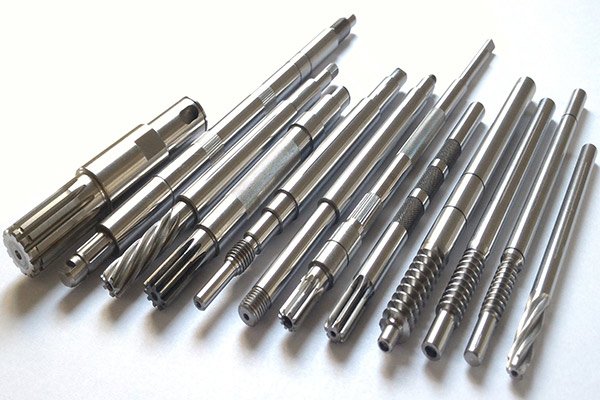
Dixin Technology’s technology capabilities include three- to five-axis CNC machining, EDM, precision grinding, and industrial ceramics. These capabilities allow the manufacturing team to select processes based on actual functional requirements rather than forcing every component into one production method. A complex metal component may require five-axis machining followed by grinding, while an application involving wear resistance, thermal stability, insulation, or corrosion resistance may call for engineered ceramic parts.
The integration model also reduces the coordination burden created by multiple specialist suppliers. Instead of separately managing machining, grinding, EDM, ceramic processing, inspection requirements, and delivery commitments, customers work with a central accountable partner. The integrator controls interfaces between operations, monitors schedule dependencies, and escalates technical or commercial risks before they become shipment failures.
This structure is especially valuable when demand is uncertain. New-product introduction may start with prototypes and low-volume pilot lots, then accelerate into recurring production. Conversely, established programs may require mixed-model deliveries, engineering updates, or temporary capacity increases. A supply chain integrator can align production plans to these transitions while maintaining the documentation, process knowledge, and quality controls accumulated during earlier stages.
For OEM and Tier 1 organizations, the result is a more resilient sourcing model: fewer uncontrolled handoffs, faster response to change, better visibility into execution, and a clearer owner for manufacturing performance.
4. Industry Applications
Aerospace: Aerospace manufacturing requires exacting control over material traceability, complex geometry, repeatable inspection, and delivery commitments. Supply chain integration helps manage the interdependence between machining, finishing, documentation, and protected logistics. For programs involving high-strength alloys, aircraft structural parts, and complex five-axis geometries, explore Dixin Technology’s aerospace CNC machining capabilities.
Medical devices: Medical components often combine tight tolerances, small features, biocompatible materials, strict traceability needs, and demanding surface requirements. An integrated manufacturing partner can coordinate machining, inspection, documentation, and process consistency across prototype and production volumes. Dixin Technology supports this market through its ISO-certified CNC machining for medical components.
Hydraulics and fluid power: Hydraulic valves, pump components, spools, sleeves, bodies, and precision sealing interfaces depend on controlled surfaces and dimensional relationships. Supply chain agility is essential when customers need to balance urgent replacement demand with recurring production schedules. Learn more about Dixin Technology’s experience with hydraulic pump parts and precision fluid-control components.
Industrial automation, energy, and equipment manufacturing: These sectors often require a mix of custom shafts, housings, fixtures, wear components, transmission parts, and specialized nonmetallic materials. Integrators help customers manage a broad part portfolio through common planning standards, coordinated sourcing, and flexible routing across suitable manufacturing technologies.
Across these applications, the strategic requirement is consistent: manufacturers need responsive supply without sacrificing the controls that protect fit, function, certification, and long-term product reliability. A capable integrator provides the organizational structure required to meet that requirement.
5. Call to Action
For global OEMs and Tier 1 suppliers, agile manufacturing is built through disciplined integration of engineering, process capability, quality assurance, and supply-chain execution. Dixin Technology helps customers establish that integration for precision components and ODM manufacturing programs.
To discuss a new component, redesign opportunity, prototype-to-production requirement, or supply-chain consolidation program, contact Dixin Technology. The team can review drawings, materials, tolerance requirements, target volumes, and delivery objectives to develop a manufacturing approach aligned with your technical and commercial priorities.