- Shaft
- Molds&Tools
- Hydraulics And Pump
- Hair transplant needle
- Hydraulics And Pump
- Precision CNC Shaft Machining Manufacturer for High Performance Applications
- Energy Industry CNC Machining Parts Supplier
- Aerospace CNC Machining Parts Manufacturer
- Aerospace CNC Machining Parts Manufacturer
- Automotive & EV CNC Machining Parts Supplier for OEM and Tier 1
- Medical CNC Machining Parts Supplier for Precision Medical Devices
Industrial Ceramics Machining: Zirconia and Alumina Applications for Global OEMs


Industrial Ceramics Machining: Zirconia and Alumina Applications
For OEMs and Tier 1 suppliers, industrial ceramics are no longer niche materials reserved for laboratory equipment. Alumina and zirconia are increasingly specified where metals, engineering plastics, and conventional coatings cannot maintain dimensional stability, wear life, electrical performance, or chemical resistance. The manufacturing challenge is translating these material advantages into repeatable production components with controlled geometry, finish, and delivery risk.
1. Executive Summary
Industrial ceramic machining supports critical applications in semiconductor equipment, fluid control, medical devices, aerospace systems, energy equipment, automation, and high-wear production tooling. The two most common advanced ceramics, alumina and zirconia, offer distinct engineering profiles. Alumina provides excellent electrical insulation, hardness, temperature resistance, and chemical stability. Zirconia provides exceptional fracture toughness, high flexural strength, low thermal conductivity, and strong resistance to abrasion and impact.
These strengths also create manufacturing constraints. Both materials are hard, brittle, and intolerant of uncontrolled machining forces. A successful ceramic component program depends on material selection, near-net-shape planning, diamond-tool processing, grinding strategy, tolerance design, inspection discipline, and a supply chain capable of managing each stage. The objective is not simply to machine a ceramic part; it is to deliver a qualified component that performs consistently across its service life and across production lots.
Dixin Technology, operating through IndustryApex CNC, helps global customers source and develop precision ceramic components within a controlled manufacturing system. By integrating CNC machining, EDM, precision grinding, ceramic processing, quality control, and program management, the company supports applications where performance failure, dimensional variation, or supply interruption carries substantial operational cost.
2. Technical Deep Dive
Alumina, commonly specified as aluminum oxide or Al2O3, is one of the most established technical ceramics in industrial production. Purity grades, grain size, additives, and densification methods influence the final balance of dielectric strength, hardness, thermal performance, and mechanical properties. High-purity alumina is valued for electrical isolation, vacuum compatibility, corrosion resistance, and stable performance at elevated temperatures. It is frequently used for insulating fixtures, electrical components, semiconductor handling parts, wear liners, seals, nozzles, and laboratory or analytical equipment.
Zirconia, typically stabilized with yttria, is often chosen when toughness is more important than maximum hardness. Its transformation-toughening mechanism provides a level of crack resistance that differentiates it from many other ceramics. Zirconia can withstand repeated contact, localized loading, and abrasive conditions better than alumina in many designs. Typical applications include valve seats, pump plungers, guide rollers, cutting and forming components, dental and medical parts, precision locating elements, and wear-resistant assemblies.
Material selection should begin with the operating environment rather than a generic hardness comparison. Designers should evaluate media compatibility, temperature range, pressure, electrical requirements, thermal cycling, contact stress, impact risk, allowable mass, surface finish, and lifecycle cost. Alumina may be the better choice for high-temperature electrical insulation and chemically stable structures. Zirconia may be more appropriate for impact-prone wear components, dynamic sealing interfaces, and precision parts exposed to cyclic mechanical loading.
Ceramic machining requires a process chain that differs materially from metal cutting. Green machining can be used before sintering when geometry allows, reducing post-sintering cycle time and diamond-tool wear. However, sintering shrinkage must be accurately modeled and controlled. Post-sintering operations commonly include diamond grinding, lapping, polishing, drilling, slotting, and specialized CNC processing. Tool selection, coolant delivery, spindle behavior, feed rates, and fixture design must limit localized stresses that can initiate chips or microcracks.
Critical dimensions often include flatness, parallelism, concentricity, bore geometry, sealing surfaces, edge conditions, and surface roughness. Tight tolerances are achievable, but they should be specified according to functional need and verified using appropriate metrology. Unnecessarily restrictive tolerances increase grinding time, inspection burden, scrap exposure, and lead time. A design-for-manufacturability review should identify where a controlled chamfer, radius, relief, or modified corner geometry can improve process yield without compromising the part’s function.
Surface integrity is especially important for ceramic parts. A nominally correct dimension does not guarantee reliable performance if subsurface damage, edge chipping, porosity, or inappropriate roughness remains. For sealing, sliding, optical, vacuum, medical, or high-voltage applications, the quality plan should define the inspection approach, sampling level, acceptance criteria, and traceability expectations before production begins.
3. The ODM & Supply Chain Advantage
Industrial ceramics projects often fail at the handoff between material supplier, machining subcontractor, inspection provider, and final assembler. Each participant may optimize its own operation while leaving the OEM responsible for qualification gaps, communication delays, and inconsistent accountability. Dixin Technology is positioned as a supply chain integrator and ODM solution provider, coordinating the component journey from technical review and process selection through manufacturing, inspection, packaging, and shipment.
Its manufacturing edge is a fully controlled precision manufacturing system supported by ERP management and more than 30 years of experience. This structure gives global OEMs and Tier 1 suppliers a clearer production picture: material status, work-in-process visibility, documented routing, quality records, and shipment coordination are managed within a unified operating framework. For ceramic components, this is particularly valuable because material batches, sintering behavior, grinding capacity, and inspection requirements can directly affect delivery performance.
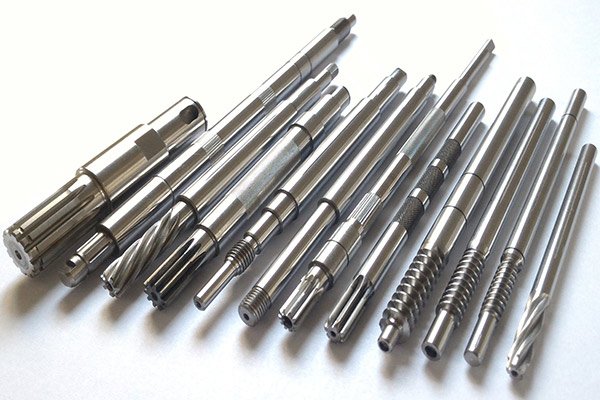
Dixin Technology combines 3-axis to 5-axis CNC machining, EDM, precision grinding, and industrial ceramics capabilities to support complex assemblies as well as individual parts. This breadth enables practical decisions about process sequencing and adjacent component production. For example, a ceramic valve seat may need a corresponding metal housing, a precision-ground mating surface, and controlled assembly interfaces. Managing these requirements through an integrated supplier reduces interface risk and helps maintain functional relationships across the finished system.
ODM support is valuable when customers have application requirements but need assistance converting them into manufacturable specifications. The engineering team can help assess material alternatives, geometry risk, critical-to-quality features, tolerance allocation, prototype strategy, and production scalability. Early engagement also enables a more realistic view of total landed cost. The lowest piece-price quotation may not account for qualification risk, batch inconsistency, accelerated freight, rework, or field failure exposure.
For supply chain teams, a qualified ceramic supplier should demonstrate more than material availability. It should provide clear revision control, traceability appropriate to the program, inspection documentation, responsive engineering communication, reliable packaging for brittle components, and a defined escalation path for nonconforming material. These capabilities are essential when ceramic parts are integrated into capital equipment, regulated products, or high-utilization industrial systems.
4. Industry Applications
Semiconductor and electronics: Alumina insulators, process fixtures, wafer-handling elements, vacuum-compatible components, and high-purity wear parts benefit from electrical insulation, chemical stability, and low contamination potential. Tight geometry and controlled surfaces are essential where alignment, particle control, and thermal management affect equipment performance.
Fluid control, hydraulics, and pumps: Zirconia and alumina are used for valve seats, plungers, sleeves, nozzles, metering components, and wear interfaces exposed to abrasive media, corrosion, pressure, or repeated motion. For related engineered component programs, see Dixin Technology’s hydraulic pump parts manufacturing capabilities. Material pairing, sealing-surface finish, and edge geometry must be evaluated together to prevent premature leakage or fracture.
Medical and analytical equipment: Ceramic components support electrical isolation, wear resistance, chemical compatibility, and sterilization-related requirements. Zirconia is also widely recognized for high-strength medical and dental applications. Customers developing precision healthcare equipment can review Dixin Technology’s ISO-certified CNC machining for medical components for complementary manufacturing support.
Aerospace and defense: Ceramic parts can provide insulation, high-temperature stability, wear resistance, and reduced mass in specialized assemblies. Aerospace programs demand documented controls, reliable repeatability, and careful management of critical interfaces. Dixin Technology also supports aerospace CNC machining and aircraft structural components, enabling coordinated sourcing of ceramic and precision metal parts.
Automation, tooling, and energy: Guide elements, rollers, dies, forming tools, insulation fixtures, wear pads, sensor housings, and chemical-processing components can benefit from ceramics when high cycle counts or aggressive operating environments limit conventional materials. In these applications, lifecycle cost should be evaluated against replacement frequency, downtime exposure, and maintenance labor, not only initial purchase price.
5. Call to Action
When specifying a zirconia or alumina component, engage manufacturing engineering early enough to validate material grade, geometry, tolerances, surface finish, inspection criteria, and volume expectations. This improves yield, shortens qualification cycles, and creates a supply plan aligned with the component’s actual operating risk.
Dixin Technology provides integrated ODM, precision manufacturing, and supply chain support for industrial ceramic programs serving global OEMs and Tier 1 suppliers. Contact the Dixin Technology team to discuss drawings, samples, material requirements, prototype needs, or a production sourcing program.