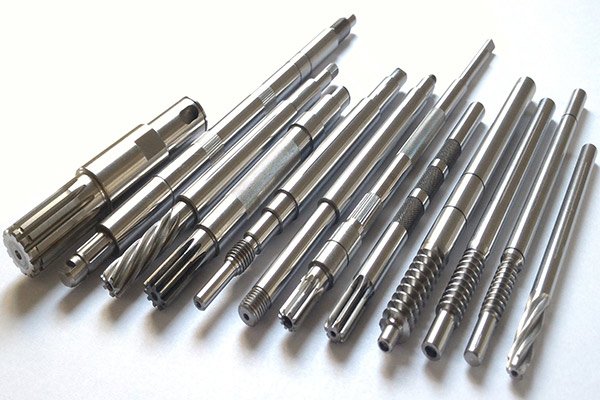
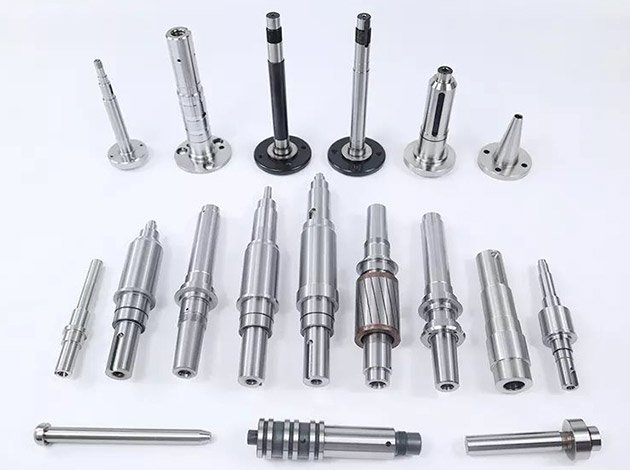
- Shaft
- Molds&Tools
- Hydraulics And Pump
- Hair transplant needle
- Hydraulics And Pump
- Precision CNC Shaft Machining Manufacturer for High Performance Applications
- Energy Industry CNC Machining Parts Supplier
- Aerospace CNC Machining Parts Manufacturer
- Aerospace CNC Machining Parts Manufacturer
- Automotive & EV CNC Machining Parts Supplier for OEM and Tier 1
- Medical CNC Machining Parts Supplier for Precision Medical Devices

Precision CNC Machining for EV Motor Housings: Tight Tolerances Explained

Precision CNC Machining for EV Motor Housings: Tight Tolerances Explained
Executive Summary
Electric vehicle motor housings are structural, thermal, electromagnetic, and assembly-critical components. A housing must locate the stator accurately, support bearing seats concentrically, protect internal electrical systems, manage heat, and interface reliably with gearboxes, inverters, cooling circuits, and vehicle mounting structures. A minor dimensional deviation can create bearing preload errors, rotor-to-stator air-gap variation, sealing failures, vibration, noise, or reduced motor efficiency.
For global OEMs and Tier 1 suppliers, precision CNC machining is therefore not simply a finishing operation. It is the manufacturing process that converts a cast, forged, or extruded aluminum housing blank into a controlled electromechanical datum structure. The most demanding features commonly include bearing bores, stator locating diameters, inverter mounting faces, sealing grooves, coolant passage interfaces, threaded ports, and gearbox mating surfaces. These features must be machined in a sequence that manages material stress, fixture distortion, thermal growth, and tolerance stack-up.
Dixin Technology, operating through IndustryApex CNC, supports EV supply-chain programs with controlled precision manufacturing, engineering collaboration, and ODM-oriented production planning. Our focus is to help customers translate functional EV motor requirements into repeatable manufacturing specifications, inspection strategies, and stable supply plans. This article explains why tight tolerances matter, how they are achieved, and what sourcing teams should evaluate when qualifying a precision machining partner.
Technical Deep Dive
An EV traction motor housing is often machined from high-pressure die-cast aluminum, low-pressure cast aluminum, gravity-cast aluminum, forged aluminum, or selected steel alloys. Material selection depends on power density, cooling requirements, corrosion exposure, structural load paths, electromagnetic design, and volume economics. Regardless of the starting material, the machining challenge is consistent: establish a stable and traceable relationship between every functional surface.
The bearing bore is among the most sensitive features. It determines the radial and axial position of the rotor shaft and influences the uniformity of the rotor-to-stator air gap. In many motor designs, bore diameter, roundness, cylindricity, and coaxiality with the opposing bearing seat are controlled at micron-level capability targets. The exact tolerance depends on motor architecture, bearing type, shaft design, thermal operating range, and assembly method. What matters most is not a single tolerance value on a drawing, but the machining supplier’s ability to maintain process capability across production lots.
Concentricity between bearing seats, stator pilot diameters, and gearbox interfaces is equally important. If the motor housing datums are not machined from a coherent reference strategy, each acceptable individual dimension can still combine into an unacceptable assembly condition. A robust process typically establishes primary, secondary, and tertiary datums early, then uses controlled fixtures and probing routines to preserve those relationships through roughing, stress-relief stages where required, semi-finishing, and finishing.
Flatness and surface finish on mating faces directly affect sealing and thermal transfer. Inverter covers, coolant jackets, gearbox flanges, and end covers may require controlled flatness to ensure gasket compression is uniform around the perimeter. Surface roughness must match the selected sealing method. A face intended for a formed-in-place gasket has different requirements than a precision-machined metal-to-metal interface or an O-ring groove application. Excessive roughness can create leakage paths, while an overly smooth surface can also compromise adhesion in certain sealant systems.
Thermal management introduces another layer of complexity. Many EV motor housings include integrated coolant channels, hose connections, threaded ports, or sealing lands. Machining burrs, residual chips, porosity exposure, or damaged sealing edges can cause coolant leakage or contaminate downstream assembly. Controlled deburring, washing, drying, and cleanliness verification are therefore part of the functional manufacturing process, not secondary cosmetic steps.
High-speed spindle machining of aluminum enables strong productivity, but it can also introduce vibration, tool deflection, thermal growth, and distortion in thin-wall castings. Dixin Technology applies process planning that considers wall thickness, clamping force, cutting force direction, tool reach, chip evacuation, and machine warm-up condition. Where geometry demands it, 3-axis, 4-axis, and 5-axis machining can reduce reclamping and improve positional consistency between complex features. EDM, precision grinding, and specialized finishing operations may be incorporated when conventional milling alone cannot reliably achieve a required feature geometry or finish.
Inspection must reflect the real function of the housing. Coordinate measuring machines, bore gauges, air gauges, surface roughness measurement, thread gauges, leak-test systems, and visual standards should be selected based on critical-to-quality features. First article inspection establishes the initial dimensional baseline, while in-process probing and statistical process control help maintain production stability. For high-volume programs, data traceability should connect material lot, machine program revision, fixture configuration, inspection result, and shipment record.
The ODM & Supply Chain Advantage
EV programs place unusual pressure on supplier networks. Product architectures evolve quickly, volumes scale unevenly, and design releases frequently move from prototype to pilot production to serial production on compressed timelines. A machining supplier that only receives a purchase order and a finished drawing may produce parts, but it may not protect the broader program from avoidable launch, quality, or supply risks.
Dixin Technology is positioned as a supply chain integrator and ODM solution provider for global OEMs and Tier 1 suppliers. This means the engagement can begin before serial production, with manufacturability review, datum strategy evaluation, material and process recommendations, fixture planning, and quality-control definition. Early engineering involvement helps identify concerns such as inaccessible tool paths, unstable thin-wall sections, ambiguous geometric dimensioning and tolerancing, insufficient casting machining allowance, difficult-to-inspect features, or tolerance requirements that do not align with the component’s actual functional need.
Our manufacturing edge is a fully controlled precision manufacturing system supported by ERP management and more than 30 years of experience. ERP-based coordination improves control over production scheduling, raw-material status, work orders, quality records, inventory, and shipment readiness. For procurement and supplier-quality teams, this structure supports clearer visibility into lead times, corrective actions, lot traceability, and capacity planning.
Dixin Technology’s capabilities include 3-5 axis CNC machining, EDM, precision grinding, and industrial ceramics. This breadth matters because modern EV assemblies frequently combine multiple precision disciplines. A motor housing may require high-efficiency CNC milling and boring, while associated locating components, insulating elements, wear surfaces, or special fixtures may call for grinding, EDM, or ceramic expertise. Integrating these requirements through one accountable manufacturing system reduces handoffs and helps maintain common quality standards.
Supply-chain resilience also depends on disciplined supplier management. Castings, forgings, fasteners, seals, surface treatments, and specialized materials need controlled sourcing, incoming inspection, and documented change management. A qualified machining partner should understand that a change in casting source, alloy chemistry, heat treatment, coating, or machining allowance can affect machining behavior and final dimensional capability. Dixin Technology manages this interaction as part of an integrated manufacturing responsibility rather than treating machining as an isolated process.
Cross-industry experience further strengthens process discipline. Requirements developed for aerospace CNC machining, high-precision medical components, and demanding hydraulic pump parts reinforces the importance of material traceability, feature-level inspection, controlled documentation, and repeatable process execution. While each sector has distinct standards, the operational discipline required for critical precision components transfers directly to EV motor-housing production.

Industry Applications
Precision-machined motor housings are used across passenger EVs, electric commercial vehicles, e-axles, hybrid drive units, electric buses, industrial traction systems, automated guided vehicles, off-highway electrification platforms, and energy equipment. Each application emphasizes a different balance of performance, weight, durability, cooling capacity, and production volume.
In passenger vehicles, compact integrated drive units require tightly controlled interfaces between the motor, reduction gearbox, differential, inverter, and cooling system. In commercial vehicles, the housing must withstand higher torque loads, extended duty cycles, and heavier vibration exposure. Off-highway machines frequently require robust sealing and corrosion resistance in dusty, wet, or high-shock environments. Industrial applications may prioritize continuous-duty thermal performance, serviceability, and long-term dimensional stability.
The same machining principles also apply to adjacent EV components: end shields, gearbox cases, inverter enclosures, battery pack structural interfaces, charging-system housings, cooling manifolds, resolver brackets, and precision shaft-support components. A supplier capable of controlling critical datums across these parts can help reduce assembly variation at the system level.
Call to Action
When sourcing precision CNC machining for EV motor housings, evaluate more than machine count and quoted unit price. Confirm how the supplier will control datum transfer, bearing-bore geometry, sealing surfaces, coolant features, fixture distortion, cleanliness, inspection data, traceability, and capacity ramp-up. These factors determine whether a housing performs consistently once it reaches motor assembly.
Dixin Technology provides engineering-led support for prototype, low-volume, and serial-production EV precision components. To discuss a motor housing drawing package, tolerance study, manufacturing feasibility review, or supply-chain requirement, contact Dixin Technology through IndustryApex CNC.