- Shaft
- Molds&Tools
- Hydraulics And Pump
- Hair transplant needle
- Hydraulics And Pump
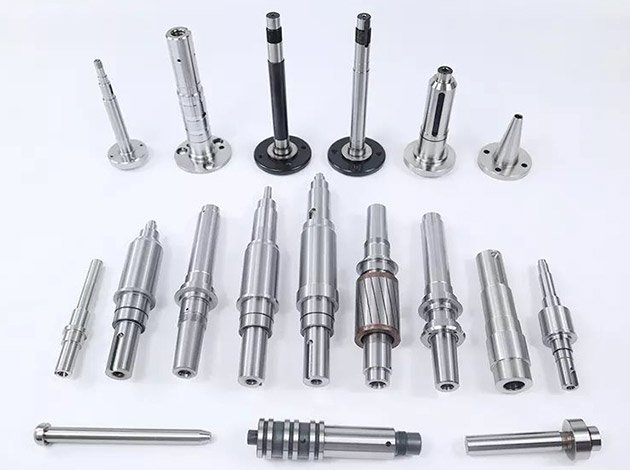
- Precision CNC Shaft Machining Manufacturer for High Performance Applications
- Energy Industry CNC Machining Parts Supplier
- Aerospace CNC Machining Parts Manufacturer
- Aerospace CNC Machining Parts Manufacturer
- Automotive & EV CNC Machining Parts Supplier for OEM and Tier 1
- Medical CNC Machining Parts Supplier for Precision Medical Devices

The Future of Robotics Components: Micron-Level Precision in 2026

The Future of Robotics Components: Micron-Level Precision in 2026
As industrial robots move into more demanding environments, component precision has become a direct driver of uptime, repeatability, safety, and total cost of ownership. For global OEMs and Tier 1 suppliers, 2026 will place greater emphasis on micron-level manufacturing discipline across the complete robotics supply chain.
Executive Summary
Robotics is no longer defined only by the robot arm, controller, and software. Its performance increasingly depends on the dimensional stability of shafts, gear housings, bearing seats, actuator bodies, end-effectors, valve components, and precision structural parts. Small deviations can compound through a kinematic chain, creating backlash, vibration, thermal drift, leakage, inconsistent tool positioning, and accelerated wear.
In 2026, demand for automation will continue to expand across electronics, logistics, automotive, medical devices, aerospace, food processing, energy, and fluid-control systems. Collaborative robots, mobile robots, machine-tending cells, surgical systems, vision-guided platforms, and high-payload automation all require components that hold tight geometric tolerances reliably at production volume. A drawing tolerance alone is insufficient. OEM sourcing teams need suppliers that can consistently manage materials, machining methods, inspection strategy, process capability, traceability, and delivery risk.
Dixin Technology, operating through IndustryApex CNC, supports this requirement as a precision manufacturing and supply chain partner. The future of robotics components is not simply finer machining. It is a controlled production system that translates complex engineering requirements into repeatable, inspectable, globally scalable parts.
Technical Deep Dive
Micron-level precision in robotics refers to more than a single linear dimension. It is the controlled relationship among size, position, form, surface condition, and material behavior. A robotic harmonic-drive housing, for example, may require tightly controlled bearing bores, concentric mounting registers, perpendicular flange faces, and precise fastener patterns. Each feature affects load distribution and axis accuracy. When the interfaces are not aligned, an otherwise sophisticated servo system cannot deliver its intended repeatability.
In practical production, critical robotics tolerances commonly include bore diameters, roundness, cylindricity, coaxiality, flatness, runout, profile, and surface roughness. The right target depends on function. Bearing fits must preserve preload and rotation quality; sealing surfaces must resist leakage; spline interfaces must transfer torque without excessive backlash; and optical or sensor mounting features must maintain a stable reference frame. Engineering teams should define tolerances around functional requirements rather than applying tight limits indiscriminately. Over-tolerancing raises cost and lead time, while under-tolerancing moves risk into assembly and field performance.
Thermal effects are another major consideration. Robots generate heat through motors, reducers, brakes, electronics, and repeated duty cycles. Aluminum housings, stainless components, alloy steel shafts, titanium structures, carbide wear parts, and industrial ceramics all respond differently to temperature. A capable manufacturing partner evaluates material selection, heat treatment condition, machining sequence, clamping stress, coolant control, and final inspection temperature. This matters especially where dissimilar materials meet in a compact actuator assembly.
Process selection must follow geometry and performance needs. Three-axis CNC machining efficiently produces many housings, plates, brackets, and prismatic end-effector parts. Four-axis and five-axis machining reduce setups for multi-face parts, complex interfaces, and contoured structures, improving positional consistency between features. EDM supports intricate internal geometry, hardened materials, and sharp radii that conventional cutting cannot reliably achieve. Precision grinding is essential for shafts, races, journals, sleeves, and other surfaces where form, finish, and fit directly influence motion quality.
Inspection must be integrated with manufacturing rather than treated as a final gate. First-article inspection, in-process measurement, calibrated gauges, coordinate measuring machines, surface roughness verification, material certificates, and documented control plans give OEMs evidence that the manufacturing process is stable. For high-value robotics assemblies, inspection data should support root-cause analysis and change control over the life of the program.
Design for manufacturability should begin early. Engineers can improve yield by defining clear datum structures, ensuring access for tools and probes, avoiding unnecessarily deep narrow cavities, specifying practical internal radii, and identifying characteristics that are truly critical to function. Early collaboration between the design team and precision supplier can reduce setup count, avoid tolerance stack-up, and protect the production schedule when a design enters pilot or volume release.
The ODM & Supply Chain Advantage
For robotics OEMs, the central sourcing challenge is often not finding a shop that can machine one prototype. The challenge is establishing a production partner that can deliver consistent parts across revisions, volumes, locations, and product lifecycles. Dixin Technology is positioned as a supply chain integrator and ODM solution provider for global OEM and Tier 1 programs that require both technical execution and coordinated supply assurance.
With over 30 years of manufacturing experience, Dixin Technology operates a fully controlled precision manufacturing system supported by ERP management. This approach connects material planning, production scheduling, process routing, quality documentation, inventory visibility, and shipment coordination. It gives procurement and engineering stakeholders a more reliable basis for managing cost, lead time, revision changes, and delivery commitments.
The manufacturing platform combines 3-5 axis CNC machining, EDM, precision grinding, and industrial ceramics. This breadth is valuable in robotics because a single program may require lightweight aluminum structures, hardened steel transmission elements, corrosion-resistant stainless components, wear-resistant carbide features, and electrically insulating or high-temperature ceramic parts. Coordinating these technologies through one engineering-led supply chain reduces handoff risk and supports consistent technical communication.
ODM capability also matters when an OEM needs help translating a functional concept into producible parts or subassemblies. The right engagement can include manufacturability review, material alternatives, process recommendations, tolerance optimization, prototype support, pilot-run planning, inspection planning, and controlled scale-up. This does not replace the OEM’s design authority; it strengthens execution by identifying manufacturing constraints before they become production problems.
For sourcing organizations, a qualified precision partner should be evaluated on more than quoted unit price. Useful criteria include proven process capability, tooling and fixture control, material traceability, inspection capacity, capacity planning, engineering responsiveness, export experience, packaging discipline, and the ability to manage multiple part families. These factors determine whether a component arrives ready for assembly or creates hidden costs through sorting, rework, line stoppages, and expedited logistics.
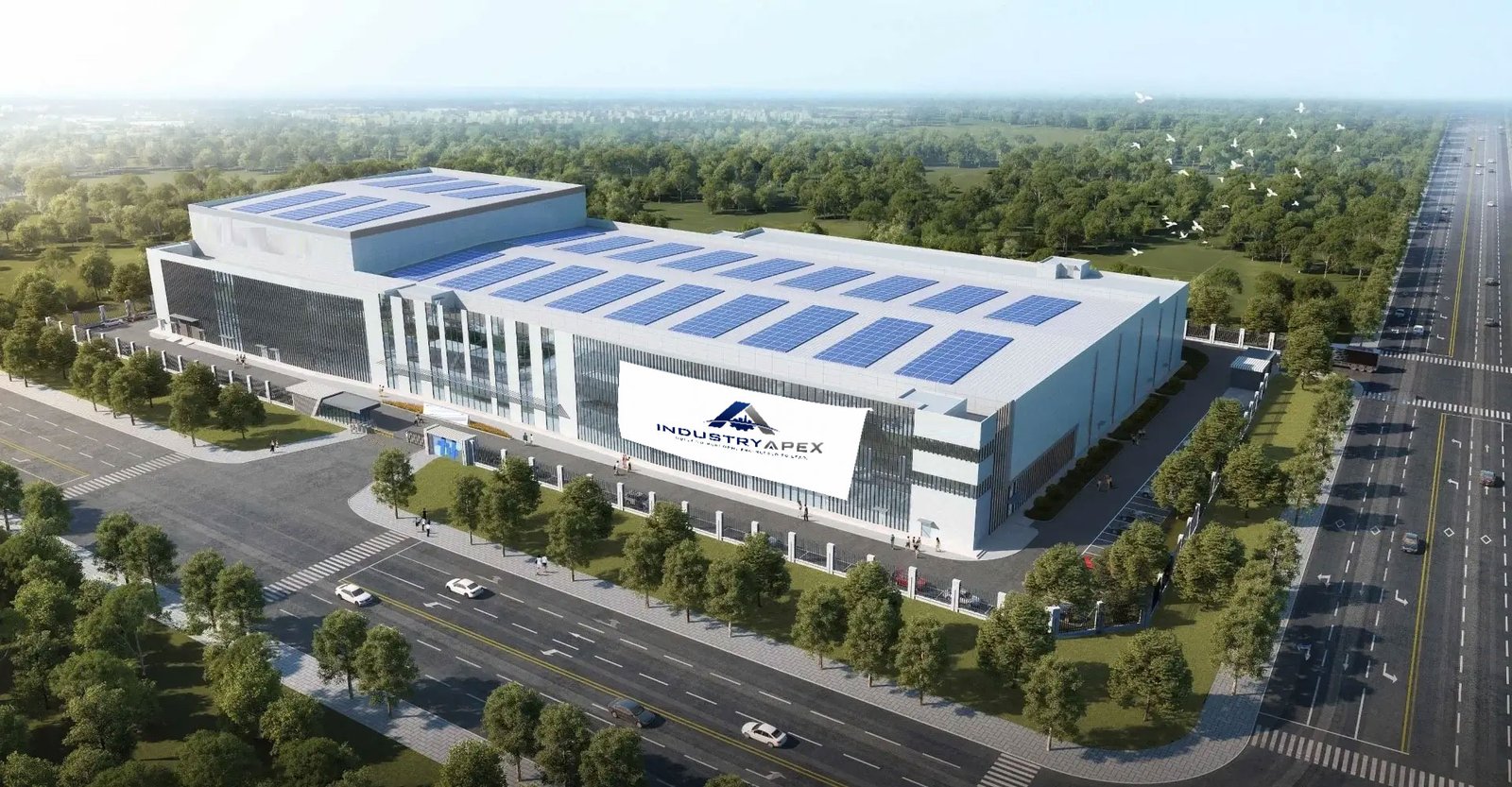
Dixin Technology’s integrated model is particularly relevant as robotics platforms become modular. A common base architecture may support multiple payloads, reach lengths, end-effectors, sensor packages, or industry-specific configurations. Controlled sourcing and flexible machining capacity enable OEMs to manage this variant complexity while maintaining common quality standards and predictable component availability.
Industry Applications
Robotics components serve a wider industrial ecosystem, and requirements vary by application. In aerospace automation and advanced inspection, lightweight structural elements, precision fixtures, and high-performance materials must withstand demanding operational and traceability requirements. Dixin Technology’s experience with aerospace CNC machining and aircraft structural components provides relevant process knowledge for robotic systems used around critical assemblies.
Medical and laboratory robotics require compact, cleanable, corrosion-resistant, and highly repeatable components. Surgical-assist equipment, automated diagnostic platforms, and pharmaceutical handling systems may use titanium, stainless steel, aluminum, and specialized engineered materials. OEMs developing these systems can draw on capabilities associated with ISO-certified CNC machining for medical components, where quality documentation and precision are essential.
Fluid-control automation is another fast-growing segment. Robotic cells used in energy, chemical processing, automotive testing, and industrial equipment often depend on compact pneumatic and hydraulic actuation. High-precision bores, spools, sleeves, manifolds, and sealing interfaces affect response speed, leakage performance, and reliability. Learn more about relevant hydraulic pump parts and fluid-power component manufacturing.
In electronics and semiconductor manufacturing, robots operate at high speed with strict contamination and positioning demands. Precision machined bases, vacuum-compatible fixtures, sensor mounts, wafer-handling interfaces, and motion-stage components must protect alignment through repeated cycles. In logistics and packaging, the focus may shift toward durable gearboxes, conveyor interfaces, grippers, shafts, and wear components that minimize downtime in high-throughput environments.
Across these applications, the common requirement is disciplined component engineering. A robot’s software can compensate for some variation, but it cannot indefinitely offset poor geometry, unstable interfaces, inconsistent material condition, or uncontrolled surface quality. Precision manufacturing remains a foundational requirement for scalable automation.
Call to Action
As robotics programs move from prototype to production, component decisions made today will shape repeatability, reliability, and supply resilience in 2026 and beyond. Dixin Technology helps global OEMs and Tier 1 suppliers source and develop precision robotics components through integrated machining, engineering support, quality control, and supply chain coordination.
To discuss a robotics component program, share drawings, material requirements, annual volumes, and inspection expectations with the Dixin Technology team through the Contact Us page. Early technical review can identify manufacturability opportunities and establish a production path aligned with your performance, quality, and delivery requirements.