- Shaft
- Molds&Tools
- Hydraulics And Pump
- Hair transplant needle
- Hydraulics And Pump
- Precision CNC Shaft Machining Manufacturer for High Performance Applications
- Energy Industry CNC Machining Parts Supplier
- Aerospace CNC Machining Parts Manufacturer
- Aerospace CNC Machining Parts Manufacturer
- Automotive & EV CNC Machining Parts Supplier for OEM and Tier 1
- Medical CNC Machining Parts Supplier for Precision Medical Devices

How ODM Solution Providers Are Transforming Medical Device Manufacturing

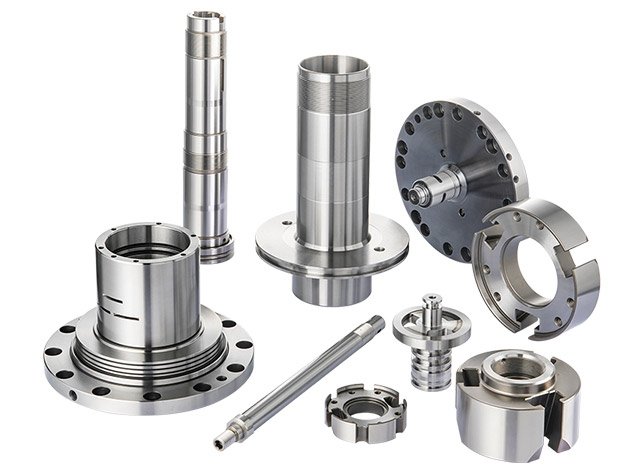
How ODM Solution Providers Are Transforming Medical Device Manufacturing
Executive Summary
Medical device manufacturing is being reshaped by a growing need for shorter development cycles, resilient sourcing, traceable quality, and highly specialized production capability. OEMs and Tier 1 suppliers are expected to bring increasingly sophisticated devices to market while managing tighter regulatory requirements, material constraints, supply disruptions, and sustained pressure on total delivered cost. Traditional supplier relationships built around isolated machining transactions are often not enough to address these demands.
ODM solution providers are changing the model. Rather than simply producing components from released drawings, an ODM partner can coordinate design-for-manufacturability input, material selection, process engineering, precision machining, inspection planning, supplier management, packaging, and ongoing supply support. This integrated approach gives device companies a more controlled path from concept and prototype through validation, production ramp, and lifecycle supply.
For medical-device programs, the value is especially significant. Components such as titanium implants, minimally invasive instrument features, diagnostic-equipment assemblies, pump parts, and robotic surgery mechanisms may combine demanding tolerances, complex geometries, difficult materials, strict cleanliness needs, and full lot traceability. A capable ODM provider helps translate design intent into repeatable manufacturing reality while reducing handoffs between disconnected vendors.
Dixin Technology, operating through IndustryApex CNC, supports this shift as a supply chain integrator and ODM solution provider. Its controlled precision manufacturing system combines engineering discipline, ERP-enabled production control, and more than 30 years of experience to serve global OEMs and Tier 1 suppliers. The result is a practical manufacturing partnership designed around quality, continuity, and scalable execution.
Technical Deep Dive
Medical devices demand manufacturing processes that account for function, safety, assembly performance, and regulatory evidence at the same time. A nominally correct part is not necessarily a production-ready part. Surface condition can influence implant behavior and cleanability. Burrs can interfere with instrument articulation. Material substitutions can affect biocompatibility documentation. Measurement strategy can determine whether a critical-to-quality feature is verified consistently across lots.
ODM engineering begins by examining the complete manufacturing definition. This includes tolerances, datum strategy, geometric dimensioning and tolerancing, material grades, heat treatment, surface finishing, assembly interfaces, inspection requirements, and expected annual volume. The engineering team identifies features that create risk during machining or inspection, then recommends changes that preserve device function while improving process capability. Examples include selecting accessible datum surfaces, revising difficult internal transitions, defining appropriate surface-finish requirements, or separating cosmetic specifications from function-critical requirements.
Five-axis CNC machining is central to many advanced medical components because it enables efficient production of complex contours, angled features, undercuts, and multiple orientations in fewer setups. Reducing setups can improve positional consistency and reduce accumulated error. Three-axis machining remains highly effective for prismatic parts, housings, brackets, fixtures, and repeat production where the geometry supports straightforward workholding. The best process is not the most complex machine path; it is the process that meets requirements reliably with appropriate validation and cost control.
EDM expands the manufacturing envelope for intricate or hard-to-machine features. Wire EDM can produce narrow slots, fine profiles, and precise contours without applying conventional cutting forces. Sink EDM is useful for detailed cavities and difficult geometries. Precision grinding supports tightly controlled diameters, flatness, concentricity, and surface quality on shafts, sleeves, surgical mechanisms, and other critical components. These processes are often most effective when planned together rather than sourced independently.
Material expertise is equally important. Titanium alloys are widely used for implants and lightweight instrument structures because of their strength-to-weight ratio and biocompatibility characteristics, but their machining behavior requires careful tooling, cooling, workholding, and cycle planning. Stainless steels, cobalt-chromium alloys, aluminum grades, engineering plastics, and industrial ceramics each introduce different manufacturing and inspection considerations. A provider with material and process depth can recommend a robust route before production schedules are exposed to avoidable uncertainty.
For OEMs seeking precision production support, Dixin Technology’s medical CNC machining capabilities address titanium implants, surgical instruments, and high-precision device parts. The focus is not limited to producing geometry; it is to establishing a controlled process capable of supporting repeat orders, documented inspection, and evolving product requirements.
The ODM & Supply Chain Advantage
The ODM advantage comes from coordinated ownership of the manufacturing system. In a fragmented model, an OEM may separately manage design refinement, prototype machining, production machining, finishing, inspection, packaging, and logistics. Each transfer introduces communication delay, documentation gaps, and responsibility ambiguity. When a late-stage issue occurs, determining root cause can consume valuable engineering and quality resources.
As a supply chain integrator and ODM solution provider, Dixin Technology brings these functions into a more unified operating model. The team can help align component design, process selection, sourcing strategy, production planning, and quality documentation early in the program. This improves visibility before a device reaches volume production, where tooling changes, supplier changes, and corrective actions become more expensive.
A fully controlled precision manufacturing system is a major differentiator. ERP-based planning connects orders, materials, process routing, inventory, scheduling, and delivery execution. For global OEMs and Tier 1 suppliers, this structure improves practical traceability and makes production status more manageable across multiple part numbers and demand patterns. More than 30 years of manufacturing experience also provides a foundation for recognizing recurring risks in tolerance stack-up, workholding, tooling life, material availability, and supplier coordination.
Dixin Technology integrates 3-5 axis CNC machining, EDM, precision grinding, and industrial ceramics capabilities. This process breadth matters because medical devices often need more than one manufacturing technology. A precision metal component may require CNC milling, grinding of a mating diameter, EDM of a fine feature, and a ceramic element for electrical insulation, wear resistance, or chemical stability. Managing the process chain through one accountable engineering organization reduces coordination burden and helps protect critical interfaces.
Supply chain integration also strengthens resilience. A mature ODM provider evaluates material lead times, qualified alternatives, make-versus-source decisions, production capacity, and logistics requirements before disruption becomes a shipment failure. ERP data supports demand planning and order prioritization, while controlled manufacturing processes create a more consistent basis for ramping production. The objective is not merely lower unit price. It is lower total program risk through dependable quality, predictable lead times, and fewer supplier-management touchpoints.

Industry Applications
In orthopedic and implantable-device manufacturing, ODM support can help manage titanium and specialty-alloy components with contoured anatomical forms, threaded features, polished surfaces, and exacting dimensional requirements. Engineering input during early development can make a meaningful difference in fixture design, cutter access, inspection datums, and scalable cycle times. These considerations help programs move from prototype feasibility to repeatable production without compromising clinical design intent.
Surgical instruments present a different combination of challenges. Instrument components may require compact geometry, fine articulation, controlled friction, corrosion resistance, and reliable assembly fit. Precision machining and grinding support shafts, jaws, handles, couplings, housings, and drive features. EDM can produce intricate slots and profiles where conventional machining would be impractical. An integrated provider can coordinate these routes while controlling documentation and lot-level production information.
Diagnostic and laboratory equipment relies on equally demanding precision components. Imaging systems, analytical instruments, and sample-handling platforms require stable housings, optical interfaces, motion-system parts, fluid-path components, and high-accuracy fixtures. The same manufacturing discipline also transfers to adjacent high-reliability industries. For example, experience with aerospace CNC machining and titanium structural components reinforces practices around complex geometry, material control, and traceable process execution.
Medical fluid-management systems, infusion equipment, and analytical-fluidics platforms may require precision valve bodies, pump housings, sleeves, shafts, and sealing interfaces. Dixin Technology’s experience with hydraulic pump parts is relevant where fluid control depends on accurate mating surfaces, controlled clearances, pressure-bearing geometry, and dependable material performance. While medical applications have their own regulatory and cleanliness requirements, the underlying precision-engineering principles remain highly transferable.
Industrial ceramics are increasingly important in medical and diagnostic applications because they can provide wear resistance, thermal stability, electrical insulation, and chemical resistance. Ceramic parts may support sensor systems, analytical instruments, high-wear mechanisms, and specialized device assemblies. An ODM provider that understands both machined-metal and ceramic supply chains can help OEMs manage these mixed-material designs with fewer procurement interfaces.
Call to Action
Medical device leaders need manufacturing partners that can contribute beyond quotation-stage capacity. The strongest ODM relationships connect engineering, quality, precision production, and supply continuity into one accountable system. That model helps OEMs and Tier 1 suppliers reduce development friction, improve manufacturability, and establish a more resilient path to production.
Dixin Technology and IndustryApex CNC provide precision manufacturing and integrated supply chain support for demanding medical-device components and related high-reliability applications. To discuss a program, submit drawings, or evaluate manufacturing options, contact Dixin Technology.